Whether France or Belgium Owns the Papillon
The question of whether the Papillon breed hails from France or Belgium is one that pops up quite a bit among enthusiasts and new owners alike, and it's completely understandable why there's confusion! This isn't a simple case of one country definitively "owning" the breed, as its history is a beautiful tapestry woven across different European courts and cultures. We're going to dive deep into the fascinating origins of this delightful butterfly dog, exploring the historical threads that tie it to both nations and give both a legitimate claim to its heritage.
The Ancestry of the Papillon: A Tale of Two Nations and One Type of Dog
When we talk about the Papillon, we're not just talking about the modern breed we know and love today with its distinctive butterfly ears. We're really looking back at a lineage that stretches hundreds of years, originating from a type of small companion dog often referred to as a "dwarf spaniel" or "Continental Toy Spaniel." These little dogs were the darlings of European nobility, cherished companions that graced the laps of royalty and aristocracy across the continent. It’s here, in these early centuries, that the lines between French and Belgian influence begin to delightfully blur, much like the delicate brushstrokes on an old masterpiece.
What Was a Dwarf Spaniel, Anyway?
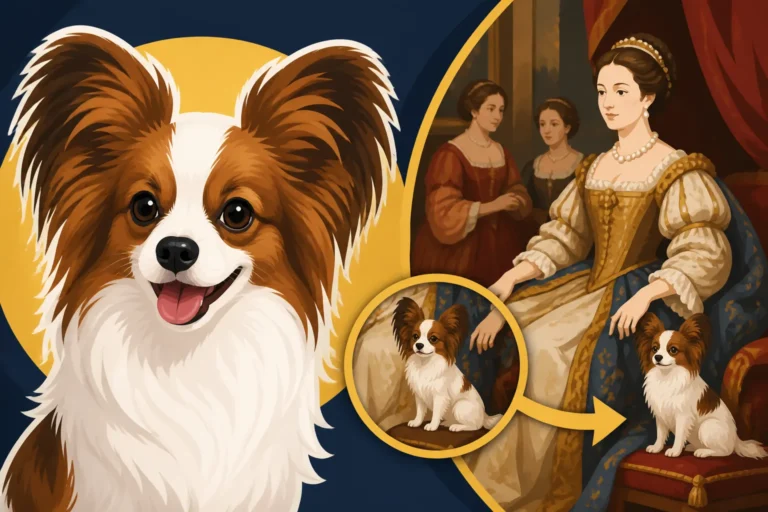
Before the Papillon, as we recognize it, even existed, there were these charming "dwarf spaniels." They were, as the name suggests, small spaniel-type dogs, typically with drop ears and soft, flowing coats. Think of them as the prototype, the foundation from which our modern Papillon eventually emerged. They weren't a formally recognized breed in the way we understand breeds today, but rather a consistent type of dog bred for companionship. You can find their images in countless European paintings from the Renaissance onwards, nestled in the arms of noblewomen or playing at their feet. They were symbols of wealth, status, and affection, living lives of luxury in grand palaces and estates. These dogs were quite popular in both French and Belgian territories, among other European nations, with different regional variations and breeding efforts contributing to their overall genetic pool. It’s helpful to understand What a Dwarf Spaniel Was to fully appreciate the Papillon's journey.
Tracing the Bloodlines: A Shared Genetic Heritage
The genetic lineage of these dwarf spaniels didn't respect modern national borders. Imagine the interconnectedness of European royal families and aristocratic houses, constantly exchanging gifts, marrying across kingdoms, and traveling. Dogs, especially highly prized companion dogs, were often part of these exchanges. A particularly charming puppy from a kennel in Brussels might find its way to a court in Paris, and vice versa. This meant that the gene pool for these small spaniels was quite intermingled across what are now France and Belgium, as well as parts of Spain and Italy. There wasn't a strict "French dwarf spaniel" or "Belgian dwarf spaniel" in terms of distinct breeds, but rather a flow of similar dogs being bred and adored. This shared history makes it incredibly difficult, if not impossible, to draw a clear line and say, "This dog type originated here and only here." Their ancestors were truly continental, a testament to their widespread appeal and the fluid nature of dog breeding in earlier centuries. Whether the Papillon Descends From a Spaniel further explores this fascinating link.
The Evolution of the Name: Papillon and Phalène
The very names associated with the breed, "Papillon" and "Phalène," are French, adding another layer to the discussion. These names, meaning "butterfly" and "moth" respectively, refer to the characteristic ear sets that define the two varieties of the breed. While the names themselves are French, the development of these distinct ear types, and the dogs that bore them, occurred within a broader European context that undeniably included what is now Belgium. This linguistic tie often leads people to instinctively credit France with the breed's origin, but it's a bit more nuanced than that.
"Papillon" – The Butterfly That Captured Hearts
The most recognizable feature of the Papillon is, of course, its large, erect, fringed ears that resemble a butterfly with open wings. This ear type is what gives the breed its most common name. The erect ear type gained popularity, particularly during the 18th and 19th centuries, eventually becoming the dominant and most sought-after variety. This distinctive look likely emerged from selective breeding efforts across various kennels and noble estates. It’s believed that the erect ears might have developed from cross-breeding with Spitz-type dogs, though historical records are not always crystal clear on exact lineage details. The rise of the butterfly-eared dog certainly took hold in France, where it was enthusiastically embraced by society, leading to the adoption of the charming French name. To understand the significance of this, it's worth exploring What the Name Papillon Refers To.
"Phalène" – The Moth With Drooping Ears
While the Papillon variety with its erect ears became highly popular, the original "dwarf spaniel" type with dropped ears didn't disappear. This variety is known as the Phalène, meaning "moth" in French, referring to its ears that hang down like a moth at rest. Interestingly, Papillons and Phalènes are not separate breeds; they are simply two varieties of the same breed and can even be born in the same litter! This highlights the close genetic relationship and shared history between the two. The Phalène represents the older, ancestral ear type, and it continued to be cherished, especially in certain regions. The existence of both varieties within the same breed underscores the continuity of the dwarf spaniel lineage. Both France and Belgium played a role in maintaining and developing these lines. For more on this, you might be interested in What the Name Phalene Refers To and Whether a Phalene Is a Separate Breed.
Tracing the Breed's Development Through Art and Courts
One of the most compelling ways to trace the Papillon's lineage and geographic presence is through historical art. From the Renaissance onward, European painters frequently depicted these charming little dogs. These portraits offer visual evidence of where and when these dogs were popular, and they clearly show their widespread appeal across courts that spanned what are now distinct national boundaries.
Royal Patronage in France and Beyond
It's undeniable that the French court, particularly during the eras of Louis XIV and Marie Antoinette, was a significant hub for these small spaniels. Paintings from French artists like Fragonard and Boucher often feature elegant ladies with their beloved lapdogs, many of which bear a striking resemblance to early Papillons or Phalènes. The association with Marie Antoinette, who is famously said to have taken her little dog to the guillotine with her (a story often repeated, though its factual basis is debated), firmly places the breed within the French historical narrative. Even if the story is apocryphal, it speaks to the breed's strong connection with French royalty and culture. This strong visual and anecdotal evidence from French history heavily contributes to the perception that the breed is primarily French. You might wonder Whether Marie Antoinette Owned a Papillon and delve into that historical anecdote.
The Influence of Flemish and Dutch Masters
However, one cannot overlook the presence of these dwarf spaniels in the works of Flemish and Dutch masters. Artists like Rubens and Jan Steen, hailing from what is now Belgium and the Netherlands, also depicted these small companion dogs in their portraits and genre scenes. These paintings showcase the popularity of these dogs among the aristocracy and wealthy merchant classes in the Low Countries. For example, some of Titian's earlier works from Italy already showed small spaniels, and the type migrated north. The presence of these dogs in the art of the region indicates that there was a vibrant culture of keeping and breeding these small spaniels in areas that are now part of Belgium. This artistic evidence suggests a parallel, and likely interconnected, development of the breed type outside of purely French influence. It shows that the affection for these dogs, and the efforts to breed them, were not confined to a single country but were part of a broader European trend. Consider exploring Which Courts Kept Dwarf Spaniels for a wider view.
The Role of Breed Clubs and National Recognition
In the modern era, the official recognition and standardization of dog breeds typically fall to national kennel clubs and breed associations. This is where the debate over "ownership" often becomes most acute, as different countries lay claim to the breed's standard and historical narrative.
Defining the Standard: A Collaborative Effort
The process of defining a breed standard, which describes the ideal characteristics of a dog, is a critical step in formalizing a breed. For the Continental Toy Spaniel, which encompasses both Papillon and Phalène varieties, this standardization was a collaborative, international effort over time. While the breed saw significant development and refinement in France, Belgian breeders were also deeply involved in shaping the breed into what it is today. Early breed clubs, though sometimes national in focus, often drew members and influences from neighboring countries. The first breed club specifically for the Papillon and Phalène was formed in France in the early 20th century, which often solidifies the French claim in many people's minds. However, breeders in Belgium were actively working on their lines, contributing to the breed's genetic diversity and overall development. This means the actual work of refining the breed was often more regional than strictly national, with breeders in border areas often collaborating or sharing stock.
International Kennel Club Recognition
When it comes to international recognition, such as with the Fédération Cynologique Internationale (FCI), which is a global kennel club federation, the breed is typically recognized under a specific country's patronage. The FCI, which includes both France and Belgium as member countries, generally lists the Continental Toy Spaniel (Papillon/Phalène) as having its origins in France and Belgium, or sometimes more broadly as "Franco-Belgian." This joint designation reflects the historical reality that both nations played a significant and intertwined role in the breed's development. It's a testament to the fact that denying either country's contribution would be an incomplete historical picture. Different kennel clubs around the world may emphasize one country over the other in their individual breed histories, but the FCI's joint recognition speaks volumes. It's interesting to consider how How Papillon Standards Differ Between Countries can sometimes hint at these national nuances.
Why the "Ownership" Debate Persists
So, if the history is so intertwined, why do people still ask if it's "French or Belgian"? There are several reasons this debate continues, often stemming from nationalist pride, historical interpretation, and the way information is presented. Ultimately, it’s a friendly rivalry fueled by a deep love for these charming little dogs.
National Pride and Historical Emphasis
Every country cherishes its cultural and historical contributions, and dog breeds are no exception. French enthusiasts often point to the breed's French names, its strong association with French royalty, and the establishment of early French breed clubs as definitive proof of its French origin. On the other hand, Belgian proponents highlight the historical presence of the dwarf spaniel type in Flemish art, the strong historical ties between the regions, and the contributions of their own breeders to the development of the various lines. Both sides have valid points because both countries were indeed instrumental in the Papillon's journey. It’s a point of pride, and rightly so, to be associated with such a beautiful and intelligent breed.
Semantic Ambiguity and Shifting Borders
Another factor is the shifting nature of European borders and national identities throughout history. What was once the Duchy of Brabant, for example, might today be partly in Belgium and partly in the Netherlands. The concept of "France" or "Belgium" as distinct, unified nations with their current borders is a relatively modern construct when looking back at several centuries of dog breeding. In the past, regions shared cultures, trade, and even rulers, making it difficult to pinpoint a single "nation" of origin in the way we might for a breed developed in a more geographically isolated area. The dwarf spaniels were simply popular across a region that eventually encompassed these modern nations.
Here’s a simple table summarizing the claims from each side:
| Aspect | French Claim/Contribution | Belgian Claim/Contribution |
|---|---|---|
| Names | "Papillon" (butterfly) and "Phalène" (moth) are French terms. | While names are French, the dogs themselves were prevalent in Belgian regions. |
| Historical Art | Depictions in French court paintings (Fragonard, Boucher), strong association with royalty. | Depictions in Flemish/Dutch art (Rubens, Jan Steen), showing regional popularity. |
| Ear Development | Significant development of the erect "butterfly" ear type and its popularization. | Contribution to the original "drop ear" (Phalène) lineage and continued breeding efforts. |
| Breed Clubs | Establishment of early breed clubs for standardization and promotion. | Active participation of Belgian breeders in refining breed characteristics. |
| Royal Patronage | Strong ties to French aristocracy, like Marie Antoinette. | Popularity among noble and wealthy classes in the Low Countries. |
| International Rec. | Often jointly recognized with Belgium by international bodies like FCI. | Often jointly recognized with France by international bodies like FCI. |
The Importance of a "Continental" Heritage
Ultimately, it’s perhaps most accurate and inclusive to consider the Papillon as a breed of "Continental Toy Spaniel" heritage, reflecting its origins across the European continent rather than strictly within one country's modern borders. Both French and Belgian breeders, artists, and nobility played crucial roles in its development, popularization, and refinement. So, instead of choosing one, we should celebrate the rich, shared history that brought us this incredible breed. You'll find many reputable breeders, whether they're in France, Belgium, or even purchasing supplies from a major retailer like Chewy, acknowledging this rich, dual heritage. The beauty of the Papillon is that it transcends national boundaries, a true European treasure.
Beyond Borders: The Papillon's Global Appeal
While the historical debate about the Papillon's primary origin is fascinating, what's truly wonderful is how this tiny dog has captured hearts globally. Its intelligence, elegant appearance, and spirited personality have made it a beloved companion far beyond the borders of France and Belgium. This global reach further emphasizes that its origins are a shared heritage, enriching its story rather than confining it to a single nation.
A Worldwide Favorite
Today, Papillons are cherished pets, formidable agility competitors, and elegant show dogs in countries all over the world. From North America to Australia, from the UK to Japan, their distinctive butterfly ears and bright, eager expressions are instantly recognizable. This widespread appeal speaks volumes about the breed's inherent qualities, qualities that were nurtured and developed by dedicated people across generations and geographies. The initial foundation laid in the European courts, with contributions from both French and Belgian lines, created a dog of enduring charm and intelligence. Whether you're ordering specialized toys for your Papillon from Chewy or discussing its latest show wins with a friend on another continent, you're participating in this global appreciation.
The Ongoing Legacy of Breeders and Enthusiasts
Modern breeders, regardless of their nationality, continue the legacy of those early European fanciers. They work tirelessly to maintain the breed standard, ensure the health and temperament of their dogs, and produce puppies that embody the best characteristics of the Papillon. Many focus on genetic health testing, paying close attention to issues that can affect small breeds. This dedication ensures that the Papillon will continue to thrive for centuries to come, a living testament to its rich and multinational history. When looking for a puppy, it's wise to consider breeders who are transparent about their dogs' lineage and health clearances, and who prioritize the well-being of the breed over nationalistic claims.
Disclaimer
This article is for general informational purposes only and does not constitute professional advice. Laws, prices and regulations vary by location and change over time. Consult a qualified professional for guidance on your specific situation.