What a Titian Spaniel Looked Like
It can be incredibly fascinating, yet sometimes a little frustrating, to look back through history and try to piece together what our beloved Papillons looked like centuries ago. We see old paintings and hear whispers of "Dwarf Spaniels," but what did they really look like, particularly those immortalized by the great masters? This guide will dive deep into the visual evidence, helping you understand the appearance of the "Titian Spaniel," the exquisite ancestor of our modern butterfly-eared companions.
Stepping Back in Time: The Ancestry of the Papillon
To truly understand what a Titian Spaniel looked like, we have to transport ourselves back to the Renaissance courts of Europe. Imagine grand palaces, flowing silks, and an air of elegance that demanded a certain kind of canine companion. These weren't working dogs or hunters; they were lapdogs, status symbols, and beloved members of aristocratic households.
The Court Dogs of Europe
In the 16th and 17th centuries, small dogs were all the rage among European nobility. They were cherished for their diminutive size, affectionate natures, and often elaborate coats, making them perfect accessories for the ladies and gentlemen of the era. These tiny canines would often be carried in sleeves, ride in luxurious carriages, or recline on velvet cushions, truly living lives of pampered luxury. They were more than just pets; they were integral to the social fabric of the time, often appearing in official portraits as symbols of wealth, leisure, and refined taste. Think of them as the ultimate living accent piece, offering comfort and companionship in a world that could often be very formal and restrictive. These were the dogs that would eventually give rise to many of our modern toy breeds, including the Papillon. You can read more about The Papillon Has Seven Hundred Years of Portraits Behind It to understand this rich history.
Why "Titian Spaniel"?
The term "Titian Spaniel" isn't a formal breed name in the way we understand it today. Instead, it’s a loving, historical moniker given to the small, long-haired spaniel-type dogs so frequently depicted in the paintings of the Venetian master, Titian, and his contemporaries. Titian (Tiziano Vecellio), who lived from the late 1400s to the late 1500s, was renowned for his vibrant portraits and mythological scenes, and he often included these charming little dogs. His brushstrokes give us some of the clearest, most enduring visual records of what these specific dogs looked like. When we say "Titian Spaniel," we're essentially referring to the specific type of Dwarf Spaniel that found its way onto his canvases, providing us with invaluable clues about the Papillon's direct ancestors. These paintings are a window into the past, showing us not just the dogs, but also the fashion, interiors, and lives of the people who adored them. For more on this connection, check out Titian Painted the Dog the Papillon Came From.
Dissecting the Appearance: What Made a Titian Spaniel Distinct?
Now, let's get down to the nitty-gritty of their looks. While there was undoubtedly some variation, historical paintings offer a remarkably consistent image of these early Papillon ancestors. They were unmistakably spaniel-like, but with their own unique charm.
Size and Build
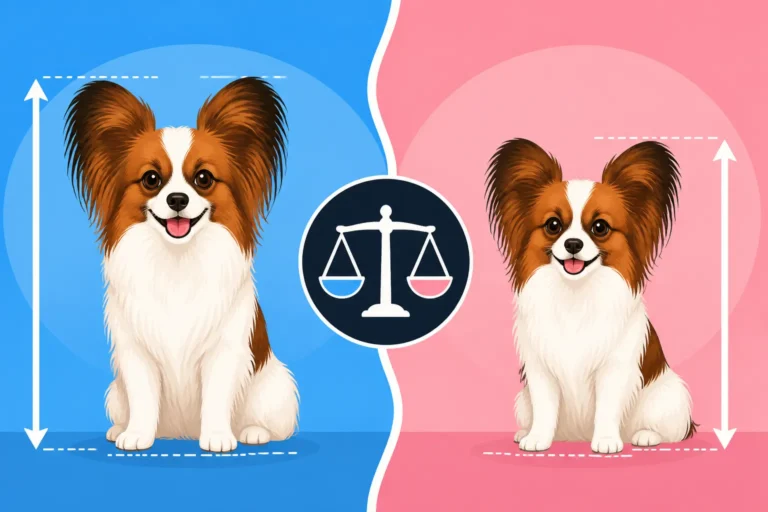
From the portraits, it's clear these were toy-sized dogs, much like our modern Papillons. They weren't hefty or stout, but rather delicate in build, exhibiting a fine bone structure that spoke of elegance. Imagine a small, graceful frame, light on its feet, perfect for being held or for mincing across polished palace floors. Their bodies appear proportionate, not overly long or short, with a general sense of balance. They weren't built for rugged outdoor work, but rather for comfort and aesthetic appeal. While specific measurements are impossible to ascertain from paintings, they seem to have been within the range of what we might consider a small toy breed today, probably falling somewhere between four to ten pounds, fitting comfortably into a noblewoman's lap or arm. This fine boned yet not frail appearance is something the Papillon breed standard still values, distinguishing them from, say, a more robust terrier type.
The Coat: Length, Texture, and Color
The coat of a Titian Spaniel was undeniably a major part of its allure. The paintings consistently show a fairly long, flowing coat, particularly around the ears, tail, and legs. This wasn't the dense, double-coated fur of a northern breed, but rather a single, silky layer that would have had a soft, luxurious feel. It appears to have been quite fine in texture, prone to waving or gentle curls rather than coarse straightness. Think of a very elegant, soft drape of hair that highlighted their delicate features.
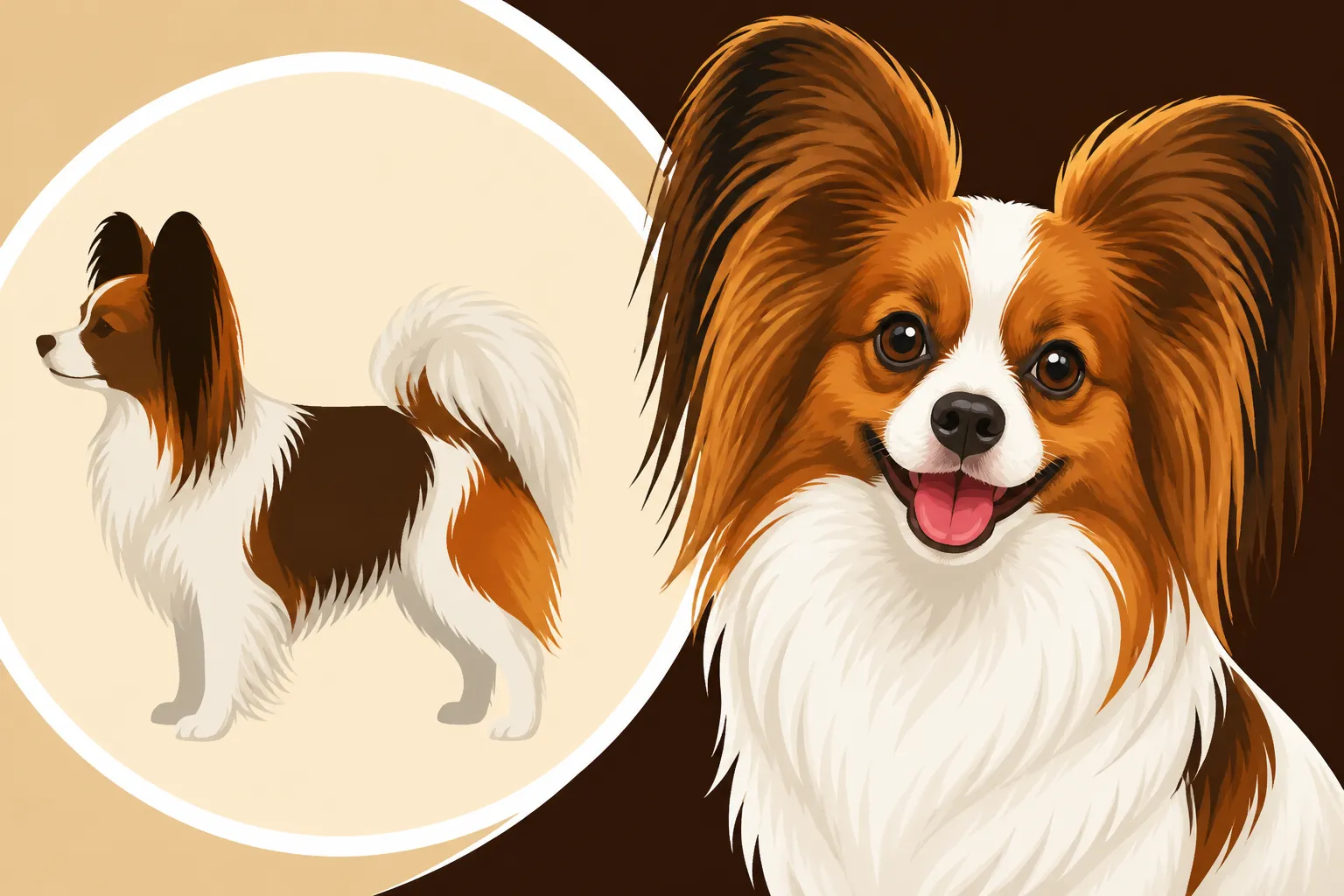
In terms of color, the paintings suggest a variety, but predominantly white with colored patches. Common colors included rich reds, sables, and black markings. Often, these patches would be symmetrically placed, enhancing their charming appeal. The white base allowed the colors to truly pop, and the overall effect was one of striking beauty and contrast. This is very much in line with the modern Papillon, where the breed standard still calls for a white base with various colored markings. You might even spot some historical examples that feature a blaze of white up the face, which is still a hallmark of many Papillons today.
The Defining Feature: Ears and Expression
Here's where the most significant difference from the modern Papillon lies, and it's a crucial point to understand the "Titian Spaniel." These dogs almost universally sported drop ears. Instead of the erect, butterfly-like ears of today's Papillon, their ears were typically large, set somewhat high on the head, and folded gracefully downwards, lying flat against the sides of the face.
These drop ears were heavily feathered, giving them a soft, appealing frame for their faces, much like the modern Phalene (the "moth" eared variant of the Papillon). In fact, the "Titian Spaniel" is essentially a historical Phalene. The extensive feathering on these ears would have given them a luxurious, almost regal look, enhancing their gentle expression.
Their eyes, as captured by Titian, appear dark, round, and full of life—intelligent and alert. This expressive quality, combined with their fine features and soft ears, would have given them an endearing and highly captivating countenance. Their small, delicate muzzles and often slightly worried or intensely curious expressions are beautifully rendered, suggesting a keen and attentive nature. This combination of soft, feathered drop ears and an intelligent gaze is a hallmark of the original "Dwarf Spaniel" that later gave rise to both the Phalene and the Papillon. If you're curious about the ear types, definitely read Papillon Means Butterfly and Phalene Means Moth.
More Than Just Looks: Temperament and Role
While the paintings primarily show us their physical appearance, the context in which they are depicted also tells us a great deal about their temperament and societal role. These weren't just pretty faces; they were cherished companions.
Companion Extraordinaire
The very reason these dogs were painted so frequently and lovingly is a testament to their role as devoted companions. They were bred and kept for their ability to offer affection, comfort, and lively interaction to their human counterparts. Their small size made them ideal indoor dogs, easy to manage in bustling households and perfect for close companionship. They were likely intelligent and eager to please, capable of forming strong bonds with their owners. Imagine a lady of the court, perhaps burdened by social expectations, finding solace and joy in the unwavering loyalty and playful antics of her little spaniel. This inherent desire to be with and please their people is a trait that has carried through to the modern Papillon, making them such wonderful pets today. Their gentle nature, coupled with a surprising amount of vivacity, would have made them incredibly engaging companions.
Living in a Renaissance Palace
Life for a Titian Spaniel would have been a far cry from roughing it. These dogs were literally part of the furniture in the grandest homes. They likely slept in comfortable beds, perhaps even on their owner's bed, and were probably fed choice morsels from the table. Their tiny paws would have pattered across marble floors and rich tapestries. They would have experienced the pomp and circumstance of court life, the quiet intimacy of private chambers, and the occasional journey in a sedan chair or carriage. Unlike today, where we might worry about our dog's diet and exercise regimen with help from modern pet stores like Chewy, these dogs likely lived a much less structured, albeit equally pampered, life. Their physical needs were probably overseen by servants, their every whim catered to. This environment further reinforced their role as symbols of luxury and leisure, perfectly suited to the opulent surroundings they inhabited.
The Evolution to the Modern Papillon
The journey from the drop-eared Titian Spaniel to the erect-eared Papillon is a fascinating tale of selective breeding and a celebrated genetic mutation.
From Drop to Erect Ears
The most dramatic shift in the Papillon's history is undoubtedly the emergence of the erect, butterfly-like ears. For centuries, the drop-eared Phalene type was the norm. Sometime in the 17th or 18th century, a genetic mutation occurred, resulting in puppies born with ears that stood proudly erect, flaring outwards like the wings of a butterfly. This unique feature quickly captured the attention of breeders and royalty alike, and selective breeding began to favor this new look. It's a prime example of how a single genetic change, when admired and cultivated, can redefine an entire breed's appearance. The exact moment and location this first happened are lost to time, but the result was the gradual rise of the "Papillon" (French for "butterfly") type over the older "Phalene" (French for "moth") type. This was a deliberate choice by breeders to enhance a novel and striking characteristic. If you're interested in the details, check out When the Erect Ear First Appeared.
Refinement Over Centuries
Once the erect ear gained popularity, breeders began to refine other aspects of the Papillon's appearance, moving further away from the ancestral Titian Spaniel. The goal was to exaggerate the butterfly effect of the ears, leading to larger, more spread-out ear leathers and even more profuse fringing. The coat, while still silky and flowing, may have been encouraged to grow even longer and more abundant in certain areas, such as the tail plume and "culottes" on the hind legs. The facial markings were also likely refined, with an emphasis on the distinct white blaze and symmetrical patches that frame the eyes, enhancing the "butterfly mask" effect.
This refinement wasn't just about aesthetics; it was also about solidifying the breed's characteristics, ensuring consistency across litters. Over the centuries, breeders diligently worked to fix these traits, creating the elegant, intelligent, and distinctly-eared Papillon we know and love today. From the calm, drop-eared companion of the Renaissance to the spirited, butterfly-eared show dog and agility star of today, the Papillon has undergone a remarkable transformation, yet still carries the charm and grace of its ancestors. The detailed standards developed by breed clubs around the world ensure that the Papillon remains true to this refined ideal.
To help visualize the transformation, here's a brief comparison:
| Feature | Titian Spaniel (Ancestor) | Modern Papillon (Descendant) |
|---|---|---|
| Ears | Large, drop ears (Phalene type), heavily feathered. | Large, erect ears (butterfly type), heavily fringed. |
| Coat Length | Long, silky, flowing, particularly on ears and tail. | Very long, silky, flowing, especially on ears, tail, chest, legs. |
| Coat Texture | Fine, soft, sometimes wavy. | Fine, single coat, silky, flowing. |
| Primary Colors | White with patches (red, sable, black). | White with patches (any color except liver/lemon in some standards). |
| Build | Delicate, fine-boned, proportionate. | Delicate but sturdy, fine-boned, elegant. |
| Temperament | Companionable, affectionate, lively (inferred from role). | Intelligent, active, companionable, bold, affectionate. |
| Weight | Likely 4-10 lbs (inferred from paintings). | Typically 5-10 lbs, varying slightly by registry. |
It's clear that while the modern Papillon has evolved its most distinctive feature, it still retains the essence of that charming "Titian Spaniel" that graced the laps and canvases of Renaissance Europe. It's a testament to the enduring appeal of these delightful little dogs, whose history is literally painted for us to see.
Disclaimer
This article is for general informational purposes only and does not constitute professional advice. Laws, prices and regulations vary by location and change over time. Consult a qualified professional for guidance on your specific situation.