When the Erect Ear First Appeared
If you've ever looked at a beautiful Papillon, with those glorious, upright, butterfly-like ears, you might have wondered if they always looked that way. It’s a natural question, especially when you see images of their drop-eared cousins, the Phalenes. The history of this charming breed, and particularly the evolution of its ears, is a fascinating journey that takes us through centuries of European aristocracy and selective breeding. This guide will delve into the timeline of the Papillon's ear development, exploring how the iconic erect ear came to be, and what it means for the breed today.
The Ancestry of the Drop-Eared Spaniel
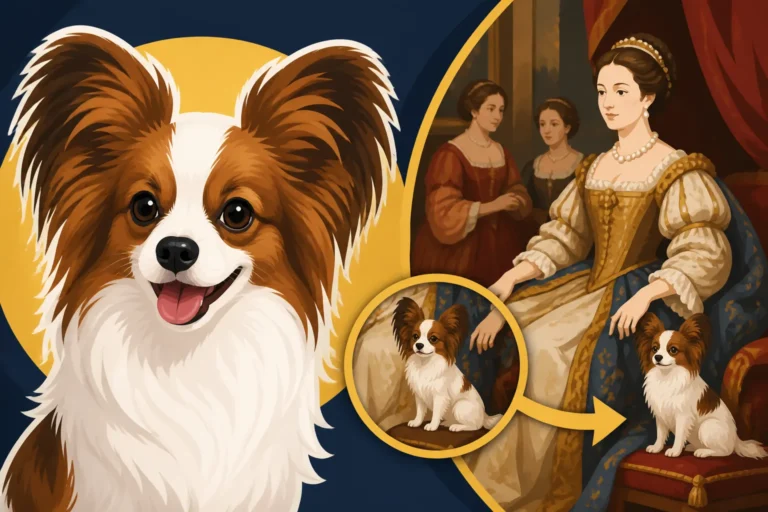
Before the Papillon as we know it fluttered into existence, its ancestors were known as "Dwarf Spaniels" or "Continental Toy Spaniels." These charming little dogs were absolute darlings of European nobility for centuries, gracing the laps of queens and appearing in countless masterpieces by famous painters. When we look at these historical depictions, it's clear that the prevailing ear type was universally dropped, soft, and hanging, much like a tiny Cavalier King Charles Spaniel.
Think about the portraits from the Renaissance and Baroque periods. You see these small, exquisite dogs nestled in the arms of ladies or at their feet. Painters like Titian, Rubens, and Fragonard often included these beloved companions, and in every single instance, their ears were undeniably down. These weren't just fluffy ears; they were deliberately depicted as a prominent feature, framing their sweet faces. It speaks to a certain aesthetic of the time, where softness and elegance were highly prized. The ears were long and flowing, often blending into the ruffs and elaborate clothing of their owners. This ancestral dog, with its moth-like ears, is essentially the forebear of both the modern Papillon and the Phalene, and it carried its ears low and proud for hundreds of years. The world didn't always have the "butterfly" dog we adore today. For a deeper dive into their early history, you might be interested in Titian Painted the Dog the Papillon Came From.
Courtly Companions and Artistic Renditions
The Dwarf Spaniels were highly valued for their companionship and their ability to bring joy to their human counterparts. They weren't working dogs in the traditional sense; their "job" was to be a friend, a confidant, and a living adornment. They were small enough to be carried everywhere, and their gentle nature made them perfect for life within bustling palaces and quiet boudoirs. This long association with aristocracy meant their traits were often carefully cultivated, though perhaps not always with the strict genetic understanding we have today.
These dogs were so beloved that they became symbols of wealth, status, and sometimes even affection in art. If you imagine a noblewoman from the 16th or 17th century, it's almost a given that a small, long-haired dog with soft, floppy ears would be at her side. These dogs were integral to their owners' lives, often receiving lavish care, including specially prepared meals and comfortable sleeping arrangements. Their drop ears were simply part of their established beauty, a hallmark of the breed type for generations before any notion of an erect-eared variant even existed.
The Original Name: Continental Toy Spaniel
The umbrella term for these dogs was generally "Continental Toy Spaniel." This highlights their spaniel lineage, suggesting a shared ancestry with hunting spaniels, but scaled down for a life of luxury. The term "toy" emphasizes their small size, which was crucial for their role as lapdogs. For centuries, there was no need to differentiate by ear type because there was essentially only one: the drop ear. It wasn't until a new ear variation emerged that people started to define and distinguish between the two.
It's a testament to the enduring appeal of these dogs that they remained popular through massive societal shifts, evolving alongside their human companions. Even without the modern Papillon’s signature ears, their intelligence, charm, and delicate beauty captivated hearts and ensured their place in history. The concept of a breed evolving so distinctly in such a visible way is quite rare, making the Papillon's ear journey all the more compelling.
The Emergence of the Erect Ear
So, when did this dramatic change happen? The erect ear, which gives the Papillon its French name "butterfly," is believed to have first appeared sometime in the late 17th or early 18th century. It wasn't an overnight transformation, but rather a gradual emergence, likely starting with a few individual dogs exhibiting the trait, which breeders then found appealing and began to selectively cultivate.
Imagine being a breeder in Paris or Brussels during that time, accustomed to generations of beautiful, drop-eared spaniels. Then, suddenly, a puppy in a litter has ears that stand up, large and fringed, resembling the wings of a butterfly. It must have been quite a sight! This striking new look captivated breeders and fanciers, and the erect ear quickly gained popularity. It offered a fresh, lively, and alert appearance that distinguished these dogs from their historical counterparts. This new ear type wasn't the result of a sudden, dramatic genetic mutation that spread like wildfire, but rather a naturally occurring variation that was then nurtured and promoted.
Theories Behind the Transformation
The exact reasons for the appearance of the erect ear are debated among breed historians. One popular theory is that it was simply a spontaneous genetic mutation, a natural variation that occurred within the existing population of Continental Toy Spaniels. Once this trait appeared, breeders, recognizing its unique beauty and charm, began to selectively breed dogs that exhibited the erect ear. Over generations, through careful selection, the erect ear became more common and more refined.
Another theory suggests the possibility of some outcrossing with other breeds that naturally had erect ears, perhaps small Spitz-type dogs, to introduce the desired trait. While this is less commonly cited for the Papillon specifically compared to some other breeds, it's a possibility for any breed experiencing a significant physical transformation. However, given the Papillon's long and well-documented aristocratic lineage, a spontaneous mutation followed by selective breeding is the more widely accepted explanation. Regardless of the precise genetic mechanism, what's clear is that human preference played a huge role. Once the erect ear appeared, it was embraced and actively propagated. This is often the case in dog breeding; a novel trait catches the eye, and dedicated breeders work to establish it. You can explore this further in Whether the Erect Ear Was a Deliberate Change and Whether Spitz Blood Made the Papillon's Ears Stand.
The Rise of the "Butterfly" Dog
The visual impact of these new, erect ears was undeniable. They truly resembled the spread wings of a butterfly, leading to the adoption of the French word "Papillon" (meaning butterfly) to describe these dogs. This was a clear departure from the "moth" (Phalene) description given to their drop-eared relatives. The two types coexisted, but the Papillon rapidly soared in popularity, becoming the dominant ear type for the breed.
This shift wasn't just about aesthetics; it also influenced how the dogs were perceived. The erect ears gave them a more spirited, attentive, and perhaps even a slightly mischievous look, perfectly complementing their intelligent and lively personalities. It's not hard to see why this striking new feature would appeal to a society always looking for novelty and elegance. For many, the erect ears became the definitive characteristic, symbolizing the very essence of the breed. This distinction, though seemingly minor, eventually led to the two ear types being recognized as variations within the same breed, something quite unique in the dog world.
Papillon vs. Phalene: Two Ear Types, One Breed
It's a common misconception that Papillons and Phalenes are entirely separate breeds. In reality, they are two varieties of the same breed, the Continental Toy Spaniel, distinguished only by their ear carriage. The Phalene represents the older, traditional drop-eared form, while the Papillon embodies the more recently developed erect-eared type. It's a beautiful example of how genetic variation and human preference can shape a breed's appearance over time.
What's truly remarkable is that a litter of puppies can contain both Papillons and Phalenes. This is because the gene for ear carriage is inherited, and both parents might carry the genes for both ear types, even if they themselves are Papillons. This genetic intertwining means that even today, a breeder focusing on Papillons might occasionally produce a Phalene puppy, and vice versa. It’s a constant reminder of their shared ancestry and the continuity of their lineage. This phenomenon is wonderfully detailed in Why a Papillon and a Phalene Are Born in the Same Litter.
Understanding the Nomenclature
The names themselves clearly denote the distinction. "Papillon," as we've discussed, means "butterfly" in French, referring to the large, erect ears that fan out like a butterfly's wings. "Phalene," also French, means "moth," aptly describing the soft, dropped ears that resemble a moth's folded wings at rest. These elegant names perfectly capture the visual difference and emphasize the artistic and graceful nature of both varieties.
It’s worth noting that in some countries, particularly in Europe, both Papillon and Phalene are judged together in the show ring, often with a slight preference given to the Papillon due to its historical surge in popularity. In other regions, like the United States, they are typically shown under the single breed name "Papillon," with the Phalene being the alternate ear type. Regardless of the specific showing rules, the fundamental truth remains: they are one breed, with a shared standard for everything except their ears. This unified identity underscores the close bond between these two beautiful variations. You can learn more about the specific meanings in What the Name Papillon Refers To and What the Name Phalene Refers To.
Ear Development in Puppies
For owners of Papillon puppies, the journey of their ears can be quite an interesting one. Papillon puppies are typically born with soft, floppy ears, much like their Phalene ancestors. It’s usually around 4 to 6 weeks of age, and sometimes even up to 4 months, that their ears begin to stand erect. This process can be gradual, with one ear popping up before the other, or they might go up and down during teething. It’s a period of adorable uncertainty for many new puppy owners!
Some puppies might even have ears that start to rise but never fully stand, remaining "half-prick" or partially erect. While these are still charming, they might not meet the strict standards for show dogs. For families adopting a puppy, this development is a fun part of watching their little companion grow. It's important not to try and force the ears to stand or to tape them unless specifically advised by an experienced breeder or vet, as this can cause damage. Most reputable breeders can give you a good idea of what to expect based on the puppy's lineage. If you’re curious about the process, When a Papillon Puppy's Ears Go Up offers more detailed information.
Here’s a quick comparison of the two ear types:
| Feature | Papillon (Erect Ear) | Phalene (Drop Ear) |
|---|---|---|
| Appearance | Large, erect, outward-flaring, heavily fringed, resembling butterfly wings | Large, dropped, hanging close to the head, heavily fringed, resembling a moth at rest |
| Origin | Emerged in the late 17th/early 18th century as a genetic variation | Original ear type of the Continental Toy Spaniel, prevalent for centuries |
| Name Meaning | "Butterfly" in French | "Moth" in French |
| Show Ring | Dominant ear type, widely recognized | Recognized as a variety, often less common |
| Genetic Basis | Result of selective breeding for an upright ear trait | The ancestral, naturally occurring ear type |
Living with Both Ear Types in the Modern World
Today, both Papillon and Phalene varieties are cherished companions, known for their intelligence, agility, and affectionate nature. While the erect-eared Papillon is far more common globally, the Phalene has a dedicated following of enthusiasts who appreciate its classic beauty and historical connection. Breeders work hard to maintain the health and temperament of both types, ensuring that the breed's incredible legacy continues.
Choosing between a Papillon and a Phalene often comes down to personal aesthetic preference, as their temperaments, activity levels, and care requirements are virtually identical. Both are intelligent, playful, and bond strongly with their families. Whether you prefer the alert, winged look or the soft, gentle drape, you're getting an amazing dog.
Care Considerations for Each Ear Type
From a practical standpoint, the care for both ear types is very similar. Both have those gorgeous, long fringes that require regular brushing to prevent mats. Owners often use specialized detangling sprays and brushes, readily available from retailers like Chewy, to keep the long hair looking its best. The primary difference might be that the open, erect ears of the Papillon tend to get a bit more airflow, potentially reducing the risk of ear infections compared to the Phalene's dropped ears, which can sometimes trap moisture.
Regardless of ear type, regular ear checks are crucial. Gently cleaning the outer ear and checking for any redness, odor, or excessive wax build-up is good practice. A quick wipe with a dog-specific ear cleaner on a cotton ball, found at Chewy or your local pet store, can help keep them healthy. Even though Papillon ears get more air, their size and feathering still make them a focal point that needs attention. Don’t forget about maintaining those beautiful fringes; a good quality slicker brush and a metal comb from Chewy can make all the difference in keeping them free of tangles.
The Standard and Breeder Focus
Breed standards for the Papillon and Phalene typically describe the ideal ear set, size, and amount of fringe. For Papillons, the ears should be large, set high on the head, and carried obliquely like a butterfly's wings. For Phalenes, they should be set slightly lower, still well-fringed, and carried flat against the head. Reputable breeders will pay close attention to these details, as well as overall health and temperament, ensuring they are producing dogs that meet the breed's long-established ideals.
Many breeders will focus on one ear type or the other, or they might embrace both, understanding that the genes for both exist within their lines. When looking for a puppy, it's wise to discuss ear type preferences with breeders and understand their approach. Some buyers explicitly seek a Phalene for its historical charm, while others are drawn to the iconic Papillon ears. Ultimately, both varieties represent the enduring beauty and spirited nature of this ancient and beloved toy breed.
Disclaimer
This article is for general informational purposes only and does not constitute professional advice. Laws, prices and regulations vary by location and change over time. Consult a qualified professional for guidance on your specific situation.