Whether a Phalene Can Produce a Papillon
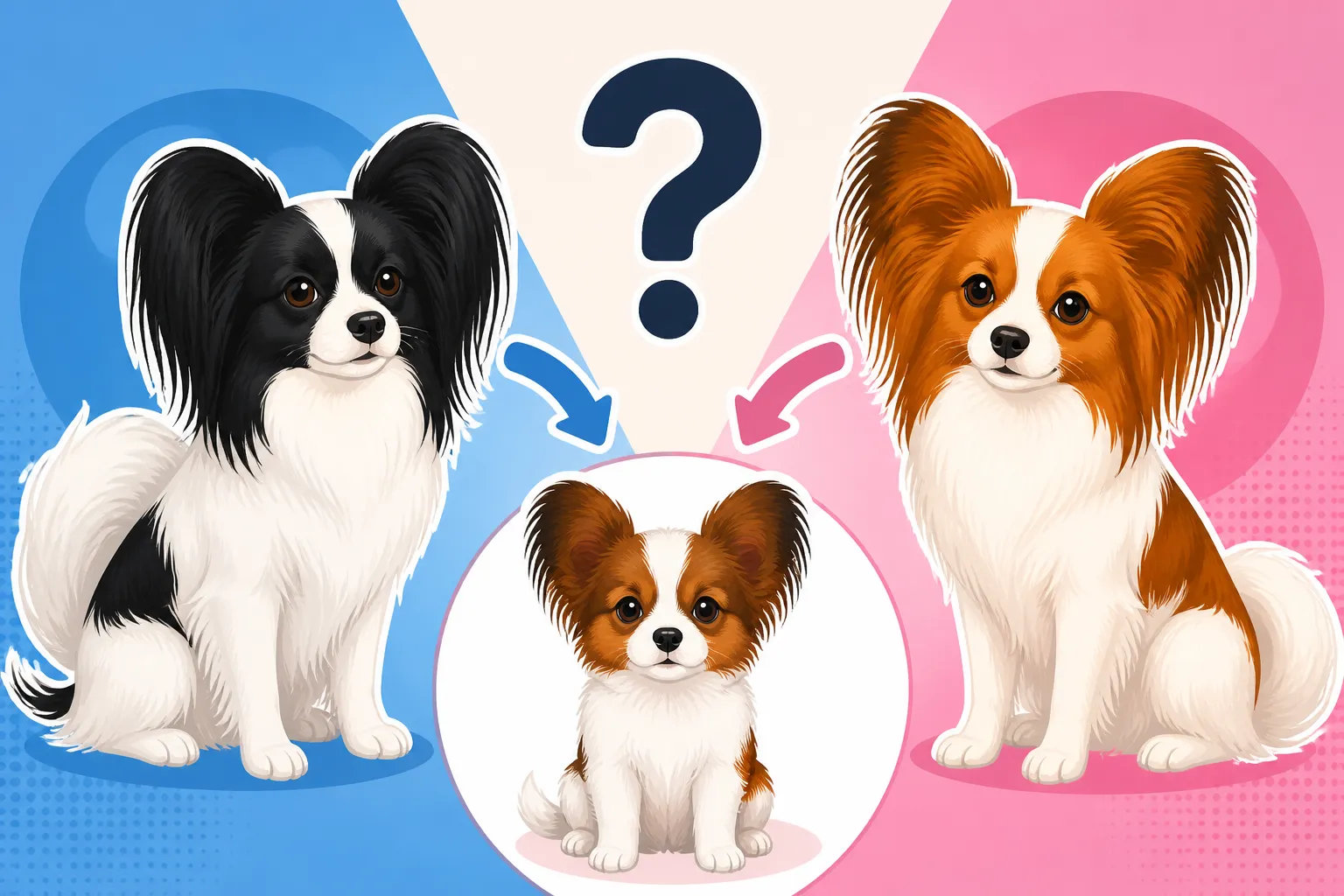
A Phalene can produce a Papillon puppy, because the two names describe different ear types within the same breed rather than two entirely separate breeds. But a litter is not guaranteed to include both types: the ears each puppy develops depend on inherited traits and individual growth, and the parents’ appearance alone cannot promise the outcome.
How a Phalene Can Have Papillon Puppies
Papillon and Phalene describe ear types
A Papillon is known for upright ears, while a Phalene has ears that hang down. The word Papillon means “butterfly” in French, a reference to the upright ears; Phalene means “moth,” evoking the dropped-ear outline. The names can make them sound like separate breeds, but they refer to varieties of the Continental Toy Spaniel, also commonly called the Papillon. For more on the name, see What the Name Phalene Refers To.
Because they belong to the same breed, a Phalene can be bred with a Papillon. A Phalene bred to another Phalene can also have puppies whose ears eventually stand up. In other words, a puppy’s ear type does not have to match the ear type of both parents. A hanging-eared parent can have upright-eared offspring.
It’s also possible for puppies in the same litter to develop different ear types. One pup may grow into a Phalene, another into a Papillon, and another may have ears that are still changing as it matures. This is why a breeder may not be able to confidently identify every puppy’s mature ear carriage when the litter is very young. The topic of mixed ear types in one litter is covered further in Why a Papillon and a Phalene Are Born in the Same Litter.
Why the parents’ ears do not settle the question
It’s tempting to look at a Phalene mother and assume all her puppies will have dropped ears. That’s understandable, especially if you’re choosing a puppy and have a particular look in mind. But ear type is not something you can reliably predict just by copying the visible appearance of one parent. Inherited traits matter, and puppy ears also change as the dog grows.
A breeder who knows the family may have a better sense of the ear types seen across several generations. Even then, family history offers clues rather than a guarantee. If you’re asking about a planned litter, ask what ear types have appeared in the parents’ relatives and previous litters, while keeping in mind that the answer can’t promise a particular result.
There is not a simple visual rule that makes a Phalene unable to produce Papillon puppies. Nor should anyone promise that a particular pairing will produce a specific number of upright- or dropped-eared pups. For a closer look at what can be inherited within a line, see Whether Ear Type Runs in Papillon Lines.
When a Puppy’s Ear Type Becomes Clear
Ears can change while a Papillon puppy grows
A puppy’s ears may not look like its adult ears right away. Some Papillon puppies’ ears begin to lift as they develop, while others retain the Phalene’s dropped-ear carriage. The timing varies from puppy to puppy, so a very young pup’s ears may not tell you the whole story. When a Papillon Puppy's Ears Go Up explains more about this developmental stage.
Growth can be a confusing time for owners because the ears may appear to change shape or position. You might see one ear standing while the other still droops, or notice that the ears look different from one week to the next. A temporary uneven look does not automatically mean something is wrong or that the puppy will keep that exact appearance as an adult.
For that reason, be cautious if someone claims to know a young puppy’s final ear type with absolute certainty. A breeder may have experience judging how ears are developing, but development is not always perfectly predictable. If the distinction matters to you, ask when the breeder expects to have a more confident assessment and whether the answer is an educated estimate or a firm breed-standard determination.
Ear carriage is not the same as ear health
A dropped ear is a normal Phalene feature, not a sign that a puppy has unhealthy ears. Similarly, upright ears are a breed characteristic of the Papillon, not proof that a puppy is healthier or better suited to life as a companion. Ear type describes appearance; it does not, by itself, tell you about a dog’s temperament, intelligence, or overall health.
If a puppy’s ears seem irritated, painful, unusually dirty, or accompanied by head shaking, that is a separate issue from whether the ears stand or hang. Ask a veterinarian about those symptoms rather than assuming they are part of normal ear development. Routine care should be gentle: avoid inserting cotton swabs or applying products inside the ear unless a veterinary professional has advised you to do so.
Some owners hear suggestions to tape or otherwise manipulate a puppy’s ears to change how they sit. Don’t try to alter a puppy’s ears based on a casual tip from a forum or social media post. Ask the breeder and a veterinarian first, and check the relevant registry’s rules if you plan to show the dog. For broader information about how ear carriage may develop, see Whether a Papillon's Ears Can Change After a Year.
What to Ask a Breeder Before Choosing a Puppy
Ask about the litter and its relatives
If you hope for a Papillon with upright ears, tell the breeder that preference clearly, but be open about the uncertainty. Ask whether Papillons and Phalenes have appeared in the parents’ families, whether the breeder has raised puppies from the same pairing before, and when the breeder expects to assess the pups’ ears. These questions are more useful than asking for a guarantee that a particular puppy will have a particular ear type.
Also ask how the breeder describes the puppies in their records and what information is available about their parents. A responsible breeder should be willing to explain the difference between an early impression and a more settled assessment. If the response is simply “all the puppies will look like their mother,” that may be a sign the answer is based on appearance alone rather than a careful understanding of the litter.
The names can also create confusion around registration and showing. The classification of Papillon and Phalene varieties can differ depending on the registry and the setting. If showing matters to you, check the applicable rules rather than assuming that every organization treats the varieties identically. You can read more in Whether a Phalene Is a Separate Breed and Whether a Phalene Can Be Shown Against a Papillon.
Compare the possibilities without treating one as a lesser dog
The practical differences are mostly about appearance and coat presentation around the ears. A Phalene’s ear fringe may hang differently from a Papillon’s, but both types need regular, gentle grooming. If you’re curious about those differences, see Whether a Phalene's Ear Fringe Differs. Neither ear type makes a dog a “failed” version of the other.
| Puppy or adult appearance | What it means | What you can reasonably expect |
|---|---|---|
| Upright ears | Papillon ear type | The ears stand rather than hang |
| Dropped ears | Phalene ear type | The ears hang down naturally |
| One ear up and one down | Ears may still be developing, or may remain uneven | Wait for development and ask the breeder or veterinarian if concerned |
| Different ear types within one litter | Puppies can inherit and develop traits differently | A litter does not need to have one uniform ear type |
It’s worth remembering that a puppy’s ear type is only one small part of choosing a dog. Ask about temperament, health screening, early socialization, and how the breeder supports new owners. A puppy with the ear shape you prefer still needs to be a good match for your home, schedule, and expectations. If you’re comparing Papillon and Phalene puppies, What a Papillon Breeder Should Have Tested can help you think beyond appearance.
Make the choice around the dog, not just the ears
If the puppy you meet has dropped ears, that does not mean you have to rule it out. Phalenes share the same lively, attentive breed background as Papillons. Likewise, if your puppy’s ears rise as it matures, that change does not alter the bond you’re building or the daily care the dog needs.
A sensible approach is to choose a reputable breeder, ask honest questions, and accept that the final ear carriage may take time to become clear. If a specific show classification or appearance is important, discuss it before placing a deposit and make sure you understand what the breeder can and cannot predict. For many families, the best decision is the puppy whose health, temperament, and fit feel right—not the one whose ears happen to match a photo.
Disclaimer
This article is for general informational purposes only and does not constitute professional advice. Laws, prices and regulations vary by location and change over time. Consult a qualified professional for guidance on your specific situation.