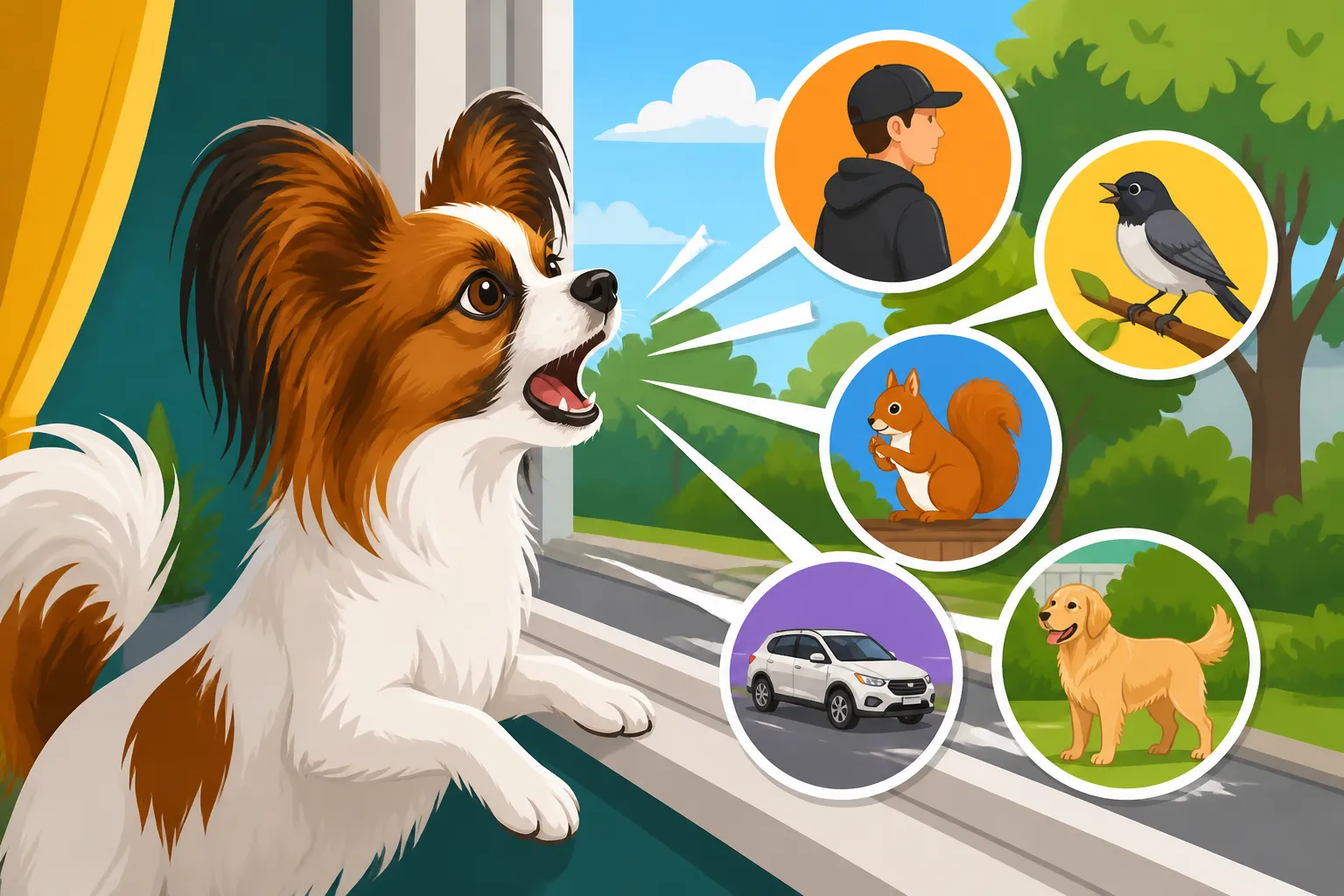
What a Papillon Barks At Outside
Living with a Papillon means embracing their big personality in a tiny package, but sometimes that huge personality comes with a loud opinion, especially when they're out in the yard. It's truly baffling and often frustrating when your usually calm companion transforms into a barking sentinel the moment they step outside or even just glance through the window. This guide is dedicated to dissecting the specific triggers that make your adorable butterfly dog bark at the great outdoors, helping you understand their motivations, and offering actionable strategies to manage this common, yet often exasperating, behavior.
The Papillon's Innate Alertness: More Than Just a Cute Face
Before we can even begin to tackle the "what" of their outdoor barking, we need to understand the "why." Papillons, despite their delicate appearance and toy breed classification, possess a deeply ingrained instinct to be aware of their surroundings. This isn't just random noise; it's often a complex communication rooted in their history and their unique perception of the world.
Their History as Pint-Sized Watchdogs
It might sound amusing to think of a Papillon as a watchdog, but centuries ago, long before they were gracing the laps of royalty, their ancestors often served this very purpose. In grand European courts and bustling households, these small spaniels were more than just pretty faces; they were often the first to notice an unfamiliar sound or a new face approaching. Their keen senses and vocal nature made them excellent, albeit tiny, alarm systems. They weren't expected to fight off intruders, but to alert their human companions to anything out of the ordinary. This historical role means that much of their "bark first, ask questions later" approach to the outdoor world is simply them doing what their ancestors did: standing guard.
Keen Senses and High Environmental Awareness
Papillons are blessed with remarkably sharp senses, particularly their hearing and eyesight. Imagine processing every rustle of leaves, every distant siren, every fleeting shadow, or every neighborhood cat that dares to cross the fence line with incredible clarity. What might be a non-event to us is a high-definition sensory experience for your Papillon. They pick up on subtle changes in their environment that larger, less agile breeds might overlook. This heightened awareness means they are constantly processing information from their surroundings, and when something registers as novel, out of place, or potentially threatening, their natural response is to vocalize. It’s their way of saying, "Hey, did you see/hear that?!" It's part of why they are so intelligent and attentive, but it can also lead to a lot of barking.
A "Big Dog" Mentality in a Small Package
One of the most endearing, yet sometimes challenging, traits of the Papillon is their absolute conviction that they are much larger than they actually are. They don't see themselves as fragile toys; they see themselves as competent, brave, and fully capable guardians of their home and their people. This "big dog" mentality means they approach potential threats or perceived anomalies with the same courage and vocal conviction you might expect from a much larger breed. A Papillon Has No Idea It Is Small. They aren't trying to be annoying; they're genuinely trying to protect you from that leaf blowing across the yard or that delivery driver who dares to approach your door. Understanding this inherent confidence helps us frame their barking not as naughtiness, but as a misguided (though well-intentioned) effort to do their job.
Common Outdoor Barking Triggers for Papillons
So, what exactly sets off these tiny, feathered alarm bells? From the mundane to the genuinely startling, Papillons have a wide range of outdoor triggers that can send them into a barking frenzy. Identifying these specific triggers is the first step toward managing the behavior.
Sights and Sounds: The Neighborhood Watch
Your Papillon is essentially running a 24/7 neighborhood watch from your yard or window. They are acutely aware of anything that moves or makes a noise.
- Moving Objects and Animals: This is perhaps the most common category. Think squirrels scampering up trees, birds landing on feeders, neighborhood cats slinking along fences, or even just leaves tumbling across the lawn on a windy day. To your Papillon, these aren't just natural occurrences; they are potential invaders or exciting prey. The sudden appearance of a bicycle, a skateboarder, or even a child running past can also trigger an alert.
- Vehicles: Mail trucks, delivery vans, garbage trucks, and even unfamiliar cars parking down the street can be major culprits. The sound of their engines, the specific hum of tires on pavement, or the sight of a large vehicle stopping where it usually doesn't, can all be perceived as a threat. They might even develop specific barks for specific vehicles once they learn the routine, like the mail truck's daily arrival.
- Unfamiliar Noises: Beyond vehicles, any unusual sound can get a Papillon vocalizing. This could be distant construction work, a neighbor's lawnmower, someone using a leaf blower, fireworks from afar, or even just the sound of a gate latching. Their sensitive hearing means these sounds are much more prominent to them than they are to us, often leading to a disproportionate reaction.
People and Other Dogs Passing By
This is a classic. Many Papillons feel it's their solemn duty to announce anyone and everyone who dares to walk past their domain.
- Pedestrians and Joggers: A person simply walking on the sidewalk, minding their own business, can be viewed as an immediate threat or an interesting curiosity. The closer they get to your property line, the more intense the barking often becomes. It’s their way of establishing boundaries and saying, "This is my territory!"
- Dogs on Leashes: This is a particularly potent trigger for many Papillons. Seeing another dog, especially one they don't know, can elicit a range of barks – from excited "I want to play!" yips to territorial "Stay away!" warnings. The frustrated greeting, where they want to interact but can't, often manifests as intense barking and lunging. This can be embarrassing and stressful for both you and your dog.
- Delivery Personnel and Strangers at the Door: This goes back to their watchdog roots. Anyone approaching the house directly, especially if they make eye contact or ring the doorbell, will almost certainly be met with a volley of barks. They view these individuals as direct threats to their home and their cherished humans.
Environmental Changes and Unknowns
Papillons thrive on routine and familiarity. Anything that deviates from their established norm can become a source of suspicion and, you guessed it, barking.
- New Decorations or Objects: Imagine your neighbor putting up a new garden gnome, a holiday decoration, or even just moving a trash can to a different spot. To your Papillon, this isn't just a minor change; it's an anomaly that must be investigated and announced. These "new" objects can seem threatening until they become part of the accepted landscape.
- Changes in Light or Shadow: Even something as subtle as a new pattern of shadows cast by a tree branch or a sudden glint of light from a reflective surface can catch their eye and trigger an alert. Their visual acuity makes them notice these nuances, and their vocal nature makes them comment on them.
- Unusual Weather: High winds, heavy rain, or a sudden downpour can create a cacophony of new sounds and sights that can be unsettling for a sensitive Papillon, leading to anxious or warning barks.
Understanding What They're Actually Communicating
It's easy to dismiss all barking as just "noise," but if you listen closely, you might start to discern different intentions behind your Papillon's vocalizations. Each bark type often has a distinct sound and body language associated with it, offering clues to their inner world. What a Papillon Barks At Outside could be a complex mix of these signals.
The "Intruder Alert!" Bark
This is often the sharpest, most insistent, and repetitive bark. It's usually accompanied by a stiff body posture, ears perked forward (if they're not already up!), and sometimes a low growl or a "hackle" raised along their back. Their tail might be held stiffly, either straight out or tucked slightly. They are genuinely trying to warn you of a perceived threat.
- Scenario: A delivery driver approaches the front door, or an unfamiliar dog enters their visual range. Your Papillon will often rush to the closest window or fence, barking rapidly and intensely, staring intently at the trigger. They might look back at you expectantly, as if to say, "Did you see that?! We need to address this!" This bark is born from their territorial instincts and their desire to protect their family.
The "Hey, Look at Me!" Bark
This bark is typically less aggressive and often has a slightly higher pitch, sometimes with a whiny or demanding tone. It's an attention-seeking behavior, and they often direct it towards you rather than the external trigger itself. Their body language might be looser, with more tail wags, or they might even try to nudge you or paw at you while barking.
- Scenario: Your Papillon is out in the yard alone, sees a bird, barks once or twice, then turns to look at you through the window. Or maybe they are inside, bored, and see a squirrel and let out a few barks, then look to you for interaction. They might even bring you a toy. This isn't necessarily about danger; it's about saying, "I'm here, I saw something, now let's play!" or "I'm bored, let's do something fun!"
The "I'm Bored/Anxious" Bark
This type of barking can be more drawn out, sometimes monotonous, or even have a mournful quality. It often lacks the sharp urgency of the "intruder alert" and the demanding tone of the "look at me" bark. It's frequently seen when a Papillon is left alone for too long outside or if they're experiencing separation anxiety indoors. Their body language might show signs of stress, such as pacing, panting, or excessively grooming themselves.
- Scenario: You've left your Papillon in the yard while you run errands, or they're simply not getting enough mental or physical stimulation. They might bark at anything and everything, or sometimes at seemingly nothing at all. This repetitive barking can escalate into a nuisance for neighbors. If your Papillon is barking due to being left alone for extended periods, it could be a sign of deeper issues like Signs a Papillon Has Separation Anxiety or simply unmet needs for interaction and activity. How Long a Papillon Copes Alone is not as long as some owners might think.
Managing and Reducing Outdoor Barking
Once you understand why your Papillon barks and what they're barking at, you can start to implement strategies to manage this behavior. Remember, patience and consistency are your best friends here.
Environmental Management: Changing the View
Sometimes, the easiest solution is to simply remove or minimize the triggers that cause barking. This is often the quickest way to reduce immediate barking without extensive training.
- Visual Barriers: If your Papillon is constantly barking at passersby or dogs on the sidewalk, consider blocking their view. For windows, you can use frosted window film, curtains, or blinds. For fences, install privacy screens or strategically plant dense shrubs. Even a lattice with climbing plants can make a huge difference. You can find effective privacy screens for fences and windows on popular online marketplaces like Amazon, offering a range of styles to suit your home.
- Supervised Outdoor Time: Instead of letting your Papillon roam freely and bark at will in the yard, supervise their outdoor time. Go out with them, and if you see a trigger approaching, gently redirect their attention before they have a chance to bark. Praise and reward them for staying quiet. This teaches them that you are also aware of the environment and they don't have to be the sole alarm system.
- Create a "Safe Zone": For indoor barking at windows, create a designated "safe zone" away from the windows where they can relax. Offer them a comfy bed, a puzzle toy, or a long-lasting chew in this area. This encourages them to settle in a place where they aren't constantly exposed to outdoor triggers.
Training for a "Quiet" Cue
Teaching a specific "quiet" cue can be incredibly effective, but it requires consistency and patience. This method works by first allowing a little barking, then cueing them to stop.
- The "Speak" and "Quiet" Method: Start by teaching your Papillon to "speak" on command. Hold a treat, wait for them to bark, say "speak," and reward them. Once they understand "speak," you can teach "quiet." When they bark (naturally or on cue), let them bark a few times, then hold a high-value treat near their nose. The moment they stop barking to sniff the treat, say "quiet" and reward them. Repeat this many times, gradually increasing the duration they must be quiet before receiving the treat. This teaches them control over their barking.
- Consistency is Key: Everyone in the household needs to use the same commands and methods. If one person rewards barking and another tries to stop it, your Papillon will get confused. Practice in short, frequent sessions rather than long, infrequent ones. Resources like BAXTER & Bella offer excellent online courses that can guide you through teaching cues like "quiet" with positive reinforcement, making the process much smoother for both you and your Papillon. How to Teach a Papillon a Quiet Cue involves a gradual approach and lots of rewards.
Enrichment and Exercise: Preventing Boredom Barks
A tired Papillon is often a quiet Papillon. Ensuring your dog gets enough mental and physical stimulation can significantly reduce barking born from boredom or excess energy.
- Adequate Physical Exercise: Even small dogs like Papillons need regular exercise. Daily walks, even short ones, can help them expel energy and satisfy their natural curiosity about the world in a controlled way. Engaging in vigorous play sessions in the yard can also help. How Much Exercise a Papillon Needs might surprise some owners, as these little dogs have boundless energy.
- Mental Stimulation: Papillons are highly intelligent and need their brains challenged. Provide puzzle toys that dispense treats, rotate their toys to keep them novel, or engage them in short, fun training sessions throughout the day. Teaching new tricks or practicing obedience commands can be incredibly satisfying for them and burn mental energy. What Mental Work a Papillon Needs can include nose work games, advanced trick training, or even simple hide-and-seek.
- Structured Playtime: Instead of just letting them wander outside, engage them in interactive games like fetch, tug-of-war, or a flirt pole. This focuses their energy on you and a positive activity, rather than on monitoring the neighborhood.
- Preventing Destructive Boredom: If your Papillon is left alone for long periods without stimulation, they might resort to barking out of sheer boredom or frustration. This can sometimes lead to other unwanted behaviors. What a Bored Papillon Destroys can range from household items to your peace and quiet.
Desensitization and Counter-Conditioning
For Papillons who react intensely to specific triggers, desensitization and counter-conditioning can be powerful tools. This involves gradually exposing them to the trigger at a low intensity while creating a positive association with it.
- Identify the Distance: First, figure out at what distance your Papillon notices a trigger (e.g., another dog) but doesn't react with barking. This is their "threshold."
- Positive Association: Start by exposing them to the trigger at that safe distance. The moment the trigger appears, give them a high-value treat (something they love, like cooked chicken or cheese). The key is to give the treat before they start barking. The goal is for them to associate the trigger with something wonderful happening.
- Gradual Approach: Over many sessions, slowly decrease the distance to the trigger, always ensuring your Papillon remains calm and responsive to the treat. If they start to bark, you've moved too close too fast. Go back a step.
- Patience and Persistence: This process takes time, sometimes weeks or months, but it can profoundly change your Papillon's emotional response to their triggers. Instead of seeing the mail carrier as an enemy, they might start to think, "Oh, here comes the treat-giver!"
- Real-world Application: If dogs walking by are a major issue, practice this from inside your house, then your porch, then your yard, always maintaining distance and rewarding calmness. You might want to invest in a good treat pouch (readily available on Amazon) to make this process easier and more efficient during training sessions. Whether a Papillon Works for Toys or food as rewards is important to know – most are highly food-motivated!
Here's a quick summary of common outdoor barking triggers and effective management strategies:
| Trigger Type | Examples | Papillon's Motivation | Management Strategy |
|---|---|---|---|
| Visual Stimuli | Mail carrier, squirrel, passing person, vehicles | Alert, territorial, prey drive | Visual barriers, supervised outdoor time, "quiet" cue, desensitization |
| Auditory Stimuli | Distant sirens, car doors, neighborhood noise | Alert, curious, worried | White noise (indoors), supervised outdoor time, "quiet" cue, desensitization |
| Other Dogs/Animals | Dogs walking by, neighborhood cats | Territorial, excitement, fear | Counter-conditioning, controlled greetings, distraction, privacy screens |
| Boredom/Frustration | Lack of stimulation, left alone too long outside | Seeking attention, stress | Enrichment toys, increased exercise, mental games, human interaction |
| Anxiety/Fear | Strange objects, loud noises, new situations | Self-preservation, insecurity | Desensitization, positive association, creating a safe indoor space |
Remember, your Papillon isn't barking to be disobedient; they're communicating. By understanding their motivations and implementing consistent, positive training strategies, you can transform your outdoor barker into a more composed and content companion.
Disclaimer
This article is for general informational purposes only and does not constitute professional advice. Laws, prices and regulations vary by location and change over time. Consult a qualified professional for guidance on your specific situation.