Getting Weight Off a Papillon
It’s incredibly easy for our beloved Papillons to pack on a few extra ounces, often without us even realizing it until it becomes a real concern. That little bit of extra padding, while seemingly cute, can silently put a significant strain on their tiny frames, leading to a host of health issues. This guide is here to walk you through how to identify if your butterfly-eared companion needs to trim down, and provide practical, empathetic steps to help them get back to a healthy weight, ensuring they can continue to live their long, joyful lives with us.
Recognizing When Your Papillon Needs to Shed Pounds
Sometimes, it’s hard to tell if your Papillon is a healthy weight, especially with their beautiful, flowing coats. Those long fringes can be deceptive, hiding a multitude of sins beneath their silky exterior. You might think they're just fluffy, but it’s crucial to know the signs of excess weight.
The Rib and Waistline Test
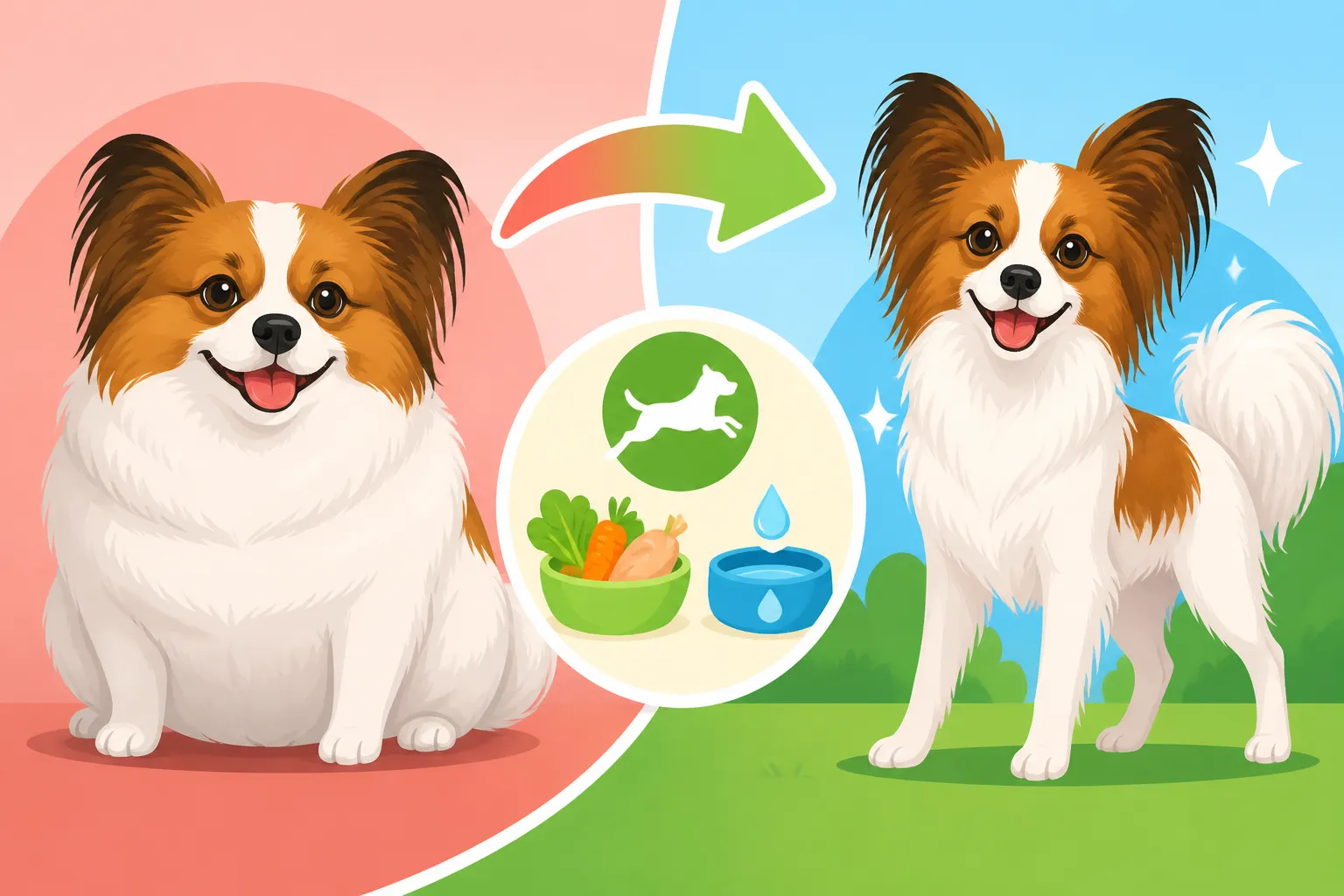
The most fundamental way to assess your Papillon’s weight is through a hands-on examination, often referred to as the "rib test" or "body condition score." You should be able to easily feel your Papillon’s ribs when you run your hands along their sides without having to press too hard. Think of it like feeling the knuckles on your hand – you can feel them distinctively without seeing them pop out. If you have to really search or press deeply to find those ribs, it's a strong indicator that there's a layer of fat in the way, and your little one is likely carrying too much weight.
Beyond the ribs, stand above your Papillon and look down. You should observe a clear, distinct waistline tucked in behind their ribs, almost like an hourglass figure. When you view them from the side, their abdomen should also tuck up slightly, rather than hanging low or appearing straight across from chest to hind legs. If your Papillon looks more like a little furry sausage or a fluffy barrel, with no discernible waist, it's time to consider a weight management plan. Many owners mistakenly believe that because Papillons are small, any extra weight is negligible, but even a few extra ounces can significantly impact their joints and overall health. For instance, Why an Overweight Papillon Strains Its Knees goes into detail about the specific risks to their delicate patellas.
Beyond the Scale: Behavioral Clues of Extra Weight
While the physical examination is key, your Papillon's behavior can also offer tell-tale signs that they're carrying too much weight. Are they less enthusiastic about their daily walks than they used to be? Do they tire out more quickly during playtime? Perhaps they struggle to jump onto their favorite spot on the sofa or need help getting up steps, even small ones. These subtle changes in energy levels and mobility can be direct consequences of carrying extra pounds, making everyday activities more of a chore.
You might also notice a change in their breathing, especially after light exertion. Heavy panting after a short walk or a brief play session could signal that their cardiovascular system is working harder than it should be. Another less obvious sign can be increased lethargy or disinterest in interaction, sometimes misinterpreted as just "getting older." However, a healthy Papillon, even a senior one, should still maintain a zest for life. If your once-lively companion seems subdued or reluctant to move, it's worth considering their weight as a contributing factor. Remember, a healthy weight is crucial for their long-term well-being and helps prevent complications as they age, as discussed in What Changes in an Aging Papillon's Care.
Crafting a Diet Plan for Papillon Weight Loss
Once you've determined your Papillon needs to shed a few pounds, the first and most impactful step is almost always a dietary adjustment. This isn't about starvation, but about smart, consistent nutrition.
Calorie Control: What and How Much to Feed
The cornerstone of any weight loss plan is managing caloric intake. For a small breed like a Papillon, every calorie counts, and even a slight overestimation can lead to weight gain. First, consult with your veterinarian to determine an ideal target weight for your specific dog. Then, based on that target, your vet can help calculate a daily caloric intake for weight loss. It will likely be slightly less than what’s recommended for their current weight. It’s a delicate balance, as you don't want to cut calories too drastically, which can lead to nutritional deficiencies or rapid, unhealthy weight loss.
Often, commercial kibbles designed for "weight management" or "senior" dogs can be a good starting point, as they are typically lower in calories and higher in fiber to help your dog feel full. If you’re buying kibble, read the labels carefully for calorie density. Measuring food accurately is paramount. Don't just eyeball it; invest in a proper kitchen scale or an accurate measuring cup specifically for pet food. A quarter-cup can look very different depending on the scoop you use. Divide their daily allowance into two or three smaller meals to keep their metabolism steady and prevent them from feeling too hungry. For example, if your Papillon normally eats How Much an Adult Papillon Eats, you might need to slightly reduce that while maintaining nutritional completeness.
The Role of Treats and Human Food
This is often the trickiest part for many owners, myself included! We love to spoil our little ones, and treats are a big part of that. However, even tiny treats add up quickly for a small dog. When your Papillon gives you those big, pleading eyes, it’s hard to resist, but consistency is key. During a weight loss journey, treats should be drastically reduced and carefully chosen. Opt for very low-calorie options like small pieces of plain cooked carrot, green beans, or even a tiny bit of air-popped popcorn (without butter or salt). Many pet stores, and even online retailers like Chewy and Amazon, offer a variety of specific low-calorie training treats that are often crunchy and satisfying.
Avoid human table scraps entirely. That tiny bite of cheese, a sliver of deli meat, or a crust from your toast might seem insignificant, but these are often packed with calories, fats, and sodium that are detrimental to your Papillon’s health and weight loss efforts. If you must give a "people food" treat, stick to the aforementioned veggies. Remember, affection, praise, and a short game of fetch can be far more rewarding to your Papillon than any treat, and they come with zero calories.
Considering Specialized Diets
Sometimes, simply cutting back on a regular diet isn't enough, or your Papillon might have specific dietary needs. In these cases, a specialized diet might be recommended by your vet. There are prescription weight-loss diets available that are formulated to be very low in calories but still provide all the necessary nutrients, often with increased fiber to promote satiety. These typically require a veterinarian's authorization.
Alternatively, some owners explore fresh food diets. Companies like Ollie offer pre-portioned, human-grade fresh food that can be customized to your dog's caloric needs. This can be a great option for precise portion control and often uses whole, unprocessed ingredients. When transitioning to any new diet, do it slowly over several days to avoid upsetting your Papillon’s sensitive stomach. Gradually mix increasing amounts of the new food with decreasing amounts of the old. Always monitor your dog’s weight and overall health closely during this process.
Boosting Activity Levels Safely
Diet is usually the biggest piece of the weight loss puzzle, but increasing your Papillon’s activity levels plays a vital supporting role. It helps burn calories, builds lean muscle, and boosts their overall well-being and mood.
Tailoring Exercise to a Small Breed
Papillons might be small, but they are energetic and intelligent dogs that thrive on activity. Daily walks are non-negotiable. Aim for at least two walks a day, ideally 15-20 minutes each, depending on your dog's current fitness level. Start slowly if your Papillon is very out of shape, gradually increasing the duration and pace over several weeks. A brisk pace that gets their heart rate up without causing them to struggle is ideal. Remember that Papillons love to explore, so varying your walking routes can keep things interesting for them.
Beyond structured walks, incorporate playful sessions throughout the day. Fetch with a lightweight toy, tug-of-war (gently, given their small size), or chasing bubbles are all excellent ways to get them moving indoors or in a secure yard. Remember their small stature and delicate bones; avoid high-impact activities or jumps, especially if they have a history of patellar luxation. Whether a Papillon Should Be Stopped From Jumping Off Furniture is a great resource on protecting their joints. For many Papillons, short, frequent bursts of activity are more effective and safer than one long, intense session.
Incorporating Mental Stimulation
Physical exercise is important, but don't underestimate the power of mental stimulation in burning energy and aiding weight loss. A mentally tired dog is often just as satisfied as a physically tired one. Papillons are incredibly smart; they are, after all, ranked as one of the most intelligent dog breeds. Engage their brains with puzzle toys that dispense small amounts of their measured kibble, making them work for their food. This slows down their eating and adds mental effort. Brands widely available on Amazon or Chewy offer a great variety of such toys.
Teaching new tricks, practicing obedience commands, or even simple scent games (hiding a treat or toy for them to find) can be fantastic ways to engage their minds. These activities not only burn mental energy but also strengthen your bond with your Papillon. Just be mindful of the caloric content of any treats used during training and factor them into their daily allowance. A Papillon that's regularly engaged both physically and mentally is less likely to be bored and seek comfort in overeating. You can find more ideas on engaging their minds in What Mental Work a Papillon Needs.
Common Roadblocks and Long-Term Success
Helping your Papillon lose weight isn't always a straight line; there will be challenges, but with persistence and the right approach, you can achieve lasting success.
Dealing with Picky Eaters and Begging
Papillons can be notoriously picky eaters, which can ironically lead to weight issues if owners constantly offer "better" options when their dog turns up their nose at regular food. This creates a cycle where the dog learns to hold out for tastier, often higher-calorie, alternatives. To combat this, establish a feeding schedule and stick to it. Put their food down for 15-20 minutes, and if they don't eat it, pick it up until the next mealtime. Don't offer alternatives or extra treats in between. A healthy dog will not starve itself, and this teaches them to eat what's offered when it's offered.
Begging is another common challenge. Those adorable, pleading eyes can melt anyone's resolve! The key here is consistency from every member of the household. No human food scraps, no extra treats outside of their measured allowance. If begging becomes persistent, redirect their attention with a brief play session or a command they know (like "sit" or "down"), rewarding them with praise rather than food. Consistency is difficult, but it's the only way to break the begging habit and ensure your Papillon understands that food comes at specific times from their bowl, not from your plate. It's truly a test of willpower, but one you can win for your dog's health!
Monitoring Progress and Adjusting the Plan
Weight loss is a journey, not a sprint. Be patient and celebrate small victories. Weigh your Papillon regularly, perhaps once a week, at the same time of day, using a small, accurate pet scale. Many vets offer their scales for public use if you don't have one at home. Record their weight to track progress over time. Don't be discouraged by slight fluctuations; the overall trend is what matters. You should aim for a slow, steady loss of about 1-2% of their body weight per week. Rapid weight loss can be dangerous.
In addition to weight, continue to perform the body condition score – feeling their ribs and checking their waistline. Look for improvements in their energy levels and mobility. If your Papillon isn't losing weight after a few weeks, or if they seem too hungry or lethargic, it's time to consult your veterinarian again. They can help adjust the caloric intake, suggest different exercise routines, or investigate if there's an underlying medical condition hindering weight loss, such as hypothyroidism or Cushing's disease, though these are less common in Papillons. Open and honest communication with your vet is the best way to ensure your Papillon safely reaches and maintains their ideal weight, setting them up for a long and happy life.
| Aspect | Before Weight Loss Plan | During Weight Loss Plan | After Achieving Ideal Weight |
|---|---|---|---|
| Ribs | Hard to feel, covered by fat | More easily felt with light pressure | Easily felt, like knuckles on your hand |
| Waistline | Absent or indistinct, body appears barrel-shaped | Developing, slight tuck behind ribs | Clearly visible hourglass shape from above |
| Abdomen | Flat or sagging | Slight tuck-up | Noticeable tuck-up from the side |
| Energy | Lower, tires easily, reluctance to play | Improving, more active | Lively, enthusiastic for play and walks |
| Breathing | Heavy panting after light exertion | Normalizing | Normal for activity level |
| Diet | Overfed, frequent high-calorie treats, table scraps | Calorie-controlled, low-calorie treats, no human food | Maintenance calories, healthy treats in moderation |
| Exercise | Infrequent walks, minimal play | Daily brisk walks, regular play, mental games | Consistent daily exercise, continued mental enrichment |
| Monitoring | Irregular or none | Weekly weigh-ins, body condition checks, vet consultations | Periodic weigh-ins, continued body condition monitoring, annual vet checks |
Disclaimer
This article is for general informational purposes only and does not constitute professional advice. Laws, prices and regulations vary by location and change over time. Consult a qualified professional for guidance on your specific situation.