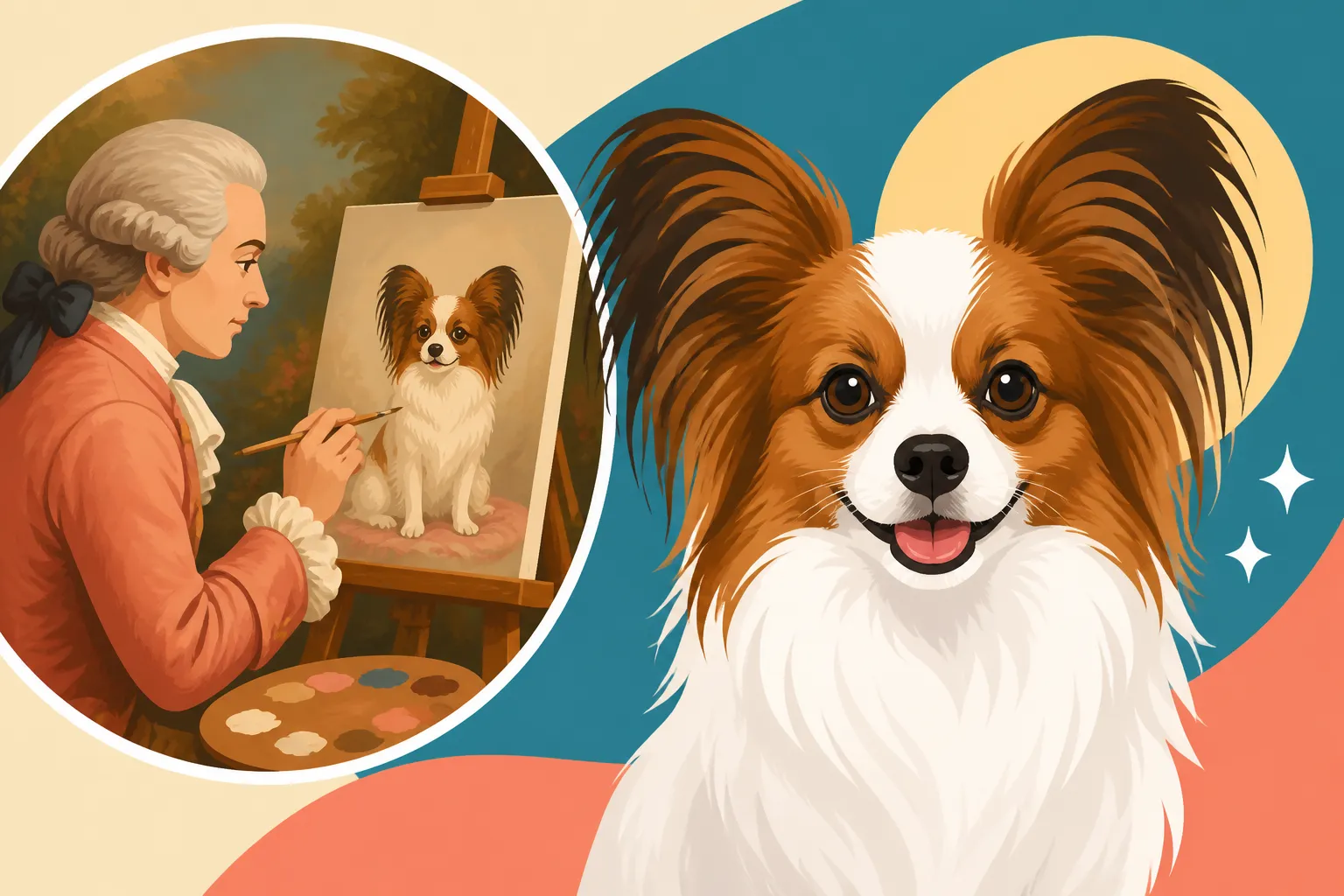
Whether Fragonard Painted a Dwarf Spaniel
It's natural to wonder about the historical footprint of our beloved Papillons, especially when tracing their lineage back through centuries of European art. Many of us see their distinctive "butterfly" ears and think, "Surely such a charming creature must have been painted by the masters!" And indeed, the ancestors of our modern Papillons, often referred to as Dwarf Spaniels or Continental Toy Spaniels, were certainly darlings of the European aristocracy and appear in numerous artworks. But when it comes to specific artists like the celebrated Rococo painter Jean-Honoré Fragonard, pinpointing a definitive "Dwarf Spaniel" in his works can be a delightful, albeit sometimes elusive, quest for the art-loving Papillon enthusiast. This guide will delve into Fragonard's world to see just how prominently our little butterfly dogs fluttered through his canvases.
The Historical Context of Dwarf Spaniels in Art
For centuries, small companion dogs held a special place in the hearts of European nobility and royalty. These tiny canines weren't just pets; they were symbols of status, affection, and sometimes even political alliances. It's no surprise, then, that they frequently found their way into the formal portraits and genre scenes of the era.
The Popularity of Companion Dogs in European Courts
Imagine the grand courts of France or Spain, bustling with powdered wigs and elaborate gowns. Amidst all the splendor, you would invariably find small dogs nestled in laps or trotting at their mistresses' heels. These little companions offered warmth, comfort, and sometimes, a bit of lively entertainment. They were seen as innocent, loyal confidantes in a world often fraught with intrigue. Which Courts Kept Dwarf Spaniels explores this phenomenon in more detail. These "lap warmers" were more than just accessories; they were deeply cherished family members, and their presence in paintings often underscored the sitter's gentle nature, wealth, or even their marital status. The bond between human and dog was a common, relatable theme even in high society portraiture.
Renaissance and Baroque Artists Who Depicted Small Dogs
The trend of including small dogs in art wasn't confined to Fragonard's 18th-century France. It stretched back much further, into the Renaissance and Baroque periods. Artists like Titian, for instance, famously incorporated these charming creatures into his works. His "Venus of Urbino" features a small dog sleeping at the foot of the bed, a symbol of loyalty and domesticity. This "Titian Spaniel," as it was sometimes known, is considered a direct ancestor of the modern Papillon. What a Titian Spaniel Looked Like can give you a clearer picture of these early prototypes. Even the Flemish master Rubens, though perhaps more known for his grand historical and mythological scenes, would occasionally include small, lively dogs, adding a touch of realism and intimacy to his portraits. These earlier artists established a rich tradition of canine companionship in art, setting the stage for later painters to follow.
Jean-Honoré Fragonard and His Artistic Style
Moving forward to the 18th century, we find Jean-Honoré Fragonard, a master of the French Rococo style. His paintings are a feast for the eyes, full of light, movement, and a certain playful sensuality. His world was one of aristocratic leisure, secret rendezvous, and pastoral fantasies.
Fragonard's Signature Themes and Subjects
Fragonard was the quintessential painter of pleasure and romance. His canvases often depict fêtes galantes – elegant outdoor gatherings, playful encounters between lovers, and scenes of innocent flirtation. Think of "The Swing," with its hidden suitor and frothy skirts, or "The Progress of Love" series, commissioned for Madame du Barry, filled with blossoming romance and picturesque gardens. His work emphasized a lighter, more decorative aesthetic compared to the grander, more serious tones of earlier periods. He perfectly captured the spirit of an age that valued charm, elegance, and amusement.
The Role of Animals in Fragonard's Paintings
While Fragonard's scenes are often populated with human figures, animals do make occasional appearances, but usually in a supporting, rather than central, role. You might find a cat playfully batting at a bird, or perhaps a small dog curled up on a lady's lap as part of the overall tableau of leisure. They tend to blend into the opulent settings, enhancing the sense of domesticity or idyllic charm without necessarily being the focal point. This is a subtle but important distinction when we're searching for specific "Dwarf Spaniels." They are often part of the rich tapestry of aristocratic life he so skillfully rendered, rather than individual canine portraits.
Examining Fragonard's Oeuvre for Dwarf Spaniels
Now for the million-dollar question: did Fragonard paint a Dwarf Spaniel? The short answer is, it's not as clear-cut as with some other artists.
Specific Works and Potential Canine Appearances
When you leaf through a collection of Fragonard's works, you'll certainly encounter small dogs. They are typically depicted as fluffy, delicate creatures, often white or cream-colored, with soft, flowing coats. They might be nestled on a cushion beside a sleeping woman, or sitting attentively at the feet of a lady reading a letter. For example, in works like "A Young Girl Reading" (sometimes called "The Reader"), a small dog is sometimes seen at the edge of the composition, though not always. The dogs in Fragonard's paintings generally embody the ideal companion dog of the 18th century – petite, elegant, and often rather fluffy.
However, distinguishing these dogs specifically as "Dwarf Spaniels" (the direct ancestor of the Papillon with its long, fringed ears) rather than generic small breeds of the period, can be challenging. The focus in his art was less on precise breed depiction and more on the overall aesthetic and emotional tone of the scene. Unlike a modern photograph, these were artistic interpretations, and specific breed features might have been softened or exaggerated to fit the overall composition.
Differentiating Papillon Ancestors from Other Small Breeds
The 18th century saw a variety of small dog breeds popular in Europe. While the "Dwarf Spaniel" was certainly among them, so were other toy breeds that might appear superficially similar in a painting. We didn't have the formalized breed standards we have today. What we know as the Papillon and Phalene today are variations of the Continental Toy Spaniel. Papillon Means Butterfly and Phalene Means Moth highlights this distinction. Identifying specific ear sets (erect 'butterfly' ears versus dropped 'moth' ears) in paintings can be tricky, especially if the dog is in motion, partially obscured, or stylized. The dogs in Fragonard's paintings often have long, pendulous ears, suggesting the Phalene type (the drop-eared variety of the Continental Toy Spaniel), but without the precise details needed for a definitive identification. It requires a keen eye and an understanding of historical canine aesthetics.
Consider this table comparing some prominent artists and their likely depiction of Dwarf Spaniels:
| Artist | Era | Typical Canine Depiction | Likelihood of "Dwarf Spaniel" | Notes |
|---|---|---|---|---|
| Titian | Renaissance (16th C) | Small, often reddish-white, sleeping dogs | High | Famous for "Titian Spaniels" in mythological & portrait works. |
| Rubens | Baroque (17th C) | Energetic, small terriers or spaniels | Medium to High | Dogs often more lively, integrated into dynamic scenes. |
| Velázquez | Baroque (17th C) | Varied, sometimes large breeds, dignified | Medium | Less frequent focus on toy breeds compared to Italian/French counterparts. |
| Fragonard | Rococo (18th C) | Small, fluffy, companion dogs | Medium | Dogs are part of idyllic scenes, less emphasis on specific breed features. |
| Gainsborough | 18th C (British Portrait) | Elegant, often spaniel-like dogs | Medium to High | Depicted companions in upper-class portraits. |
Why the Link to Fragonard Might Be Less Direct Than Other Painters
While Fragonard certainly included small dogs in his lavish compositions, the direct, unambiguous link to the specific "Dwarf Spaniel" that would evolve into our modern Papillon isn't as strong as with some of his predecessors.
Titian's Clearer Association with Dwarf Spaniels
When we talk about the earliest ancestors of the Papillon in art, Titian's name consistently comes up. His "Titian Spaniels" are recognizable as the progenitor of the Continental Toy Spaniel. Which Italian Painters Put a Papillon Ancestor in a Portrait will show you other examples. The dogs in Titian's work often have a more distinct, almost iconic presence, clearly marking them as the beloved companion dog of the era. The style of painting, the period, and the specific breed characteristics visible in Titian's works align more directly with what we understand to be the early Dwarf Spaniels. This is because the breed type was still somewhat nascent and distinctly associated with its region.
Fragonard, painting centuries later, was part of a different artistic movement and had different artistic priorities. His focus was less on the precise depiction of anatomical detail or specific animal breeds, and more on evoking an atmosphere, a mood, or a narrative within his romantic and often playful scenes. The little dogs he painted were lovely, fluffy accessories to the aristocratic lifestyle he depicted, but perhaps not subjects of intense breed-specific study for him.
The Evolution of the Papillon's Appearance Over Centuries
It's also important to remember that the "Dwarf Spaniel" itself wasn't a static breed throughout history. Over centuries, through selective breeding and changing fashions, its appearance evolved. The distinctive erect "butterfly" ears, which give the Papillon its name, became more prevalent later in the breed's development. Early Dwarf Spaniels were often drop-eared (the Phalene type). Whether the Papillon and Phalene Split Formally explains this relationship.
By Fragonard's time in the 18th century, the general type of small companion spaniel was well-established, but the specific characteristics we associate with the modern Papillon were still developing. So, while Fragonard undoubtedly painted ancestors of today's Papillon, they might not have looked exactly like the dogs we recognize now, making definitive identification through art even more complex. The "Dwarf Spaniel" he painted might represent an intermediate stage in the breed's evolution. If you want to dive deeper into the historical depictions of the breed, check out The Papillon Has Seven Hundred Years of Portraits Behind It. It’s a fascinating journey to see how much, and how little, they’ve changed over time.
So, while you might not find a direct, unambiguous portrait of a "Papillon" with its erect butterfly ears staring out from a Fragonard painting, you will certainly find lovely, small companion dogs that are undoubtedly part of the breed's long and captivating ancestry. Fragonard’s art beautifully captures the spirit of canine companionship in the Rococo era, showcasing the beloved status these little dogs held, even if their exact breed identity remains somewhat generalized within his exquisite scenes. Just like finding the perfect high-quality food or toy for your modern Papillon on Chewy, sometimes the quest for historical specifics requires a bit of research and appreciation for the broader context. Your Papillon's ancestors were indeed celebrated, even if their exact "breed name" wasn't always the artist's priority!
Disclaimer
This article is for general informational purposes only and does not constitute professional advice. Laws, prices and regulations vary by location and change over time. Consult a qualified professional for guidance on your specific situation.