Whether the Papillon Descends From a Spaniel
It’s a question that often pops into the minds of new Papillon owners, or really, anyone who marvels at these tiny, elegant dogs with their distinctive butterfly ears: where did they come from? You see "spaniel" in some of the historical descriptions, and it can be a little confusing because they don't look much like your typical Springer or Cocker Spaniel today. But trust me, the lineage is definitely there, and understanding it helps us appreciate the Papillon even more. This guide will dive deep into the fascinating history of the Papillon, exploring its undeniable roots within the spaniel family and revealing how this magnificent breed evolved into the charmer we know and love today.
Tracing the Papillon's Ancestry: A Spaniel Connection?
When we talk about the Papillon's origins, it's not like we have DNA tests from 500 years ago to definitively map out every ancestor. Instead, we rely heavily on historical records, especially paintings, and written accounts from centuries past. These records, however, paint a very clear picture: the Papillon's direct ancestors were indeed small companion dogs often referred to as "Dwarf Spaniels" or "Continental Toy Spaniels." So, to answer the burning question: yes, absolutely, the Papillon descends from a type of spaniel.
The "Dwarf Spaniel" in European History
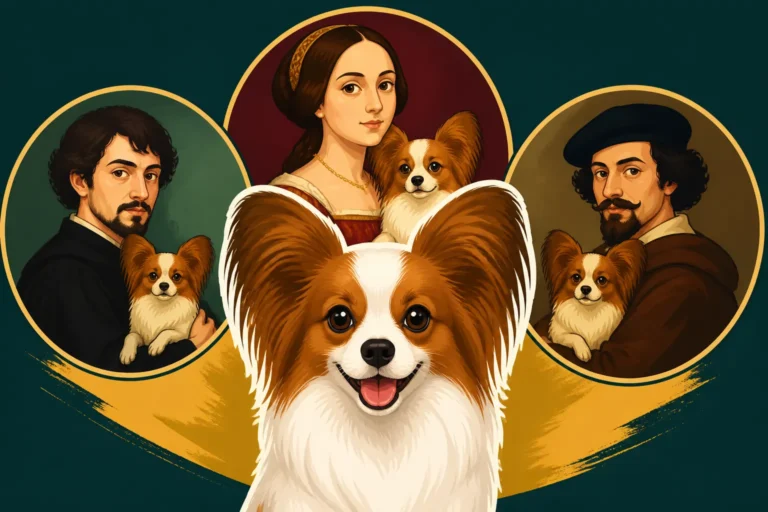
Imagine the opulent courts of Europe, particularly France, Spain, and Italy, from the Renaissance onward. Ladies of the court didn't carry big working dogs; they preferred tiny, elegant companions that could fit in their laps or be tucked into sleeves. These were the "Dwarf Spaniels." They were cherished lapdogs, often depicted as symbols of status and affection. These small dogs, with their soft, flowing coats and often drop ears, were highly prized. They weren't bred for hunting or retrieving like many of their larger spaniel cousins; their sole purpose was companionship. This focus on companionship is a thread that runs directly from these ancient dogs to the modern Papillon, highlighting a core aspect of their personality even today.
The name "Dwarf Spaniel" itself tells you a lot. It signifies a smaller version of the broader spaniel type, adapted for a different role. These dogs were the ultimate luxury item, passed down through noble families and often appearing in family portraits alongside their esteemed owners. Their prevalence in such historical documentation really underscores their importance and established presence in the canine world of the time. If you're curious about the general historical timeline, you can look into How Old the Papillon Breed Is.
Understanding the Historical Spaniel Type
It’s crucial to understand that the term "spaniel" in historical contexts was much broader than it is today. It didn't refer to a single, tightly defined breed as we understand breeds now. Instead, "spaniel" was a descriptor for a type of dog, typically characterized by a soft, often long coat, drop ears, and a generally amiable disposition. These dogs were often bred for specific tasks, like flushing game (field spaniels) or retrieving (water spaniels), but a significant branch also developed purely for companionship. The "Dwarf Spaniels" fall squarely into this latter category.
These early spaniels were known for their gentle nature, their intelligence, and their eagerness to please – traits that are still hallmarks of the Papillon breed. While the modern Papillon might have those magnificent erect ears, which we'll get to in a moment, their overall structure, coat texture, and affectionate personality are very much in line with their spaniel ancestors. The historical context confirms that What a Dwarf Spaniel Was is truly the direct precursor to our modern butterfly dogs.
Visual Evidence from the Renaissance Masters
One of the most compelling pieces of evidence for the Papillon's spaniel lineage comes from the breathtaking artwork of the Renaissance and Baroque periods. These painters were meticulous in their depictions, and their canvases offer us a literal window into the past, showing us exactly what these beloved "Dwarf Spaniels" looked like.
Titian and His Little Dogs
If you're looking for proof, look no further than the great Venetian painter, Titian. His portraits from the 16th century often feature small, elegant dogs nestled in the laps or at the feet of noblewomen. These dogs are unmistakably the ancestors of the Papillon. They have delicate builds, often dark, soulful eyes, and a coat that appears soft and flowing, much like the Papillon's single coat today. Most importantly, many of them possess the characteristic drop ears of a spaniel.
Think of Titian's "Venus of Urbino" or "Eleonora Gonzaga della Rovere, Duchess of Urbino." The little dogs in these paintings share a striking resemblance to the Phalene, the drop-eared variety of the Continental Toy Spaniel, which is essentially a Papillon without the upright ears. It's a wonderful visual affirmation that Whether Titian Painted the Papillon's Ancestor is a resounding yes, and these dogs were clearly a cherished part of European aristocratic life centuries ago. It’s truly incredible to see hundreds of years of history reflected in these artworks, revealing the continuity of the breed's type.
Other Court Painters and Their Canine Subjects
Titian wasn't alone in capturing these charming dogs. Many other prominent artists across Europe also included "Dwarf Spaniels" in their works. Painters like Rubens, Fragonard, and Goya all depicted similar small, long-haired dogs in various court settings, from formal portraits to more intimate genre scenes. These consistent depictions across different regions and time periods demonstrate the widespread popularity and recognizable form of these toy spaniels.
The dogs in these paintings invariably show the traits of a delicate, companionable animal. They often have long, feathery tails carried high, expressive eyes, and soft coats, just as we see in the Papillon today. While the specific ear carriage might vary (most early depictions show drop ears), the overall body type, head shape, and general "essence" of the dog are unmistakably those of the Papillon's direct forebears. For a deeper dive into this artistic heritage, you can explore Which Other Painters Included Dwarf Spaniels. These visual records are invaluable; they bridge the gap between anecdotal history and concrete evidence, solidifying the Papillon's place within the historical spaniel lineage.
The Evolution from Drop Ears to Butterfly Ears
The most distinguishing feature of the modern Papillon is, without a doubt, those magnificent, erect ears that resemble a butterfly's wings. This is the key difference that often causes people to pause when considering their spaniel ancestry. However, this ear type is a relatively recent development in the breed's long history, arising from a natural genetic mutation rather than a sudden shift away from its spaniel roots.
The Rise of the Erect Ear
For centuries, the "Dwarf Spaniels" had drop ears, much like other spaniel breeds. The erect-eared variety, which gave the breed its French name "Papillon" (meaning butterfly), is believed to have become prominent around the 17th or 18th century. It’s thought that a spontaneous mutation occurred, leading to puppies with upright ears. These "butterfly" ears quickly captured the fancy of the European nobility, who were always on the lookout for novel and fashionable pets. Breeders then began selectively breeding for this trait, solidifying it within the lineage.
It’s fascinating to think about this pivotal moment in the breed's history. One day, a litter of drop-eared spaniel puppies might have included one or two with those distinctive standing ears, and suddenly, a new fashion was born. This is why you can still find dogs with drop ears born in the same litter as those with erect ears; the genetic blueprint for both is still very much intertwined. Understanding When the Erect Ear First Appeared helps clarify that this was an evolution within the spaniel type, not a departure from it.
The Phalene: A Link to the Past
The existence of the Phalene (French for "moth"), the drop-eared variety of the Continental Toy Spaniel, serves as a living bridge to the Papillon's spaniel ancestors. Phalenes are genetically identical to Papillons; the only difference is the ear carriage. They are born in the same litters, share the same temperament, coat, and build, and are shown under the same breed standard in many parts of the world, including the American Kennel Club (AKC) where they are considered the same breed.
If you ever see a Phalene, you're essentially looking at the Papillon's historical self, prior to the widespread popularity of the erect ear. This directly reinforces the idea that the Papillon did not descend from an entirely different lineage that somehow acquired spaniel traits. Instead, it is a spaniel, with a unique ear carriage that became fashionable. The fact that Whether a Phalene Is a Separate Breed is a clear "no" underlines this continuity. They are two varieties of the same venerable breed, united by shared ancestry and core characteristics.
Shared Traits Beyond Appearance
Beyond the historical records and artistic depictions, the Papillon continues to exhibit many traits that are characteristic of its spaniel heritage. These aren't just superficial similarities; they speak to the very essence of the breed's temperament, intelligence, and physical conformation, making the case for their spaniel descent even stronger.
Temperament: Companion vs. Worker
Traditional spaniels, even those bred for work, are known for their sweet, eager-to-please dispositions and their strong bond with their human companions. The Papillon embodies these traits perfectly, but with a specific lean towards companionship. While some larger spaniels might be out in the field, the Papillon's ancestors were firmly planted on the laps of royalty. This history as a dedicated companion has shaped their personality.
Papillons are incredibly affectionate, highly intelligent, and thrive on human interaction. They are not dogs that are content to be left alone for long periods, preferring to be involved in every aspect of their owner's life. This deeply embedded desire for companionship and close emotional connection is a hallmark of many spaniel breeds, and it is exceptionally strong in the Papillon. They are also notoriously clever, and quick to learn, a trait often attributed to spaniels. They love to learn new tricks and engage in mental challenges, showing their heritage as intelligent dogs that interact closely with their handlers. For instance, finding durable chew toys or puzzle feeders that cater to their intelligence is easy at places like Chewy, ensuring they stay mentally stimulated.
Size and Structure: A Toy Spaniel's Build
While the modern Papillon is tiny, typically weighing between 5 to 10 pounds, their underlying physical structure still carries echoes of their spaniel ancestry. They possess a fine-boned yet sturdy frame, a gracefully arched neck, and a balanced overall appearance that is more refined than fragile. Their long, flowing single coat, often with feathering on the ears, legs, and tail, is also very much in line with the traditional "spaniel coat" – a luxurious, low-maintenance feature that contributed to their appeal as aristocratic pets.
The concept of a "toy spaniel" isn't unique to the Papillon. Other breeds like the Cavalier King Charles Spaniel also represent this smaller, companion-focused branch of the spaniel family. The Papillon's relatively long muzzle, expressive dark eyes, and elegant movement all contribute to a picture that aligns perfectly with the historical descriptions and depictions of the "Dwarf Spaniel." They are miniature versions of their larger spaniel cousins, meticulously bred for size without sacrificing elegance or the fundamental spaniel characteristics.
Modern Breed Recognition and the Spaniel Family Tree
When breed clubs and kennel organizations categorize dog breeds, they often do so based on a combination of historical origin, physical characteristics, and functional purpose. The Papillon’s classification consistently places it within the broader spaniel family, even if it's considered a unique branch.
How Breed Clubs Classify the Papillon
Major kennel clubs around the world, such as the American Kennel Club (AKC) and The Kennel Club (UK), classify the Papillon within their "Toy Group." This group is dedicated to small companion dogs, regardless of their historical working roots. However, within the historical context and even in some international classifications, the Papillon is often referred to as a "Continental Toy Spaniel." This longer, more descriptive name directly acknowledges its spaniel heritage.
The term "Continental Toy Spaniel" encapsulates both the Papillon and the Phalene, recognizing them as two varieties of the same breed, distinguished only by ear carriage. This formal recognition by breed clubs solidifies the historical connection. It’s not just an informal theory; it’s enshrined in the very structure of how dogs are categorized, offering strong evidence for Whether the Papillon Is Related to the Continental Toy Spaniel. This classification highlights that despite its distinct appearance, the Papillon’s fundamental genetic and historical make-up is deeply rooted in the spaniel tradition.
Distinguishing from Other Spaniel Breeds
While the Papillon is a spaniel, it’s important to understand how it differs from other, perhaps more commonly recognized, spaniel breeds today. Breeds like the Cocker Spaniel, Springer Spaniel, or even the Cavalier King Charles Spaniel have their own distinct histories and appearances. The Papillon stands out primarily due to its size and, of course, its unique ear set (for the Papillon variety).
Consider this comparison:
| Feature | Papillon (Continental Toy Spaniel) | English Cocker Spaniel | Cavalier King Charles Spaniel |
|---|---|---|---|
| Size | Very Small (5-10 lbs) | Medium (26-34 lbs) | Small (13-18 lbs) |
| Ear Carriage | Erect ("butterfly") or Drop ("moth") | Drop, long and feathered | Drop, long and feathered |
| Coat Type | Single, long, silky, no undercoat | Double, medium length, dense | Single, medium length, silky |
| Head Shape | Slightly rounded skull, moderate stop | Dome-shaped, square muzzle | Slightly rounded, moderate stop |
| Historical Role | Lapdog, companion | Hunting dog (flushing game) | Lapdog, companion |
| Origin | Continental Europe | England | England |
As you can see, while there are clear differences, the "lapdog, companion" role, the long silky coat (though single vs. double), and the general elegance are recurring themes within the spaniel family, reinforcing the Papillon's place within it.
Debunking Myths and Solidifying the Connection
Despite the wealth of historical and artistic evidence, a few misconceptions sometimes surface regarding the Papillon's ancestry. Addressing these helps solidify the understanding of its spaniel lineage and appreciate the long journey of this delightful breed.
The "Spitz Influence" Debate
One common myth, often arising when people observe the Papillon's erect ears and high-set tail, is that it must have some Spitz heritage. Spitz breeds, like Pomeranians or Huskies, are known for their upright ears, fluffy double coats, and curled tails. While it's easy to see how one might jump to this conclusion based on a superficial resemblance, especially with the erect ears, historical records and genetic studies do not support a significant Spitz influence in the Papillon's direct lineage.
As discussed, the erect ear was a natural mutation that was then selectively bred for, not an introduction of new bloodlines from distinct Spitz breeds. The Papillon's coat, while long and flowing, is a single coat, unlike the dense double coat of most Spitz dogs. Its delicate bone structure and overall refinement are also distinct from the more robust build typically seen in Spitz breeds. The Papillon's history is firmly rooted in the European toy spaniel tradition, and while its ears might be upright, its core identity remains that of a spaniel.
Why the Spaniel Ancestry Endures
The reason the Papillon's spaniel ancestry endures, despite its unique ear carriage, is simply because all the evidence points to it. From the 16th-century paintings to the shared temperament, physical attributes (minus the ears, in many cases), and formal breed classifications, the connection is undeniable. The Papillon Has Seven Hundred Years of Portraits Behind It showing dogs that gradually evolved into the breed we see today.
The Papillon is a testament to selective breeding and the enduring appeal of a companion animal. Its journey from the "Dwarf Spaniel" in Renaissance courts to the "butterfly dog" of today is a rich tapestry woven with history, art, and genetics. It's a breed that proves how much a dog can evolve in appearance while still retaining the fundamental characteristics and cherished companionship role of its ancestors. So, the next time you admire a Papillon, remember that you're looking at a living piece of history, a true spaniel at heart, with a captivating story spanning centuries. And if you need any modern pet supplies to keep your little spaniel happy, like a comfy bed or healthy treats, you know online retailers like Chewy have everything you could possibly need for your elegant companion.
Disclaimer
This article is for general informational purposes only and does not constitute professional advice. Laws, prices and regulations vary by location and change over time. Consult a qualified professional for guidance on your specific situation.