Whether the Papillon Is Related to the Continental Toy Spaniel
A Papillon is related to the Continental Toy Spaniel because, in international breed terminology, Papillon is one of the two varieties of that breed. The other is the Phalène, distinguished by its dropped ears. This guide explains how the names fit together, why registries may label the dogs differently, and what the relationship does—and does not—mean for owners and prospective buyers.
How the Papillon Relates to the Continental Toy Spaniel
One breed name, two ear varieties
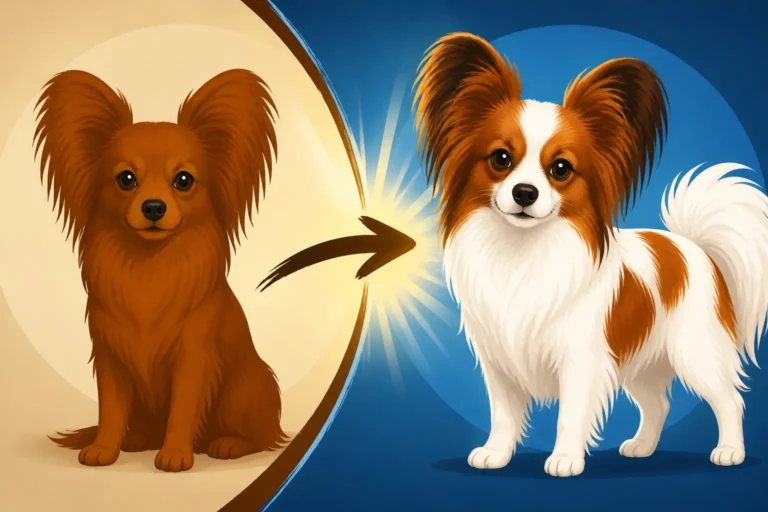
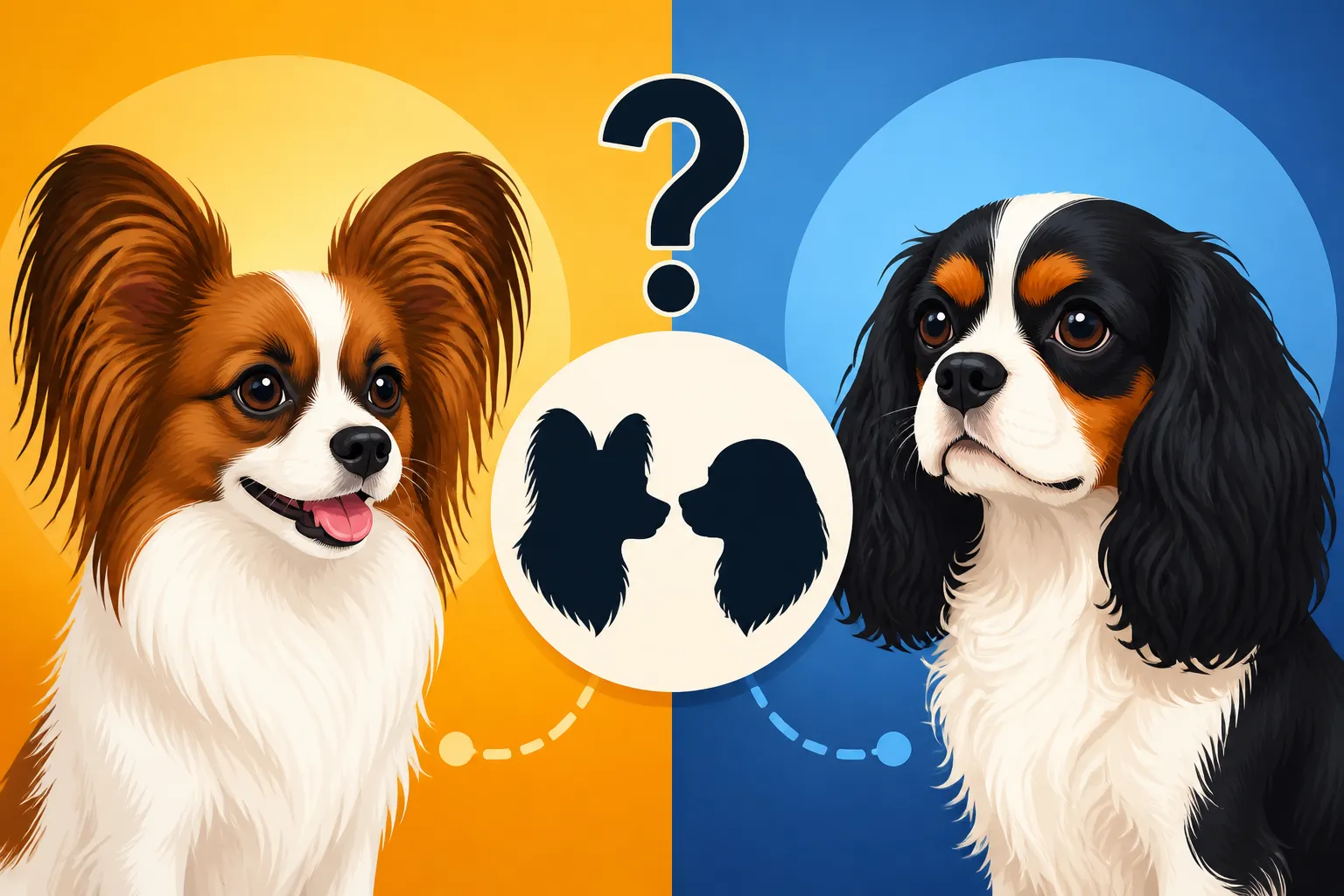
The Continental Toy Spaniel is the broader breed name used by the Fédération Cynologique Internationale, commonly known as the FCI. Within that breed, the Papillon and Phalène are varieties distinguished primarily by their ears: the Papillon has ears carried erect, while the Phalène has ears that hang down.
In French, papillon means “butterfly,” a reference to the upright ears and their fringes. Phalène means “moth,” describing the look of the hanging ears. The names capture a visible difference, but they do not mean the dogs are unrelated breeds. For more on the terminology, see What the Name Papillon Refers To and What the Name Phalene Refers To.
A useful comparison is to think of “Continental Toy Spaniel” as the umbrella name and Papillon and Phalène as its two recognized forms in the FCI system. The distinction is real and important for breed identification, but the dogs share the same basic breed background and standard framework. The ears are the feature that gives each variety its familiar name.
Why you may see different names in different places
Breed names depend partly on the registry and country involved. The FCI uses Continental Toy Spaniel as the breed name and recognizes the Papillon and Phalène varieties. In the United States, the American Kennel Club registers the Papillon as a breed in its own right. As a result, an American listing may say “Papillon,” while an international document or breed reference may use “Continental Toy Spaniel.”
This difference in naming can be confusing when you are reading pedigrees, looking at show information, or comparing breed descriptions online. It does not automatically indicate that a dog belongs to a separate lineage. It may simply reflect the naming system used by the organization or country.
The same issue can appear in everyday searches. A rescue profile, breeder page, or retailer such as Chewy might use the familiar name “Papillon,” while a formal breed reference uses “Continental Toy Spaniel.” The retailer’s label is useful for finding relevant information or supplies, but it is not a substitute for a dog’s registration papers or pedigree.
Is the Papillon a separate breed from the Continental Toy Spaniel
The answer depends on which registry’s terminology you are asking about. In the FCI system, Papillon is a variety of the Continental Toy Spaniel. In the AKC system, Papillon is the registered breed name. Both statements can be correct within their respective systems.
This is similar to encountering different official naming conventions rather than discovering two unrelated dogs. If you are comparing pedigrees, show eligibility, or breeder records, check which registry issued the document and how it names the breed. A dog’s name in a casual advertisement may be less specific than its formal registration.
The Phalène raises a related question: whether it should be treated as a separate breed or as the drop-eared variety within the same breed. Whether a Phalene Is a Separate Breed explains that distinction, while Whether a Phalene Can Be Shown Against a Papillon covers how the varieties are handled in show settings.
| Question | Short answer |
|---|---|
| Is a Papillon a Continental Toy Spaniel? | In the FCI system, yes. Papillon is one of the breed’s two varieties. |
| What is the other variety? | The Phalène, which has dropped ears. |
| Why do some records say only Papillon? | Some registries, including the AKC, use Papillon as the breed name. |
| Does “Continental Toy Spaniel” mean a Papillon mix? | No. It is a formal breed name, not a crossbreed description. |
| Do upright or dropped ears alone prove pedigree? | No. A registry’s documentation is what establishes registration and lineage. |
What the Relationship Means for Breed History and Appearance
The Papillon and Phalène share a breed background
The Papillon and Phalène are closely connected because they are treated as varieties of the same breed in the FCI system. They share a common breed identity, and the ear carriage is the defining difference between the two forms. A Phalène is not simply a dog from a completely separate breed that happens to resemble a Papillon.
That shared identity also explains why people may encounter both ear types in discussions of Continental Toy Spaniels. The names describe two recognizable looks within the same broader breed. If you want to understand how both types can appear among related dogs, read Why a Papillon and a Phalene Are Born in the Same Litter.
It is still wise to avoid assuming that every dog with butterfly-like ears or a spaniel appearance is a registered Papillon or Phalène. Appearance can suggest a breed, but it cannot confirm ancestry by itself. A reputable pedigree or registration record is more informative when a specific breed history matters.
A shared name does not make every description interchangeable
Because the two varieties belong to the same breed framework in the FCI system, many broad descriptions of temperament, size, and background apply to both. But that does not mean every registry’s wording, show rules, or individual dog’s traits will be identical. Breed standards are official documents, and their language can vary across organizations.
The ear difference is obvious, but individual Papillons can also vary in coat markings, size, and personality. A breed name gives you a useful starting point, not a guarantee that every dog will look or behave exactly alike. For example, a lively, people-focused Papillon may be typical of the breed’s reputation, but dogs still have individual temperaments shaped by genetics, early experiences, and training.
This distinction matters if you are choosing a puppy. Ask the breeder which registry the litter is recorded with, what breed name appears on the paperwork, and whether the parents have documented pedigrees. A product search on Chewy or a general breed selector can be convenient for browsing dog supplies, but it cannot establish a puppy’s ancestry or show status.
The breed’s history predates modern registry labels
Small spaniel-type dogs appear in European art and historical accounts long before today’s kennel organizations established standardized breed names. The modern Papillon developed from that broader history of small companion spaniels, but it is difficult to map every historical dog neatly onto a present-day breed label.
That is why historical discussions may use terms such as dwarf spaniel, toy spaniel, or Continental Toy Spaniel. These names can refer to related dogs or historical categories without proving that a particular portrait depicts a modern Papillon exactly as it is recognized today. Where the Papillon Comes From and How Old the Papillon Breed Is explore those historical questions in more detail.
So, the relationship is best described carefully: Papillons belong to the modern Continental Toy Spaniel breed framework used by the FCI, and the Papillon variety is defined by erect ears. The breed’s historical roots are older and less tidy than current registration labels, so avoid treating an old name as a precise modern pedigree.
How to Read Breed Listings and Papers
Check the registry before interpreting the name
When a breeder, rescue, or show program uses “Papillon” or “Continental Toy Spaniel,” first look for the registry behind the wording. A document from the FCI and a document from the AKC may use different official breed names while referring to the same familiar type of dog.
For a puppy purchase, ask to see the registration information and the names of the parents. If the seller says the dog is “Continental Toy Spaniel,” ask whether it is the Papillon or Phalène variety and which organization recognizes the litter. A clear answer should explain the terminology rather than rely on a label that sounds more formal.
For an adoption, paperwork may be incomplete or unavailable, especially if the dog came through a shelter or was surrendered without records. In that situation, the shelter’s breed description is usually an informed estimate based on appearance and available history. It should not be treated as proof of a documented pedigree.
Don’t confuse a variety name with a crossbreed label
“Continental Toy Spaniel” can sound like a broad category or a mix to someone who has only heard the word Papillon. In the FCI context, however, it is the formal breed name. The Papillon is not considered a cross between a spaniel and another breed simply because the word “spaniel” appears in the name.
Likewise, a Phalène is not automatically a Papillon mix. It is the drop-eared variety within the same breed framework. For a fuller look at the naming question, What the Name Phalene Refers To explains why the term is used.
When browsing supplies, a shop such as Chewy may organize products around familiar breed names or general dog categories. That can help you locate items, but the category is not a statement about whether a dog is purebred, registered, or eligible for a particular show. For those questions, consult the dog’s paperwork and the relevant registry.
What to ask when a breeder uses both names
If a breeder’s website uses “Papillon” in one place and “Continental Toy Spaniel” in another, it is reasonable to ask for clarification. The wording may reflect differences between registries, international standards, or the breeder’s intended audience. Ask which registry the parents and puppies are recorded with, and request to see the paperwork rather than relying on the website’s phrasing alone.
You can also ask whether the puppy’s ears are expected to remain erect or may fall, especially if you are interested in a particular variety. Ear carriage is central to the Papillon and Phalène distinction, but a young puppy’s ears may not always make the final adult appearance obvious. A responsible breeder should explain what is known about the puppy and avoid promising outcomes they cannot guarantee.
For ordinary shopping, it is fine to use the name that best matches the dog you have. Searching Chewy for Papillon supplies may be more straightforward than searching the full international breed name. Just keep the distinction clear: shopping labels help with browsing; registry records answer questions of formal identity.
Common Questions About the Papillon and Continental Toy Spaniel
Is a Papillon just another name for a Continental Toy Spaniel
Not exactly in every registry’s terminology. Under the FCI, Continental Toy Spaniel is the breed name, and Papillon is the erect-eared variety. In the AKC system, Papillon is the recognized breed name. The terms are closely linked, but they are not used in precisely the same way by every organization.
Is a Phalène a Papillon
A Phalène is the drop-eared variety of the Continental Toy Spaniel in the FCI system, while Papillon refers to the erect-eared variety. People may casually group both together as Papillons, especially in places where the Papillon is the more familiar name. For formal identification, use the terminology of the registry or show organization involved.
Does a Papillon have spaniel ancestry
The Papillon belongs to a breed with a historical connection to small spaniel-type companion dogs. That does not mean every modern Papillon is a recent cross with another spaniel breed. It is more accurate to distinguish the breed’s historical background from its current identity as a defined, registered breed or variety.
How can I tell whether a dog is a registered Papillon
Appearance alone cannot verify registration. Ask for the dog’s registration certificate or pedigree and check which organization issued it. If a dog is adopted and no records are available, you can still describe it as Papillon-like or Papillon-type based on appearance, but formal breed status cannot be confirmed from looks alone.
Does the name change how I care for the dog
No. The distinction between Papillon and Continental Toy Spaniel is about breed naming and classification, not a different basic care routine. Focus on the individual dog’s health, grooming, exercise, and veterinary needs. If you are learning about breed characteristics, What People Get Wrong About the Papillon offers additional context on how the breed is commonly described.
Disclaimer
This article is for general informational purposes only and does not constitute professional advice. Laws, prices and regulations vary by location and change over time. Consult a qualified professional for guidance on your specific situation.