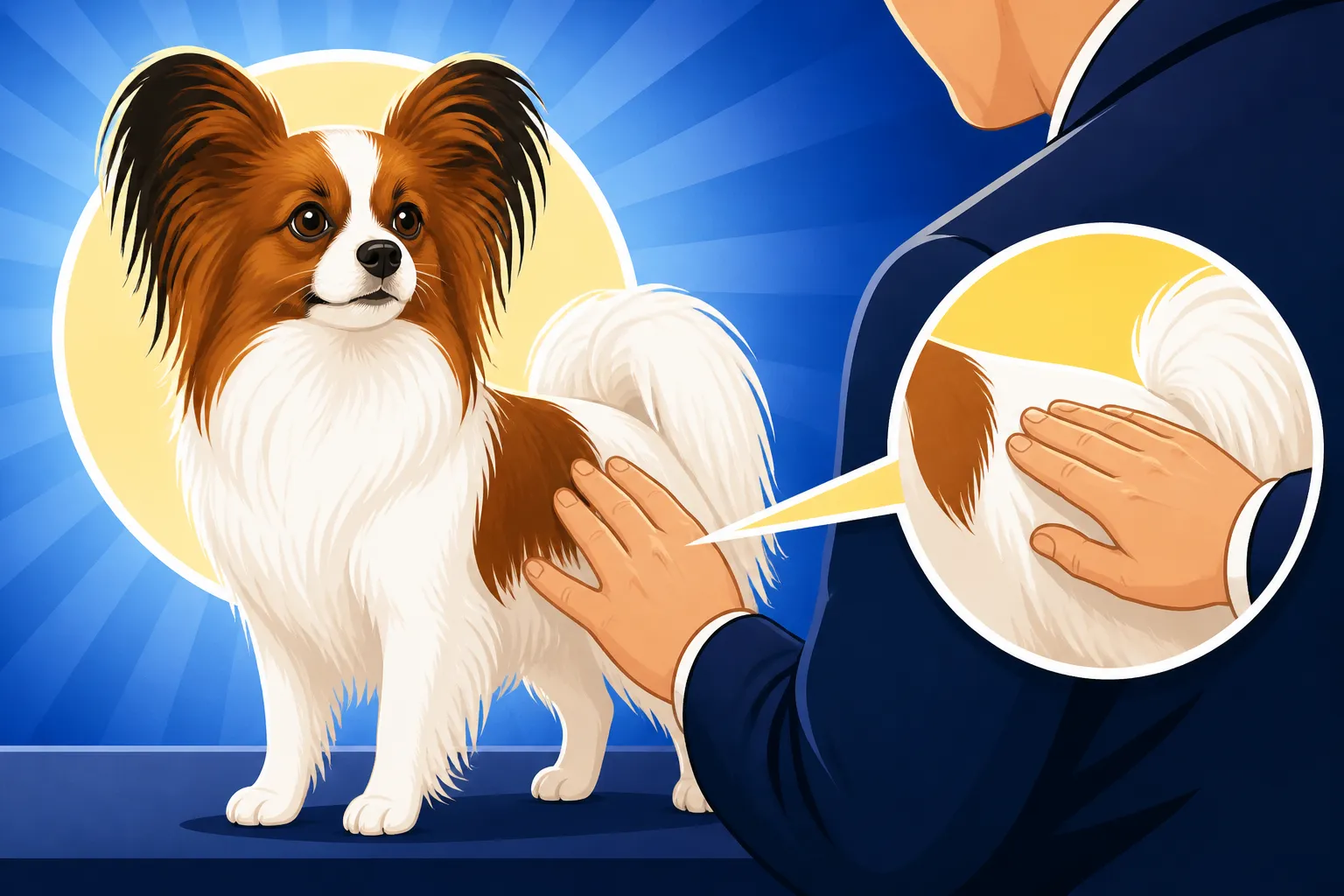
What a Papillon Judge Puts a Hand On First
A Papillon judge usually looks at the dog standing before making a hands-on examination, and there is no single required touch that every judge must make first. The hands-on portion often starts at the head, including the mouth and ears, then moves over the body and legs. Knowing what the judge is assessing can make the ring feel less mysterious for both dog and handler.
What a Papillon Judge Assesses Before Touching the Dog
The first look is about the whole dog
Before reaching in, a judge generally takes in the Papillon’s overall appearance: balance, outline, condition, and how the dog stands. They are not judging a single feature in isolation. A beautifully fringed ear, for example, cannot tell them whether the dog’s proportions and structure fit the breed.
This initial look may happen while the dog is standing naturally in front of the judge. The judge might also ask the handler to move the dog so they can see its gait. That early observation gives context for the closer examination: the judge can compare how the dog is put together while standing with how it moves.
A useful overview of the breed’s proportions is What a Correct Papillon's Outline Looks Like. The outline is not simply about looking elegant. It helps a judge assess whether the dog appears fine-boned but not fragile, and whether its body, legs, neck, and tail come together in a balanced way.
The judge may begin the examination at the head
There is no universal rule that a judge must touch a Papillon’s head first. In many rings, though, the head is an early part of the hands-on examination because the judge may need to check the bite and teeth, feel the head, and assess the ears. The precise order can vary with the judge, the dog, and the flow of the class.
A judge may ask the handler to show the dog’s bite or may gently lift the lips to see how the teeth meet. That check is brief, but it can feel like a big moment if a Papillon is not used to having its mouth handled. The goal is to assess the dog, not to test whether it will tolerate a long dental exam.
The head has several features that contribute to the breed’s characteristic expression and shape. For a closer look at those details, see What a Papillon's Head Should Look Like. The judge may also examine the ears, but should not need to tug on the fringe or pull the ears into position to understand their set and shape.
What the Hands-On Examination Can Include
Mouth, head, ears, and expression
A judge may inspect the bite and teeth near the beginning of the examination. A handler can help by teaching the Papillon to accept a gentle lip lift at home. Practise briefly and calmly; repeatedly holding the mouth open for a long time is unnecessary and can make a small dog wary.
The judge may then look and feel around the head, including the skull and muzzle, while checking the ear placement. Papillon ears are a defining feature, but the judge assesses their structure and carriage, not just how much fringe they have. A dog that is worried may flatten its ears or pull its head away, which can make the examination less comfortable for everyone.
Good preparation is practical rather than theatrical. Teach the dog to stand while a familiar person briefly touches its head, checks its ears, and lifts its lips. If you keep a small comb and grooming supplies in your show bag, retailers such as Chewy may be one place to look for basic coat-care items. The important part is using them in a way that keeps the dog relaxed, not trying to reshape or force the ears into a particular look.
Body, legs, feet, and tail
After the head, a judge may run their hands over the body to assess proportions, topline, chest, and general condition. They may feel the dog’s structure beneath its coat rather than relying on appearance alone. A Papillon’s flowing coat can make the outline look especially soft, so a hands-on assessment helps the judge evaluate what is underneath.
The judge may also examine the legs and feet. That can involve feeling the limbs and checking how the dog stands, rather than manipulating each joint extensively. The feet matter to the dog’s structure and movement; What Shape a Papillon's Feet Are explains why they are part of the breed’s overall picture.
The tail and its carriage may be observed as the dog stands and moves. A judge can assess the tail’s set and plume without needing to handle the feathering roughly. For more on the desired carriage, read What a Papillon's Tail Should Be Carried. If you’re preparing for a show, a light comb-through can help tidy the coat; Chewy may be a convenient source for grooming basics, but the dog’s comfort and natural presentation should come first.
| Part of the examination | What the judge may assess | Helpful preparation |
|---|---|---|
| Initial view | Balance, outline, condition, and stance | Practise standing calmly without rigid posing |
| Mouth | Bite and teeth | Teach a brief, gentle lip lift |
| Head and ears | Shape, expression, ear set, and carriage | Practise calm head and ear handling |
| Body | Proportions, topline, and overall structure | Let the dog become comfortable with a light body touch |
| Legs and feet | Structure, stance, and foot shape | Reward stillness during brief handling |
| Movement | Gait and coordination | Practise moving at a comfortable, steady pace |
How Movement Fits Into the Judging Process
The judge watches the dog move
A hands-on examination is only one part of judging. The judge may ask the handler to walk or trot the Papillon in a pattern that lets them see it from different angles. The dog’s movement helps show how its structure works in motion, which cannot be fully assessed while it is standing still.
The judge may watch the dog travel away and back, then move across the ring. The specific pattern depends on the show and the judge’s instructions. Handlers should listen carefully, keep the lead loose where possible, and avoid rushing. A Papillon that is pulled along too quickly may not show its natural gait clearly.
The breed’s movement should be assessed as part of the complete picture, not as a flashy performance. See How a Papillon Should Move for more on what the judge is looking for. Ring practice can help the dog understand the routine, but it should not become so repetitive that the dog loses interest or starts anticipating every turn.
A judge compares the dog with the breed standard
Conformation judging is about how closely a dog fits its breed standard, not whether it performs tricks or behaves like a pet in a living room. Judges consider multiple traits together, including outline, head, coat, structure, and movement. A small difference in one feature does not automatically tell you how the dog will place.
The Papillon’s light, elegant appearance can sometimes lead owners to assume that daintiness alone is the goal. In practice, the dog should look fine-boned without appearing weak or frail. Proportion and soundness matter alongside the distinctive ears and coat.
Judges may weigh faults differently depending on how they affect the dog’s overall quality and function. For a broader look at potential concerns, see Which Faults Judges Penalize in a Papillon. The breed’s general size is also useful context when evaluating proportion; What a Papillon Weighs and How Tall It Stands covers those basics.
Preparing a Papillon for a Calm Examination
Practise the handling without making it a wrestling match
A Papillon does not need to be trained to tolerate rough handling. Instead, build familiarity with short, gentle touches: briefly check the mouth, touch the ears, run a hand along the body, and handle the feet. Reward calm cooperation, then stop before the dog becomes restless.
For example, if your dog pulls away when you touch its paws, begin by resting your hand near the shoulder and gradually moving down the leg over several short sessions. Do not pin the dog down or keep going once it is frightened. A show examination is brief, and confidence is more useful than forcing the dog to endure a long rehearsal.
It can also help to practise with another calm person, since a dog may behave differently when handled by someone unfamiliar. Ask the person to move slowly and pause if the Papillon becomes tense. The goal is not to imitate every possible judge but to help the dog learn that brief, gentle handling is predictable.
Keep grooming and ring presentation comfortable
A tidy coat helps the judge see the dog clearly, but grooming should not interfere with comfort or natural appearance. Brush out tangles gently, especially in feathered areas, and avoid pulling at the ears or tail. If grooming tools are part of your kit, Chewy is one retailer where owners may look for routine supplies, though the right choice depends on the dog’s coat and sensitivity.
Before entering the ring, check that the dog can stand comfortably and that its lead is not being used to hold it in an unnatural pose. A handler may need to make small adjustments, but the Papillon should not look strained. Dogs are more likely to cooperate when they are given time to settle and are not constantly repositioned.
On show day, follow the judge’s directions rather than trying to predict the exact sequence. One judge may inspect the mouth first; another may begin with a brief look at the whole dog before moving to the head. That variation is normal. A prepared Papillon can stay composed through either approach because it has practised the basics: standing, moving, and accepting gentle handling.
Disclaimer
This article is for general informational purposes only and does not constitute professional advice. Laws, prices and regulations vary by location and change over time. Consult a qualified professional for guidance on your specific situation.