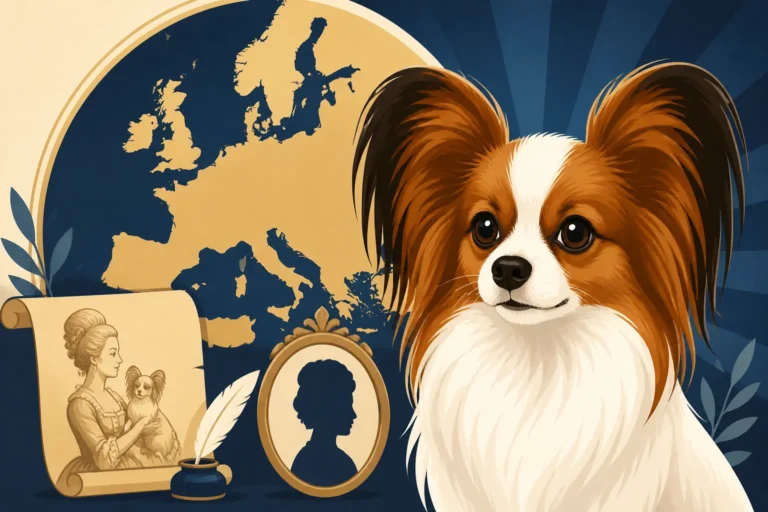
Where the Papillon Comes From
When you look at a Papillon today, with those elegant, butterfly-like ears and delicate frame, it’s easy to think of them as a relatively modern creation, a delightful toy breed perfected in recent times. But the truth is, this isn't some new designer dog. The Papillon boasts a lineage that stretches back centuries, intertwined with European royalty and artistic masterpieces. This guide will take you on a journey through time, uncovering the fascinating origins of this intelligent and spirited little companion, dispelling the myth that their history is anything less than truly grand.
The Ancient Roots of the Continental Toy Spaniel
Before they were known as the Papillon, or even the Phalene, these charming little dogs were broadly referred to as "dwarf spaniels" or "Continental Toy Spaniels." Their history isn't just documented in dusty old kennel club records; it's literally etched into the canvases of some of the most famous painters in Western art. They weren't just pets; they were living accessories, symbols of status, and cherished companions for the European elite.
Tracing Back to the Dwarf Spaniels of Europe
Imagine the grand courts of Europe, particularly France, Spain, and Italy, hundreds of years ago. In these opulent settings, tiny, long-haired dogs with expressive eyes were constant fixtures. These weren't your robust hunting spaniels or your working dogs; these were bred purely for companionship, designed to sit on laps, offer comfort, and perhaps, ward off fleas from their noble owners. They were often passed down through generations, becoming treasured family members in their own right.
The term "dwarf spaniel" wasn't a formal breed name in the way we understand it today, but rather a descriptive classification for these small, spaniel-type dogs. They were distinct from the larger spaniels used for bird flushing or retrieving, having been selectively bred over centuries for their diminutive size and gentle disposition. Their primary role was simply to be adored, a testament to the fact that even in ancient times, people sought out the unique bond only a small companion dog can offer. This extensive history is part of Where the Papillon Comes From.
Artistic Evidence Through the Centuries
One of the most compelling pieces of evidence for the Papillon's long and noble lineage comes not from written records, but from the art world. If you visit a major museum and look at portraits from the Renaissance and Baroque periods, particularly those depicting ladies of the court, you'll often spot a small, long-haired dog nestled in their arms or at their feet. These are the direct ancestors of our modern Papillons.
Artists like the Venetian master Titian, who worked in the 16th century, frequently included these small spaniels in his paintings. His "Girl in a Fur" or "Venus of Urbino" are often cited as examples, showcasing dogs that bear a striking resemblance to the Phalene variety of the Papillon, with their luxurious coats and appealing drop ears. It's fascinating to think that the dogs captured in these timeless works are essentially the same breed we cherish today. Titian Painted the Dog the Papillon Came From is a great resource for understanding this visual history.
Later, artists like Peter Paul Rubens and Jean-Honoré Fragonard also depicted these charming canines, further cementing their place in European history. These paintings aren't just pretty pictures; they're historical documents, illustrating the physical characteristics, size, and even the accepted colors of these early toy spaniels. They show dogs with flowing coats, often parti-colored (white with patches of color), and those signature long, feathered ears that were a hallmark of the breed long before the "butterfly" ear became dominant. It really goes to show just how far back Which Italian Painters Put a Papillon Ancestor in a Portrait you can trace these incredible dogs.
The Emergence of the Butterfly Ear
For centuries, these continental toy spaniels primarily featured drop ears, much like their larger spaniel cousins. This ear type is what we now call the Phalene, meaning "moth" in French. But somewhere along the line, a delightful mutation or specific breeding program led to the erect, fringed ears that give the Papillon its famous "butterfly" moniker.
The Name: Papillon and Phalene
The names "Papillon" and "Phalene" are both French and describe the most defining characteristic of these dogs: their ears. "Phalene" means "moth," and it refers to the original ear type, which is dropped and feathered, resembling a moth at rest. If you've ever seen a Phalene, you'll immediately understand why. Their ears lie flat against their head, covered in beautiful, long fringe, giving them an incredibly soft and sweet expression.
The "Papillon" name, on the other hand, means "butterfly." This is the ear type most people recognize today – large, erect, and held at an angle, with long, flowing fringe that mimics the open wings of a butterfly. It's an iconic look that truly sets the breed apart and speaks to their delicate yet vibrant nature. It’s important to remember that Papillon Means Butterfly and Phalene Means Moth are not separate breeds; they are simply two ear varieties of the same breed, both equally cherished. Understanding What the Name Papillon Refers To and What the Name Phalene Refers To makes it easier to appreciate the distinction and the shared heritage.
From Drop Ears to Erect Ears: A Gradual Evolution
The transition from the prevalent Phalene (drop-eared) type to the Papillon (erect-eared) variety wasn't an abrupt one. It's believed that the erect ear began to appear in the breed sometime in the 17th or 18th century, with it becoming more widely favored and developed in the 19th century. There's no single definitive story about how it happened, but several theories exist.
One theory suggests a spontaneous genetic mutation, a charming quirk that breeders then selected for. As breeders noticed these unique, upright ears, they might have found them particularly appealing and began to selectively breed dogs exhibiting this trait. Another popular theory posits that crossbreeding with other small, erect-eared breeds, perhaps even early Spitz-type dogs, could have introduced the gene for erect ears. This could have happened to emphasize smaller size or a different "fashion" in dog aesthetics. This is explored further in When the Erect Ear First Appeared and Whether Spitz Blood Made the Papillon's Ears Stand.
Regardless of the exact mechanism, the erect ear gained immense popularity, eventually becoming the dominant and most recognized ear type for the breed. This shift reflects changing preferences in dog aesthetics over the centuries. It’s a testament to the artistic eye of breeders who cultivated a trait that would eventually define the breed's modern identity. However, even today, Phalenes are still born in Papillon litters and are equally valid members of the breed, a beautiful nod to their shared past.
Royal Courts and Continental Popularity
The Papillon, or its Phalene ancestor, wasn't just present in European courts; it was practically a staple. These tiny dogs moved through the grand halls of palaces, warming laps and offering silent companionship to some of history's most powerful figures.
Companions of European Nobility
The Continental Toy Spaniel's rise to prominence began long before the French Revolution. They were beloved pets of royalty and the aristocracy across Europe, especially in Spain, Italy, and France. These dogs were often depicted in portraits alongside their noble owners, serving as symbols of wealth, status, and refined taste. They were small enough to be carried, making them perfect companions for ladies who might spend hours in drafty castles or traveling between estates.
Perhaps the most famous association is with Marie Antoinette, the ill-fated Queen of France. Legend has it that she cherished her little spaniel so much that she carried it with her even to the guillotine. While this particular tale is likely romanticized, it speaks volumes about the deep affection these dogs inspired. Her dog, supposedly named Thisbe, was said to have waited faithfully for her outside the execution chamber. While the truth of Marie Antoinette and the Papillon She Is Said to Have Carried is debated, the legend itself highlights the enduring bond between these dogs and their prominent owners.
Other notable figures who kept these small spaniels include Madame de Pompadour, King Louis XIV, and even members of the Medici family. These dogs weren't just decorative; they were often seen as living hot water bottles, nestling in laps to provide warmth during chilly European winters. They were a constant presence, offering comfort and loyalty in a world of complex political intrigue. This widespread royal patronage firmly established the breed's reputation as a dog of elegance and refinement. You can learn more about their illustrious owners in Which Royal Households Kept Papillons.
Surviving Revolutions and World Wars
The survival of any dog breed through centuries of political upheaval, social change, and widespread conflict is remarkable, and the Papillon is no exception. Periods like the French Revolution, with its violent overthrow of the monarchy and aristocracy, could have easily led to the eradication of a breed so closely associated with the elite. However, the Papillon's charm and adaptability ensured its continuation.
During the Revolution, many noble families either fled or were executed. It's plausible that some of their beloved dogs, perhaps those already living in less prominent households or those rescued by sympathetic individuals, managed to escape the purges. The breed's inherent appeal as a loving companion likely transcended class boundaries to some extent, even if their primary association was with the upper echelons of society. Dedicated enthusiasts, even those who weren't royalty, would have worked to preserve the lines.
Later, through the devastating World Wars of the 20th century, many breeds faced severe decline due to scarcity of resources and the sheer disruption of daily life. Breeders often faced immense challenges in simply feeding and housing their dogs, let alone maintaining breeding programs. Yet, the Papillon persevered. Its small size, making it less resource-intensive than larger breeds, and its role as a beloved house pet, likely contributed to its resilience. Breeders, driven by a passion for the breed's unique qualities and long history, painstakingly kept lines alive, ensuring that the charming butterfly dog would continue to grace homes for generations to come. Even today, modern enthusiasts can ensure the continued health and vitality of the breed by accessing quality nutrition and supplies, readily available from retailers like Chewy, a small nod to the continued care and dedication this ancient breed commands.
Establishing the Modern Breed and Global Recognition
As the centuries turned into the modern era, the Papillon transitioned from a beloved court companion to a formally recognized and highly admired breed on the global stage. This required standardization and the dedicated efforts of enthusiasts.
Standardisation and Kennel Club Recognition
The late 19th and early 20th centuries marked a significant period for many dog breeds, as formal kennel clubs began to emerge and establish breed standards. This was crucial for the Papillon, as it moved from being a general "dwarf spaniel" type to a distinct, recognizable breed with specific characteristics. Breeders and enthusiasts worked tirelessly to define what a Papillon should look like, encompassing everything from ear set and coat texture to temperament and overall structure.
These standards provided a blueprint for breeding, ensuring consistency and preserving the unique traits of the Papillon. When national kennel clubs, such as the American Kennel Club (AKC), started recognizing breeds, it conferred legitimacy and provided a platform for exhibition and competition. The Papillon was officially recognized by the AKC in 1915, marking a significant milestone in its journey. This recognition allowed the breed to be shown in conformation events, judged against its established standard, and brought it to a wider audience. To further understand their recognition journey, check out When the AKC Recognized the Papillon.
The establishment of breed clubs played an equally vital role. These organizations brought together dedicated owners and breeders who were committed to the health, preservation, and promotion of the Papillon. They organized shows, educated the public, and maintained careful records, all of which contributed to the breed's ongoing success and integrity. Modern Papillon owners often consult these breed clubs and reliable resources, even from reputable retailers like Chewy, to ensure they're providing the best care in line with breed-specific needs and historical standards.
The Papillon's Journey to America and Beyond
While the Papillon's roots are firmly planted in European soil, its charm proved to be universal. The breed made its way across the Atlantic to North America and eventually spread to other continents, gaining admirers wherever it went. Early enthusiasts imported quality breeding stock from Europe, carefully establishing the breed in new territories.
Initially, Papillons might have been considered somewhat exotic, but their intelligence, vivacity, and manageable size quickly won over hearts. They became popular not just as elegant companions but also as formidable competitors in dog sports. Their keen minds and agility made them exceptionally suited for activities like obedience and, particularly, agility trials, where they often outshine much larger breeds. This combination of beauty, brains, and athleticism fueled their rising popularity. Delving into When the First Papillons Reached America provides more insight into their transatlantic voyage.
Today, the Papillon is cherished worldwide, gracing homes in diverse countries and climates. Their adaptability and engaging personalities have ensured their enduring appeal. From their humble beginnings as court lapdogs to their current status as beloved family members and canine athletes, the Papillons have proven their versatility and capacity to thrive in various roles. It’s a true rags-to-riches story, albeit one where the "rags" were opulent silks and velvets!
Why Papillon and Phalene are Still the Same Breed
Despite their obvious visual difference in ear carriage, it's crucial to understand that Papillons and Phalenes are not two separate breeds. They are simply variations within the same breed, recognized by all major kennel clubs under the single breed standard. This shared identity speaks volumes about their unified origin and genetic makeup.
The Genetic Linkage
The most compelling proof that Papillons and Phalenes are the same breed lies in their genetics. They can, and frequently do, appear in the same litter. It's a delightful surprise for breeders: a single litter might contain puppies with the erect, butterfly ears we associate with the Papillon, and others with the soft, dropped ears of the Phalene. This phenomenon directly demonstrates that the difference in ear carriage is merely a phenotypic variation within a single gene pool, not an indication of separate ancestral lines. To understand this unique aspect, consider Why a Papillon and a Phalene Are Born in the Same Litter.
Breeders often refer to these two types by their ear carriage, but both are registered as Papillons. This genetic interconnectedness means that a Phalene can produce Papillon puppies, and a Papillon can produce Phalene puppies, depending on the genetic lottery of ear carriage genes passed down from the parents. This is a common and accepted part of Papillon breeding. Knowing How Many Phalenes Are Born in a Papillon Litter can give you a better idea of how frequently this occurs. It's a charming quirk that connects today's dogs directly to their ancient ancestors, some of whom were undoubtedly Phalene-eared.
Shared Traits Beyond Ear Carriage
Beyond the obvious difference in ear set, Papillons and Phalenes are identical in every other significant aspect. Their temperament is the same: intelligent, outgoing, playful, and affectionate. They share the same delicate yet athletic build, the same silky single coat (no undercoat!), and the same range of accepted colors and markings.
Their size, weight, and general health predispositions are also identical. Whether you have a Papillon with erect ears or a Phalene with drop ears, you're getting a dog with a keen mind, a boundless zest for life, and a strong desire to be involved in everything you do. They both require similar grooming, training, and exercise. You wouldn't treat a Phalene differently in terms of care or expectations than you would a Papillon; the only divergence is how their beautiful ears are carried.
This shared identity reinforces their common heritage and the long journey they've taken together. It's a wonderful reminder of the breed's continuous evolution and adaptation, while still holding true to its fundamental characteristics as a bright, elegant, and devoted companion. For an owner, understanding this shared identity ensures that all Papillons, regardless of ear carriage, receive the same love, respect, and breed-appropriate care that their long and storied history deserves. And for sourcing many of the practical items needed for their care, whether it's specialized small-breed food or grooming tools for their silky coats, online retailers like Chewy make it incredibly convenient for owners.
A Timeline of Papillon History
To help visualize the incredible journey of this breed, here's a brief timeline of key historical periods and events:
| Period | Key Development / Description | Notable Features |
|---|---|---|
| 14th-16th Century | Appearance of "Dwarf Spaniels" in European courts (Italy, Spain). | Small size, long silky coats, often parti-colored, drop ears (Phalene type). Primarily lap companions. |
| 16th-17th Century | Prominence in Renaissance art; depicted by masters like Titian. | Clearly established as beloved pets of nobility, status symbols. Still predominantly drop-eared. |
| 17th-18th Century | Continued popularity in European royalty (e.g., French court). Gradual emergence of erect ears. | Association with figures like Marie Antoinette. The "butterfly" ear (Papillon type) begins to appear. |
| 19th Century | Erect-eared variety gains significant popularity and becomes dominant. | Distinct Papillon name emerges, recognizing the butterfly ears. Continued selective breeding for type. |
| Late 19th/Early 20th Century | Formal breed standards established; breed clubs formed in Europe and America. | Breed characteristics are solidified. Focus on consistency and refinement. |
| 1915 | American Kennel Club (AKC) officially recognizes the Papillon breed. | Marks official acceptance and allows for conformation showing in the United States. |
| Mid-20th Century – Present | Global spread and increasing popularity as companion and performance dogs. | Excelling in dog sports like agility. Continued dedication to health testing and responsible breeding. |
Disclaimer
This article is for general informational purposes only and does not constitute professional advice. Laws, prices and regulations vary by location and change over time. Consult a qualified professional for guidance on your specific situation.