Whether a Papillon Is Smaller Than a Pomeranian
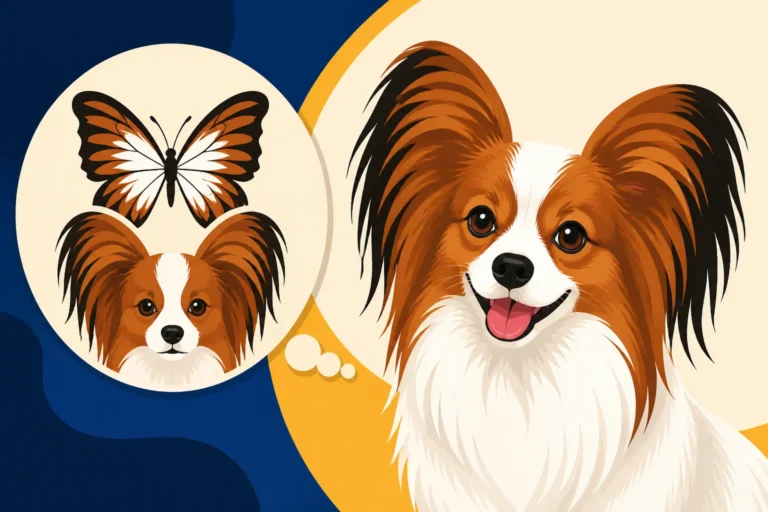
A Papillon is generally not smaller than a Pomeranian. Papillons tend to stand taller, and they may weigh as much or more, although the breeds overlap in size and individual dogs vary. Their coats can make the comparison confusing: a Pomeranian often looks rounder and fluffier, while a Papillon’s long ear and leg feathering can make its frame seem bigger.
Papillon and Pomeranian size compared
Height and weight at a glance
Using typical adult breed ranges, the Papillon is usually the taller dog. A Pomeranian is usually more compact, though a larger Pom and a petite Papillon can overlap in weight. These ranges are useful for setting expectations, not for judging whether an individual dog is healthy.
| Breed | Typical adult height | Typical adult weight | General build |
|---|---|---|---|
| Papillon | About 8 to 11 inches at the shoulder | About 5 to 10 pounds | Fine-boned, slightly longer than tall |
| Pomeranian | About 6 to 7 inches at the shoulder | About 3 to 7 pounds | Compact, short-backed, with a dense coat |
Height is measured at the shoulder, not to the top of the ears or the highest point of the coat. That distinction matters with both breeds. A Papillon’s erect ears add visual height, while a Pom’s abundant coat can make its outline appear larger than its body really is.
A quick answer to “Is a Papillon smaller than a Pomeranian?” is usually no. Papillons are commonly taller, and their typical weight range extends above the usual Pomeranian range. But the overlap is real: a small Papillon might weigh less than a large Pomeranian, so breed averages cannot tell you the exact size of two specific dogs.
Why the breeds can look bigger or smaller than they are
A Pomeranian’s thick double coat creates a rounded silhouette. The coat stands away from the body, especially around the neck and chest, so a Pom can look wide and substantial even when its frame is small. When the coat is wet, clipped, or in a seasonal shed, the dog may look dramatically different without its actual body size changing.
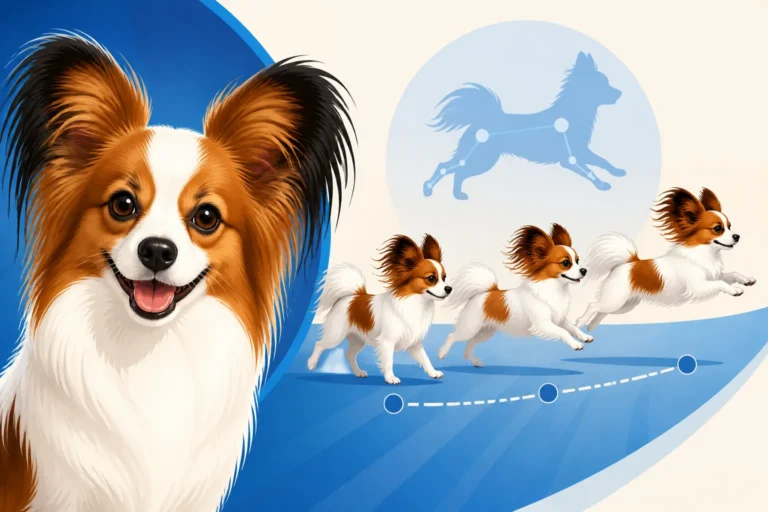
A Papillon has a single coat that lies closer to the body, with longer feathering on the ears, chest, legs, and tail. Those fringes can exaggerate its length or make the dog look taller in motion. Underneath the coat, the Papillon’s frame is typically fine-boned and lightly built. For a broader visual comparison, see The Papillon Against the Pomeranian and the Chihuahua.
The difference is easy to miss in a photo. A Pom photographed with its coat fully fluffed may look bigger than a Papillon standing beside it, while a Papillon photographed from a low angle may appear unusually tall. A side-by-side comparison on level ground is more useful than judging by a single picture.
What the size ranges mean for an individual dog
Breed ranges are not a promise
A breed standard describes the general type expected of a well-bred adult; it does not guarantee that every dog will land at the same height or weight. Genetics, sex, growth, body condition, and individual variation all affect the final result. Even two puppies from the same litter can mature into noticeably different-sized adults.
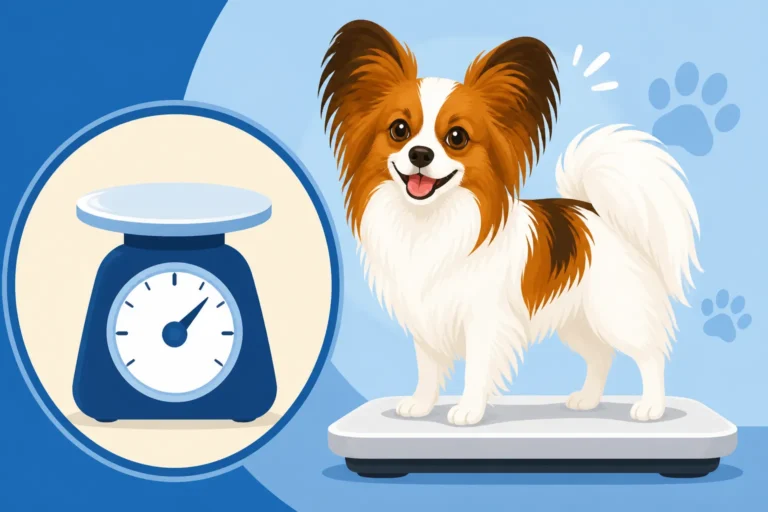
If you are comparing a specific Papillon with a specific Pomeranian, measure both rather than relying on breed labels alone. Have each dog stand naturally on a flat surface. Measure from the floor to the top of the shoulder, and use a reliable scale for weight. A dog that wiggles or sits down can make the measurement less useful, so a calm second person to offer a treat can help.
Age matters, too. Puppies are still growing, and a puppy’s current size does not provide a perfectly precise prediction of adult size. If you are choosing a puppy, ask the breeder about the parents’ sizes and the puppy’s growth so far, while remembering that those details are clues rather than guarantees. You can also read The Age a Papillon Stops Growing for more about Papillon development.
Small does not automatically mean healthier
It is tempting to assume the smallest dog is the ideal version of the breed, especially when “tiny” is presented as a selling point. But a particularly small body is not a health certificate. Extremely small dogs may be more delicate, and a small puppy can need careful monitoring, sensible handling, and age-appropriate feeding.
For Papillons, look at overall condition rather than chasing a number on the scale. You should be able to feel the ribs without pressing hard, while the dog should not appear bony or have a sharply tucked, hollow look. A veterinarian can assess body condition and growth in context, including whether a puppy’s weight trend is appropriate. What a Papillon Weighs and How Tall It Stands offers more detail on the breed’s typical proportions.
The same principle applies to Pomeranians. Their coat can disguise weight gain, making a dog look “just fluffy” when the body underneath is carrying excess weight. Check the dog’s shape and feel, rather than judging by its silhouette alone. In either breed, a sudden change in weight is worth discussing with a veterinarian, particularly if it comes with reduced appetite, low energy, vomiting, or other changes.
How size affects everyday life
Handling, furniture, and safe lifting
Both breeds are small enough to be injured by a fall or rough handling, even if one dog is heavier than the other. Children should be shown how to sit on the floor to greet a little dog, avoid picking it up without help, and never grab its ears, tail, or coat. A Papillon’s fine frame and a Pom’s compact body both deserve gentle handling.
A dog’s height can matter around furniture. A Papillon may be taller on its legs than a Pom, but either breed can be hurt jumping down from a sofa or bed. Consider a low step or ramp if your dog regularly climbs up and down, and teach it to use the aid rather than leaping. Non-slip flooring can also help a small dog feel secure when turning or running indoors.
When lifting, support the chest and hindquarters rather than scooping a dog up by its front legs. This is especially useful when a dog is startled, injured, or squirmy. A well-fitted carrier can make trips to the veterinarian or travel easier, but it should allow the dog to stand, turn around, and lie down comfortably. A carrier’s weight limit is only one part of the fit.
Harnesses, carriers, and clothing fit
A breed label is a poor substitute for measuring. A Papillon and a Pomeranian of the same weight may have different chest shapes, neck measurements, and body proportions. For a harness, measure around the widest part of the rib cage and check the maker’s fitting instructions. The harness should be secure without rubbing behind the legs or restricting movement.
Retailers such as Chewy carry pet travel and walking supplies, but the most useful choice still depends on the dog’s measurements and comfort. Check the size chart for the exact item, since sizing labels can differ between products. If your dog is between sizes, consider whether the design has adjustments and whether it stays in place during a short, supervised trial.
For coats and sweaters, measure the back length and chest rather than choosing by breed name. A Papillon’s long feathering may catch in a tight garment, and a Pom’s thick coat can make a snug garment uncomfortable. Give the dog room to walk, sit, and turn naturally. If the dog freezes, scratches repeatedly, or seems distressed, take the item off and reassess the fit.
Choosing between a Papillon and a Pomeranian
Size is only one part of the decision
If you need the smallest likely adult dog, the Pomeranian’s typical height and weight are lower. If you prefer a slightly taller, fine-boned dog, the Papillon may fit that picture better. Neither description is certain for an individual puppy, and neither breed should be selected solely because it is expected to stay below a particular weight.
Temperament, activity, grooming, and your daily routine are just as important. Both are alert, lively toy breeds, but coat care differs. A Pom’s dense double coat generally needs regular attention to prevent tangles and maintain coat condition. A Papillon’s silky coat also needs brushing, particularly around the feathering, but its coat texture and grooming needs are not identical. See The Papillon Has Seven Hundred Years of Portraits Behind It for a broader introduction to the breed, and Why a Papillon's Long Coat Takes Twenty Minutes a Week for a closer look at routine care.
Think about the practical setting, too. A very small dog may be easier to carry, but that does not mean it should be carried everywhere instead of learning to walk calmly on leash. Both breeds benefit from training, activity, and safe opportunities to explore. A small body can still come with a big appetite for attention, movement, and mental engagement.
Questions to ask before bringing one home
When speaking with a responsible breeder or rescue, ask about the adult dog’s actual size, health history, and typical routine. If you are considering a puppy, ask what the parents weigh and how large previous puppies from the line became as adults. Those answers can help set expectations, but no one can promise an exact adult weight.
It is also reasonable to ask how the dog handles being picked up, walking on leash, meeting visitors, and settling at home. For a rescue, a foster caregiver may be able to describe the dog’s current size and behavior in a household. A dog’s present weight is useful information, but it should be considered alongside body condition and veterinary history.
If you are choosing between the breeds, make a short list of what matters most: coat maintenance, activity level, the dog’s likely adult size, and how comfortably it will fit into your home. Then meet adult dogs where possible. Seeing a Papillon and a Pomeranian in person often makes the difference in body shape much clearer than comparing breed photos online.
The practical answer
A Papillon is not generally smaller than a Pomeranian. The Papillon is usually taller and can weigh more, while the Pomeranian is typically shorter and lighter. Their size ranges overlap, however, so one particular Papillon may be smaller than one particular Pom.
Compare measured height and weight when evaluating individual dogs, and look at body condition rather than coat volume. If you are choosing a puppy, use parent size and growth history as helpful context—not a guarantee—and prioritize health, temperament, and a good fit for your home.
Disclaimer
This article is for general informational purposes only and does not constitute professional advice. Laws, prices and regulations vary by location and change over time. Consult a qualified professional for guidance on your specific situation.