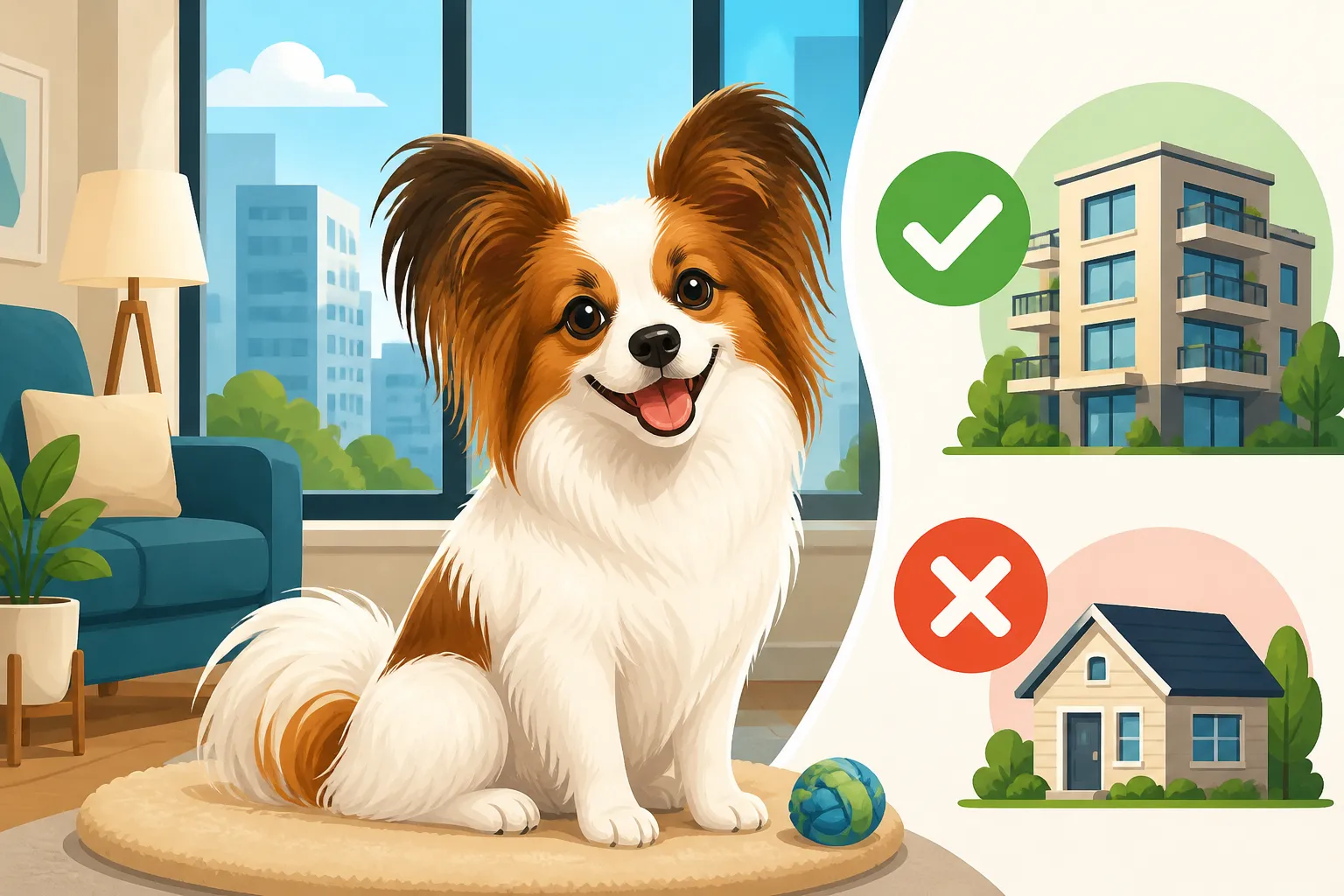
Whether a Papillon Suits an Apartment Dweller
A Papillon can fit comfortably in an apartment, but a small body does not automatically mean an easy neighbor. Barking at hallway noises, house-training setbacks, and long stretches alone can make apartment life stressful for both dog and owner. This guide explains what to expect, how to set up your home, and how to decide whether this lively companion suits your routine.
Is a Papillon a Good Apartment Dog
Why the breed can adapt to a smaller home
Papillons are compact, bright, and generally able to get useful exercise without a large yard. A short walk, a few play sessions, and training games can provide variety in a way that simply having access to a big space may not. In an apartment, everyday routines can work well if you make room for activity and attention rather than expecting the dog to entertain itself.
Their size can also make practical parts of city life easier. A Papillon is typically manageable in a carrier, can accompany an owner on many errands where dogs are welcome, and does not need a huge bed or a dedicated room. Still, small does not mean low-energy. Many Papillons are quick, curious dogs who notice movement and sounds, and they may need more mental engagement than their lap-dog appearance suggests. For ideas beyond walks, see What Mental Work a Papillon Needs.
An apartment can suit a Papillon in a quiet building or a busy urban neighborhood, but the match depends on the individual dog and the household. A confident adult who has learned to settle may cope differently from a young puppy still adjusting to new sounds. If you are choosing a dog, ask about the puppy’s temperament and how the breeder or rescue has introduced it to household noises, handling, and time alone.
What apartment living does not solve
A small home does not remove a dog’s need for exercise, company, training, or toilet breaks. Without enough to do, a Papillon may bark, pace, chew, or become demanding. Those behaviors can feel especially intense in a studio, where there is little separation between your workspace, sleeping area, and the dog’s activity zone.
The main tradeoff is often sound, not square footage. A Papillon may alert when someone passes the door, a neighbor comes up the stairs, or a delivery arrives. In a building with thin walls, even a dog that is not barking for long stretches can create tension if the sound happens frequently. It helps to plan for this before you move in or bring a dog home. How Much a Papillon Barks and Whether a Papillon Suits Close Neighbors cover two closely related questions.
Shared outdoor space can be another complication. Some apartment residents have a private yard or a nearby patch of grass; others need to use an elevator, cross a lobby, or walk to a public area for every toilet trip. That extra time matters most with a puppy, a senior dog, or a Papillon who is unwell. Think through the route at 6 a.m., in heavy rain, and when you are carrying groceries—not only on a pleasant weekend afternoon.
A quick fit check
Use this table as a starting point, not as a guarantee. A Papillon’s age, health, training, and temperament all affect how well apartment life works.
| Apartment factor | More manageable when | More challenging when |
|---|---|---|
| Noise | You can train calm responses and reduce triggers near the door | Hallway sounds are constant and barking carries easily |
| Toilet access | You can take the dog out regularly and promptly | Getting outdoors takes a long elevator ride or a long walk |
| Time alone | Your schedule includes gradual alone-time training and breaks | The dog is left for long periods without a plan |
| Exercise | You can provide daily walks, play, and short training sessions | You expect indoor space alone to meet the dog’s needs |
| Building rules | Dogs are allowed and you understand the relevant restrictions | Size, noise, elevator, or common-area rules create frequent obstacles |
The Daily Routine a Papillon Needs in an Apartment
Exercise means more than a quick trip outside
Papillons usually benefit from a mix of walking, play, and thinking. A brisk neighborhood loop can offer smells and new sights, while a short game of fetch indoors or a few minutes of cue practice can add useful variety. The goal is not to exhaust a tiny dog with relentless activity. It is to give the dog a predictable outlet and help it learn when it is time to settle.
A practical day might include a morning toilet walk, an afternoon break, and a longer outing later, with brief play or training at home. The exact routine depends on the dog’s age, health, weather, and temperament. A young puppy needs frequent bathroom opportunities and short, age-appropriate activity. An adult may enjoy longer walks, while a senior Papillon may prefer gentler outings and more rest. For a closer look at activity needs, read How Much Exercise a Papillon Needs.
Apartment owners sometimes try to make up for limited outdoor space with an intense weekend outing after a quiet week. That can leave a dog over-tired without resolving the weekday boredom. Short, regular activities tend to be easier to maintain: practice a recall cue in the hallway only where it is safe and permitted, scatter a few pieces of the dog’s meal for sniffing, or teach a simple trick between meetings.
Alone time needs to be taught gradually
Many Papillons enjoy close company and may follow their people from room to room. That affection is lovely when you are home, but it can make departures difficult if the dog has not learned that being alone is safe and temporary. Working from home does not automatically prepare a puppy for solitude; a dog that has never been separated from its owner may find a sudden return to office days especially confusing.
Build alone-time skills in small steps. Start with calm, brief separations while you remain nearby, then gradually increase the time if the dog stays relaxed. Keep departures and returns low-key, and give the dog a safe resting place. A food puzzle or chew may help some dogs settle, but it is not a substitute for gradual practice or a bathroom break.
If your workday is long, plan for someone to provide a visit or walk rather than assuming a Papillon can simply wait. A trusted dog walker, friend, or pet sitter may be useful, particularly during puppyhood or a change in schedule. Watch for distress such as persistent vocalizing, frantic scratching at the door, or inability to settle; these signs call for patient support, and sometimes guidance from a veterinarian or qualified behavior professional. How Long a Papillon Copes Alone explains the issue in more detail.
Make room for calm as well as activity
Apartment life often includes shared corridors, elevator rides, people passing the door, and dogs nearby. Teach your Papillon to wait politely, walk on a loose leash, and pause before going through the apartment door. These small skills reduce the chance of bolting into a hallway or surprising a neighbor who is carrying a dog or groceries.
Create a predictable resting spot away from the busiest part of the entryway. A bed, crate, or gated area can give the dog a place to unwind, as long as it is introduced positively and never used as punishment. In a studio, a mat can mark a quiet zone even if it is only a few feet from your desk. It is also helpful to reward calm behavior when the dog hears a distant sound instead of waiting until barking starts.
Indoor enrichment does not need to be complicated. Rotate a few safe toys, practice short training sessions, or offer a food puzzle using part of the dog’s regular meal. If you are shopping for puzzle toys or basic supplies, Chewy is one option for comparing products; choose items that suit your dog’s size and chewing habits, and supervise new toys until you know how your dog uses them.
Common Apartment Challenges and How to Handle Them
Barking at doors and building noise
A dog may bark because it is startled, excited, worried, or trying to alert its household. The first step is to notice the pattern. Does barking happen when footsteps approach the door, when the elevator opens, or whenever the dog sees people through a window? Identifying the trigger helps you change the setup instead of repeatedly calling out after the dog has already become worked up.
If hallway activity is the problem, move the dog’s bed away from the front door, limit access to a window that overlooks a busy path, or use a fan or other steady household sound to soften abrupt noises. Then reward the behavior you want: a glance toward the door followed by turning back to you, for example. A quiet cue is most useful when taught in calm moments and practiced gradually, not shouted over active barking. How to Teach a Papillon a Quiet Cue offers a focused approach.
Be considerate of neighbors, but do not assume that scolding will solve the issue. Loud correction can add excitement or anxiety, and the dog may learn that door sounds predict a tense interaction. If the barking is persistent, appears linked to fear, or becomes worse despite consistent practice, discuss it with a veterinarian or a qualified trainer who uses humane, reward-based methods.
House-training when there is no yard
Puppy house-training can feel demanding in an apartment because the trip outside takes longer than opening a back door. Young puppies may need to go out after waking, eating, drinking, and active play, as well as at other frequent intervals. Carrying a small puppy through a lobby or down stairs can help avoid accidents on the way, but follow your veterinarian’s advice about safe outings during vaccination and socialization.
Choose a toilet route and make it predictable. Take the dog to the same suitable outdoor spot, give it time to sniff, and reward it promptly for going. If an accident happens indoors, clean the area thoroughly and adjust the schedule rather than punishing the puppy. Accidents can mean the dog was not taken out soon enough, did not understand the routine, or is dealing with a medical issue.
Some owners use indoor pads as a temporary aid, particularly when outdoor access is difficult, but pads can blur the message for dogs expected to toilet outdoors. Decide what works for your home and be consistent. For a puppy, a reliable plan matters more than whether the route includes a yard. Read Why a Papillon Is Slow to House Train if progress feels uneven, and ask your veterinarian about sudden changes in bathroom habits.
Stairs, elevators, and small-dog safety
A Papillon’s small size calls for sensible care in shared spaces. Keep the dog on leash in hallways and elevators, and avoid letting it approach unfamiliar dogs before you know whether both animals are comfortable. A large dog may not intend harm but can knock over a tiny companion during an enthusiastic greeting. Staying close and creating space is often safer than asking a small dog to navigate a crowded lobby alone.
Stairs can be tiring or risky for some dogs, especially puppies, seniors, or Papillons with knee problems. Use a carrier or carry the dog when appropriate, and ask a veterinarian for advice if you notice limping, skipping, reluctance to climb, or changes in how your dog moves. A ramp or step setup may help with furniture at home, but it should be stable and easy for the dog to use. More on household setup is available in Whether a Papillon Needs Ramps to Furniture.
Flooring also matters. Smooth tile or polished wood can make a quick turn or landing slippery. Place secure, washable rugs in the dog’s main paths, especially near the bed, food area, and places where the dog jumps down. If you are buying mats or other apartment essentials, Chewy can be one place to compare pet products, but measure first and look for items that stay in place and are easy to clean.
How to Decide Whether Your Apartment and Lifestyle Fit
Check the building before bringing a dog home
Read your lease and building rules carefully. Look for restrictions on dogs, size, common-area access, noise, waste disposal, and whether pets can use shared outdoor spaces. If the policy is unclear, ask the landlord or property manager to clarify it in writing. A dog that is welcome in one building may not be allowed in another, even within the same neighborhood.
Consider the physical layout, too. Is there a safe place nearby for toilet breaks? Can you get outside quickly when the puppy needs to go? Is there a quiet corner for the dog’s bed? A large apartment is not automatically a better fit than a small one if it is noisy, difficult to access, or lacks a workable bathroom routine. Likewise, a compact home can work well if the dog gets attention, exercise, and opportunities to rest.
If you live in a busy area—whether in a high-rise, a walk-up, or a neighborhood with crowded sidewalks—think through how you will manage daily transitions. A carrier may help in some situations, but the dog still needs appropriate walks and social experiences. A harness that fits securely can be useful for leash walks; check the fit regularly and ask a veterinarian or experienced groomer for help if you are unsure how to put it on safely.
Be honest about your schedule and expectations
A Papillon is more likely to suit you if you enjoy interacting with your dog throughout the day and can build a routine around regular outings. It may be a difficult match if you are away for long hours, cannot arrange bathroom breaks, or need a consistently silent home. That does not mean apartment dwellers should rule out the breed. It means the practical support plan needs to be in place before problems begin.
Think about your tolerance for training, too. Teaching a dog to settle when it hears a neighbor, wait at the elevator, and cope with short periods alone takes repetition. A puppy may also need nighttime bathroom trips and close supervision. If you want a dog who can be left alone for most of the day and rarely needs structured activity, a Papillon may not fit your expectations.
An adult rescue dog can sometimes be a better match than a puppy if its behavior in a home is already known. Ask what the dog is like around apartment sounds, how it handles being alone, and whether it is comfortable with elevators or stairs. A rescue’s previous experience will not guarantee future behavior, but it can help you make a more informed choice. For general suitability questions, see Whether a Papillon Suits Someone Who Works Full Time and What Papillon Owners Wish They Had Known.
A realistic final checklist
Before committing, imagine an ordinary weekday rather than an ideal one. You wake up late, it is raining, your first meeting starts soon, and the elevator is busy. Can you still take the dog out, give it a little attention, and arrange care if you will be gone longer than planned? Your answers will say more about fit than the size of your living room.
A Papillon can be a happy apartment companion when the household provides a reliable toilet routine, daily activity, thoughtful noise training, and companionship. The breed’s small stature is convenient, but its intelligence and alertness mean it needs engagement. Before choosing a puppy or adult dog, talk with a responsible breeder, rescue organization, and veterinarian about the individual dog’s temperament, health, and likely needs.
If you decide the fit is right, prepare the home before the dog arrives: set up a safe resting area, choose a consistent toilet route, secure the leash and harness, and plan how you will handle time away. For apartment owners, those simple preparations can make the first weeks calmer for the dog, the owner, and the neighbors.
Disclaimer
This article is for general informational purposes only and does not constitute professional advice. Laws, prices and regulations vary by location and change over time. Consult a qualified professional for guidance on your specific situation.