Why a Papillon Is Slow to House Train
It can be incredibly frustrating, can't it? You bring home your adorable Papillon puppy, or perhaps you've welcomed an adult rescue into your life, and you find yourself constantly battling unexpected puddles or little "gifts" on the rug. Many Papillon owners eventually wonder if their charming, intelligent little companions are just inherently slow to house train. It's a common struggle that can leave you feeling exasperated and questioning your training methods. This comprehensive guide will delve into the various reasons why Papillons sometimes take a bit longer to master potty training, offering insight into their unique physical traits, behavioral quirks, and common owner pitfalls, alongside actionable strategies to finally achieve a reliably house-trained companion.
Understanding the Papillon's Unique Potty Training Challenges
It's easy to assume all dogs learn house training at roughly the same pace, but that's simply not true. Papillons, with their delicate build and spirited personalities, come with their own set of considerations that can make the journey to a reliably clean house a little longer and more nuanced than with some other breeds.
Their Small Bladder and High Metabolism
One of the most fundamental reasons Papillons can seem slow to house train lies in their very physiology. These are tiny dogs, and their internal organs are proportioned accordingly. Just imagine a small teacup—it fills up much faster than a large pitcher, right? The same principle applies to a Papillon's bladder. It simply cannot hold as much urine as a larger dog's, meaning they need to eliminate much more frequently.
Compounding this is their often-high metabolism. Papillons are active, energetic little dynamos, burning through food and water at a quicker rate than a more sedentary or larger breed. This faster metabolic process means that what goes in tends to come out more rapidly. A Papillon puppy, in particular, might need to relieve itself every hour or two, especially after waking up, eating, or a burst of playtime. If you're not absolutely on the ball with taking them out, accidents are almost inevitable, not because they're being stubborn, but because their bodies genuinely can't hold it. This isn't a training failure; it's a biological reality you need to work with.
As they mature, their bladder capacity does increase somewhat, but they will always be a dog that needs more frequent potty breaks than, say, a Labrador. It's crucial to acknowledge this from day one. You might find yourself asking Why a Papillon Puppy Must Not Go Long Without Food as it directly impacts their need to relieve themselves. Establishing an almost constant vigilance in the early days is not overkill; it's practically a necessity for success.
The "Hidden" Accidents of a Tiny Dog
Another challenge, often overlooked, is the sheer size of a Papillon's accidents. When a larger dog has an accident in the house, it's usually unmistakable. You're talking about a significant puddle that's hard to miss, even if you're not paying close attention. This immediate and obvious feedback loop is crucial for owners to realize an accident has happened, clean it up thoroughly, and adjust their routine.
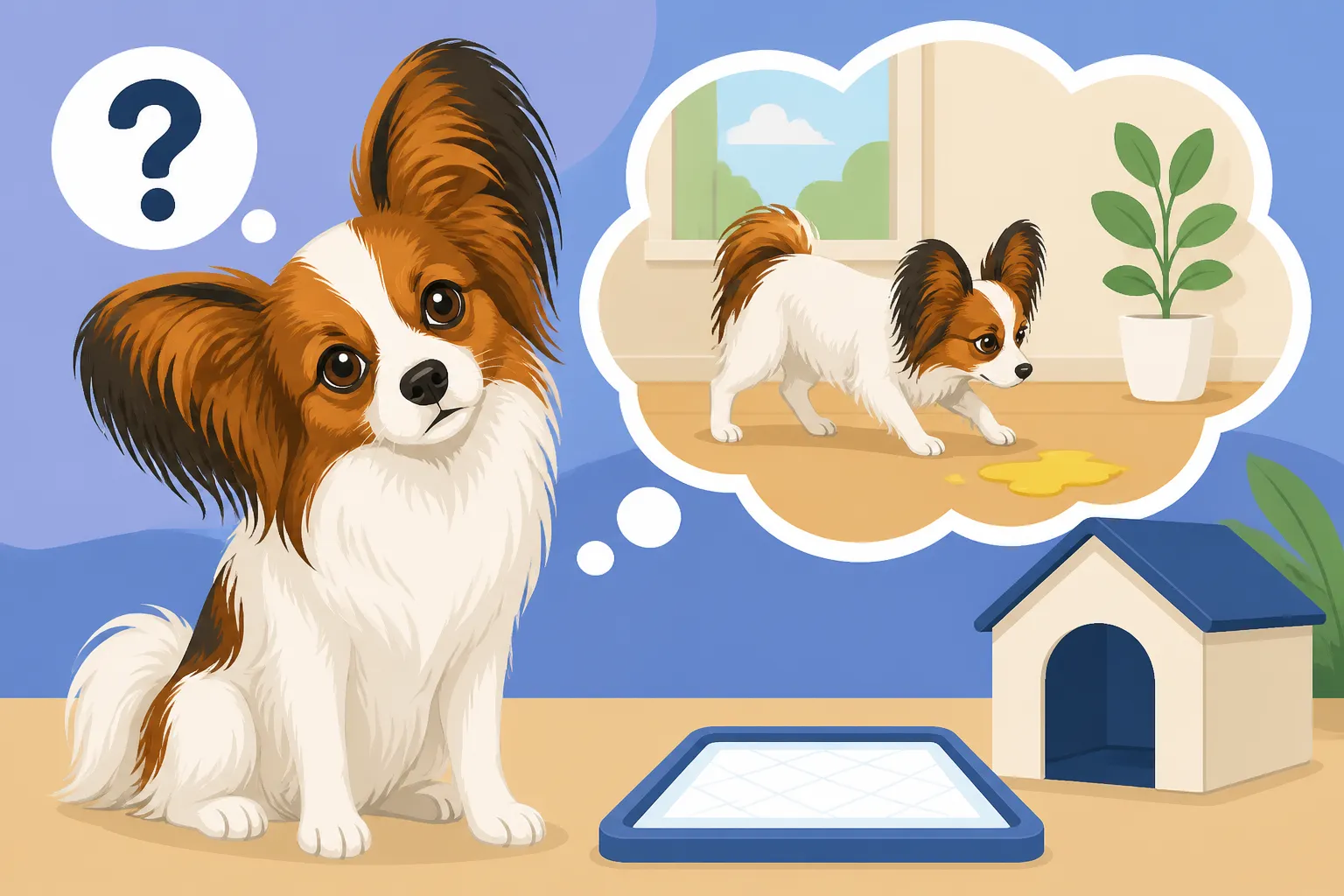
With a Papillon, a urine accident might be no bigger than a small coaster, and a bowel movement could be quite tiny and easily hidden under a piece of furniture, a rug, or even a discarded blanket. If you're not constantly scanning your floors, especially in less-trafficked areas, these small accidents can go unnoticed for hours. The problem with this isn't just the lingering mess; it's the impact on your dog's training. If you don't discover the accident, you can't clean it properly, and more importantly, you can't adjust your schedule to prevent future occurrences. Your Papillon might relieve itself inside, you miss it, and therefore they don't get taken out more frequently to break the habit.
Furthermore, these undetected accidents leave behind an odor that, while perhaps imperceptible to the human nose, is a clear signal to your dog: "This is a good spot to go!" Dogs are driven by scent, and if an area smells like a toilet, they'll instinctively return to it. This can quickly create a pattern where your Papillon feels perfectly justified in using certain indoor spots as their personal restroom, setting back your house training efforts significantly. It highlights why understanding How Long House Training a Papillon Takes can vary so much from one dog to another.
Behavioral and Environmental Factors Contributing to Slow House Training
It's not all about biology; sometimes, a Papillon's personality and their environment play a significant role in how quickly they grasp the concept of "outside only." These aren't necessarily negative traits, but rather characteristics that require a thoughtful approach to house training.
The Weather-Averse Papillon and Outdoor Aversions
Let's be honest: some Papillons are just not big fans of inclement weather. With their single, silky coat and delicate frame, they're not exactly built for trudging through deep snow or standing out in a downpour. Many owners have experienced the sheer determination of a Papillon refusing to step paw outside when it's raining, windy, or cold. They'll stand at the door, give you the most pitiful look, and then dart back inside, convinced that the great outdoors is a terrifying, wet, or frigid wasteland.
This aversion can create a major roadblock in house training. If your dog is reluctant to go out, they're not going to relieve themselves, even if they desperately need to. Instead, they'll hold it until they're back in the comfort of your warm, dry home, where they'll quickly find an indoor spot. This inadvertently reinforces the idea that inside is a perfectly acceptable place to potty. Why a Papillon Refuses to Go Out in Rain is a common query, and it's a challenge many owners face. You might have to get creative with raincoats, covered potty areas, or even simply waiting out the worst of the weather, but the goal remains the same: ensuring they have successful outdoor potty breaks.
This sensitivity extends beyond just weather. Some Papillons can be particular about surfaces, refusing to go on wet grass or concrete if they're used to something else. Others might be easily distracted by noises, squirrels, or passersby, making them forget their mission to potty. Understanding and accommodating these preferences, or gently desensitizing them, is key to consistent outdoor success.
The Impact of Early Experiences and Puppy Mill Backgrounds
Just like humans, a dog's early life experiences shape their understanding of the world, and this includes house training. A Papillon puppy raised in a clean, stimulating environment by a responsible breeder who began potty training correctly will likely have a much easier time adapting to your routine. They'll have a foundation of understanding where to go.
However, many Papillons, particularly those from less-than-ideal backgrounds such as puppy mills, pet stores, or homes where they were simply left in a cage or pen full of their own waste, can develop deeply ingrained habits that make house training a monumental task. If a puppy has been forced to live in their own waste, they often lose the natural instinct to keep their "den" clean. They learn that going potty wherever they are is normal and acceptable. This is often referred to as "kennel soiling."
Rescue Papillons, too, can present unique challenges. They might have been strays, lived in multiple homes, or spent time in shelters where consistent potty training wasn't a priority. These dogs often need extensive re-training, patience, and understanding as they unlearn old habits and form new ones. It’s not a reflection of their intelligence, but rather the powerful influence of their past. Integrating a comprehensive online training program like those offered by BAXTER & Bella can provide structure and support for owners dealing with these more challenging cases, helping you build a solid foundation even with a dog who's had a rough start.
Common Owner Mistakes That Sabotage Papillon Potty Training
While Papillons have their quirks, many house training delays are inadvertently caused or prolonged by common human errors. It's not about blame, but about understanding where we can adjust our approach to better support our small companions.
Inconsistent Routines and Missed Opportunities
The golden rule of house training any dog, especially a Papillon, is consistency. Without a predictable schedule, your dog can't learn what's expected of them. Taking your Papillon out at random times, or only when they signal they need to go, often leads to accidents. Remember, their bladders are small, and by the time they're desperately signaling, it might be too late to get them all the way outside.
Missing a critical potty break, even just once, can set you back. Did you just wake up? Potty time. Did they just finish eating or drinking? Potty time. Did they just have a vigorous play session? Potty time. These are prime opportunities for accidents if ignored. A common mistake is assuming that because they went outside an hour ago, they're good for another few hours. With a Papillon puppy, that's often a faulty assumption. The smaller the dog, the more diligent you need to be.
Furthermore, inconsistency in how you reward them can also hinder progress. If sometimes they get a treat and praise for going outside, and other times they don't, the message isn't clear. Every successful outdoor potty break should be met with enthusiastic praise and a high-value treat immediately. This consistent positive reinforcement solidifies the desired behavior in their minds. A structured schedule, where you take them out regularly, regardless of apparent need, is paramount. This includes even Crating a Papillon Overnight effectively to minimize overnight accidents and establish a consistent morning routine.
Improper Cleaning and Scent Marks
This is a big one that often goes unaddressed, and it can dramatically prolong house training. When a dog has an accident indoors, merely wiping it up with a paper towel or a standard household cleaner isn't enough. To a dog, whose sense of smell is exponentially more powerful than ours, the scent of urine or feces can linger for a very long time, even if you can't smell it. This residual scent acts as a powerful attractant, essentially marking the spot as an acceptable toilet area for your dog.
Imagine walking into a restroom and smelling strong cleaning chemicals but still getting hints of what was there before. That's often what a dog experiences. They will gravitate back to those spots, making it incredibly difficult to break the habit of indoor accidents. It's a frustrating cycle for owners who think they've cleaned thoroughly, only for their Papillon to return to the same spot days or weeks later.
To effectively eliminate these scent markers, you need to use an enzymatic cleaner specifically designed to break down organic matter and neutralize odors. These aren't just air fresheners; they contain enzymes that digest the proteins in urine and feces, removing the attractant for your dog. You can find excellent enzymatic cleaners on Amazon that are specifically formulated for pet stains. Without this crucial step, you're fighting an uphill battle against your Papillon's natural instincts and their superior sense of smell.
Strategies for Successful House Training Your Papillon
While the challenges might seem numerous, successful house training for your Papillon is absolutely achievable. It requires dedication, consistency, and a willingness to understand and work with your dog's specific needs. Here are some strategies that have proven highly effective for Papillon owners.
Crate Training for Papillons
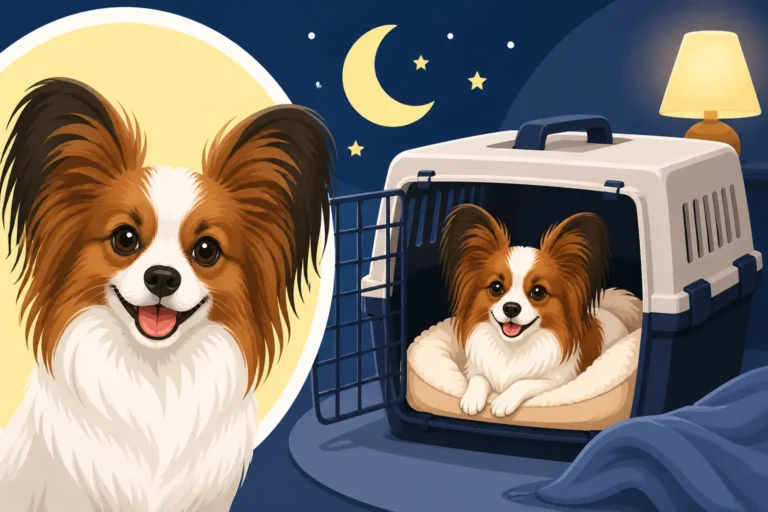
Crate training is, without a doubt, one of the most powerful tools in house training a Papillon. The principle is simple yet effective: dogs are naturally den animals and are reluctant to soil their sleeping area. By providing a properly sized crate, you leverage this instinct. The crate should be just large enough for your Papillon to stand up, turn around, and lie down comfortably. If it's too big, they might designate one end as a sleeping area and the other as a potty area, defeating the purpose.
Introduce the crate positively, making it a comfortable, safe haven filled with soft bedding and perhaps a safe chew toy. Never use the crate as punishment. When you can't actively supervise your Papillon, they go in the crate. This prevents them from having unsupervised accidents in the house. The moment they come out of the crate, the very first thing you do is take them directly outside to their designated potty spot. This teaches them that relief comes immediately after leaving their den. This method is so effective because it forces them to hold their bladder, strengthening their control and building a strong association between going outside and relief. Consider resources like BAXTER & Bella's online puppy school for comprehensive crate training guidance and support.
This strategy dramatically reduces the number of indoor accidents, which in turn reduces the number of "hidden" scent markers and reinforces the desired behavior. Over time, your Papillon learns to associate the feeling of needing to go with waiting until they are outside. For detailed instructions, you might want to read Crating a Papillon Overnight.
Consistent Schedule and Positive Reinforcement
Building a rock-solid routine is non-negotiable for house training success. Papillons thrive on predictability. Your schedule should involve taking your Papillon out:
- First thing in the morning (immediately upon waking).
- After every meal.
- After every drink.
- After every nap.
- After every play session.
- Before bedtime.
- Every 1-2 hours during the day for puppies, extending gradually as they mature.
When you take them out, always go to the same designated potty spot if possible. Keep them on a leash initially, even in your own yard, to keep them focused on the task at hand and prevent distractions. The moment they eliminate, praise them lavishly and immediately offer a high-value treat. This instant reward is critical for them to connect the action (pottying outside) with the positive outcome (treats and praise).
Avoid scolding them if you catch them in the act indoors. A loud "No!" or startling them might interrupt the behavior, but it can also teach them to hide their accidents from you. Instead, calmly but quickly pick them up (if safe to do so) and rush them outside. If they finish outside, reward them. If they don't, bring them back in and try again in 10-15 minutes, perhaps crating them in between. Focus on rewarding the successes, not punishing the mistakes. Understanding What a Papillon Needs Every Day often includes these consistent routines.
Leveraging Potty Pads (With Caution)
Potty pads, sometimes referred to as "wee-wee pads," can be a controversial topic in house training, especially for small breeds. For some Papillon owners, particularly those living in apartments on high floors, or those dealing with extreme weather, potty pads can seem like a convenient solution. Whether Indoor Pads Suit a Papillon truly depends on your long-term goals and lifestyle.
The main benefit is that they offer an acceptable indoor spot for your Papillon to relieve themselves, which can be useful for very young puppies who can't hold it for long, or for older dogs with incontinence. They can prevent accidents on your floors and provide a designated area.
However, the caution comes if your ultimate goal is for your Papillon to only go outside. Introducing pads can confuse the training process, as your dog learns that going inside is sometimes okay. This can make the transition to outdoor-only pottying much harder later on. If you do use pads, place them in a consistent, easily accessible spot away from their food and sleeping area. Reward heavily for using the pad. If your ultimate goal is outdoor-only, you'll eventually need to transition them off the pads by slowly moving the pad closer to the door, then outside, and eventually removing it. For some owners, particularly those with very small Papillons who genuinely struggle with outdoor access due to health or environmental factors, pads become a permanent solution, and that's perfectly acceptable as long as it's a conscious choice.
| Potty Training Challenge | Common Mistake | Effective Strategy |
|---|---|---|
| Small Bladder/High Metabolism | Infrequent potty breaks | Frequent, scheduled outings (every 1-2 hours for puppies) |
| Hidden Accidents | Incomplete clean-up; missing small messes | Thorough cleaning with enzymatic cleaners; constant supervision |
| Weather Aversion | Forcing dog out; giving up | Provide shelter/rain gear; use a designated covered area outside |
| Past Poor Habits | Lack of consistent re-training; quick frustration | Structured crate training; consistent routine; patience |
| Inconsistent Routines | Random outings; inconsistent rewards | Strict schedule; immediate, high-value rewards for outdoor success |
| Lingering Scents | Using standard cleaners only | Always use enzymatic cleaners for all indoor accidents |
Consistency in approach, combined with empathy for your Papillon's physical and behavioral traits, will pave the way for a house-trained, happy companion. Remember, it's a marathon, not a sprint, but the finish line is definitely within reach!
Disclaimer
This article is for general informational purposes only and does not constitute professional advice. Laws, prices and regulations vary by location and change over time. Consult a qualified professional for guidance on your specific situation.