Whether a Tricolor Papillon Is Preferred
A tricolor Papillon can turn heads with its crisp white coat, dark patches, and warm tan markings, so it is natural to wonder whether that pattern is considered the best. The short answer: tricolor is an accepted and attractive color, but it is not automatically preferred over other standard colors. Here’s how breed standards, show judging, and everyday ownership affect the answer.
What tricolor means on a Papillon
The three colors in the pattern
A tricolor Papillon has white plus two other colors, commonly black and tan. The white usually forms part of the background, while darker patches appear on the head and body. Tan markings may show above the eyes, on the cheeks, inside the ears, or on the legs, though their exact placement and intensity vary from dog to dog.
“Tricolor” describes a color pattern, not a separate Papillon variety. A tricolor dog is still a Papillon, and its color does not tell you whether it will be more energetic, easier to train, healthier, or better suited to a particular home. Those traits depend on the individual dog, its breeding, health, socialization, and care—not simply whether it has tan points.
Papillons are generally parti-colored, meaning they have a white base with patches of another color. Their patterns can look quite different even when the dogs share the same broad color description. One tricolor Papillon might have a balanced mix of black, white, and tan, while another may have a large dark saddle and only small tan accents. For more on the range of accepted patterns, see Which Colors a Papillon Comes In.
How tricolor differs from other accepted colors
Papillons can have a range of colors on a white background. Depending on the breed standard being followed, examples include black, red, sable, and combinations with tan markings. A tricolor is one of those combinations; it is not the only color pattern that can be considered correct or attractive.
A dog with tan points may look especially striking because the warm markings create contrast against the darker coat and white areas. But contrast is a matter of appearance, not proof of superior quality. A red-and-white or sable-and-white Papillon can also have a beautiful, well-balanced coat. Color descriptions can be confusing, too: breeders and owners may use terms such as “sable,” “red,” or “tricolor” somewhat differently in casual conversation. If you are comparing puppies, ask the breeder how they describe the markings and what color is recorded in the puppy’s paperwork.
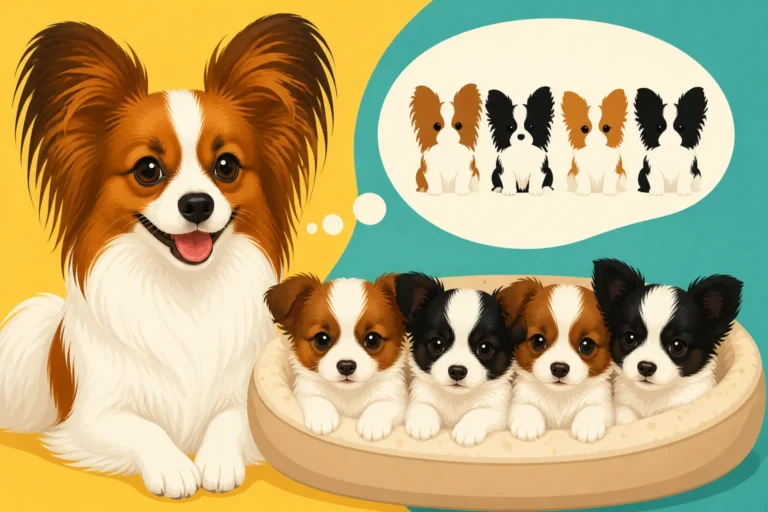
A mostly white coat with patches is not the same as a solid-colored coat. The distinction matters because Papillon standards describe the breed as parti-colored. You can read more about that difference in Whether a Solid Colored Papillon Is Standard. A puppy’s markings can also change in appearance as its coat develops, so a photograph taken at a very young age may not show exactly how the adult pattern will look. Whether a Papillon Puppy's Markings Change explains what owners may notice as a dog matures.
Is a tricolor Papillon preferred in the show ring
Color is only one part of judging
A tricolor Papillon may be shown if it meets the rules of the relevant kennel club, but the pattern alone does not make the dog a stronger show prospect. Conformation judges assess the dog as a whole, including its structure, movement, proportions, expression, and presentation. A striking coat can catch the eye, but it cannot make up for faults in other areas.
That distinction is useful for pet buyers, too. It is easy to focus on a puppy’s face markings in photos and miss the questions that matter more over a lifetime: Have the parents had appropriate health testing? Does the breeder raise puppies thoughtfully? Is the dog confident and comfortable with handling? Does the breeder explain the puppy’s needs and provide clear records? Color can be part of your preference, but it should not be the main measure of a puppy’s quality.
Standards and judging practices can differ among kennel organizations and countries. If showing is important to you, check the standard and rules for the specific organization where you plan to compete, then discuss the puppy’s prospects with an experienced breeder or knowledgeable show mentor. A breeder may have a view about a puppy’s show potential, but no color pattern guarantees wins.
Markings can matter without making one color best
Breed standards may describe where color should appear on the head, how white markings are viewed, or what kind of blaze is desirable. Those details are not the same as declaring tricolor the best color. In practice, a particular marking may be more or less desirable under a given standard, while the overall quality of the dog remains the larger picture.
For instance, a puppy might have the familiar dark ears and eye markings that make a Papillon face immediately recognizable, but a white blaze that is uneven or narrow. That does not automatically make the dog unsuitable as a companion, nor does it mean the dog’s color is “wrong.” If show eligibility matters, ask specifically how the markings compare with the applicable standard rather than relying on a casual label such as “perfect tricolor.”
A blaze is the white marking that may run up the center of the face. Some standards describe a clearly defined blaze as preferred, but that does not mean every Papillon must have an identical stripe. For more detail, see Whether a Papillon Must Have a White Blaze and Whether a Papillon's Blaze Should Be Even. Facial symmetry is another separate question from color category; Whether a Papillon's Face Markings Should Be Symmetrical looks more closely at that topic.
Comparing Papillon color choices
| What you are comparing | What it means | What it does not mean |
|---|---|---|
| Tricolor pattern | White plus two other colors, often black and tan | That the dog is automatically better for showing |
| Red-and-white or sable-and-white pattern | Another possible color combination on a white background | That the dog is less typical or less valuable as a companion |
| Face markings | The placement and shape of color and white on the head | A reliable indicator of personality or health |
| Show potential | How the dog compares with the applicable breed standard overall | A guarantee based on coat color alone |
| Puppy coat appearance | What the markings look like at a particular age | A promise that every shade and boundary will stay identical |
Choosing a puppy for the right reasons
If you love tricolor Papillons, it is perfectly reasonable to say so. A preferred appearance can be part of choosing a dog, just as some people prefer a particular coat length or expression. The key is not to let that preference crowd out health, temperament, and responsible breeding. Ask what health evaluations are relevant to the parents, how the puppies are raised, and what support the breeder offers after the puppy goes home.
Be cautious if a seller treats a fashionable color as a reason to rush you, charges extra without explaining the basis, or makes sweeping promises about health and temperament because a puppy is tricolor. Color alone cannot establish that a dog is healthy or well bred. A responsible breeder should be able to discuss the puppy’s background and care without making the coat pattern sound like a medical or behavioral advantage.
You might also find that your favorite puppy is not the one with the most dramatic markings. A lively, curious puppy that settles comfortably when handled may be a better match than the puppy whose coat looks most striking in a photo. If you are buying primarily as a companion, talk through your household, activity level, and experience with small dogs. A good match is about the individual Papillon, not winning a color contest.
Looking at color over time
A puppy’s coat can change as it matures. The overall pattern may remain recognizable while shades deepen, lighten, or become more distinct. Lighting, coat length, and grooming can also make markings appear different in photos. A breeder who has watched the puppy grow may be able to explain how the coat has developed so far, but no one should promise that every shade will remain exactly the same.
The question “Which color is most common?” is also different from “Which color is preferred?” Frequency can vary among breeding populations and regions, and a common color is not necessarily more desirable under every standard. For a closer look at prevalence, see Which Papillon Color Is Most Common. Coat appearance may shift with age as well, which is covered in Whether a Papillon's Color Fades With Age.
Caring for a tricolor coat
Keep grooming practical and gentle
A Papillon’s coat is long and silky, with feathering on areas such as the ears, chest, legs, and tail. Tricolor markings do not require a special grooming routine, but owners may notice dirt more readily on white areas after a walk or a romp through a damp yard. Regular brushing helps remove loose hair and catch small tangles before they tighten, particularly behind the ears and around the feathering.
Use a suitable comb or brush gently, working in sections rather than pulling through knots. If you are gathering basic grooming tools, retailers such as Chewy can be one place to compare brushes and combs; choose tools based on your dog’s coat and comfort, not a claim that a product will preserve a particular color. A calm routine, introduced gradually, is usually more helpful than trying to complete a full grooming session all at once.
For an outdoor walk, a tricolor Papillon does not need special protection because of its markings. The same sensible care applies to any Papillon: keep the coat clean, check for burrs or debris, and dry the dog when it gets wet. If you need shampoo, look for one intended for dogs and follow its directions. Chewy may also carry basic coat-care supplies, but avoid using harsh products or trying to lighten markings at home. If skin irritation, persistent staining, or unusual hair loss appears, ask your veterinarian rather than assuming it is a color issue.
Don’t confuse coat color with health
A black, tan, and white pattern does not diagnose a health condition, and it does not make a dog immune to common breed-related concerns. Ask the breeder about health screening and veterinary records regardless of whether you are looking at a tricolor, red-and-white, or sable-and-white puppy. Likewise, if a dog’s coat or skin changes suddenly, consider practical causes such as irritation, infection, parasites, or another medical issue instead of attributing the change to its color.
When buying grooming supplies, it is fine to compare options at places such as Chewy, but remember that routine products do not replace veterinary care. A dog that is persistently scratching, developing bald patches, or showing redness needs an appropriate assessment. Coat color is a visual feature; it is not a shortcut for judging health.
So, is a tricolor Papillon preferred
Tricolor is a recognized, appealing pattern, but it is not automatically the preferred Papillon color. Breed standards can set expectations for color and markings, while judges consider the dog’s overall quality rather than rewarding a pattern in isolation. For a companion, choose the Papillon whose health background, temperament, and needs fit your home. If you plan to show, discuss the relevant standard and the individual dog’s conformation with an experienced breeder or mentor.
It is fine to have a favorite. Just keep it in proportion: a beautiful tricolor coat can be a lovely feature, but the best Papillon for you is the one you can care for well and enjoy as an individual.
Disclaimer
This article is for general informational purposes only and does not constitute professional advice. Laws, prices and regulations vary by location and change over time. Consult a qualified professional for guidance on your specific situation.