Whether a Papillon Puppy’s Markings Change
A Papillon puppy’s coat can look noticeably different as it grows, which can leave owners wondering whether its markings are actually changing. Usually, the pattern itself stays broadly recognizable while coat length, texture, shading, and the puppy’s changing proportions alter how it looks. This guide explains what can shift, what usually stays put, and when a change deserves a closer look.
How Papillon puppy markings can appear to change
The coat changes as the puppy grows
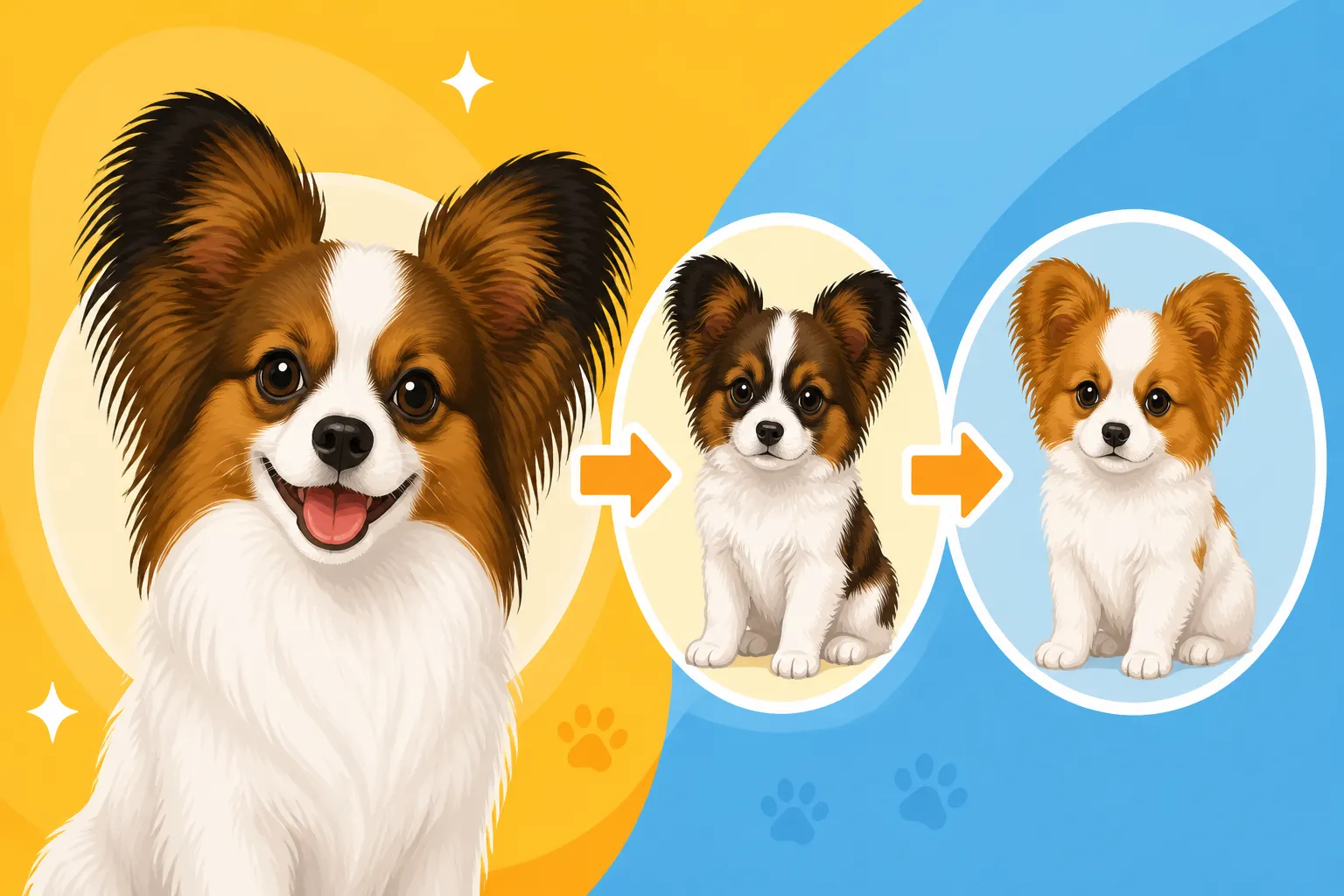
A Papillon puppy’s first coat is not always a reliable preview of its adult coat. As puppy hair gives way to a longer adult coat, the new hair can lie differently, grow into feathering, or reveal colors and patches that were hard to see before. The result may look like a marking has moved or changed size, even though the underlying pattern is much the same.
This is especially noticeable around the ears, chest, tail, and backs of the legs, where adult Papillons develop more feathering. A patch that looked sharply outlined on short puppy hair may seem softer or larger once longer hairs grow over its edges. Conversely, a darker area can become less obvious when pale feathering grows through or around it.
The timing and degree of these changes vary from dog to dog. For a broader sense of the transition, see The Age a Papillon's Adult Coat Arrives and Whether a Papillon Puppy's Coat Predicts the Adult. Neither a puppy’s early appearance nor a single photograph can guarantee exactly how its adult coat will look.
Shading can lighten or darken
Some Papillon coats include shaded hairs, such as darker tips over a lighter base. As the coat grows and sheds, the balance of those hairs can change the impression of a color. A puppy may look quite dark in one stage and appear lighter later, or a shaded area may become more noticeable as the adult coat develops.
Lighting can exaggerate the effect. Warm indoor bulbs, bright outdoor sun, a damp coat, and a recent bath can all make colors look different in photographs. Even two pictures taken a few weeks apart may give the impression of a dramatic change if one was taken in shade and the other in direct sunlight.
A change in shade does not necessarily mean that the puppy’s basic color pattern has changed. Compare the puppy in similar light and from similar angles before drawing conclusions. For a wider overview of accepted coat colors, see Which Colors a Papillon Comes In and Whether a Papillon's Color Fades With Age.
The puppy’s proportions change the view
A small puppy’s head and body do not have the same proportions as an adult dog’s. As the face lengthens and the head grows, a blaze or colored patch may look narrower, wider, or differently positioned in relation to the eyes and muzzle. The markings may be in the same places, but the landmarks around them have changed.
A white blaze is a good example. It can seem prominent on a tiny puppy face, then look less dominant as the muzzle and head mature. The reverse can happen if surrounding hair grows longer or darkens and makes the white area stand out more. These are often changes in visual balance, not the white marking physically moving across the face.
Markings are only one part of a Papillon’s appearance. If you are comparing your puppy with a breed description, Whether a Papillon Must Have a White Blaze and Whether a Papillon's Face Markings Should Be Symmetrical can help clarify what is being discussed.
What usually stays the same and what may shift
A Papillon’s coat pattern can look different over time without every part of its appearance changing. It helps to separate the location of colored patches from the coat’s length, texture, and shade.
| What you notice | What may be happening | What to look for |
|---|---|---|
| A patch seems softer at the edges | Longer hair is blending its outline | Compare the roots and the same area in older photos |
| A dark area looks lighter | New coat, shedding, or lighting may affect the appearance | Take pictures in consistent natural light |
| The face blaze seems narrower | The head and muzzle are growing | Compare the blaze against the same facial landmarks |
| Ear color seems more noticeable | Ear fringe is growing in | Look at the skin and hair roots rather than only the outer silhouette |
| A new bare or irritated area appears | This is not a typical coat-pattern change | Contact a veterinarian, particularly if it spreads or itches |
Markings generally do not migrate
Colored areas of coat usually remain in roughly the same locations as the dog matures. The boundary may look less crisp as hair grows, but a patch does not typically travel from one part of the body to another. If the coat seems to have changed dramatically, first check whether the hair is longer, parted differently, damp, or photographed under different lighting.
A simple example: a dark patch on a puppy’s shoulder may look smaller after feathering grows around it. The original patch may still be there, but the longer pale hairs soften its outline. On the face, the same effect can happen when hair length and head shape change together.
Regular photos make these differences easier to understand. Take a clear picture of each side, the face, and the back in similar light, and note the date. A phone album is enough; you do not need a special tracking system. If you already shop for routine puppy supplies through Chewy, you could keep a simple grooming and photo reminder alongside your usual care checklist.
The white and colored areas have different visual effects
Papillons are commonly recognized by a predominantly white coat with patches of color. The contrast between those areas can make even a modest change in hair length seem significant. A colored patch may appear broader when its fringe spreads out, while a white area may look smaller when it is surrounded by newly grown darker hair.
Do not judge a marking only by the outline of the longest hairs. Part the coat gently and look at how the color appears closer to the skin. This can help distinguish a change in hair direction or feathering from an actual change in the coat’s appearance.
For a more complete discussion of the breed’s coloring, Every Color a Papillon Is Allowed to Be provides useful context. Puppy coat changes are not a reason to assume a dog’s health or quality has changed; they are one part of normal development and individual variation.
Coat appearance is not the same as skin pigment
The color of the hair and the color of the skin beneath it are not the same thing. A dark patch of hair can cover pale skin, and a pale patch of hair can sit over more pigmented skin. A puppy’s nose, eye rims, and skin may also be evaluated separately from its coat pattern.
If you are unsure whether you are seeing a coat-color change or a skin change, take a clear picture and ask your veterinarian. Avoid scraping, bleaching, dyeing, or applying human hair products to investigate. Those approaches can irritate a puppy’s skin and make it harder to tell what is actually happening.
How to track your Papillon puppy’s coat
Take photos in a consistent way
Photographs are most useful when you can compare like with like. Choose a place with soft natural light, avoid strong filters, and photograph your puppy when its coat is dry. Try to use the same distance and angles each time: front of the face, both sides, back, and tail.
You do not need to take pictures every day. A monthly record is often enough to notice gradual changes without turning normal puppy growth into a source of worry. Write down anything relevant, such as a bath, a heavy shed, or a haircut around the feet, so you remember why one image may look different from another.
If you share pictures with a breeder or veterinarian, include the date and mention whether the coat was wet, freshly brushed, or photographed outdoors. That small detail can prevent a lighting difference from being mistaken for a major color change.
Groom gently and avoid trying to alter the color
Brushing helps you see the coat more clearly, but it should be gentle, especially around the ears and other areas with fine feathering. A comb that reaches through the coat without pulling is more useful than forceful brushing that can break hairs or make a puppy wary of grooming. If you are choosing basic grooming supplies, Chewy is one place owners may look for combs and coat-care products; select tools appropriate for a small dog and follow your groomer’s or veterinarian’s advice.
Bathing can temporarily change how coat color appears because clean, dry hair reflects light differently from oily or damp hair. Use a dog-appropriate shampoo and rinse thoroughly. Chewy and local pet shops carry a range of pet shampoos, but the right choice depends on your puppy’s skin and coat; ask your veterinary team before using medicated products or anything intended to change coat color.
Do not use whitening products, hair dye, bleach, or human cosmetics to make markings look more defined. The goal is to keep the coat clean and comfortable, not to make a puppy’s natural pattern look different. If you are uncertain whether a product is safe, check with your veterinarian before applying it. A retailer such as Chewy can help you locate ordinary grooming supplies, but product suitability should come first.
Ask the breeder what they have seen in the family
A breeder may be able to describe how related puppies or adult dogs changed as their coats matured. Ask for adult photographs of the parents and, if available, older relatives from the same line. This is useful context, but it is not a promise that your puppy will develop the same shades or markings.
It is also reasonable to ask which parts of your puppy’s current appearance are expected to change as the coat grows. A breeder who knows the family may be able to point out typical shading or coat development. If you are learning more about the breed’s appearance overall, What People Get Wrong About the Papillon offers additional context.
Treat color predictions as estimates rather than guarantees. Individual dogs can mature differently, and photographs can make even closely related dogs appear more alike or more different than they are.
When a change may need attention
Normal coat development is gradual and does not usually harm the skin
A gradual shift in the apparent shade or outline of a marking, without discomfort or skin changes, is usually a coat question rather than an emergency. The puppy acts normally, the hair remains present, and the skin is not inflamed, scabby, or sore. In that situation, consistent photos and routine grooming can help you follow what is happening.
A sudden patch of hair loss, redness, crusting, persistent scratching, or a change in skin color is different from a coat pattern simply looking lighter. These signs can have many causes, and a veterinarian is the right person to assess them. Avoid waiting for the coat to grow back before asking for advice if the area is worsening or your puppy seems uncomfortable.
A practical rule is to look at both the hair and the skin, then consider how quickly the change occurred. Slow changes across a growing coat often look different from a sudden, sharply defined area of loss or irritation.
Contact a veterinarian for sudden or uncomfortable changes
Call your veterinary clinic if a marking-like area appears suddenly alongside hair loss, swelling, sores, odor, significant itching, or tenderness. Also ask for guidance if a color change is accompanied by changes in your puppy’s energy, appetite, or general wellbeing. The coat alone cannot identify the cause.
Before the appointment, take a photograph and note when you first noticed the change. Write down any new shampoo, grooming product, medication, or contact with plants or cleaning products. This information can help the veterinarian understand the timeline without you needing to guess at a diagnosis.
Most owners simply want to know whether their Papillon will keep the same look they fell in love with as a puppy. The honest answer is that the coat may mature and the markings may look different, but the puppy’s overall pattern is usually still recognizable. A calm photo record, gentle coat care, and veterinary advice when the skin itself changes will help you tell normal development from a problem.
Disclaimer
This article is for general informational purposes only and does not constitute professional advice. Laws, prices and regulations vary by location and change over time. Consult a qualified professional for guidance on your specific situation.