Why the Papillon Was Once a Solid Colored Dog
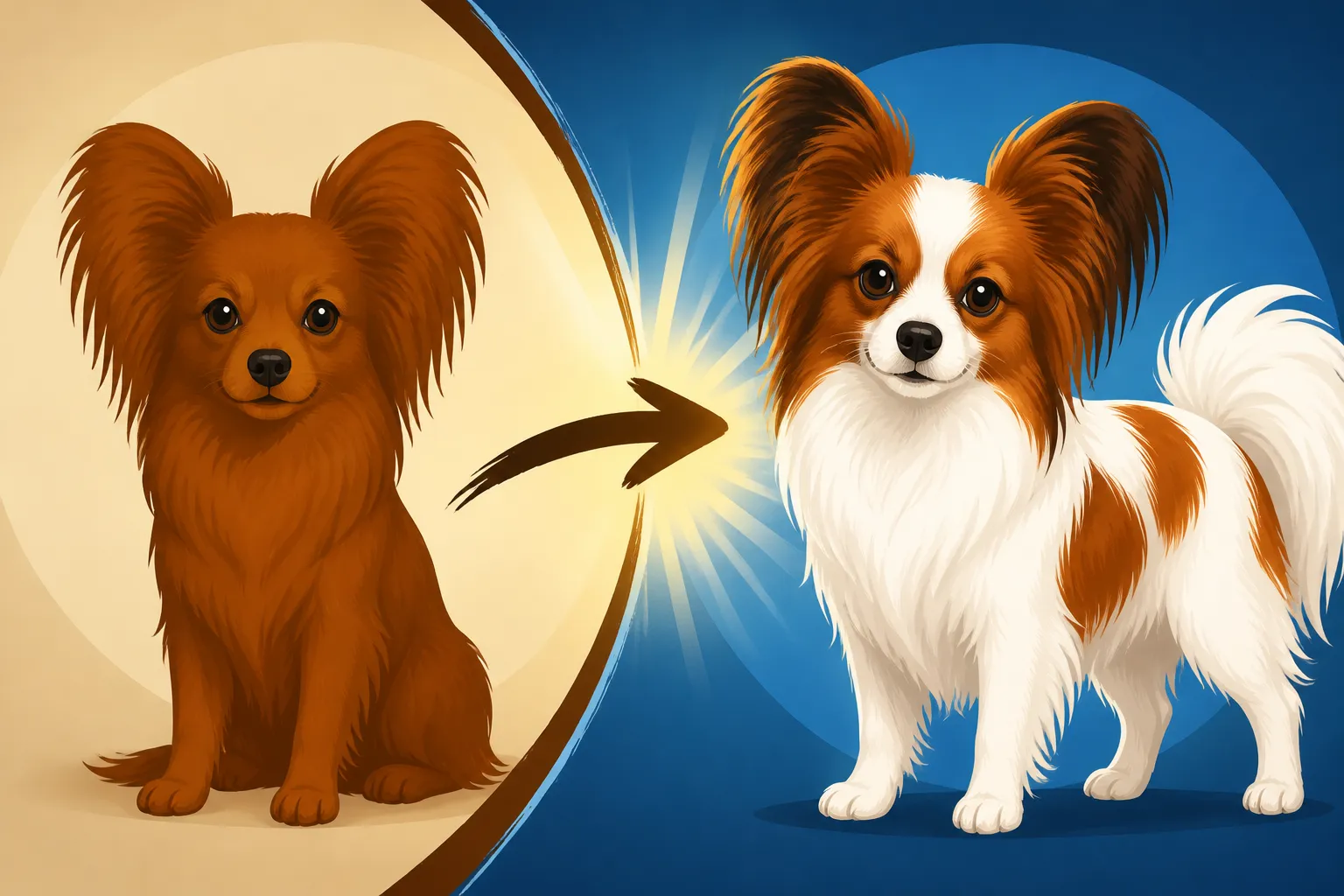
It’s quite a surprise for many Papillon enthusiasts, isn't it? When you look at those vibrant, butterfly-eared little dogs today, with their distinct patches and white blazes, it's hard to imagine them looking any other way. But the truth is, the Papillon we adore now evolved from ancestors who were often solid-colored or had very minimal markings. This guide will take you on a journey through history, exploring how this charming breed transformed from a plainer companion into the striking, intricately patterned dog we recognize today.
The Papillon's Ancient Ancestry: A Canvas of Solid Hues
Before the Papillon flaunted its iconic butterfly ears and dazzling markings, its ancestors were much simpler in appearance. These were the "dwarf spaniels" of Europe, beloved by royalty and nobility for centuries. While they still had that undeniable spaniel charm and a playful spirit, their coats tended towards solid colors or very subtle patterns, quite different from the multi-colored canvases we see today.
The Dwarf Spaniel: Ancestor of Adornment
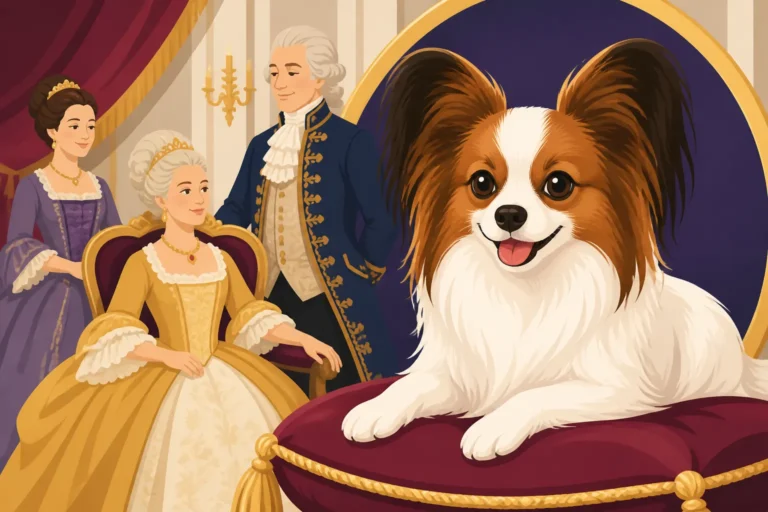
Imagine stepping back in time to the courts of 16th-century Europe. There, nestled in the laps of ladies-in-waiting or perched beside dukes and duchesses, you'd find small, elegant dogs. These were the forebears of our modern Papillons, often simply referred to as "dwarf spaniels" or "Continental Toy Spaniels." Their primary role was that of a companion, a living adornment, a tiny source of warmth and affection in draughty castles.
These early dogs were typically quite unassuming in their coats. Many portraits from this era depict dogs that are predominantly one color – perhaps a rich chestnut, a deep black, or a creamy white – with minimal or no white markings. The focus wasn't on intricate patterns but on the overall elegance and diminutive size of the dog. They were cherished for their gentle nature and their ability to bring joy, regardless of their coat's complexity. Their presence in these historical settings tells us a lot about the enduring appeal of small companion dogs, even before the characteristic "butterfly" look had fully emerged.
Courtly Companions and Plain Coats
Life in the European courts was all about status, beauty, and subtle declarations of wealth. These little dwarf spaniels fit perfectly into that world. They were often carried in sleeves, tucked into cloaks, or allowed to roam the opulent chambers, a constant presence by their human companions. Their small size made them portable, and their generally calm demeanor made them ideal indoor pets.
In this context, a solid-colored coat likely held a certain appeal. It was simple, elegant, and didn't distract from the elaborate fashions and jewels worn by their owners. Think of a rich red spaniel against a blue velvet gown, or a pure white one contrasting with dark brocade. The dogs were an extension of their owners' aesthetic, and often, simplicity was key. There wasn't yet a drive to create the eye-catching, symmetrical facial markings that would define the Papillon centuries later. Their beauty was in their delicate form and silken coat, a luxurious texture rather than a complex pattern. These dogs were more about quiet companionship and elegant presence than flamboyant display.
A Glimpse Through Time: Renaissance to Rococo
The journey of the Papillon's appearance is intertwined with the evolution of art and changing human tastes. As centuries passed, so did the depiction of these beloved toy spaniels, offering us clues about how their coats, and indeed their very identity, began to shift.
Titian and the Early Spaniels
When we look at the works of Renaissance masters like Titian, we catch a fascinating glimpse into the past of these little dogs. The "Titian Spaniel," as it's sometimes called, refers to the small spaniel-type dogs frequently depicted in his 16th-century portraits. These dogs, universally adored by the Venetian elite, were almost always shown with a long, silken coat, a plumed tail, and drop ears. Crucially, their coloration was typically solid or minimally marked.
Imagine a stunning portrait of a noblewoman, her hand resting gently on the back of a small, rich red dog. This dog would likely have been a solid chestnut, or perhaps black, without the intricate white blaze or the contrasting patches that define a modern Papillon. These paintings are invaluable historical documents, showing us that the "butterfly" look was still centuries away. The beauty of these dogs, as captured by Titian, was in their luxuriant coats and gentle expressions, rather than any striking color pattern. They were clearly ancestors, but not yet the Papillon we recognize. If you want to dive deeper into this artistic connection, you might find Titian Painted the Dog the Papillon Came From a fascinating read.
The Evolution of Art and Canine Preference
Art has always reflected society, and canine fashion was no exception. From the Renaissance through the Baroque and Rococo periods, artists continued to include small dogs in their works. While Titian's dogs were often solid, as centuries progressed, subtle changes began to creep into the artistic depictions.
Later painters, like Rubens or Fragonard, sometimes showed dogs with slightly more white on their faces or chests, hinting at the gradual introduction of piebald patterns. This wasn't necessarily a conscious breeding effort to create specific markings at first, but rather a natural genetic variation that, over time, became more appealing. As dog breeding became a more deliberate endeavor, especially among the aristocracy who could afford to indulge such interests, certain looks began to be favored. It's a testament to the enduring appeal of these dogs that they continued to feature so prominently in art, even as their appearance slowly evolved. Each brushstroke offers a small piece of the puzzle, revealing the slow transformation from the unassuming court spaniel to the more distinctly marked companion.
The Emergence of the Butterfly: How Markings Appeared
The shift from the solid-colored dwarf spaniel to the distinctively marked Papillon was not an overnight change. It was a gradual evolution, driven by both the fascinating mechanisms of genetics and the ever-changing tides of human aesthetic preference.
Genetic Mutations and Selective Breeding
At the heart of any change in a breed's appearance are genetics. The beautiful, multi-colored Papillon we know today owes its striking patterns to the "piebald" gene, also known as the S-locus (or spotting locus). In its simplest form, this gene dictates where pigment cells fail to develop, resulting in white areas on the coat.
Early dwarf spaniels likely carried variations of this gene, but perhaps not in the combinations that would produce extensive white spotting. Over generations, random genetic mutations can occur. Imagine a breeder centuries ago noticing a puppy in a litter that had a small white patch on its chest or face, something a little different from its solid-colored siblings. Initially, this might have been seen as a "fault," but as these variations became more common and perhaps more pronounced, they started to catch the eye. Breeders, consciously or unconsciously, began to select for these dogs, favoring those with more distinct white markings. If a puppy had a white blaze that beautifully framed its eyes, creating an appealing symmetry, it might have been chosen for breeding, leading to an increased prevalence of such patterns in future generations. This process of identifying and perpetuating desirable traits, even if they started as minor genetic variations, is the essence of selective breeding.
The Shift in Aesthetic Preference
Beyond the genetic possibilities, human taste played an enormous role in shaping the Papillon's appearance. The late 17th and 18th centuries saw a rise in ornate aesthetics, with a love for intricate detail, symmetry, and decorative flourishes. It was in this environment that the "butterfly" look truly began to capture the imagination.
The erect ears, which gave the Papillon its name (French for "butterfly"), are believed to have emerged around this time. Once these striking ears became a feature, breeders likely started to notice how white markings, particularly on the face, could enhance and complement them. A clear white blaze running between two distinct patches of color over the ears created a beautiful, symmetrical "mask" that perfectly evoked the image of a butterfly with open wings. This wasn't just about color; it was about the pattern that highlighted the unique ear set. People began to actively desire these markings, seeking out puppies that displayed the emerging "butterfly" characteristics. The shift was profound: from simply being a small, elegant companion, the dog now became a living piece of art, perfectly aligned with the Rococo era's love for delicate beauty and playful charm. This conscious choice transformed the breed forever, moving it far beyond its solid-colored ancestors.
The Papillon's Distinctive Markings: A Modern Standard
Today, the Papillon's signature look is instantly recognizable: those glorious butterfly ears, the expressive eyes, and, of course, the intricate multi-colored coat. This isn't just a random assortment of patches; the breed standard outlines very specific requirements for coloration and markings, moving far beyond the solid hues of its ancestors.
The Importance of the Blaze and Mask
For a modern Papillon, the white blaze and the "mask" formed by the colored ears are not just attractive features; they are foundational to the breed's identity. The name "Papillon" literally means "butterfly" in French, a direct reference to the breed's erect, heavily fringed ears that resemble the wings of a butterfly in flight. To truly complete this illusion, the facial markings are paramount.
The ideal Papillon will have a clear, distinct white blaze running down its muzzle and between its eyes, dividing the color on its head. This blaze creates a beautiful symmetrical effect and accentuates the dark, intelligent eyes. The ears, which are typically colored, will have a patch of color over each, extending over the eyes and sometimes down the cheeks, forming the "mask." The contrast between the white blaze and the colored mask is what truly brings the "butterfly" effect to life. Without these specific markings, a Papillon would lose a significant part of its characteristic charm and would not meet the breed standard for conformation. These intricate patterns didn't just appear by chance; they were carefully selected for and refined over generations, leading to the highly specific and cherished look we see today. You can learn more about the accepted appearances in Every Color a Papillon Is Allowed to Be.
Color Combinations and Accepted Patterns
While the solid-colored Papillon is a thing of the past, the modern Papillon comes in a delightful array of color combinations. However, there's a crucial rule: white must always be present. A truly solid-colored Papillon would be considered a serious fault, even a disqualification, in the show ring today. The breed standard emphasizes that the body should be predominantly white, with patches of color appearing over the ears and often on the back, sides, or tail.
Common and highly sought-after color combinations include:
- White and Black: A classic, striking contrast.
- White and Sable: Beautiful shades of red-brown, often with black tipping, which can darken with age.
- White and Red: Rich, clear red patches against the white.
- Tricolor: This includes white, black, and tan markings. Often, the tan points appear above the eyes, on the cheeks, or under the tail, adding another layer of complexity to the pattern.
It's important that these patches of color are distinct and clear, not brindled or muddied. The white areas should be clean, without excessive ticking (small flecks of color within the white). The preferred distribution of color accentuates the Papillon's elegant structure and lively expression. The presence of such clear, multi-colored patterns is a hallmark of the breed's evolution and a testament to centuries of selective breeding that moved away from the more uniform coats of its ancient ancestors.
The Genetics of Papillon Coloration
Understanding why Papillons are no longer solid-colored is a fascinating dive into the world of canine genetics. It's not just about a preference for pretty patterns; there's a scientific basis for the development of their distinctive markings.
Understanding the "Piebald" Gene
The primary reason Papillons are multi-colored is due to the presence of the "piebald" gene, scientifically known as the S-locus (or spotting locus). This gene is responsible for determining the extent of white spotting on a dog's coat.
Think of it this way: all dogs have pigment-producing cells called melanocytes. These cells migrate across the embryo during development, determining where color will appear. The piebald gene essentially interferes with this migration process in certain areas, leading to the absence of pigment – which we see as white.
Dogs inherit two copies of every gene, one from each parent. For the piebald gene, there are different alleles (versions) that dictate how much white is present. A dog could be homozygous (two copies) for a gene that produces minimal white, or heterozygous (one copy of each) for a gene that results in larger white patches. In Papillons, breeders have consistently selected for dogs with significant white spotting, meaning that the breed is now characterized by genetic combinations that produce extensive white areas, punctuated by patches of color. Without this piebald gene, or if Papillons had been selectively bred for the absence of it, they would indeed revert to solid colors, much like their distant ancestors. This gene is the fundamental reason we see those beautiful, crisp white sections on a Papillon's body, setting the stage for the distinct colored patches.
The Role of Other Color Genes
While the piebald gene is critical for creating the white canvas, other genes are responsible for determining the actual colors within the pigmented patches. Canine coat genetics is a complex interplay of multiple loci, and the Papillon is a vibrant example of this genetic dance.
Here's a simplified look at some key genes that work alongside the piebald gene to give the Papillon its varied hues:
- E-locus (Extension): This gene controls the distribution of red/yellow pigment (phaeomelanin) versus black/brown pigment (eumelanin). It can allow for black masks, determine if a dog is sable (red with black tips), or if it's clear red without black.
- K-locus (Dominant Black): This gene can override other color genes, producing solid black or patterned black coats.
- A-locus (Agouti): This gene dictates how black and red pigments are distributed, creating patterns like sable, fawn, or black-and-tan. A Papillon’s sable coloration, for instance, is controlled by this locus, often appearing as rich red with black tips, sometimes even giving the appearance of a black "saddle" as the dog matures.
- B-locus (Brown): This gene turns black pigment into brown. If a Papillon inherits two copies of the 'b' allele, any black areas would appear brown or liver.
- D-locus (Dilution): This gene can dilute eumelanin (black/brown) to blue/grey or phaeomelanin (red/yellow) to cream. While not as common in Papillons, it demonstrates how genes modify color intensity.
It's the specific combination of the dominant piebald gene creating the white spotting, along with the particular alleles inherited at these other color loci, that results in the full spectrum of Papillon colors we see today: black and white, red and white, sable and white, and the stunning tricolor (black, white, and tan). Each gene acts like a switch or a dimmer, influencing the final masterpiece that is a Papillon's coat.
Breeding for Color and Health
In the world of responsible dog breeding, while color and conformation are important, they should always take a back seat to health and temperament. This is especially true for Papillons, a breed with specific health considerations.
Ethical Breeding Practices for Papillon Colors
For a truly ethical Papillon breeder, the pursuit of specific colors or markings should never come at the expense of the dog's well-being. A responsible breeder understands the breed standard's color requirements but also knows that health must be the top priority. They focus on producing sound, healthy dogs with excellent temperaments first and foremost.
This means that while they might consider the genetic likelihood of certain color outcomes when planning a litter, they won't make breeding decisions based solely on achieving a particular pattern. They will prioritize breeding dogs that have been thoroughly health-tested for common Papillon issues, such as patellar luxation, and eye conditions like progressive retinal atrophy (PRA). Genetic testing is an invaluable tool for breeders today, allowing them to identify carriers of certain genetic diseases and make informed breeding choices to avoid producing affected puppies. This kind of testing also gives insights into potential color outcomes without resorting to questionable breeding practices. Breeders often publish these results transparently, giving prospective owners peace of mind. For a comprehensive list of what a good breeder should test for, you might want to read What a Papillon Breeder Should Have Tested. It’s a delicate balance, appreciating the beauty of the Papillon's coat while always championing its robust health.
The Phalene: A Nod to the Past
An interesting aspect of the Papillon breed is the existence of its drop-eared counterpart, the Phalene (French for "moth"). Genetically, the Papillon and Phalene are the same breed, distinguished only by their ear carriage. Phalenes possess the same charming personality and dainty build as Papillons, and crucially, they also exhibit the same range of multi-colored patterns.
The Phalene actually represents the older ear type, a direct link back to those dwarf spaniels depicted by Titian and other Old Masters, before the erect "butterfly" ear became dominant. This means that while the ear type of the Phalene harks back to an earlier era, its coat coloration has evolved right alongside the Papillon. Phalenes are born in the same litters as Papillons, carrying all the same genetic potential for white spotting and varied colors. A litter might have both erect-eared and drop-eared puppies, all displaying the classic Papillon patterns. This shared genetic heritage in terms of coloration reinforces how deeply ingrained the multi-colored coat has become in the breed, regardless of ear set. If you're curious about this fascinating genetic connection, Why a Papillon and a Phalene Are Born in the Same Litter offers a deeper look into how both ear types can appear in the same litter. Both Papillon and Phalene, with their vibrant, patterned coats, stand as beautiful examples of selective breeding.
The Lasting Legacy of a Colorful History
The Papillon’s journey from a humble, often solid-colored court dog to the vivid, butterfly-eared companion of today is a remarkable story. It’s a testament to the power of selective breeding, genetic evolution, and the enduring human appreciation for beauty and companionship in our canine friends.
Appreciating the Breed's Journey
When we look at a Papillon today, with its perfectly placed white blaze, its rich sable patches, and those magnificent fringed ears, it’s easy to take its appearance for granted. But understanding its history — knowing that its ancestors were once much simpler in their coloration — adds a profound layer of appreciation for this delightful breed. It highlights the fascinating evolution of canine aesthetics and genetics. The transformation speaks volumes about human taste and how breeds are shaped over centuries.
The Papillon's journey from being a merely decorative, often solid-colored presence in royal courts to becoming the animated, intelligent, and distinctly marked agility star and family pet we know, is truly captivating. It makes us realize that even seemingly minor characteristics, like a white patch or the tilt of an ear, have a rich backstory. This deep historical context enriches the bond we share with these dogs, reminding us that they are living links to a vibrant past.
Modern Resources for Papillon Owners
For those who cherish these elegant and intelligent dogs, understanding their unique needs is paramount. Whether you have a puppy or an older Papillon, ensuring they have the right diet, grooming tools, and enrichment opportunities is key to their long, happy lives.
The distinctive long, silky coat of a Papillon, for example, requires regular attention to keep those fringes and plumes looking their best and prevent matting. Even though they don't have an undercoat, consistent gentle brushing is important. Resources like Chewy offer a wide array of specialized brushes and detangling sprays perfectly suited for a Papillon's delicate coat.
Furthermore, a Papillon's small mouth means they are prone to dental issues, making dental care a crucial part of their routine. Finding appropriate small-breed kibble or dental chews is essential, and many online retailers, including Chewy, make it easy to source these specialized items. Understanding their historical journey from plain to patterned only enhances the joy of caring for these living works of art. From their earliest days as plain court companions to their current status as brightly marked, cherished family members, the Papillon continues to captivate hearts.
| Feature | Early Dwarf Spaniel (Ancestral) | Modern Papillon (Current Standard) |
|---|---|---|
| Primary Coat Color | Often solid (e.g., red, black) | Predominantly white with colored patches |
| Common Markings | Minimal or none | Distinct white blaze, colored mask over ears |
| Ear Type | Drop ears (Phalene type) | Erect, fringed "butterfly" ears (Papillon type) |
| Genetic Basis | Likely less prominent piebald gene | Strong presence of piebald gene (S-locus) |
| Aesthetic Preference | Simplicity, elegant texture | Intricate patterns, symmetry, "butterfly" look |
| Historical Period | Renaissance (15th-16th century) | From 17th century onwards, solidified in 19th-20th |
Disclaimer
This article is for general informational purposes only and does not constitute professional advice. Laws, prices and regulations vary by location and change over time. Consult a qualified professional for guidance on your specific situation.