Whether Taping a Papillon’s Ears Is Allowed
A Papillon puppy’s ears may look uneven for months, and it is tempting to tape them into the upright butterfly shape. Whether that is allowed depends on why the ears are being taped, where you live, and whether the dog will enter a show. This guide explains the difference between medical support and cosmetic taping, plus the safety and rule checks to make first.
Is taping a Papillon’s ears allowed
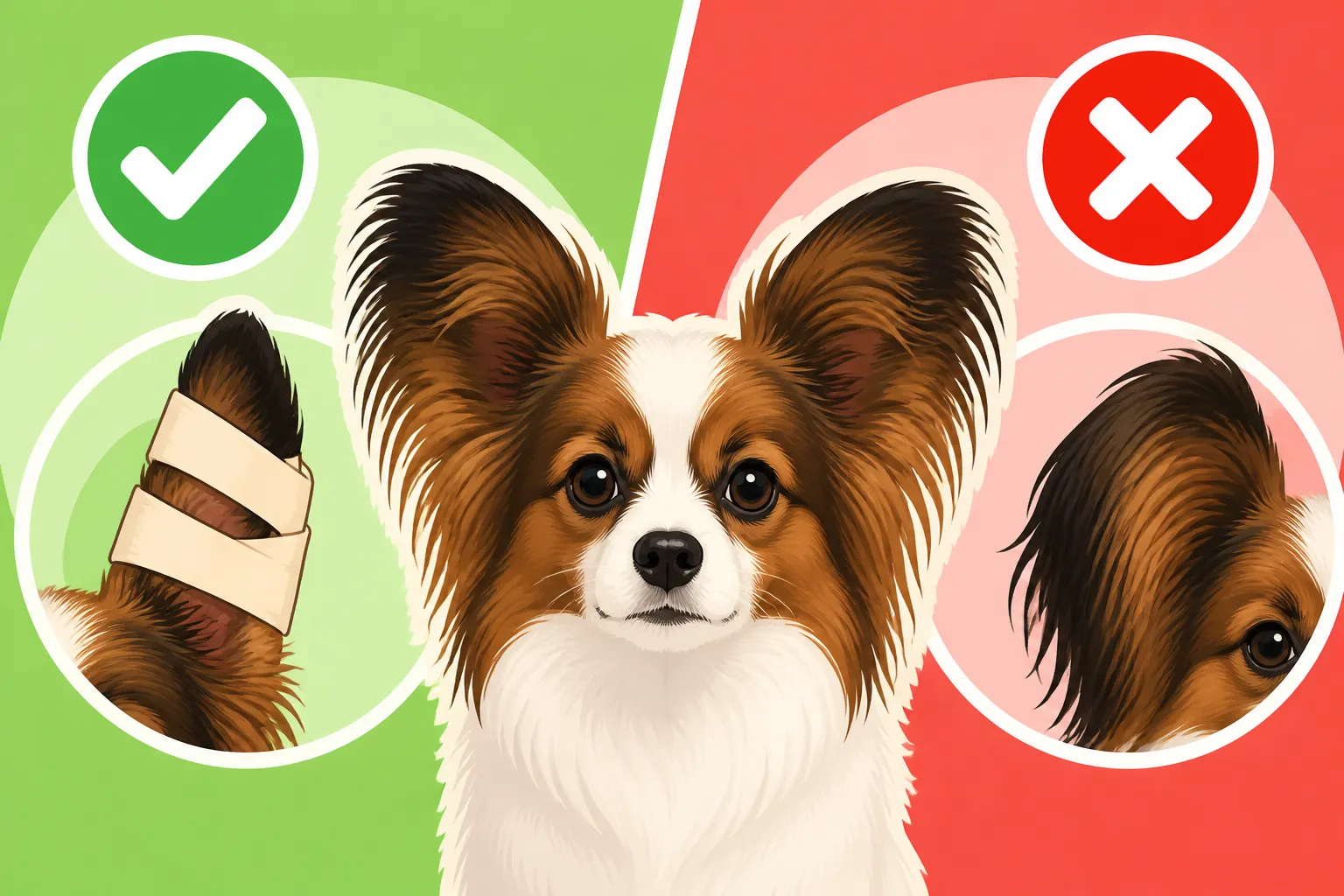
There is no single worldwide rule that makes all Papillon ear taping either legal or prohibited. Temporary tape used as veterinary treatment is different from taping intended to change a dog’s appearance. Show rules may also be stricter than ordinary pet-keeping rules, so the answer depends on the specific purpose and setting.
Taping at home is not the same as a legal requirement
In many places, there is no general law specifically addressing temporary, non-injurious ear taping. That does not mean every method is acceptable: animal welfare laws still apply, and tape that causes pain, restricts circulation, damages skin, or creates an untreated injury can raise a welfare concern. Ear taping is not the same procedure as cropping, which involves surgery and is regulated or prohibited in some jurisdictions.
For a puppy whose ears are still developing, breeders sometimes use temporary support in an attempt to encourage the ears to stand upright. But a Papillon’s ears can rise on their own, and their timing varies. Before trying anything, ask the breeder and your veterinarian whether there is a genuine reason to intervene. If your interest is mostly about how the ears will look, waiting is usually the least complicated option.
You can learn more about normal development in When a Papillon Puppy's Ears Go Up and Whether a Papillon's Ears Can Change After a Year. If the ears look partly raised or uneven, Whether Half Up Ears Are Faulted on a Papillon may help explain why a temporary stage does not automatically mean something is wrong.
Medical support is different from cosmetic taping
A veterinarian may recommend a bandage or other support after an injury, procedure, or skin problem. In that situation, the goal is treatment, not changing the dog’s natural appearance. Follow the veterinary team’s instructions about the material, placement, duration, and when to return for a check. Do not substitute advice from a breeder or an online tutorial for care of an injured ear.
Cosmetic taping is intended to influence how the ear sits. Even when a breeder considers it a familiar practice, it should not be treated as automatically safe or suitable for every puppy. Young dogs have delicate skin, and an ear that is taped too tightly or left covered too long may become irritated or sore. Ask your veterinarian before applying tape, especially if the skin is red, scabbed, itchy, damp, or tender.
If a vet recommends a specific skin-safe supply, check that the product is appropriate for your dog rather than choosing solely by appearance or convenience. Chewy may list pet-care products, but a retailer listing is not a substitute for veterinary guidance on what belongs on a puppy’s ear. If you need a particular item, confirm the exact product and how to use it with your clinic first.
What show rules may say about Papillon ear taping
A dog can be perfectly acceptable as a loved family pet while still being subject to different rules in a conformation show. The key issue for exhibitors is whether taping is considered an artificial aid that changes appearance, and whether the relevant organization allows it in the circumstances. Do not assume a practice used by one breeder or at one event is permitted everywhere.
Check the rules for the organization and event
Show rules vary between kennel clubs, countries, and types of competition. A rule may distinguish between veterinary bandaging and an aid used to alter a dog’s appearance; it may also address substances, attachments, or handling that affect the presentation of the dog. The exact wording matters, as does how event officials interpret it.
If you plan to show your Papillon, ask the show secretary or governing organization before the event. Describe what was done, why it was done, and whether any tape or residue will still be present when the dog is examined. If the dog is being shown under a national kennel club, check that organization’s current rules rather than relying on a general internet answer or advice from a different country.
It is also sensible to ask the breeder what they intended and whether they have experience with the rules for your specific show circuit. A responsible breeder should be willing to explain their approach without pressuring you to tape a puppy’s ears. For broader questions about what is inherited and what is not, see Whether Ear Type Runs in Papillon Lines.
| Situation | Main concern | Practical next step |
|---|---|---|
| Ear support prescribed after an injury | Correct treatment and skin protection | Follow the veterinarian’s directions and attend recommended checks |
| Cosmetic taping for a family pet | Comfort, skin condition, and whether intervention is necessary | Ask your veterinarian and consider waiting for natural development |
| Taping before a conformation show | Whether the show rules treat it as an artificial aid | Check the event and kennel club rules before entering |
| Tape already on, with irritation or discomfort | Possible skin injury or circulation issue | Contact a veterinarian promptly and ask how to remove it safely |
Do not mistake appearance rules for breed health
Papillon ears are a defining part of the breed’s silhouette, but an ear’s position does not by itself tell you whether a puppy is healthy or well cared for. A puppy may go through uneven stages as the cartilage and surrounding tissues develop. Teething is sometimes mentioned by owners as a possible reason for changes in ear carriage, but a change in appearance is not enough to diagnose a problem.
The Papillon and Phalene are varieties of the same breed, distinguished by ear carriage: the Papillon has erect ears, while the Phalene has dropped ears. That difference is part of why owners can feel anxious when a Papillon puppy’s ears are not standing yet. For background, see Papillon Means Butterfly and Phalene Means Moth and Whether a Phalene Is a Separate Breed.
A breeder or judge may have an opinion about show presentation, but that opinion should not override a veterinary assessment when an ear is painful, inflamed, or injured. Likewise, a puppy’s natural ear position should not be treated as a medical defect just because it differs from what an owner hoped to see. If you are unsure whether what you are seeing is normal development, ask your veterinarian to examine the ears rather than trying to correct them yourself.
Safety concerns before any ear taping
The fact that a method is temporary does not make it risk-free. Tape can pull at skin, trap moisture, irritate the ear, or conceal a problem that needs attention. The risks are especially relevant for a puppy who is wriggly, scratches at the tape, or has already shown sensitivity to grooming products or adhesives.
Watch for signs of irritation or distress
Do not keep tape in place if your puppy seems painful, repeatedly scratches or shakes their head, or tries persistently to remove it. Redness, swelling, broken skin, unusual odor, discharge, or an ear that feels hot or looks unusually pale are reasons to contact a veterinarian. If your puppy appears very uncomfortable, do not wait for a planned follow-up appointment.
Avoid putting tape into the ear canal or using household adhesives, strong solvents, or products not intended for skin. Removing tape can also injure delicate skin if it is pulled off quickly or against the hair. If you have been told to use a product to help remove adhesive, confirm that it is suitable for your puppy and follow the veterinary team’s directions. Chewy may carry pet-care supplies, but check with your veterinarian before using an adhesive remover or any product near the ear.
Keep the ear dry and check the skin as directed by your veterinarian. If the tape becomes wet, dirty, loose, or starts to rub, do not simply add more layers over it. Contact the person who recommended the support so they can advise whether it should be replaced, removed, or assessed in person.
Avoid do-it-yourself advice that ignores the individual puppy
Online demonstrations can make taping look simple, but they cannot assess your puppy’s skin, ear shape, comfort, or reason for needing support. A method that seems to work for one dog may be unsuitable for another. Puppy ears also change as the dog grows, so repeatedly adjusting tape without professional guidance may create more irritation than benefit.
If you are considering taping because one ear is not rising as quickly as the other, start by keeping notes about what you notice and asking your breeder or veterinarian for an assessment. You can also ask whether there is a medical concern, whether observation is appropriate, and what signs would mean the puppy needs to be seen sooner. For owners curious about the specific practice, Whether a Papillon's Ears Can Be Taped Up addresses the question without assuming that every puppy needs it.
Some people search for special tapes, adhesives, or grooming accessories before they have confirmed whether taping is appropriate. That can put the cart before the horse. If your veterinarian has recommended a particular product, Chewy can be one place to check for pet-care supplies, but compare the product details with the clinic’s instructions and do not substitute a different adhesive based only on a similar-looking listing.
How to decide what to do for your Papillon
Start with the reason. If a veterinarian is treating an injury or recommending support, follow that plan and ask how to check the ear safely. If the purpose is cosmetic or related to future showing, get the relevant rule guidance before applying anything. If you are simply worried because the puppy’s ears have not stood yet, a veterinary check and patience may be more useful than tape.
Use a simple decision process
- Look for a medical problem. If the ear is sore, swollen, bleeding, smelly, or producing discharge, contact your veterinarian rather than taping it.
- Clarify the purpose. Ask whether the proposed support is for treatment or to influence ear carriage.
- Check show requirements if relevant. Contact the show organization or event secretary before entering a dog that has been taped.
- Ask about safe materials and monitoring. If a veterinarian recommends support, confirm what to use, how long it should remain, and what symptoms require a call.
- Reassess instead of continuing automatically. If the skin becomes irritated or your puppy resists, stop and ask for advice.
This approach helps separate three questions that often get muddled together: “Is it lawful where I live?”, “Will a show allow it?”, and “Is it safe for my puppy?” A yes to one does not answer the other two. For example, a method might not be specifically prohibited by local law but still be disallowed in a particular show ring, or it might be permitted by an event while still being unsuitable for an individual dog’s skin.
Keep expectations realistic
Ear carriage is only one feature of a Papillon, and puppy ears do not always develop on the schedule an owner expects. If the dog is a pet, comfort and health matter more than forcing a particular appearance. If the dog is being considered for conformation, ask the breeder and show officials about expectations before making a decision that could affect eligibility.
It is also worth remembering that Papillon puppies are not all identical. Ear position, timing, and fringe development can vary. If you are trying to understand what is typical, related topics such as Whether Teething Drops a Papillon Puppy's Ears can help you separate common owner questions from reasons to seek an examination.
When in doubt, leave tape off until you have specific advice. That is particularly important if the puppy has sensitive skin, is scratching, or has an ear problem that has not been diagnosed. A calm conversation with your veterinarian, breeder, and—if needed—show officials can prevent a small uncertainty from turning into a painful ear or an avoidable show-rule problem.
Disclaimer
This article is for general informational purposes only and does not constitute professional advice. Laws, prices and regulations vary by location and change over time. Consult a qualified professional for guidance on your specific situation.