Whether a Papillon’s Ears Can Be Taped Up
A Papillon puppy’s ears can look uneven, soft, or only partly upright for a while, which can make owners wonder whether taping will help. The short answer is that ears can be physically supported, but taping is not a guaranteed fix and can irritate delicate skin or cause injury if done incorrectly. Here’s how to tell normal development from a reason to ask your breeder or veterinarian.
Can you tape a Papillon’s ears up?
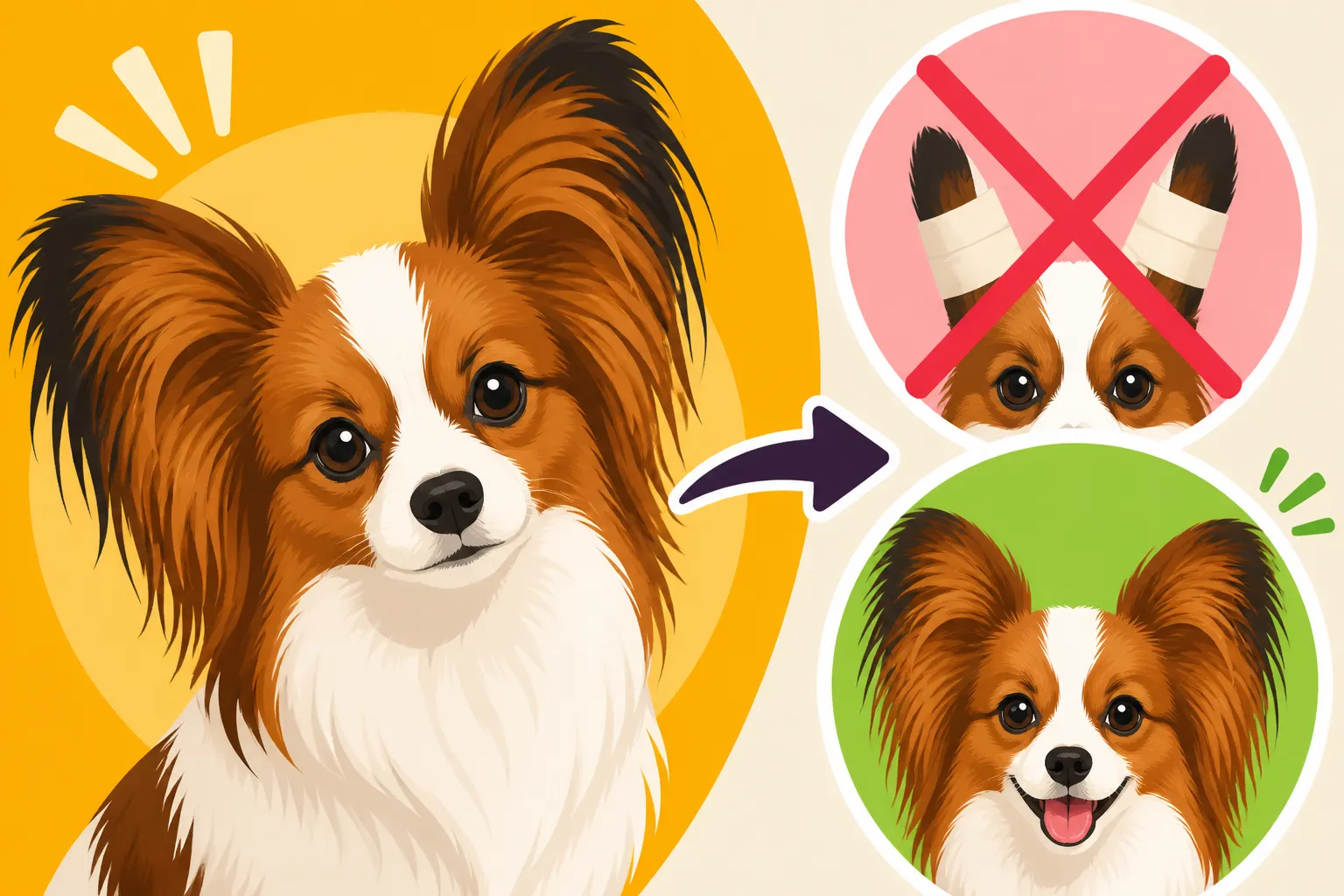
Taping is possible, but it does not guarantee upright ears
Some people use gentle support to encourage an ear to sit in a particular position. But a puppy’s ear carriage depends largely on how the ear develops, including its cartilage and inherited traits. Tape cannot reliably change those underlying factors, and an ear that looks floppy today may stand on its own later.
It’s especially important not to treat taping as a quick cosmetic correction. Tight, poorly placed, or unsuitable tape can pull on skin, trap moisture, irritate the ear, or affect circulation. Removing tape carelessly can also hurt. A puppy may scratch at it or catch it while playing, creating another opportunity for irritation or injury.
If a breeder suggests taping, ask what they mean by “taping,” why they recommend it for this particular puppy, and whether they can show you a safe method. If the ear looks painful or inflamed, get veterinary advice rather than trying to support it yourself. For broader context about normal development, see When a Papillon Puppy's Ears Go Up.
Papillons and Phalenes have different ear carriage
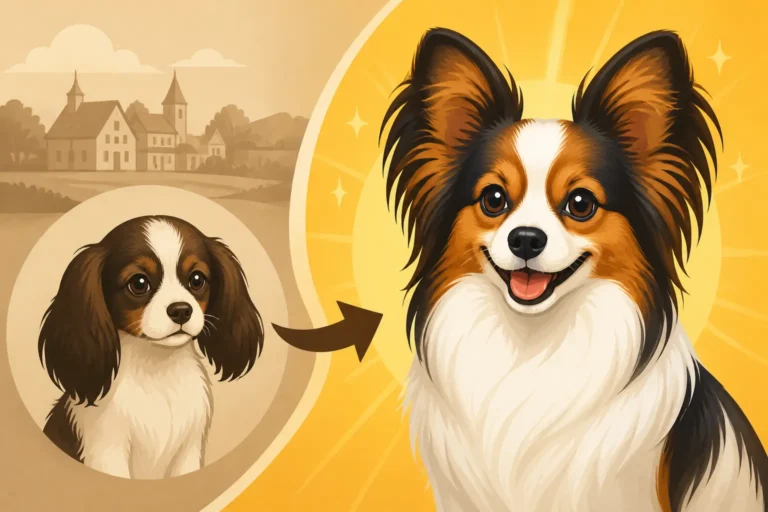
The Papillon is known for its upright, butterfly-like ears. The Phalene, whose name means “moth,” has dropped ears. They are varieties of the same breed, not necessarily different kinds of dogs with different care needs. Learn more in Whether a Phalene Is a Separate Breed and What the Name Phalene Refers To.
That distinction matters when you’re looking at a puppy with ears that are still changing. A temporarily soft or partly raised ear does not automatically mean the puppy will mature into a Phalene, and an owner shouldn’t assume that tape can turn a naturally dropped ear into a reliably upright one. If you’re buying a puppy and have a particular preference, ask the breeder how they describe the puppy’s likely adult ear carriage, while understanding that young puppies can be unpredictable.
A healthy dog’s comfort is more important than making its ears match a particular look. If your Papillon’s ears settle into a different position than you expected, that alone is not a reason to tape them. The useful first step is to work out whether you’re seeing normal development, a variety difference, or a new change that needs attention.
Why a Papillon puppy’s ears may look floppy or uneven
Ear carriage can develop gradually
Papillon ears don’t always rise neatly at the same time. One may stand before the other, or both may look partly raised for a period. That can be unsettling when you’re comparing your puppy with photos of adult Papillons, but variation during growth is not, by itself, proof that something is wrong.
Keep track of what you’re seeing rather than repeatedly handling or repositioning the ears. Note whether the change is gradual, whether both ears are affected, and whether your puppy seems comfortable. A quick photo every week or two can help you describe the pattern to your breeder or veterinarian without constantly touching the ears.
There isn’t a single timetable that applies to every puppy. For more about the timing and the ways ear position can change as a young dog matures, read Whether a Papillon's Ears Can Change After a Year and Whether Half Up Ears Ever Finish Rising.
Teething may coincide with changes in ear position
Owners often notice a change in ear carriage around teething and wonder whether the two are connected. The timing can overlap with other changes in a growing puppy, but it doesn’t tell you on its own what the adult ears will look like. A puppy’s ears may shift as it matures, and an apparent change during teething is not a reason to rush into taping.
If your puppy’s ears soften or look uneven during this stage, keep the ears clean and dry and avoid trying household adhesives or improvised wraps. Ask your breeder what they have observed in the puppy’s family, and ask your veterinarian if you’re concerned. You can also read Whether Teething Drops a Papillon Puppy's Ears for more on the question owners commonly raise.
A sudden change is different from gradual development
A puppy whose ears have always been soft or uneven is a different situation from a dog whose previously upright ear suddenly droops. A new change, especially on just one side, deserves more attention if it occurs alongside head shaking, scratching, odor, discharge, swelling, redness, tenderness, or a head tilt.
Those signs may point to discomfort or an ear problem rather than an issue of appearance. Don’t tape over a sore or irritated ear: doing so could make it harder to notice what’s happening and may trap moisture. Contact your veterinarian and describe when the change began and what other signs you’ve noticed.
If your puppy seems comfortable and the ears are simply developing at different speeds, there may be no need for intervention. If there’s pain, a sudden change, or a question about what is normal for your puppy, a hands-on veterinary assessment is the safer route.
When to consider taping and when to avoid it
Ask a breeder or veterinarian before applying anything
A reputable breeder who knows the puppy’s parents and relatives may be able to explain what they’ve seen in that line. A veterinarian can check for irritation, injury, infection, or other problems and tell you whether support is appropriate. Their advice should be specific to your puppy, not a generic instruction copied from a video or online discussion.
Before trying anything, ask what material is suitable, where it should sit, how often the ear needs to be checked, and when to remove it. Also ask what to do if the puppy scratches at it or the skin becomes red. If the person recommending taping can’t answer those practical questions—or dismisses signs of pain—pause and get veterinary guidance.
Owners sometimes find tapes, adhesives, and grooming supplies while browsing retailers such as Chewy. Don’t assume a product is safe for a puppy’s ears just because it is sold for pets or described as suitable for grooming. Check the exact product and intended use with your veterinarian or breeder before buying it for this purpose.
Keep an eye out for skin and comfort problems
If a veterinarian or experienced breeder has recommended a method, check the ear regularly and stop if you notice redness, swelling, moisture, odor, broken skin, or sensitivity. Watch your puppy’s behavior too. Persistent scratching, rubbing the ear on furniture, or trying repeatedly to remove the support can mean the setup is uncomfortable.
Never pull tape off quickly, wrap tightly around the ear, block the ear canal, or cover an ear that appears infected or injured. Don’t use household glue, strong adhesive tape, or a material that has not been recommended for a puppy’s skin. When in doubt, leave the ear alone and call the person who advised you.
If you’ve already purchased a product from Chewy or another pet retailer, keep the packaging so your veterinarian can see the ingredients and intended use. That is more helpful than relying on a product description or guessing that a grooming item is appropriate for a delicate ear.
Don’t treat show rules as a health need
People interested in conformation shows may have questions about ear carriage and whether a puppy can be taped. Rules and interpretations can depend on the organization and event, so check the relevant show rules and ask an experienced breeder or show mentor. For a related discussion, see Whether Taping a Papillon's Ears Is Allowed.
Even when someone is focused on a show prospect, the dog’s comfort comes first. Taping is not a substitute for sound breeding decisions, and it should never be used to disguise pain, an ear injury, or an ear that is naturally developing differently. If you’re buying a puppy with the aim of showing, ask about the parents’ ear carriage and the breeder’s approach before you commit.
| What you notice | A sensible next step |
|---|---|
| One ear is slower to rise, but your puppy is comfortable | Observe over time and ask the breeder about normal development |
| Both ears look soft or partly raised as your puppy grows | Avoid rushing to tape; discuss expectations with the breeder or veterinarian |
| An ear suddenly droops or changes position | Contact your veterinarian, especially if the change is one-sided |
| Redness, odor, discharge, swelling, or repeated scratching | Arrange a veterinary check; do not cover the ear with tape |
| A breeder recommends support | Ask for a puppy-specific explanation and safe instructions |
| You are considering tape for a show prospect | Check applicable show rules and prioritize the dog’s comfort |
How to make a confident decision for your Papillon
Start with the dog in front of you
Look at both ears without repeatedly bending, lifting, or pressing them into position. Consider your puppy’s age, whether the ear position is changing gradually, and whether the skin looks healthy. A puppy who is eating, playing, and behaving normally, with no ear discomfort, may simply be going through a stage of development.
If you’re unsure, send your breeder a clear description and ask what they’ve seen in related puppies. A short video can show how the ears sit when your puppy is relaxed and moving naturally. Avoid comparing your puppy with a carefully posed adult dog online; the image may not show the range of normal puppy development.
You can also ask the breeder whether ear type appears to run in the family. That question is about context, not a guarantee. Whether Ear Type Runs in Papillon Lines explores why family patterns may be relevant when you’re trying to understand what to expect.
Choose observation over repeated home experiments
It’s tempting to change the position, add tape, remove it, and try another method when the ears don’t look the way you hoped. Repeated handling can make a puppy uncomfortable and may irritate the skin. If you haven’t been given puppy-specific instructions, don’t experiment with adhesives or wrapping.
Instead, keep a simple record: date, what the ears looked like, and whether there were any signs of discomfort. Bring that information to a routine veterinary visit or contact the clinic sooner if the change is sudden or symptoms appear. This gives the veterinarian a useful timeline and keeps the focus on health rather than appearance.
If your veterinarian or breeder does recommend a specific support method, follow their directions exactly and ask what signs mean you should stop. A suitable plan should include monitoring and a clear way to get help if the ear becomes uncomfortable.
Let comfort guide the outcome
A Papillon’s ears are part of its distinctive appearance, so it’s understandable to wonder whether you can influence how they sit. Still, a puppy’s comfort and healthy skin matter more than achieving a particular outline. Taping may be considered in some situations under informed guidance, but it cannot promise an outcome and should never be done casually.
If you’re shopping for a product after receiving professional instructions, confirm the item with the person who advised you before ordering from Chewy. Retail listings can help you locate supplies, but they can’t assess your puppy’s ear, skin, or development. That distinction helps prevent an appearance concern from turning into an avoidable irritation or injury.
When the question is simply whether a soft ear will eventually stand, time and advice from someone who knows your puppy are more useful than a quick fix. When the ear is painful, suddenly different, or showing signs of inflammation, get veterinary care rather than taping it into place.
Disclaimer
This article is for general informational purposes only and does not constitute professional advice. Laws, prices and regulations vary by location and change over time. Consult a qualified professional for guidance on your specific situation.