Whether Teething Drops a Papillon Puppy’s Ears
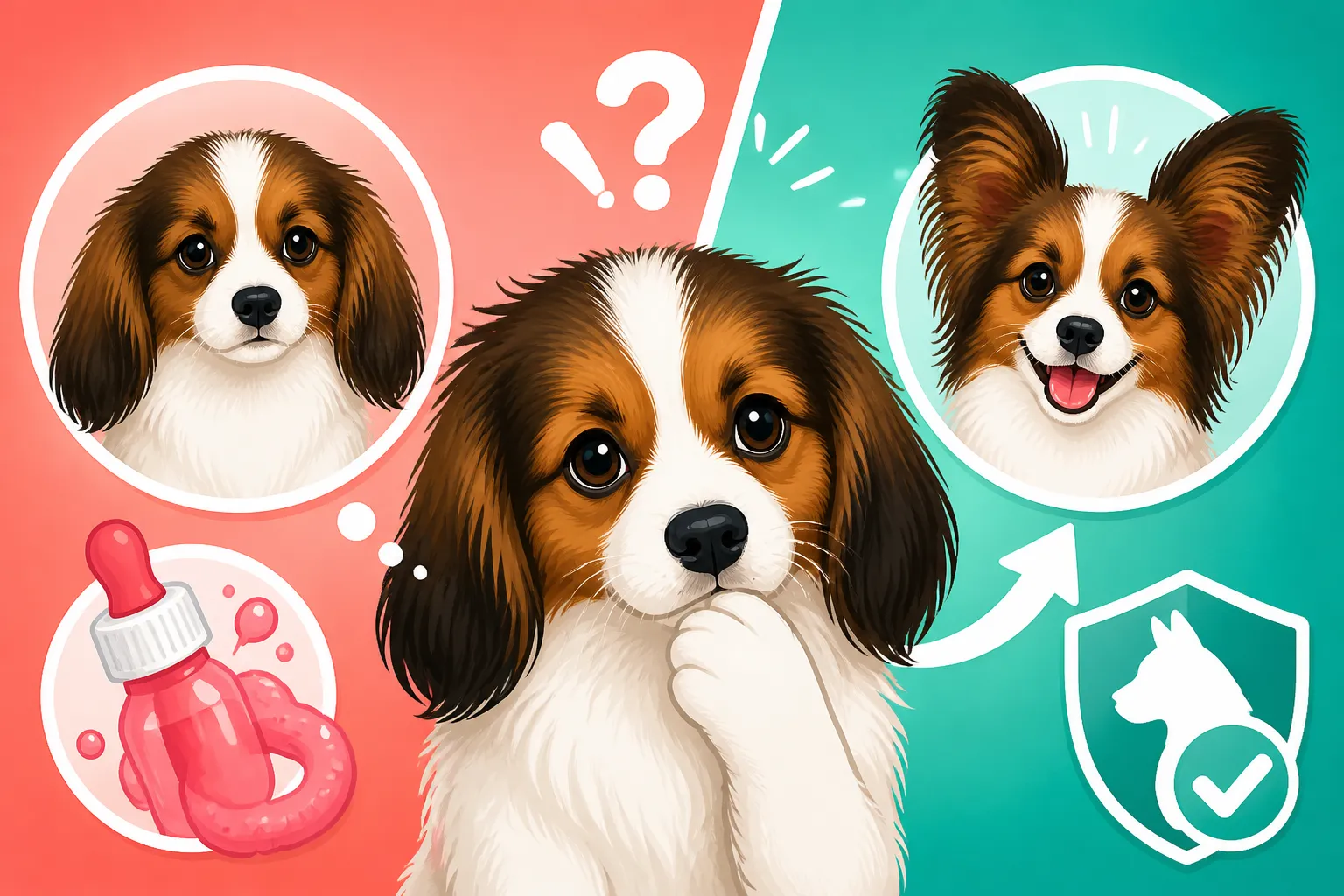
A Papillon puppy’s ears may stand one week and look floppy the next, often around the teething months. That timing can make it seem as if teething has caused the ears to drop, but a temporary change does not automatically mean anything is wrong or that the ears will stay down. This guide explains what to watch, what not to try, and when to ask a veterinarian.
Can teething make a Papillon puppy’s ears drop
Why the timing can look connected
Papillon ears often change as a puppy grows. One ear may rise before the other, both may stand for a while and then soften, or the tips may tilt as the puppy matures. These changes can happen during the same broad period as teething, so it is understandable that owners connect the two.
However, seeing an ear change during teething does not prove that teething itself caused it. Ear carriage depends on developing cartilage, the shape and set of the ears, and inherited traits. Growth does not always happen in a perfectly even, predictable sequence. A puppy may also have ears that naturally take longer to become erect.
This is why a temporary dip is best treated as a development to observe rather than a problem to correct immediately. For a broader timeline, see When a Papillon Puppy's Ears Go Up. The important question is not whether the ears look identical from day to day, but whether the puppy is otherwise comfortable and behaving normally.
What a temporary ear change can look like
A temporary change may be subtle: the ear still stands at the base but the tip folds, one ear sits lower than the other, or both ears look softer for a period. The appearance may vary with posture and activity, too. A puppy that has just woken up or is relaxed may hold the ears differently from one that is alert and watching something.
Take a photo every few days from a similar angle and in similar lighting. This gives you a more reliable sense of whether the position is changing than checking repeatedly throughout the day. Frequent handling can make a puppy uncomfortable and may leave you worrying over normal small variations.
A brief change in carriage, by itself, is different from an ear that suddenly becomes painful, swollen, red, or sensitive to touch. Those signs call for veterinary advice rather than waiting to see whether the ears rise again.
Why Papillon puppy ears do not all develop alike
Cartilage, growth, and inherited ear carriage
The outer ear has cartilage that gives it shape and support. During puppyhood, that structure is still developing, and ears can look inconsistent while the puppy grows. A Papillon’s ears are not simply miniature adult ears from the day it is born; their shape, fringe, and carriage mature over time.
Inheritance matters as well. The family line can influence ear size, set, and how readily the ears stand. If you have questions about what is typical for your puppy’s relatives, ask the breeder to explain what they have seen in related dogs. Whether Ear Type Runs in Papillon Lines offers more context on inherited variation.
Do not use a puppy’s temporary ear position as the only measure of its health or future appearance. A puppy can be active, eating normally, and comfortable while its ears are still changing. Conversely, a puppy with apparently erect ears can still need care if it has irritation or an infection.
Papillon and Phalene ears are different varieties
Papillons are known for their erect, butterfly-like ears. The Phalene is the drop-eared variety of the same breed, with ears that hang down. A floppy ear in a young Papillon does not automatically mean the puppy is a Phalene; the distinction is about the dog’s mature ear carriage, not a single look during an in-between stage. For more on the relationship, see Whether a Phalene Is a Separate Breed and Whether a Phalene Can Produce a Papillon.
If you are choosing a puppy for showing or have a question about how its ears may develop, ask the breeder what they can reasonably tell you about its pedigree and growth. No one can promise the exact final appearance based on one early snapshot.
It is also worth remembering that there is no need to keep lifting or folding the ears to test them. Let them rest naturally, and ask a veterinarian or experienced breeder before considering any handling routine intended to influence carriage.
What to do when your puppy’s ears look floppy
Observe first and keep the ears comfortable
If your puppy seems well and the change is limited to ear position, take a calm, practical approach. Note when you first noticed it, whether one or both ears are affected, and whether the change is constant or comes and goes. A short record and occasional photos can make a conversation with your vet or breeder more useful.
Keep routine grooming gentle. Check the ears visually for dirt, redness, swelling, discharge, or an unpleasant smell, but do not push cotton swabs or other objects into the ear canal. If you already use an ear product, follow its label and your veterinarian’s directions. When a veterinarian recommends a specific cleaner, confirm the exact product before ordering it from a retailer such as Chewy; products intended for general cleaning are not a substitute for diagnosing an ear problem.
Avoid trying to stiffen, reshape, or repeatedly manipulate the ears on your own. If you are unsure whether a grooming step is appropriate, Whether a Papillon's Ears Should Be Brushed Separately and What to Clean a Papillon's Ears With can help you think through basic ear care, but a veterinarian should guide care for irritation or symptoms.
Be cautious about taping and supplements
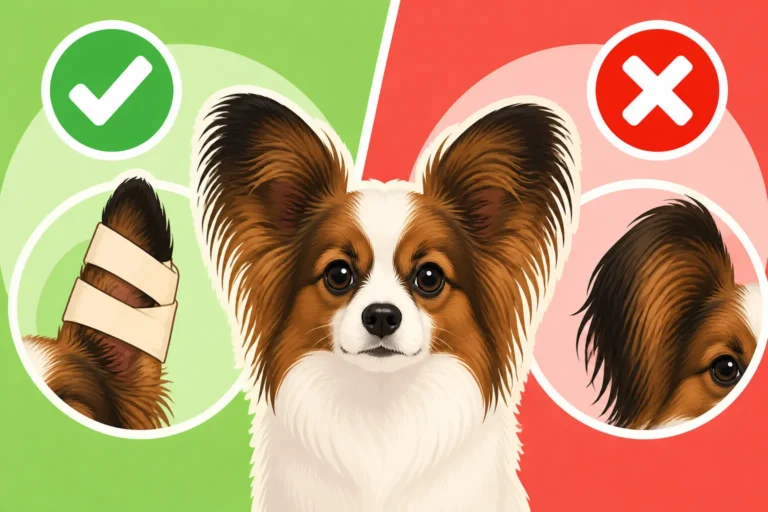
You may hear advice to tape a Papillon puppy’s ears, massage them, or add calcium to the diet. Do not assume these steps are needed just because the ears have softened. Taping can irritate skin or be applied in a way that causes discomfort, and supplements can disrupt a balanced diet or create other problems if given without veterinary guidance.
If someone suggests a product or technique, ask what it is intended to do, whether it is suitable for your puppy’s age, and what risks to watch for. A breeder may be able to describe practices used in their own lines, but that does not replace veterinary advice about skin, pain, or nutrition. If your vet recommends a particular item, use the exact name and instructions they provide; a retailer such as Chewy may be one place to check for that item, but availability or convenience does not establish that it is right for your puppy.
For questions about whether taping is acceptable or appropriate, see Whether Taping a Papillon's Ears Is Allowed. If you are planning to handle your puppy’s ears as part of routine care, Teaching a Papillon Puppy to Be Handled All Over offers a useful starting point for making gentle handling less stressful.
When to call the veterinarian
Signs that deserve prompt attention
A floppy ear alone is usually a different concern from an ear that is painful or inflamed. Contact your veterinarian if your puppy cries, pulls away, scratches repeatedly, shakes its head often, or resists having the ear touched. Redness, swelling, discharge, a strong odor, or scabs also warrant an examination.
Seek veterinary advice promptly if the ear change comes with other unusual signs, such as a head tilt, trouble with balance, marked lethargy, or a sudden change in behavior. Those signs are not explained by ordinary variation in ear carriage and need professional assessment.
A veterinarian can look into the ear canal and distinguish a normal developmental change from infection, injury, or another issue. If you are unsure whether a symptom is urgent, call the clinic and describe what you see rather than trying to diagnose it from appearance alone. Chewy’s customer service or product listings cannot assess an ear; use a veterinary clinic for symptoms or medical decisions.
A quick guide to what you are seeing
| What you notice | What it may mean | A sensible next step |
|---|---|---|
| Ear tips soften during puppyhood, with no other symptoms | Normal variation in development may be possible | Take occasional photos and monitor without repeatedly handling the ears |
| One ear stands while the other folds, and the puppy seems comfortable | The ears may be developing at different rates | Ask the breeder or veterinarian if you remain concerned |
| A floppy ear is red, swollen, smelly, or has discharge | Irritation, infection, or another ear problem may be present | Arrange veterinary advice |
| Your puppy scratches, shakes its head, or reacts painfully to touch | Discomfort needs to be assessed | Contact your veterinarian |
| Ear position changes suddenly alongside balance problems or a head tilt | This is not just an appearance question | Seek prompt veterinary advice |
The practical takeaway is simple: teething and floppy ears can coincide, but the timing alone cannot establish the cause. Watch your puppy’s comfort and overall behavior, keep ear care gentle, and get professional advice for pain or signs of illness. A temporary change does not, on its own, mean the ears will remain down.
Disclaimer
This article is for general informational purposes only and does not constitute professional advice. Laws, prices and regulations vary by location and change over time. Consult a qualified professional for guidance on your specific situation.