How PRA1 Is Inherited in Papillons
It's incredibly frustrating and heartbreaking to think about our beloved Papillons losing their eyesight, especially when it's due to a condition that can be passed down through generations. Progressive Retinal Atrophy Type 1 (PRA1) is one such genetic challenge facing the breed, and understanding how it's inherited is absolutely crucial for both current owners and anyone considering welcoming one of these beautiful dogs into their family. This guide will walk you through the complex world of PRA1 genetics, explaining the inheritance patterns, what it means for individual dogs, and how responsible breeding practices are working to protect the future of the Papillon.
Understanding Progressive Retinal Atrophy Type 1 (PRA1) in Papillons
Progressive Retinal Atrophy (PRA) isn't just one disease; it's a catch-all term for a group of genetic disorders that cause the retina to degenerate over time. In Papillons, a specific type known as PRA1 is the primary concern. When a dog is affected by PRA1, it means the specialized cells in their retina, responsible for detecting light, begin to break down. This isn't an overnight process; it's a gradual decline that typically starts with night vision and can progress to total blindness over several years.
What PRA1 Actually Means for Your Papillon's Eyesight
Imagine living in a world where shadows grow deeper every night, and familiar objects become indistinguishable in dim light. That's often how PRA1 begins for a Papillon. The earliest and most common symptom owners notice is what we call nyctalopia, or night blindness. Your once confident little dog might start bumping into furniture in the evening, become hesitant to go outside after sunset, or even seem disoriented in poorly lit rooms. This initial stage can be particularly distressing, as you see your vibrant companion struggling in situations they once navigated with ease. Over time, as the disease progresses, even daylight vision will be affected, though often much later. It's a slow, relentless march, and the timeline for each dog can vary. Owners often report their Papillons adapting incredibly well to their diminishing sight, thanks to their other senses, but it’s still a profound change that requires significant adjustments in their environment and care. If you're seeing signs that your Papillon is losing night vision, it's definitely time for a veterinary ophthalmologist visit.
The Specific Gene Behind Papillon PRA1
The scientific community has pinpointed the exact culprit behind PRA1 in Papillons: a specific mutation within the CNGB1 gene. Genes are essentially the instruction manual for building and operating a living organism, and each dog inherits two copies of every gene, one from each parent. The CNGB1 gene plays a vital role in the function of the rod photoreceptor cells in the retina. Rods are primarily responsible for vision in low light conditions, which is why the initial symptom of PRA1 is night blindness. When there's a specific "frameshift" mutation in both copies of this CNGB1 gene, the instructions for building and maintaining those rods go awry. This leads to the progressive degeneration of the rods, and eventually the cones (which handle daylight and color vision), causing the eventual blindness. Understanding this specific gene and its mutation is paramount because it allows us to develop accurate DNA tests to identify affected dogs and carriers, which we'll discuss more later. This knowledge helps us grasp the intricate details of what the CNGB1 frameshift does to a Papillon's rods.
The Autosomal Recessive Inheritance Pattern
Understanding how PRA1 is passed down in Papillons hinges on grasping the concept of "autosomal recessive" inheritance. This might sound like a mouthful, but once you break it down, it makes a lot of sense, even if the implications can be quite frustrating for breeders and owners.
What "Autosomal Recessive" Truly Signifies
Let's demystify "autosomal recessive." "Autosomal" simply means the gene in question, the CNGB1 gene, is located on a non-sex chromosome. This means the inheritance pattern doesn't depend on whether the dog is male or female; both sexes are equally susceptible to inheriting the condition. "Recessive" is the key part. It tells us that for a Papillon to actually develop PRA1, they must inherit two copies of the mutated CNGB1 gene – one from their mother and one from their father.
Think of it like this: for each gene, there are two possible versions, or "alleles." Let's say 'N' represents the normal, healthy gene, and 'm' represents the mutated, disease-causing gene.
- A dog with two normal genes (N/N) is considered "clear." They will not develop PRA1 and cannot pass the mutated gene on to their offspring.
- A dog with one normal and one mutated gene (N/m) is called a "carrier." Here's where it gets interesting and sometimes frustrating: carriers do not develop PRA1 themselves because the single normal gene is enough to produce functional rod cells. The normal gene "dominates" or masks the effect of the recessive mutated gene. However, they can pass that mutated 'm' gene on to their puppies. So, to answer the question, a carrier Papillon never goes blind from PRA1.
- A dog with two mutated genes (m/m) is "affected." These are the Papillons who will develop PRA1 because they don't have a single healthy copy of the CNGB1 gene to compensate.
This recessive nature is why the disease can persist in a breed even when it seems to "skip" generations. You might have healthy parents who produce an affected puppy, leaving you scratching your head, and that's usually because both parents were asymptomatic carriers.
How Carriers Fit into the Picture
Carriers are the silent backbone of autosomal recessive inheritance. They are perfectly healthy, living out full lives without ever showing a single sign of PRA1. From an owner's perspective, having a carrier Papillon is generally not a concern for their dog's personal health. They won't go blind from this particular form of PRA. However, from a breeding perspective, carriers are incredibly important.
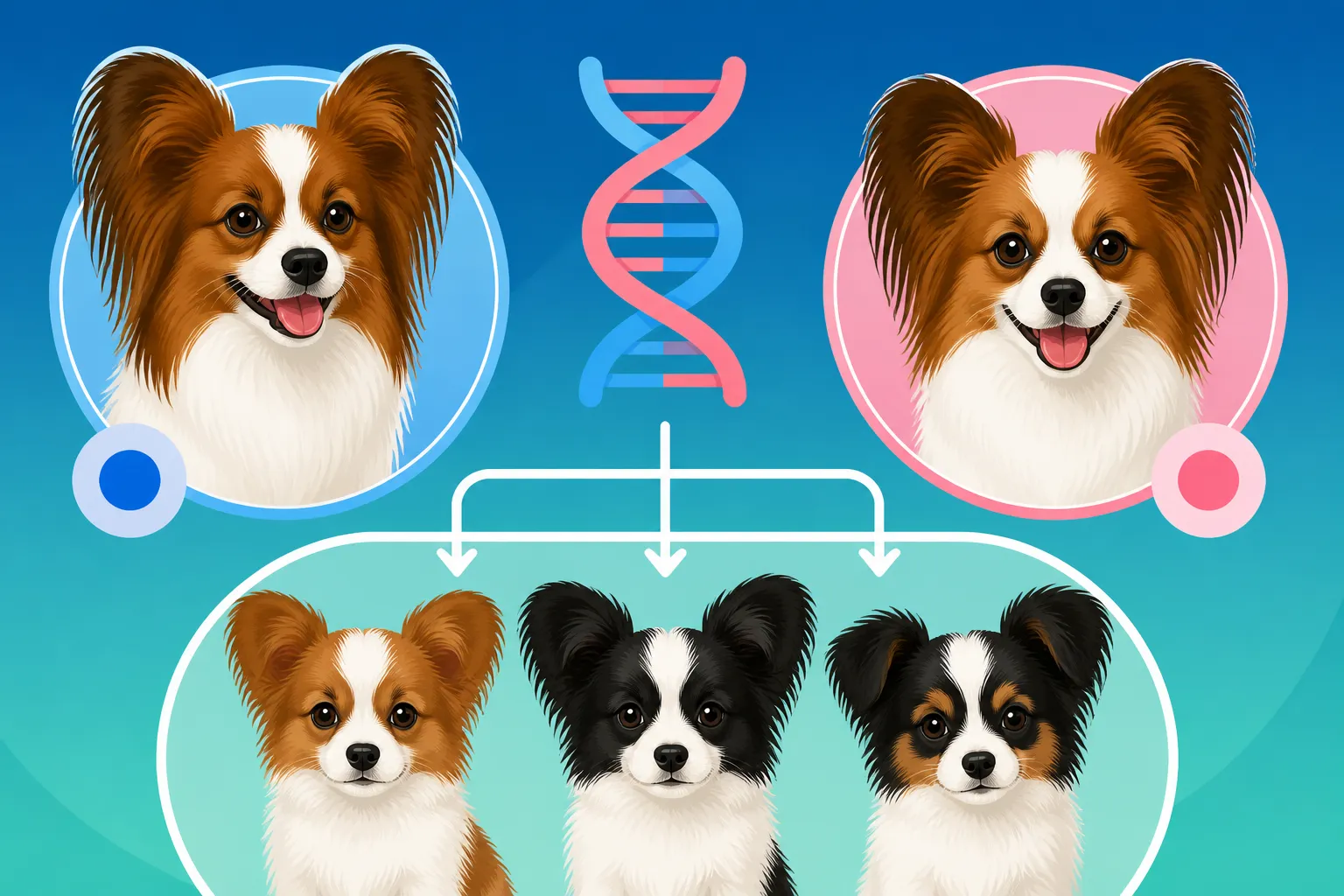
Because carriers possess one copy of the mutated gene, they have a 50% chance of passing that mutated gene on to each of their offspring, regardless of who the other parent is. If a carrier dog is bred to another carrier, or worse, to an affected dog, that's when you run the risk of producing puppies who inherit two copies of the mutated gene and will therefore be affected by PRA1. This is why genetic testing is so vital for all breeding Papillons, even if they appear perfectly healthy themselves. Identifying carriers allows breeders to make informed decisions to prevent the birth of affected puppies, thereby slowly but surely reducing the incidence of PRA1 within the breed's population. It truly puts the power in the hands of responsible breeders to make a significant difference.
Predicting Outcomes: Breeding Scenarios and Risk Factors
Understanding the autosomal recessive inheritance pattern becomes incredibly practical when we look at breeding scenarios. For anyone involved in breeding Papillons, or even just for curious owners, knowing these probabilities is fundamental to making responsible choices. The goal is always to avoid producing puppies affected by PRA1.
Decoding the Parental Combinations
Let's break down the possible outcomes when two Papillons are bred, based on their PRA1 genetic status. We'll use 'N' for the normal gene and 'm' for the mutated gene.
Scenario 1: Clear (N/N) x Clear (N/N)
- Outcome: All puppies will be Clear (N/N).
- Explanation: Since both parents only have normal genes to pass on, all offspring will inherit a normal gene from each side. This is the safest breeding combination.
Scenario 2: Clear (N/N) x Carrier (N/m)
- Outcome: Approximately 50% Clear (N/N) puppies and 50% Carrier (N/m) puppies.
- Explanation: The Clear parent will always pass on an 'N' gene. The Carrier parent has a 50% chance of passing on an 'N' and a 50% chance of passing on an 'm'. No affected puppies will be produced, but half of the litter could be carriers. This combination is sometimes used strategically by breeders to bring in desirable traits from a carrier dog, but only with careful planning and subsequent testing of the offspring.
Scenario 3: Carrier (N/m) x Carrier (N/m)
- Outcome: Approximately 25% Clear (N/N) puppies, 50% Carrier (N/m) puppies, and 25% Affected (m/m) puppies.
- Explanation: Both parents have a 50% chance of passing on the 'm' gene. This combination will produce affected puppies, on average, a quarter of the litter. This is why the question of whether two carrier Papillons should be bred is often met with a resounding "no" from responsible breeders, as it knowingly creates affected animals.
Scenario 4: Clear (N/N) x Affected (m/m)
- Outcome: All puppies will be Carrier (N/m).
- Explanation: The Clear parent always passes 'N', the Affected parent always passes 'm'. While no affected puppies are produced directly in this generation, every single puppy will be a carrier. This is not a recommended pairing, as it spreads the carrier status widely.
Scenario 5: Carrier (N/m) x Affected (m/m)
- Outcome: Approximately 50% Carrier (N/m) puppies and 50% Affected (m/m) puppies.
- Explanation: The Affected parent always passes 'm'. The Carrier parent has a 50% chance of passing 'N' and 50% chance of passing 'm'. This pairing has a high probability of producing affected puppies and should be strictly avoided by ethical breeders.
Scenario 6: Affected (m/m) x Affected (m/m)
- Outcome: All puppies will be Affected (m/m).
- Explanation: Both parents only have the mutated gene to pass on, so all offspring will inherit two copies and be affected. This combination is completely unethical and should never occur.
Here's a handy table summarizing these scenarios:
| Parent 1 Status | Parent 2 Status | Clear Puppies | Carrier Puppies | Affected Puppies |
|---|---|---|---|---|
| Clear (N/N) | Clear (N/N) | 100% | 0% | 0% |
| Clear (N/N) | Carrier (N/m) | 50% | 50% | 0% |
| Carrier (N/m) | Carrier (N/m) | 25% | 50% | 25% |
| Clear (N/N) | Affected (m/m) | 0% | 100% | 0% |
| Carrier (N/m) | Affected (m/m) | 0% | 50% | 50% |
| Affected (m/m) | Affected (m/m) | 0% | 0% | 100% |
The Importance of Genetic Testing for Breeders
Given the complexities of autosomal recessive inheritance, genetic testing isn't just a good idea for Papillon breeders; it's an absolute necessity for ethical and responsible breeding. Before a Papillon is even considered for breeding, they should undergo specific DNA testing to determine their PRA1 status (Clear, Carrier, or Affected). Companies like Embark Veterinary, Wisdom Panel, and OptiGen (which offers the original PRA1 test) provide reliable genetic screening services. Breeders submit a simple cheek swab, and the results clearly indicate the dog's genotype. This allows them to know definitively which genes their dog carries.
This testing prevents the heartbreaking scenario of unknowingly breeding two carriers together and producing affected puppies. A breeder who knows their dog is a carrier can choose to breed them with a clear dog, ensuring no affected puppies are born, though some puppies will still be carriers. The responsible thing to do is then test those puppies and only breed the clear ones in future generations, or continue to breed carriers to clears and test all offspring. This strategic approach, sometimes called "test and remove," helps to gradually reduce the number of carriers in the gene pool without severely limiting genetic diversity. For any Papillon owner considering breeding, or someone looking to purchase a puppy, verifying that the breeder has performed and openly shares these genetic test results, like The DNA Test for Papillon Retinal Atrophy, is a non-negotiable step. It speaks volumes about their commitment to the health of the breed. Furthermore, having a solid pet insurance plan from a provider like Healthy Paws can give breeders and owners peace of mind, knowing that if any unforeseen health issues arise, including those potentially related to genetic conditions, they have support for veterinary costs.
Living with and Managing PRA1 in Papillons
Even with the most diligent breeding practices, some Papillons may still be affected by PRA1. For owners of these special dogs, understanding the progression of the disease and how to best support their companion is paramount. It’s a journey that requires patience, adaptation, and a deep well of love.
Early Detection and Progression
The insidious nature of PRA1 means it often begins subtly. As mentioned, the first real clue is usually a noticeable decline in night vision. Your Papillon might hesitate at the top of stairs in the dark, refuse to go into a dimly lit room, or stumble over familiar objects once the sun sets. These are not minor quirks; they're significant indicators. As the rods in their eyes continue to degenerate, these issues become more pronounced. Eventually, typically years after night blindness first appears, the cones, responsible for daylight vision, will also start to fail. This is when total blindness can occur. The exact age this starts and how fast it progresses can vary between individual dogs, but it's generally a condition that manifests in young to middle-aged adulthood. If you observe any changes in your Papillon's vision, especially in low light, consulting a veterinary ophthalmologist is crucial. They can perform specialized eye exams, like electroretinography (ERG), which measures the electrical activity of the retinal cells, to diagnose PRA1 definitively and monitor its progression. This early awareness empowers you to begin adapting your home environment and routines to support your dog.
Supporting Your Papillon's Quality of Life
Living with a Papillon affected by PRA1 means becoming their eyes in many situations. The good news is that dogs are incredibly adaptable, and many blind Papillons lead happy, fulfilling lives. The key is consistency and creating a safe, predictable environment.
- Maintain Routine: Dogs thrive on routine, and for a blind dog, it’s even more important. Stick to consistent feeding times, potty breaks, and walks.
- Environmental Stability: Avoid rearranging furniture. If you must, do it slowly and guide your dog around new placements. Use scent markers (like essential oils on furniture legs) or textured mats to help them navigate key areas like doorways or water bowls. Investing in ramps or steps can also help prevent falls from furniture. You might also want to learn how a blind Papillon learns a house, which involves a lot of scent and touch cues.
- Safety First: Block off stairs or dangerous areas with baby gates. Supervise them closely outdoors, especially in unfamiliar territory. A securely fenced yard is ideal, but even there, inspect it for hazards your dog might not see.
- Verbal Cues: Start using more verbal cues to guide them. "Step up," "step down," "wait," "left," "right" can be incredibly helpful. Reward them generously for responding.
- Enrichment: Don't let blindness limit their joy. Scent work, puzzle toys that dispense treats, and familiar chew toys can provide mental stimulation. Keep up with walks in familiar, safe areas, allowing them to explore with their nose.
- Physical Contact: Maintain plenty of gentle physical contact. Speak to them often, so they know where you are.
- Consider Other Senses: Since their hearing and sense of smell are heightened, engage them with sounds and interesting smells on walks.
Managing the ongoing veterinary care, potential eye drops, or even adapting to new safety measures can add up. Having pet insurance, for instance from Healthy Paws, can be incredibly beneficial in offsetting these costs, ensuring you can provide the best possible care without financial strain. It’s all about creating a world where your Papillon feels secure, loved, and capable, even without sight.
The Broader Impact on the Papillon Breed
The presence of a genetic condition like PRA1 has far-reaching implications that extend beyond individual dogs and their owners. It impacts the entire breed, challenging breeders to balance health, genetic diversity, and preservation of the Papillon's cherished traits.
Responsible Breeding Practices and Gene Pools
For a breed as beloved as the Papillon, breeders carry a heavy responsibility. The existence of a reliable DNA test for PRA1 means there's no excuse for breeding affected dogs or knowingly producing affected puppies. Responsible breeders are committed to testing all their breeding stock and making informed decisions based on those results. The primary goal is to produce healthy puppies, and ideally, to slowly reduce the prevalence of the 'm' gene in the population. However, this isn't as simple as just removing all carriers from the breeding pool. If a significant percentage of the breed carries the gene, simply cutting them out could drastically shrink the gene pool. A limited gene pool increases the risk of other genetic problems emerging or intensifying due to inbreeding.
Therefore, the common, responsible approach is to breed carriers to clear dogs (as in Scenario 2 in our table). This ensures no affected puppies are born, but still allows valuable genetic lines from carrier dogs to continue. The offspring from such pairings are then thoroughly tested, and the clear puppies are prioritized for future breeding. This "test and manage" strategy, as opposed to "test and eliminate," is vital for maintaining genetic diversity while actively working to reduce the incidence of PRA1. Any reputable breeder should be transparent about their dogs' health testing, including for PRA1, and be able to articulate their breeding philosophy concerning genetic health. This is part of a larger commitment to what a Papillon breeder should have tested.
The Future of PRA1 Management
The future of PRA1 management in Papillons looks promising, thanks to scientific advancements and the dedication of breed enthusiasts. Ongoing research, often funded by breed clubs and foundations, continues to explore the nuances of genetic conditions and potential therapeutic interventions, though currently, there is no cure for PRA1. Education remains a cornerstone of future success. Prospective Papillon owners need to be informed consumers, understanding the importance of genetic testing and seeking out breeders who prioritize health. Supporting breeders who openly test and strategize their pairings to avoid affected puppies is crucial.
Furthermore, collaboration among breeders, veterinary geneticists, and breed clubs is essential. Sharing data, tracking lineage, and working towards a collective goal of improving breed health helps to ensure that future generations of Papillons will continue to thrive with excellent eyesight for as long as possible. The Papillon Club of America, for example, actively promotes health testing and education to protect the breed's future. Investing in pet insurance like Healthy Paws, even for a healthy puppy, is a smart long-term strategy, as it ensures that if any breed-specific health challenges, including PRA1, arise down the line, owners are financially prepared to provide the best possible care, supporting both individual dogs and the broader health goals of the breed.
Disclaimer
Please remember that the information provided in this article is intended for general informational purposes only and does not constitute professional veterinary advice. Always consult with a qualified veterinarian or veterinary ophthalmologist for any health concerns or before making any decisions related to your pet's medical care or breeding program.