Whether Half Up Ears Ever Finish Rising
A Papillon puppy’s ears can look wonderfully mismatched for weeks: one upright, one folded, or both sitting halfway up. That uncertainty is normal, but it can leave owners wondering whether the ears will finish rising or stay that way. Here’s what affects ear position, what changes to expect as a puppy grows, and when a veterinarian should take a look.
Why a Papillon Puppy’s Ears May Be Half Up
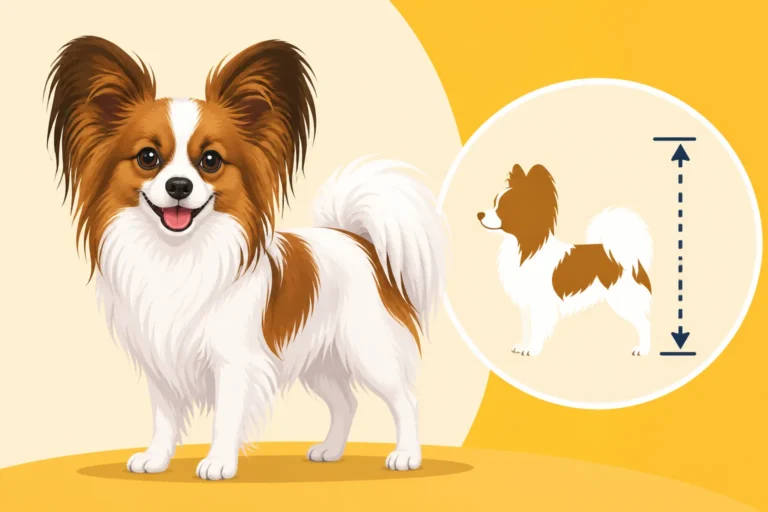
Papillons are known for large, erect ears with fringed hair, but puppies don’t necessarily arrive with their adult ear carriage already in place. Ear position develops as the puppy grows, and the timing varies. A puppy’s ears can shift from floppy to partly raised and back again before their adult look becomes clearer.
Cartilage, growth, and individual development
An ear’s shape depends on the structure supporting it, including cartilage. During puppyhood, that structure is still developing. The ear may start to lift at the base while the tip remains folded, or one ear may rise before the other. A half-up appearance doesn’t, by itself, show that anything is wrong.
Growth is not perfectly synchronized. One side of a puppy’s body may mature at a different pace from the other, so uneven ears are not unusual. The change can be gradual, making it hard to notice from one day to the next. Comparing photographs taken a few weeks apart can be more useful than checking the ears repeatedly throughout the day.
There is no guaranteed age when every Papillon’s ears finish rising. Some puppies’ ears become upright relatively early; others take longer, and some retain a softer fold or different carriage. For a general look at the range of developmental timing, see When a Papillon Puppy's Ears Go Up.
Genetics and family resemblance
Inherited traits play a major role in ear shape and carriage. If a puppy’s relatives have varied ear positions, that may offer a clue about what to expect, though it cannot predict an individual puppy with certainty. Even puppies from the same litter may not develop identical ears.
Ask the breeder what the parents’ and close relatives’ ears looked like as puppies and adults. Photos can help, especially if they show the dogs at different ages rather than only in a posed adult portrait. A breeder may also be able to explain whether the puppy’s family tends to have ears that rise later or retain a softer tip.
Ear type can run in families, but family history is still a guide rather than a promise. Whether Ear Type Runs in Papillon Lines explores that question in more detail. And because Papillon and Phalene refer to distinct ear types within the same breed, it can help to understand the distinction before interpreting a puppy’s appearance. See Whether a Phalene Is a Separate Breed.
Teething and other temporary changes
Owners often notice ear changes around the time their puppy is teething. A puppy might have more upright ears one week and softer-looking ears the next. That timing has led to the familiar idea that teething makes Papillon ears drop, but a change happening at the same time does not prove that teething caused it. Ear development and teething both occur during puppyhood, so they can overlap.
If your puppy’s ears change during this period, it is usually more helpful to watch the overall pattern than to assume the change is permanent. Keep an eye on comfort and skin health, and avoid repeatedly folding, pulling, or pressing the ears to test their stiffness. For more on the commonly discussed connection, read Whether Teething Drops a Papillon Puppy's Ears.
| What you notice | What it may mean | A sensible next step |
|---|---|---|
| Both ears are partly raised | Normal development may still be underway | Observe over time and ask the breeder about family history |
| One ear rises before the other | The two sides may be developing at different rates | Take occasional photos rather than checking constantly |
| Ear position changes during puppyhood | Growth and development can make the appearance change | Avoid assuming the change is permanent based on one day |
| An ear suddenly droops with pain or swelling | A health issue may need attention | Contact your veterinarian |
| Ears remain partly folded as the puppy matures | Adult carriage may simply differ from your expectation | Discuss appearance and breed type with the breeder or vet |
Will Half-Up Ears Eventually Stand?
Sometimes, but not always. A partly raised ear may continue to become more upright as the puppy matures. It may also keep a fold at the tip or settle into another natural position. There isn’t a reliable home test that can tell you which outcome is coming.
What to expect as the puppy matures
Look for gradual changes over weeks rather than expecting a sudden, permanent switch. The base of an ear may become firmer first, while the tip still folds. An ear can also appear different depending on how the puppy is holding its head, whether it is relaxed or excited, and how its fringe lies.
Try not to treat each small change as a verdict. A puppy may prick its ears forward when interested and let them relax when sleepy. That movement can make the ears look more or less upright in the moment, without indicating that their underlying development has changed.
If you’re wondering whether an ear that is partly raised will ever become fully erect, the honest answer is that individual puppies vary. A breeder familiar with the puppy’s family may offer a more informed estimate, but no one can guarantee the final carriage based on appearance alone. The related guide Whether a Papillon's Ears Can Change After a Year discusses why ear appearance may continue to prompt questions as a dog matures.
Papillon and Phalene ear types
Papillons are associated with erect ears, while Phalenes have dropped ears. Both types are part of the same breed, and puppies with different ear types can occur in the same litter. That background matters if you are trying to understand whether an ear is still developing or whether it may remain folded.
A half-up ear does not automatically mean a puppy is a Phalene. The ear may still change as the puppy grows, and a partly folded tip is not the same thing as a fully dropped ear. If the puppy is being placed as a companion, ask the breeder how they describe its likely adult ear type and whether that distinction affects the terms of the sale or registration.
For a closer look at how the two ear types can appear in one litter, see How Many Phalenes Are Born in a Papillon Litter. If your main concern is whether a particular ear position is considered a fault in a show setting, Whether Half Up Ears Are Faulted on a Papillon addresses that separate question. A dog’s health and the appearance preferred for showing are not the same issue, so it helps to keep those questions distinct.
What an adult outcome can mean
If the ears remain partly folded, that does not necessarily mean the dog has a health problem. Ear carriage is an appearance trait. A veterinarian can assess whether the ears are healthy, but a routine exam does not always predict exactly how they will look as an adult.
It is also worth separating everyday expectations from show expectations. People choosing a puppy as a companion may care most about temperament, health, and fit with their household. Someone hoping to show a Papillon may want to discuss breed standards and likely ear carriage with an experienced breeder before choosing a puppy.
If appearance is important to you, talk about it openly and kindly with the breeder. Ask what they can reasonably predict and what remains uncertain. That conversation is more useful than trying to force the ears into a preferred shape.
Should You Tape or Train the Ears to Stand?
Usually, don’t try to make a puppy’s ears stand by manipulating them yourself. Taping, gluing, massaging, or using improvised supports can irritate delicate skin and may cause discomfort. It also cannot guarantee the adult result you want.
Why home taping can backfire
A puppy’s ear skin is sensitive, and adhesives or repeated handling can cause irritation. A puppy that resists may become stressed, and pulling or pressing the ear can be uncomfortable. Products intended for people or general craft use should not be used on a dog’s ears.
Some owners look online for products or advice, including through retailers such as Chewy, when they are worried about ear carriage. Shopping for a product is not a substitute for an examination, though, and an adhesive or support should not be used just because a listing suggests it is suitable. If you have concerns about the ear’s health, ask your veterinarian before applying anything.
You may also see advice about supplements or dietary changes to affect ear position. Don’t add supplements solely to change how the ears sit. A complete diet appropriate for the puppy’s age is a better starting point, and a veterinarian can advise you if there is a genuine nutritional concern.
When to ask a breeder or veterinarian
If you’re considering any kind of ear support, talk with the breeder and veterinarian first. They can help distinguish ordinary development from a concern that needs attention. If the puppy is being shown, seek guidance from someone experienced with the breed and its rules rather than following an online tutorial.
If you order routine grooming or ear-care supplies from Chewy or another retailer, choose products for their intended purpose and follow veterinary guidance. Avoid anything meant to hold the ear in a particular position unless a qualified professional who knows the puppy has specifically recommended it. The topic of taping also raises a separate question about show rules; Whether Taping a Papillon's Ears Is Allowed can help you explore that issue.
When a Half-Up Ear Needs a Vet Check
A half-up position on its own is usually an appearance question, not an emergency. But a new change accompanied by discomfort or other symptoms deserves attention. Rather than focusing only on whether an ear stands, notice whether the puppy seems comfortable and whether the skin looks normal.
Changes that deserve attention
Contact your veterinarian if the ear suddenly droops after previously standing, especially if there has been a fall, rough play, or another possible injury. Also ask for advice if you notice swelling, redness, a wound, discharge, a strong odor, frequent head shaking, or repeated scratching. These signs can point to an ear problem that needs assessment; they are not something to treat by taping the ear upright.
If the puppy seems painful when you touch near the ear, stop handling it and call the clinic for guidance. Don’t put ear cleaner, oil, or medication into the ear unless your veterinarian recommends it. Products bought through Chewy or elsewhere may not be appropriate for every problem, and adding something before an exam can complicate care.
A vet visit can also reassure you when you’re unsure whether a change is ordinary. Bring photos if the ear’s appearance has changed over time, and describe when you first noticed it. That history may be more useful than trying to recreate the position by moving the ear.
Questions to ask the breeder
The breeder can help with questions about the puppy’s family, expected ear type, and any promises made about show potential. Ask whether the parents or littermates had similar ear changes and whether the breeder has photos from earlier puppy stages. If you have concerns about health, ask whether the breeder has noticed scratching, discharge, or other ear symptoms.
It’s reasonable to ask whether the puppy was sold with a particular expectation about adult ear carriage. Still, no photo or family pattern can guarantee that an individual puppy’s ears will finish rising. A straightforward conversation can clarify what was represented and what remains uncertain.
For many owners, the most useful approach is simple: give the puppy time, keep the ears clean only as advised, and focus on the dog in front of you rather than checking for a daily change. A half-up phase may pass, or it may be part of your Papillon’s adult look. Either way, if the puppy is comfortable and the ears are healthy, the position alone is generally a matter of appearance.
Disclaimer
This article is for general informational purposes only and does not constitute professional advice. Laws, prices and regulations vary by location and change over time. Consult a qualified professional for guidance on your specific situation.