Which Faults Judges Penalize in a Papillon
A Papillon can look charming and healthy yet still lose points in the conformation ring because a judge is comparing it with a written breed standard, not simply choosing the prettiest dog. The tricky part is knowing which differences are ordinary imperfections, which affect movement or type, and which may disqualify a dog. This guide explains the main areas judges assess and how to prepare thoughtfully.
What judges mean by a fault in a Papillon
A fault is not the same as a disqualification
In dog shows, a fault is a feature that falls short of the ideal described in the breed standard. It might be a small departure in proportion, coat, color, or movement. A disqualification is a more serious issue specified by the governing organization’s standard; it can make a dog ineligible for competition in that conformation class.
That distinction matters because people sometimes hear that a Papillon has a “fault” and assume the dog is unhealthy or unsuitable as a companion. Usually, that is not what the word means. A Papillon with a less-than-ideal ear set, for example, may live a perfectly happy life. The judge is assessing how closely the dog matches the standard, not making a general judgment about the dog’s worth.
Standards and show rules can differ between organizations and countries, so confirm the rules for the event you plan to enter. For an overview of why one dog may be evaluated differently across venues, see How Papillon Standards Differ Between Countries. Also keep in mind that conformation is only one way to participate with a dog; the ring does not measure affection, trainability, or the quality of your relationship.
How judges weigh the whole dog
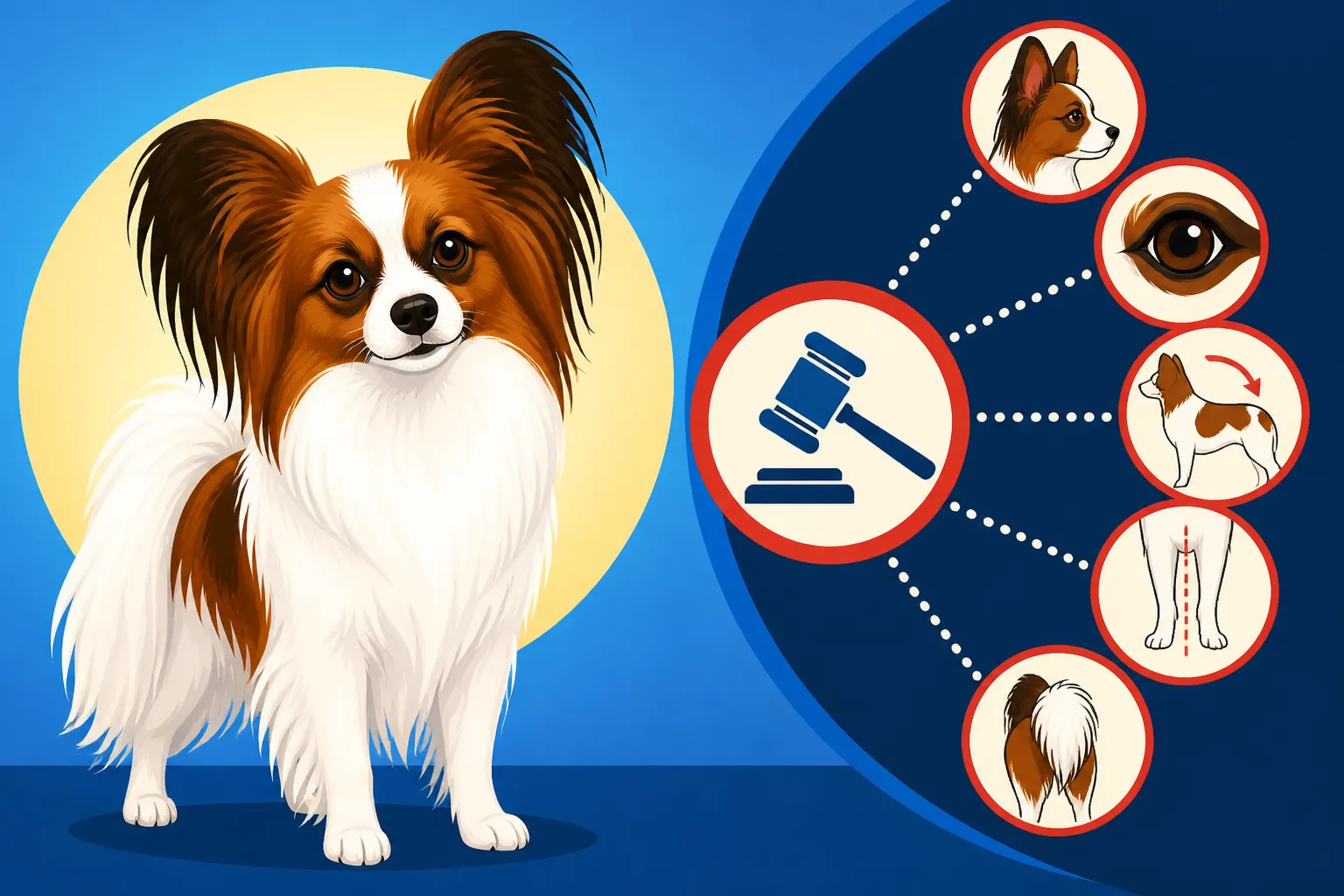
Judges assess the Papillon as a complete dog. They look at proportions, head and expression, ears, body, coat, color, feet, and movement. A single minor imperfection does not necessarily determine the result. Overall balance and the way the dog carries itself can influence how the judge evaluates its strengths and weaknesses.
For example, imagine two Papillons with slightly uneven facial markings. One has balanced proportions, sound movement, and a confident presentation. The other has several departures from the ideal, including a less balanced outline and inefficient movement. The shared marking detail does not mean the dogs should receive identical evaluations: the judge considers the whole picture.
Temperament and presentation matter, too. A dog that is frightened, difficult to examine, or unable to move comfortably may not show its qualities well. That does not mean a handler should force a dog through a stressful experience. Good preparation helps the dog feel secure and lets the judge evaluate it fairly.
The features most likely to attract a judge’s attention
Size, outline, and proportions
The Papillon is a small, fine-boned toy spaniel, but “small” does not mean frail or poorly balanced. Judges assess whether the dog’s overall shape, proportions, and substance fit the breed type. A dog that appears coarse, unusually heavy, or excessively delicate may be seen as departing from the desired outline.
Height can be especially important because the breed standard sets limits. A dog outside the permitted range may face a more serious consequence than a minor difference in proportions, depending on the rules in use. If your Papillon is near a size boundary, avoid relying on an informal estimate from home. Ask a knowledgeable breeder or show mentor how measurements are taken and review the standard for the specific organization. The related guide Whether an Oversized Papillon Can Be Shown explains why size concerns deserve careful attention.
A judge is not looking for a dog that merely appears tiny. The ideal is a balanced Papillon that looks elegant but sturdy enough to move freely. To understand the proportions behind that impression, see What a Correct Papillon's Outline Looks Like.
Head, expression, ears, and color
The Papillon’s distinctive head and alert expression contribute strongly to breed type. Judges may consider the shape of the head, the muzzle, eye placement and expression, and how these features come together. A head that looks overly coarse or out of proportion with the body may not match the desired appearance. For more on the features involved, see What a Papillon's Head Should Look Like.
Ears are another defining feature. Papillons have erect ears with characteristic feathering; the Phalène variety has drop ears. Judges assess the ear’s shape, placement, carriage, and furnishings in relation to the variety and standard. An ear that does not sit or carry as expected can affect the dog’s overall expression. A puppy’s ears may also change as it grows, so avoid treating a temporary stage as a final assessment.
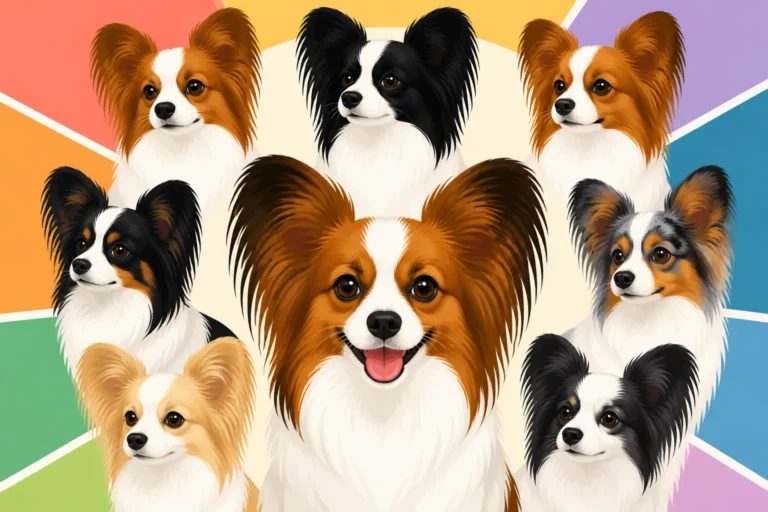
Color and markings can be confusing for new exhibitors, especially when two dogs have different facial patterns. The standard describes acceptable colors and markings, but an attractive blaze or symmetrical face is not a substitute for sound structure. White is part of the breed’s parti-color pattern, and markings can vary. Read Which Colors the Papillon Standard Accepts and Whether a Papillon Must Have a White Blaze for more detail. In the ring, focus on the complete standard rather than assuming one marking pattern automatically wins.
Movement, feet, and soundness
Movement can reveal issues that are less obvious when a Papillon is standing still. Judges watch the dog travel at an appropriate pace, often examining how it moves from different angles. They are looking for efficient, coordinated movement rather than a dog that appears stiff, unbalanced, or uncomfortable.
Feet also matter because they affect how the dog stands and moves. Judges may assess their shape, placement, and whether they support a balanced stance. Long nails, excessive hair between the pads, or a slippery surface can make a dog’s feet look untidy or compromise its footing during presentation. These practical details are manageable, but they should not be mistaken for a lasting structural problem.
If you want to learn what judges look for in motion, read How a Papillon Should Move and What Shape a Papillon's Feet Are. A judge’s hands-on evaluation can provide more information than a quick glance from across the ring; What a Papillon Judge Puts a Hand On First offers more context on that part of the exam. If your dog appears sore or reluctant to move, pause show preparation and consult your veterinarian rather than assuming it is a training issue.
| Area judges assess | What they may notice | What owners can prepare |
|---|---|---|
| Size and outline | Height, balance, proportions, and overall type | Learn the relevant standard and get guidance on proper measurement |
| Head and expression | Head shape, muzzle, eyes, and breed expression | Practice calm examination and presentation |
| Ears | Variety, placement, carriage, and feathering | Keep furnishings clean and gently combed |
| Color and markings | Whether the pattern fits the applicable standard | Read the event’s breed standard rather than relying on show-ring rumors |
| Coat and presentation | Condition, cleanliness, and natural appearance | Establish a gentle grooming routine and avoid over-trimming |
| Movement and feet | Coordination, comfort, stance, and foot shape | Keep nails maintained and practice moving on safe surfaces |
Preparing your Papillon without overdoing it
Build comfort with handling and movement
A judge may examine your Papillon’s body and ask it to stand or move. Short, pleasant practice sessions can help your dog become comfortable with these experiences. Begin at home in a quiet place: reward your dog for standing calmly, allow gentle handling of the shoulders and body, and practice a few steps on leash. Gradually add mild distractions only if your dog remains relaxed.
Keep sessions brief. A young or sensitive dog may learn more from a handful of successful repetitions than from a long practice that ends in frustration. If your Papillon pulls away, freezes, or becomes worried, make the next attempt easier. The goal is not to make the dog tolerate every kind of handling at any cost; it is to build confidence in a respectful, gradual way.
Practice movement on a secure surface that gives your dog good footing. Watch for comfort and an even, natural gait rather than trying to make the dog move at an exaggerated speed. If you are new to showing, a local breed club or experienced handler may be able to demonstrate ring presentation and explain what is expected at your event.
Keep grooming neat and breed-appropriate
A Papillon’s coat can look elaborate, but show preparation should preserve a natural appearance. Regular gentle brushing helps prevent tangles in the ear fringe, chest frill, culottes, and tail plume. Pay particular attention to areas that catch debris or rub against bedding. A fine comb can help you check whether you have reached the coat near the skin without pulling at delicate furnishings.
If you need a basic comb or coat-care supplies, Chewy may be one place to look; choose tools suited to a fine, silky coat and use them gently. A comb is for finding tangles, not forcing them out. Work from the ends of a small section toward the roots, and stop if your dog shows discomfort. For stubborn mats or uncertainty about trimming, ask a groomer familiar with Papillons rather than cutting close to the skin at home.
Bathing and drying should be calm, thorough, and appropriate for your dog’s coat. A damp coat can tangle more easily, so gently work through knots before bathing and dry the coat carefully afterward. If you shop for shampoo or a detangling product through Chewy, check that it is made for dogs and follow the product directions. Keep product out of the eyes and ears, and discontinue use if your dog’s skin reacts.
A tidy presentation does not require turning a Papillon into a sculpted dog. Before making substantial changes to the coat, ask an experienced exhibitor what the standard and local rules allow. Chewy can also be a convenient source for routine grooming basics, but the important part is choosing tools and products that suit your individual dog and using them with care.
Reading a judge’s feedback and deciding what to do next
Use critiques as information, not a verdict
A judge’s placement is one result on one day. It may reflect the dogs entered, the judge’s interpretation of the standard, how each dog moved and presented, and the specific qualities the judge prioritized. A lower placement does not automatically mean your Papillon has a serious flaw. Likewise, a ribbon does not guarantee that every aspect of the dog is ideal.
If the event provides feedback, note the specific observation rather than trying to interpret a vague comment as a complete diagnosis. “Could use more reach” or “needs a cleaner outline” may point toward a presentation or conformation detail, but it is worth asking a knowledgeable mentor what the comment means in practice. If the feedback concerns discomfort, lameness, or a change in movement, consult a veterinarian before continuing to train or compete.
Keep a record of what you hear across events. One comment may be a judge’s preference or a presentation issue; repeated feedback about the same feature may be more useful. Discuss patterns with a responsible breeder, breed mentor, or experienced handler who knows the standard and can evaluate your dog in person.
Separate show goals from your dog’s everyday life
It is easy to become preoccupied with a detail after hearing it called a fault. Try to keep the context clear: the breed standard is a reference for conformation judging, not a checklist for whether your Papillon deserves a good life. A dog does not need a show-winning outline, perfectly placed ears, or ideal markings to be a delightful companion.
If your goal is to compete, learn the standard, prepare your dog kindly, and accept that judges may differ in what they notice most. If your goal is simply to understand your Papillon’s appearance, the same information can still be useful without turning every small variation into a problem. The most valuable preparation is often ordinary care: keeping the dog comfortable, maintaining the coat and nails, and noticing changes in movement or behavior.
A thoughtful owner can appreciate both sides of the picture. The show ring rewards closeness to a written ideal, while daily life is built from health, security, good habits, and companionship. Knowing the difference makes breed-standard feedback easier to use—and much easier not to take personally.
Disclaimer
This article is for general informational purposes only and does not constitute professional advice. Laws, prices and regulations vary by location and change over time. Consult a qualified professional for guidance on your specific situation.