Whether a Papillon Can Be All One Color
A Papillon cannot be solid-colored under the breed standard: white must be the predominant color, with patches of another color. That can be confusing when a dog looks mostly black, red, or sable, especially if its markings change as it grows. This guide explains what counts as “all one color,” how standards treat markings, and what to ask when assessing a puppy.
Can a Papillon Be All One Color
What the breed standard means by color
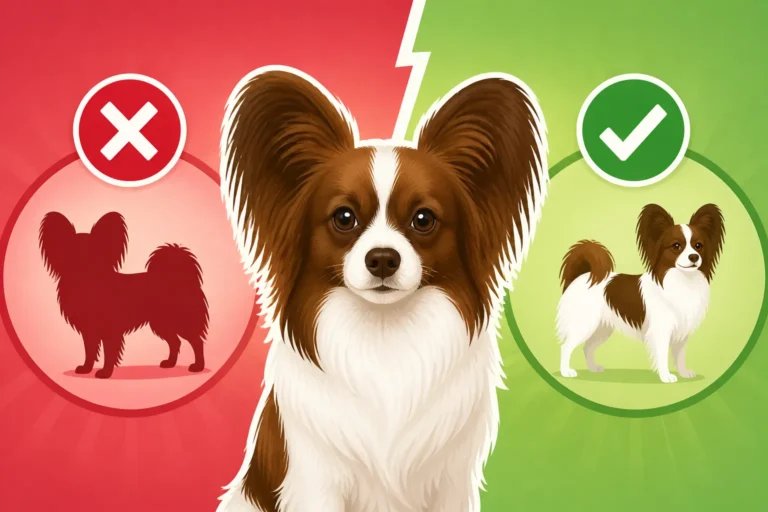
A Papillon may have patches of many colors, but a dog with no white or with a coat that is entirely one color does not fit the usual breed-standard description. The important distinction is between a solid-colored dog and a white-based dog with large patches. A Papillon with a great deal of dark color can look almost solid from a distance, yet still have enough white to make its pattern visibly two-colored.
White is meant to predominate across the body and legs. The patches may be black, red, sable, or another accepted color, depending on the applicable registry’s wording. The standard is about the overall pattern, not whether every individual hair is white or colored. A dog may have a large colored saddle or substantial color on its head and still have a white base.
If you are comparing a dog with the breed description, Which Colors a Papillon Comes In offers a useful overview of the accepted colors. The key point is that “any color” does not mean “any color pattern”: the white ground and the way colored areas are distributed matter too.
What owners mean when they call a Papillon solid
In everyday conversation, “solid” can mean several things. Someone may use it to describe a Papillon whose back is mostly black, even though the dog has white legs and a white chest. Another person may mean a truly single-color coat, with no visible white markings. Those are not the same thing when judging whether a Papillon matches the standard.
A mostly colored-looking dog may simply have large patches or a pattern that makes the white less obvious in a quick photo. Look at the dog standing in natural light, including its underside and legs, rather than relying on a cropped headshot or a picture taken against a pale background. A photograph can hide the edges of markings or make pale cream areas appear white.
The face can also create a misleading impression. A Papillon with colored ears and a mostly colored mask may look like a solid-color dog in a portrait, while white remains evident on its body. If the question is whether the dog conforms to a show standard, appearance should be assessed as a whole rather than based on one striking area.
How color pattern differs from a white blaze
A white blaze is a stripe or area of white running up the face. It is a familiar Papillon feature, but it is not the same thing as the requirement for white to predominate on the dog’s body and legs. A dog’s face markings can be prominent, narrow, uneven, or absent without that single feature answering every question about its overall color pattern.
The blaze is often discussed because it makes a Papillon’s face look especially distinctive. However, owners sometimes assume that every Papillon needs a perfectly centered stripe. Breed descriptions may express a preference for a blaze, but that is not identical to saying that every dog must have one. For more detail, see Whether a Papillon Must Have a White Blaze.
Likewise, symmetrical facial markings may look appealing, but symmetry alone does not determine whether a dog is solid-colored or whether its body pattern meets the standard. Whether a Papillon's Face Markings Should Be Symmetrical explains why a face that is not perfectly balanced can still be a recognizable Papillon face.
How to Tell Whether a Papillon’s Coat Is Solid or Mostly Patched
Check the whole dog in good light
Start with the simplest check: examine the coat from the shoulders to the tail, then look at the chest, belly, and legs. White may be easier to see on the underside or lower legs than it is along the back. If the coat is long, part the feathering gently so you can distinguish the color at the roots from the way the strands lie over one another.
Try not to decide from one image. Indoor lighting can make cream look white or make white fur appear yellowed. A phone camera may also deepen dark patches, especially in shadow. If you are viewing a puppy in person, ask to see it standing and moving in daylight, and look at a few clear photographs taken from different angles.
For a quick reference, this table separates common descriptions from what they usually mean:
| Description | What it may look like | What to check |
|---|---|---|
| Solid-colored | One color across the coat with no visible white | Whether white is truly absent from the body and legs |
| Mostly colored | Large patches make the dog look dark at first glance | White areas on the chest, belly, legs, and body |
| White with patches | White is the base, with colored areas over parts of the coat | Whether white remains the predominant color |
| White blaze | A white marking on the face | The overall body pattern as well as the face |
| Changing puppy markings | Markings look different as the coat develops | Compare photographs over time and assess the current coat |
The table is a practical viewing aid, not a substitute for a registry’s exact standard. If you are considering showing a dog, ask a knowledgeable breeder or conformation judge to assess the dog’s pattern under the rules that apply where you live.
Remember that puppy coats can look different later
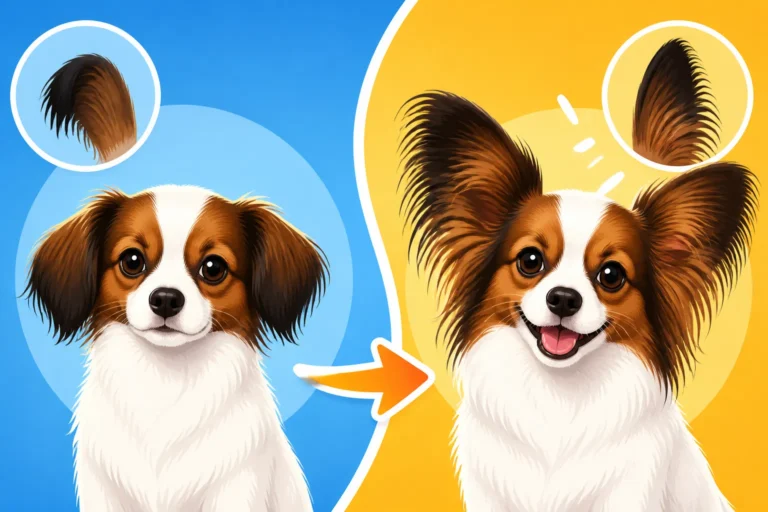
A puppy’s coat is not always a perfect preview of its adult appearance. As the coat grows and develops, the length, texture, and arrangement of the hair can change how much of each marking you notice. A colored patch may appear larger when the coat lies in a certain direction, while white feathering may become more visible as it grows.
That does not mean the dog’s basic color pattern will necessarily transform from solid to patched or the other way around. It means that a quick impression from a young puppy can be misleading. If you are comparing photos, try to use similar lighting and angles, and remember that grooming, coat length, and seasonal shedding can affect how the markings appear.
A breeder should be able to talk through what they have observed in the puppy and, where possible, show pictures of related dogs as they matured. For a closer look at what may change during development, read Whether a Papillon Puppy's Markings Change. Avoid treating a single early photo as a guarantee of the adult coat.
Distinguish coat color from coat condition
A coat that looks dull, stained, or uneven is not automatically a color-pattern issue. Dirt, saliva, tear staining, damp feathering, and lighting can all affect how white areas look. These everyday changes do not mean the dog has become a different color, and they should not be confused with the standards used to describe its markings.
For routine coat care, focus on gentle brushing and products made for dogs rather than trying to alter the coat with harsh bleaching or coloring products. If you shop at Chewy, for example, check product labels and choose a dog-safe shampoo that suits the dog’s skin and coat rather than selecting something only because it claims to brighten white fur. A comb can help you inspect the coat more clearly, and Chewy’s grooming listings can be one place to compare basic options. The goal is clean, comfortable fur, not changing the dog’s natural pattern.
What Breed Standards and Color Mean for Showing
A standard is not the same as a pet’s worth
A dog can be a wonderful Papillon companion even if its markings do not fit a show standard. Conformation standards describe the traits used to evaluate breeding and show dogs; they do not measure affection, intelligence, trainability, or the bond a dog forms with its family. A nonstandard coat pattern does not make a dog less deserving of a safe, loving home.
This distinction can ease a common worry for new owners. If a puppy appears to have more color than expected, that may be relevant to show eligibility, but it does not by itself say anything about the puppy’s personality or quality as a pet. Ask the breeder to explain the pattern plainly rather than relying on labels such as “rare,” “special,” or “perfect.”
If the dog is being sold as a show prospect, ask how the breeder interprets the applicable standard and whether an experienced person has evaluated the puppy. If the dog is being placed as a companion, the practical questions are different: health, temperament, socialization, and the breeder’s willingness to answer questions matter much more than whether the coat is ideal for the ring.
Standards and terminology can vary
Breed standards are maintained by kennel organizations, and their exact wording and judging practices can differ by country or registry. The broad description of the Papillon as white with patches is widely recognized, but do not assume every organization phrases every detail identically. If you plan to show, consult the official standard for the organization where you expect to compete.
When comparing two dogs, be cautious about treating informal terms as official classifications. “Parti,” “mostly white,” “dark,” and “solid” may be used casually by owners or breeders, but a registry may describe the same pattern differently. If a seller makes a claim about a dog’s eligibility, ask which organization’s rules they mean and request the specific explanation.
For a broader look at accepted shades and patterns, Which Papillon Color Is Most Common may help put the dog’s appearance in context. A common color is not automatically more correct, healthier, or better suited to a household. Color popularity is separate from the question of whether the white base and patches meet a particular standard.
Ask clear questions if you are choosing a puppy
If you are evaluating a litter, ask the breeder to describe each puppy’s markings without relying on sales language. You can ask whether white is visible across the body and legs, whether the puppy’s color has changed noticeably since birth, and whether the breeder expects the adult coat to look different as it grows. Clear photographs from several angles are more useful than a single close-up.
A careful breeder should also be willing to separate appearance from health. Color alone is not a health test, and it should not replace questions about veterinary care, family history, or the health screening relevant to Papillons. For help with the wider conversation, see What Health Results a Papillon Breeder Should Show and Which Questions to Ask a Papillon Breeder.
If you already have a Papillon who looks unusually dark, you do not need to rush to a conclusion. Take a few well-lit photos, check the whole coat rather than the face alone, and ask a knowledgeable breeder or show mentor to explain how the pattern would be described. If you are simply enjoying life with a pet, the dog’s markings can be part of its charm without needing to pass a show-ring test.
Common Misunderstandings About Papillon Color
“Any color” does not mean an all-over solid coat
Breed descriptions may say that Papillons can come in any color, but that wording refers to the colors found in the patches, not permission for a coat with no predominant white. This is the most common source of confusion. A dog may have a striking black, red, or sable appearance and still have a white-based pattern; a truly single-color coat is a different matter.
When you read a description online or hear a breeder use the phrase “all colors,” look for the rest of the wording about white and pattern. Reading only the first few words can lead to an incorrect conclusion. If a claim seems contradictory, ask the person to clarify whether they mean patch color, overall appearance, or show eligibility.
Color changes do not necessarily mean the dog is becoming solid
Owners sometimes notice that a Papillon looks darker or lighter in later photos and worry that its markings are changing in a way that affects its status. Coat length, lighting, dirt, and the development of the adult coat can all change the impression. A dog may look different without its basic pattern becoming a completely different one.
A color shift also does not automatically signal a health problem. If the skin itself changes, the coat becomes patchy, or the dog develops itching, redness, or hair loss, that is a separate health concern worth discussing with a veterinarian. For ordinary variation in coat appearance, Whether a Papillon's Color Fades With Age offers additional context.
Color is only one piece of the breed picture
It is easy to focus on markings because they are visible and distinctive, especially in puppy photos. But color is only one part of a Papillon’s appearance. Body structure, movement, coat condition, temperament, and health all deserve attention when choosing a breeder or companion. No particular shade can guarantee that a puppy will be healthier, calmer, or easier to train.
If the question is simply whether a Papillon can be all one color, the practical answer is no under the usual breed standard: the coat should be white-based, with colored patches. A dog that looks almost solid may still have substantial white hidden by its coat or less visible in a photograph. Check the full pattern, clarify which standard is being used, and treat the dog as an individual rather than a color label.
Disclaimer
This article is for general informational purposes only and does not constitute professional advice. Laws, prices and regulations vary by location and change over time. Consult a qualified professional for guidance on your specific situation.