Whether a Papillon’s Color Fades With Age
A Papillon’s markings can look different as the dog grows up, and sunlight, shedding, and age can all change how the coat appears. That can be unsettling when a puppy’s dark patches seem to lighten or a familiar color looks duller. This guide explains what usually counts as normal color change, what affects it, and when a coat change deserves a closer look.
Why a Papillon’s Coat Color Can Change
Puppy color is not always adult color
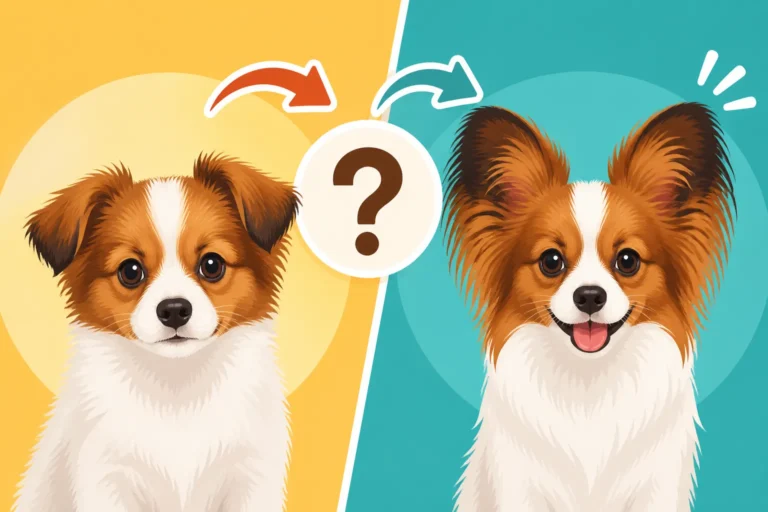
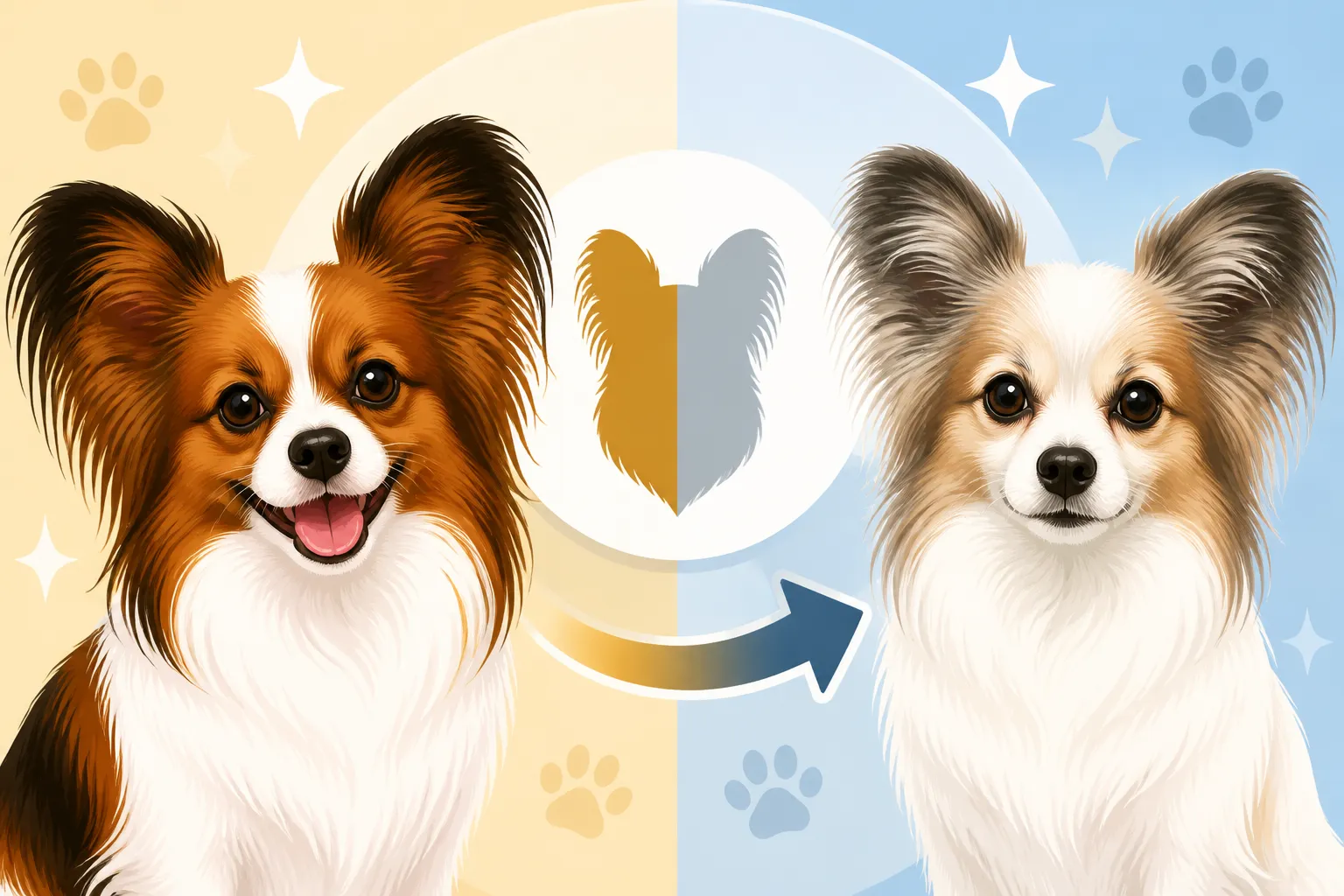
Papillon puppies may not keep exactly the same shade or pattern as they mature. A puppy’s coat can change as it is replaced by a longer adult coat, and lighter or darker areas may become more noticeable along the way. The underlying pattern generally remains recognizable, but its contrast and the way the color is distributed through the coat can look different.
This transition can be especially striking when a puppy has sable or shaded hair. Individual hairs may have darker tips and lighter bases, so the coat can appear to change as the hair grows, lies in a new direction, or is brushed out. A dark patch may seem softer, or a lighter area may become clearer once the puppy coat sheds.
A young Papillon’s appearance is not a perfect preview of its adult coat. If you are comparing puppy photos month by month, take pictures in similar lighting and from similar angles. Indoor bulbs, a bright window, and a phone camera’s automatic color settings can make the same coat look warmer, cooler, darker, or paler. For more on the transition, see Whether a Papillon Puppy's Markings Change and Whether a Papillon's Coat Changes at a Year.
The adult coat can look different from the puppy coat
As the puppy coat gives way to adult hair, the Papillon’s silky furnishings may become longer and more obvious. The change in length and texture can affect how color reads, even if the pigment itself has not changed much. Long fringe may catch the light differently from shorter body hair, and overlapping strands can make a patch look less sharply defined.
Owners sometimes expect the adult coat to arrive all at once. In reality, coat development is gradual, and different parts of the dog may look mature at different times. The ears, chest, tail plume, and breeches may each change in appearance as the coat grows. A grooming routine can also reveal color variation that was hidden by loose hair or tangles. What a Papillon's Coat Is Made Of offers more detail on the coat’s texture and structure.
A puppy with darker shading may appear lighter after the adult coat grows in, while another dog’s markings may seem more vivid because the new hair has a different length or sheen. It is better to watch the overall pattern over time than to judge a single small area. For breed-specific color context, Which Papillon Color Is Most Common and Which Papillon Color Is Rarest can help explain the range of appearances you may encounter.
A Papillon’s color may shift without the pattern disappearing
A color change does not automatically mean the dog’s markings are vanishing. A white-and-colored Papillon can retain the same broad pattern while the colored hair changes shade, the edges look softer, or sunlight makes one area appear paler than another. Coat length and movement can also alter how much of a patch is visible.
Take note of whether the change is gradual and limited to the hair, or whether the skin itself looks different. A coat that slowly lightens while remaining full and comfortable is different from a sudden bare patch, persistent itching, redness, or scaling. Those signs point beyond an ordinary cosmetic color shift and are worth discussing with a veterinarian.
What Can Make a Papillon Look Lighter or Darker
Sunlight can bleach exposed hair
Regular sun exposure may lighten the tips of a dog’s hair, particularly on areas that spend more time in direct light. The effect can be uneven: the back or top of the head may look paler than hair protected under the ears, chest, or tail. A Papillon who spends sunny afternoons in a yard may therefore look a little different from one whose outdoor time is mostly short walks.
Sun-bleached hair can resemble a permanent pigment change, but the contrast may diminish as the old hair sheds and new hair grows. There is no need to keep a dog indoors just to preserve coat color. Instead, provide shade, fresh water, and sensible limits during hot or intense sun. Never apply human sunscreen or a coat product without checking that it is suitable for dogs and for the area where it will be used.
When shopping for grooming basics, owners may browse Chewy for a comb or a gentle, dog-specific shampoo. Choose products for coat care rather than promises to “restore” or “enhance” color; a shampoo cannot reliably change the pigment growing from the hair follicle. If you are uncertain whether a product is safe for your dog, ask your veterinarian or groomer before using it.
Shedding and grooming change the coat’s appearance
Shedding can temporarily make a coat look thinner, less even, or less glossy. Loose hairs may be lighter or darker than the newer hair beneath them, and a brush can remove them in clumps. That can make a patch look faded for a while, especially during seasonal coat changes.
Papillons do not have a heavy undercoat, but they still shed. Their long furnishings can also collect loose hair, so a dog may look different after a thorough brushing or bath. A regular, gentle routine helps you see the coat more clearly and notice changes early. It also reduces tangles, which can hide the skin or make certain areas look unusually dark from trapped debris. See When a Papillon Sheds Most for more on coat changes through the year.
If you need a comb, pin brush, or dog-safe detangling product, Chewy can be one place to compare grooming options. Look for tools that suit a fine, silky coat and use them carefully around the ear fringe, chest, and tail. Pulling hard through a knot can damage hair and make coat appearance worse; work slowly, and ask a groomer to handle tight mats rather than cutting close to the skin yourself.
Age can bring a softer or grayer appearance
As a Papillon gets older, its coat may lose some of its former brightness or develop gray or white hairs, especially around the face. This varies from dog to dog. Some older dogs retain vivid markings, while others develop a softer, less contrasting look. A gradual change in hair color can be a normal part of aging.
Age-related color change should still be considered alongside the dog’s overall condition. A senior Papillon whose coat looks dull may also need a health check if there are changes in appetite, energy, skin comfort, or weight. Coat quality can be affected by more than age, including skin problems and general health concerns, so it is sensible to mention a marked change at a routine appointment.
How to Tell Normal Fading From a Coat or Skin Problem
Look at the hair, skin, and pattern together
A gradual shade change in otherwise healthy hair is usually less concerning than a sudden change accompanied by hair loss or skin irritation. Part the coat gently in the affected area and look for redness, flakes, sores, swelling, or a change in skin color. Check whether the hair is simply lighter, or whether it is broken, thinning, or missing.
Notice whether your dog is scratching, licking, rubbing, or reacting when you touch the area. A Papillon may not make a dramatic fuss even when something is uncomfortable. Persistent itching or repeated licking can damage the coat and irritate the skin, making a color concern harder to assess.
A simple record can help: take a clear photo in natural, indirect light, note the date, and repeat the picture later under similar conditions. Avoid judging the coat under different lamps or after applying a leave-in product, since both can change its apparent color. If the spot is spreading, the skin looks abnormal, or the dog seems uncomfortable, contact your veterinarian rather than waiting for the next routine grooming session.
Watch for changes beyond color
A coat becoming patchy, unusually brittle, or noticeably thinner is not the same as ordinary fading. So are areas of hair loss, persistent dandruff, sores, an unpleasant skin odor, or repeated scratching. These signs can have several possible causes, and a veterinarian can examine the skin and decide what evaluation is appropriate.
Pay attention to the timing as well. A gradual, even change over months is different from a sudden shift over days or weeks. If the change follows a new shampoo, topical product, medication, or grooming treatment, note that detail and share it with the veterinary team. Do not stop a prescribed treatment or start a supplement solely to improve coat color without asking for advice.
Color change alone is usually not a useful way to judge whether a dog is healthy. But a new coat problem can be one visible clue among several. If your Papillon also seems less energetic, is eating differently, or has changes in skin comfort, explain the whole picture at the appointment rather than focusing only on the shade.
Avoid trying to recolor the coat
Dyes, color-depositing products, and harsh whitening or brightening treatments are unnecessary for a pet Papillon and may irritate the skin. Human hair products are not formulated for dogs. Even a product marketed for pets should be used according to its label, and it should not be used on irritated or broken skin without veterinary guidance.
Basic grooming is a safer approach: brush gently, bathe when needed with a mild dog shampoo, rinse thoroughly, and dry the coat well. If you are comparing shampoo options, Chewy may help you review dog-specific products, but choose for skin and coat suitability rather than a promise to make a Papillon’s natural markings darker or brighter.
For routine care between baths, keep the coat clean and free of tangles rather than trying to preserve a particular shade. Whether a Papillon's Coat Needs Anything Between Grooms covers practical in-between care, while Whether a Papillon Gets Dry Skin explains why persistent flaking or discomfort deserves attention.
What to Do When Your Papillon’s Color Changes
Track the change without overreacting
Start by noting where the color looks different and whether the change is limited to exposed hair, a shedding area, or one distinct patch. Take a photo in consistent lighting, then compare it after a few weeks. If the coat remains full and the skin appears comfortable, a gradual color shift may simply reflect maturity, sunlight, shedding, or age.
Keep grooming consistent while you observe. Use a gentle brush and avoid frequent bathing, which can dry or irritate the skin. If your dog has a new product in its routine, note when it was introduced and whether the change followed soon after. That information is useful if you decide to call your veterinarian.
Do not assume that every color change is a problem, but do not dismiss other symptoms as “just fading.” A little patience is reasonable for a slow, cosmetic shift. Sudden thinning, itching, sores, or a change in your dog’s general well-being calls for a veterinary conversation.
Ask the right questions at a veterinary visit
If you book an appointment, bring photos that show how the coat has changed over time. Tell the veterinarian when you first noticed it, whether it is spreading, and whether there has been scratching, licking, hair loss, or a change in grooming products. Mention any other health or behavior changes, even if they seem unrelated.
The veterinarian can examine the skin and hair and decide whether the change looks like normal coat variation or needs further investigation. The appropriate next step depends on what the skin looks like and what else is happening; there is no single test or treatment for every fading coat. Avoid giving supplements or applying medicated products unless they have been recommended for your dog.
Set expectations for coat color over a lifetime
A Papillon’s coat is not a fixed paint pattern. Puppy development, adult coat growth, sunlight, shedding, and aging can all affect its appearance. Two dogs with similar markings may change at different rates, and the same dog can look different after a bath, brushing, or seasonal shed.
The most useful goal is a comfortable, clean, healthy coat—not keeping every patch at precisely the same shade. For age-by-age grooming guidance, see What a Papillon's Coat Needs at Each Age. If the color shift is gradual and the skin and hair otherwise look healthy, it may be part of your dog’s normal coat story. If the change is sudden or comes with discomfort, hair loss, or skin changes, get it checked.
Disclaimer
This article is for general informational purposes only and does not constitute professional advice. Laws, prices and regulations vary by location and change over time. Consult a qualified professional for guidance on your specific situation.