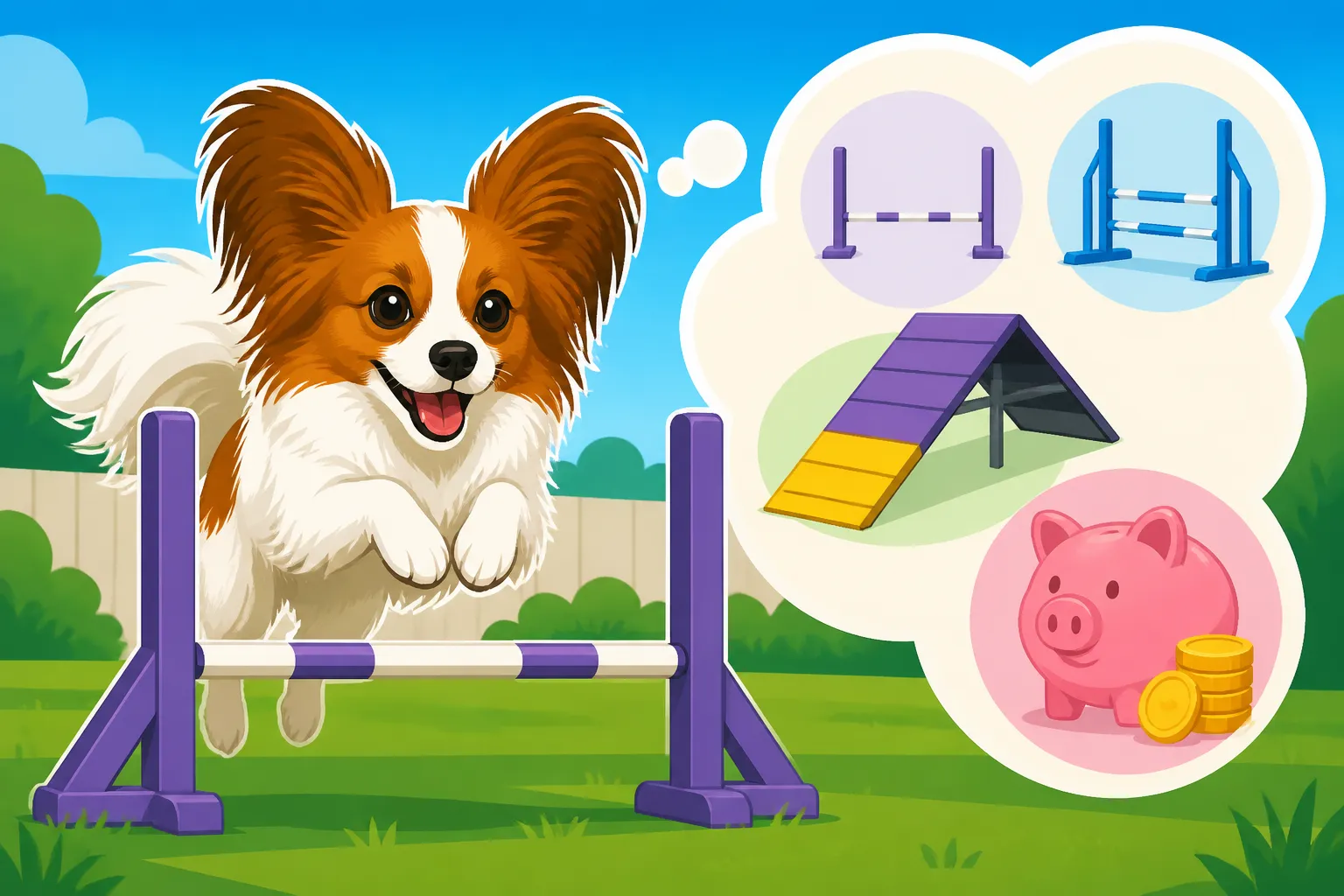
What a Set of Backyard Jumps Costs
You've got a little Papillon, full of boundless energy and that incredible brain, and you're thinking, "Why not bring some of that agility fun right into our own backyard?" It's a fantastic idea! Training at home offers so much flexibility and a relaxed environment for both you and your little butterfly-eared companion. But then the questions start bubbling up: "How much is this actually going to cost me? Do I need to take out a second mortgage for a few jumps?" It's a totally valid concern, because while a full agility course can indeed be a significant investment, starting with backyard jumps can be surprisingly accessible, or it can become quite a dedicated hobby, depending on your ambitions. This guide will walk you through the various costs associated with setting up backyard agility jumps for your Papillon, from the absolute basics to more serious training setups.
Why Backyard Jumps Are a Game-Changer for Your Papillon
Having agility jumps right outside your door isn't just about convenience; it's about unlocking a new level of engagement and physical activity for your brilliant little dog. Papillons are known for their intelligence and athleticism, and agility provides a fantastic outlet for both. Imagine being able to grab a few treats and spend fifteen minutes working on jump skills whenever the mood strikes, rather than packing up the car and driving to a class.
Convenience and Consistency
One of the biggest advantages of having backyard jumps is the sheer convenience. Life gets busy, and committing to weekly classes can be tough. With jumps at home, you can fit training sessions into even the shortest pockets of time. Did your Papillon just wake up full of beans? Five minutes of jumps. Is there a break in your work schedule? Ten minutes in the yard. This kind of consistent, short burst training is incredibly effective for dogs, especially highly intelligent breeds like the Papillon, who thrive on regular mental stimulation. It helps build muscle memory and reinforce cues without the pressure or distractions of a busy class environment.
You’ll also find that consistency truly makes a difference in your Papillon's progress and confidence. Instead of only practicing once a week, you can reinforce skills daily, or even multiple times a day. This repetition, in a low-stress setting, is invaluable. Your Papillon will learn faster, retain information better, and build an even stronger bond with you as you work together. Plus, it's a great way to burn off some of that legendary Papillon energy, keeping them happy and preventing boredom-related behaviors.
Tailoring Training to Your Papillon's Needs
Every Papillon is an individual, and backyard jumps allow you to completely customize their training experience. You can adjust jump heights to suit their age and ability, starting very low for puppies or older dogs, and gradually increasing as they gain confidence and strength. This is especially important for a small breed where joint health, like Patellar Luxation Is the Papillon Problem You Will Actually Meet, is a consideration. You control the environment, eliminating distractions that might overwhelm a shy dog or overstimulate an excitable one. If your Papillon needs more time on a specific jump type or a particular approach, you can drill it repeatedly without feeling rushed or holding up a class.
Furthermore, you can adapt your training schedule to your dog's energy levels and the weather. On a hot day, a quick session in the cooler morning or evening works perfectly. If your Papillon is feeling a bit off, you can opt for shorter, less intense sessions. This flexibility is key to keeping training fun and positive for both of you. It also allows you to focus on specific weaknesses or build on strengths at your own pace, ensuring your Papillon develops solid skills before moving on to more complex sequences.
Breaking Down the Costs: What Goes Into a Backyard Jump Set
When you start looking at agility jumps, you'll find a pretty wide range of options and price points. It really depends on your goals. Are you just looking for some casual fun and exercise, or do you have ambitions for future competitions? The materials, construction quality, and features all play a role in the cost.
Entry-Level Jumps for Beginners
For most Papillon owners just starting out, entry-level jumps are more than sufficient and won't break the bank. These are typically made from lightweight PVC pipe, sometimes with a few decorative elements or colored tape. They are designed to be easy to assemble, move, and store. You might find single jumps for a relatively low cost, or small sets of two or three. The bars might be simple PVC dowels or break-away bars for safety, which is crucial for tiny dogs to avoid injury.
These basic jumps are perfect for teaching your Papillon the fundamentals: how to approach a jump, how to clear the bar, and how to follow your cues. They're lightweight enough that if your dog knocks a bar, it falls easily, preventing any fear or injury. You can often find sets that include adjustable heights, making them versatile as your Papillon's skills grow. The important thing here is safety and functionality, not necessarily competition-grade durability. You might even find these at general pet supply stores or online marketplaces like Chewy, making them very accessible.
Mid-Range Options for Serious Amateurs
If you and your Papillon are getting serious about agility and perhaps considering local fun matches or advanced home training, you might want to invest in mid-range equipment. These jumps often feature sturdier PVC, sometimes with more stable bases, and possibly a wider variety of jump types, like winged jumps or panel jumps, though for a Papillon, a simple bar jump is often the most used. The bars themselves might be heavier duty or include more sophisticated break-away mechanisms.
Mid-range options often come in more complete sets, offering better value if you're planning to buy multiple jumps. They're designed to withstand more frequent use and perhaps a bit more varied weather conditions if left outside. While still generally portable, they'll feel a bit more substantial than the entry-level options. These are great for practicing complex sequences and honing skills that will transfer well to competition, providing a stepping stone before committing to full-blown competition equipment. Think of these as a good investment if you're looking to stick with agility long-term without going pro.
Competition-Grade Equipment (for the Dedicated)
For those truly dedicated to competitive agility, who might be dreaming of titles and national events, competition-grade jumps are the way to go. These are built to exacting standards, often from high-quality, weather-resistant materials like furniture-grade PVC, aluminum, or even powder-coated steel. They feature precise measurements, weighted bases for stability in wind, and often include professional-grade safety features like specific break-away cup designs. These jumps mimic exactly what you'd find at an official agility trial.
The cost for competition-grade jumps is significantly higher, reflecting the materials, craftsmanship, and adherence to official regulations. You're paying for durability, performance, and the peace of mind that your home practice environment perfectly prepares your Papillon for the trial ring. While a full set of this caliber can be a substantial outlay, it's an investment for serious competitors. For many Papillon owners, especially given the common concerns around things like Patellar Luxation Is the Papillon Problem You Will Actually Meet, it might be overkill unless you are truly pursuing advanced titles. You might also want to consult with experienced agility trainers or clubs before making this level of investment to ensure you're getting equipment that meets specific organizational standards.
DIY vs. Ready-Made: Weighing Your Options
When it comes to getting those jumps into your backyard, you essentially have two main paths: building them yourself or buying them pre-made. Each has its own set of pros and cons, especially when considering cost and your personal skills.
The Allure of DIY: Savings and Customization
Building your own agility jumps can be a fantastic project, especially if you're handy or enjoy a good craft challenge. The biggest draw, without a doubt, is the potential for cost savings. PVC pipe, fittings, and some basic tools are relatively inexpensive, and you can often find many online tutorials with step-by-step instructions. You might already have some of the tools you need in your garage. This can dramatically reduce the financial outlay compared to purchasing ready-made equipment.
Beyond the savings, DIY offers unparalleled customization. You can build jumps to precise specifications, adjust heights easily, and even paint them to match your backyard aesthetic. If your Papillon has specific needs or you want to experiment with different base designs, you have the freedom to do so. This hands-on approach can also be incredibly satisfying, knowing you've created something functional and fun for your dog. However, remember to prioritize safety above all else. Ensure all connections are secure, edges are smooth, and jump bars fall easily when touched. You wouldn't want a rogue piece of pipe to cause an injury that might lead to a vet visit, which is where having good pet insurance like Healthy Paws can truly come in handy for unexpected accidents, even with careful backyard training.
The Convenience of Ready-Made: Quality and Time
For those who aren't keen on DIY projects, or simply don't have the time or tools, ready-made jumps are a blessing. The primary advantage here is convenience. You order, they arrive, you assemble (usually minimally), and you're ready to train. There's no measuring, cutting, gluing, or painting involved. This saves a significant amount of your precious time and effort.
Ready-made jumps also often come with a guarantee of quality and safety. Reputable manufacturers design their equipment with dog safety in mind, using appropriate materials and break-away mechanisms. You can be more confident that the jump bars will fall cleanly, and the bases will be stable. For smaller dogs like Papillons, this safety aspect is critical. While the initial cost will be higher than DIY, you're paying for the expertise, the finished product, and the peace of mind. Many online retailers, including pet-specific ones, offer a variety of ready-made agility equipment suitable for Papillons.
Beyond Jumps: Other Agility Essentials and Their Costs
While the core of your backyard agility setup might be jumps, there are other pieces of equipment that can significantly enhance your Papillon's training and provide a more complete experience. Thinking about these early on can help you budget realistically.
Tunnels and Weave Poles
After mastering jumps, tunnels and weave poles are often the next steps in a Papillon's agility journey. Tunnels, typically made of flexible, collapsible fabric with wire spirals, are fantastic for building confidence and teaching forward drive. You can find lightweight, portable training tunnels that are perfect for the backyard. For a Papillon, a 10-foot long, 18-inch diameter tunnel is often sufficient, but you can also find larger 24-inch diameter ones that work just fine. Their cost can vary widely based on length, diameter, and material quality, but many affordable options exist.
Weave poles are another essential. These are a series of upright poles that your Papillon learns to navigate in a serpentine pattern. They are known for being one of the most challenging obstacles to teach, but incredibly rewarding. Backyard weave pole sets usually consist of 6 or 12 poles, often on a flat base or individually staked into the ground. Again, PVC is a common material for more affordable sets. Look for sets where the pole spacing can be adjusted, as this helps with teaching your Papillon the proper entry and flow. While less expensive options are available, a good, stable set of weaves is a wise investment once your Papillon has the jump basics down. What Competing a Papillon in Agility Costs a Year will show you that tunnels and weaves are standard fare in competitions.
Contact Obstacles and Teeters
More advanced agility equipment includes contact obstacles like the A-frame, dog walk, and teeter-totter. These are typically much larger, more complex, and significantly more expensive. They require specific construction to meet safety standards, including non-slip surfaces and precise dimensions for contact zones (the colored areas dogs must touch when ascending and descending). For most backyard setups, especially when just starting, these are often considered a later-stage investment, if at all.
For a Papillon, whose small size and delicate frame make falls from height potentially more dangerous, focusing on ground-level obstacles and lower jumps is usually the priority. Some owners might invest in a small, low-height teeter-totter for confidence building, but a full-sized dog walk or A-frame is usually best left for dedicated club facilities where they can be properly maintained and supervised by experienced instructors. If you do consider these, research carefully for small-dog specific versions and always prioritize safety.
Making it Affordable: Tips for Budget-Conscious Owners
Agility can seem like a big investment, but it doesn't have to be. There are plenty of ways to enjoy this fantastic sport with your Papillon without emptying your wallet.
Starting Small and Scaling Up
The absolute best way to manage costs is to start small. You don't need a full course on day one. Begin with just one or two adjustable bar jumps. Focus on mastering those fundamental skills with your Papillon. Once they're confidently clearing the bar and following your directional cues, then you can consider adding another jump, or perhaps a small tunnel. This incremental approach allows you to spread the cost over time and ensure that your Papillon genuinely enjoys the activity before you invest more heavily.
Think about it like this: your Papillon doesn't know (or care) if you have the fanciest, competition-grade equipment. They care about the fun, the praise, and the treats! A simple, safe jump is just as effective for teaching the basics as a high-end one. As your dog's skills improve and your commitment grows, you'll have a better idea of what additional obstacles would be most beneficial and worth the investment. This gradual scaling also allows you to replace or upgrade pieces as needed, ensuring you're always using appropriate and safe equipment. You might find that What the First Year With a Papillon Costs is already enough to plan for without overspending on advanced gear.
Second-Hand Finds and Community Resources
Another excellent way to save money is to look for second-hand agility equipment. Many agility enthusiasts upgrade their gear, or stop competing, and sell their older but still perfectly functional equipment. Check online marketplaces, local classifieds, or even ask at local agility clubs or dog training centers. You might be surprised at the quality of gear you can find for a fraction of the original price. Just be sure to thoroughly inspect any used equipment for damage, stability, and safety before purchase. Ensure all parts are present, and that the materials are sound, especially if it's PVC that might have become brittle in the sun.
Agility communities are often very supportive. Sometimes clubs will sell off old equipment, or members might have spare pieces they no longer use. Don't be shy about reaching out and asking. You might also find groups that offer equipment rentals or sharing programs. Attending local fun matches or novice trials can also be a great way to see different types of equipment in action and potentially meet people who are selling used items. Every dollar saved on equipment means more funds for treats, toys, or even entry fees for those fun trials down the line!
Where to Find Your Backyard Agility Jumps
Once you've decided on your budget and whether you're going DIY or ready-made, you need to know where to actually get your hands on the equipment. The options are pretty diverse these days.
Online Retailers
Online shopping is arguably the easiest and most convenient way to purchase agility jumps. Major pet supply retailers, like Chewy, often carry a selection of entry-level and mid-range agility equipment, including jumps, tunnels, and weave poles. Specialty online agility stores dedicated solely to dog sports equipment will offer a wider range, including higher-end or competition-grade items. These specialty stores often provide more detailed product descriptions, customer reviews from experienced handlers, and sometimes even package deals for multiple obstacles.
When shopping online, pay close attention to product specifications: material, dimensions, adjustability, and safety features. Read reviews to get an idea of the durability and ease of assembly. Factor in shipping costs, as larger items can sometimes incur higher fees. The benefit of online retailers is the sheer variety and the ability to compare prices from the comfort of your home. Just be sure to check return policies in case the equipment isn't quite what you expected or suitable for your energetic Papillon.
Specialty Agility Stores and Clubs
While less common than general pet stores, some larger metropolitan areas might have brick-and-mortar specialty stores dedicated to dog sports and agility. These stores offer the distinct advantage of allowing you to see and touch the equipment before you buy it. You can assess the quality of materials, check the stability of bases, and even get a feel for how easy the jumps are to adjust. The staff at these stores are usually knowledgeable agility enthusiasts themselves and can offer personalized advice based on your Papillon's size and your training goals.
Local agility clubs are another fantastic resource. Many clubs either sell equipment directly, recommend specific suppliers, or have annual equipment sales. Some clubs might even offer "loaner" equipment for members to use at home, allowing you to try out different types of jumps before committing to a purchase. Engaging with a local club also connects you with a community of experienced handlers who can provide invaluable guidance, share tips on equipment choices, and even help you find second-hand items. It’s a great way to deepen your involvement in the sport and make new friends, both human and canine! You may even want to look into Starting a Papillon in Agility to see how much more you'll get out of it.
Disclaimer
This article is for general informational purposes only and does not constitute professional advice. Laws, prices and regulations vary by location and change over time. Consult a qualified professional for guidance on your specific situation.