What Insuring a Papillon Costs a Month
One of the biggest anxieties for any Papillon owner is the thought of unexpected veterinary bills. These little butterflies might be small, but their health concerns, especially as they get older, can lead to significant financial strain. This guide will walk you through the various aspects that determine how much pet insurance for your beloved Papillon might cost each month, helping you understand the factors involved and make informed decisions for their long-term well-being.
Understanding Pet Insurance for Your Papillon
Bringing a Papillon into your life is a joy, but it also comes with the responsibility of ensuring their health and happiness. For many of us, the idea of a sudden, hefty vet bill for an emergency or an ongoing condition can be truly daunting. Pet insurance isn't just for big breeds with known orthopedic issues; it's a financial safety net designed to help you provide the best care for your small companion without having to choose between your pet's health and your savings.
Why Papillons Need Insurance Considerations
While Papillons are generally considered a robust and long-lived breed, they are not immune to health issues. Like any purebred dog, they come with a predisposition to certain genetic conditions, and their small size can sometimes make them prone to accidents that might be less severe for a larger dog. Thinking about insurance isn't about expecting the worst, but about being prepared for anything, ensuring that you can say "yes" to necessary treatments. For instance, common issues such as Patellar Luxation Is the Papillon Problem You Will Actually Meet can often require surgical intervention, which can be a significant expense.
Imagine your lively Papillon, known for its boundless energy and playful spirit, suddenly develops a limp. You take them to the vet, and after X-rays and an exam, you're told it's a luxating patella – a common occurrence in small breeds. The vet recommends surgery to correct it, explaining the procedure and the recovery process. Without insurance, that news could feel like a punch to the gut, not just emotionally but financially. Having a plan in place means you can focus on your dog's recovery, rather than the zeroes on the estimate.
What Pet Insurance Aims to Cover
At its core, pet insurance is designed to reimburse you for a percentage of your eligible veterinary expenses, typically after you've met a deductible. Most comprehensive plans cover accidents, illnesses, surgeries, diagnostic tests, medications, and even emergency care. This means if your Papillon suddenly ingests something they shouldn't, or develops a chronic condition like diabetes later in life, the financial burden is significantly lessened.
Consider a scenario where your Papillon, famous for its elaborate ear fringe, suddenly gets an ear infection that requires multiple vet visits, special medication, and even follow-up tests. Or perhaps they need Anesthesia and a Five Pound Papillon for a necessary dental procedure, a common concern for the breed as we'll discuss later. These are precisely the types of situations where insurance steps in. It's not just about major emergencies; it's about the accumulation of smaller, unforeseen medical costs that can really add up over time.
How Insurance Premiums Are Determined General Factors
The monthly premium you pay for pet insurance isn't a one-size-fits-all number. Several factors come into play, influencing the cost. These generally include the type of plan you choose, the deductible you select, the reimbursement percentage, and any annual limits you set. For example, a plan with a lower deductible and a higher reimbursement rate will typically have a higher monthly premium, simply because the insurance company will be paying out more should a claim arise.
Beyond these structural choices, your Papillon's specific details also play a role. Their age, breed, and even where you live can affect the premium. A younger, healthier Papillon might cost less to insure initially, but the premium might increase slightly as they age and become more susceptible to age-related conditions. This isn't unique to pet insurance; it mirrors how human health insurance or even car insurance rates are calculated based on risk factors.
Deciphering the Cost: Factors Influencing Your Monthly Premium
When you start looking into pet insurance, it can feel like navigating a maze of options and terminology. However, breaking down the key factors that contribute to your monthly premium can make the process much clearer. Understanding these elements will empower you to choose a plan that fits both your budget and your Papillon's needs.
Age and Breed-Specific Risks for Papillons
A significant factor in your monthly premium is your Papillon's age. Generally, insuring a young puppy is less expensive than insuring a senior dog. This is because puppies and young adult dogs are statistically less likely to develop serious chronic illnesses or require extensive age-related care. As your Papillon matures and enters their senior years – typically around the age discussed in The Age a Papillon Is Considered Senior – the likelihood of developing conditions like heart disease, kidney issues, or even cancer increases.
Furthermore, breed-specific predispositions are considered. While Papillons are known for their generally good health and longevity, certain conditions are more prevalent in the breed. As mentioned, patellar luxation is one such example. Another common concern can be dental disease, as addressed in The Teeth in a Papillon's Small Jaw. Insurance providers factor in these breed-specific risks when calculating premiums. A breed known for expensive orthopedic surgeries or a higher incidence of certain cancers might have slightly higher premiums than a breed with fewer known genetic predispositions. This isn't a penalty; it's an actuarial assessment of potential future claims.
Location, Deductibles, and Reimbursement Levels
Where you live can also influence your pet insurance premiums. Veterinary care costs vary significantly across different regions and cities. For instance, vet services in a major metropolitan area like New York City or Los Angeles might be considerably more expensive than in a rural town. Insurance companies adjust premiums to reflect the average cost of veterinary care in your specific geographical location.
Your choice of deductible directly impacts your monthly premium. The deductible is the amount you pay out of pocket before your insurance coverage kicks in. A higher deductible will result in a lower monthly premium because you're taking on more of the initial financial risk. Conversely, a lower deductible means you pay less upfront if you need to make a claim, but your monthly premium will be higher. Similarly, the reimbursement level (e.g., 70%, 80%, 90%) dictates how much of the eligible vet bill the insurance company will pay after your deductible is met. A higher reimbursement level means a higher monthly premium. It's a balancing act between what you can afford monthly and what you're comfortable paying during a veterinary emergency.
Type of Coverage: Accident, Illness, or Wellness
Pet insurance plans typically come in a few main flavors, and the type of coverage you choose will significantly impact your monthly cost.
- Accident-Only Plans: These are usually the most affordable option. They cover injuries resulting from accidents, such as broken bones, swallowed objects, or car accidents. They do not cover illnesses, chronic conditions, or routine care. This can be a good starting point for a very tight budget, offering peace of mind for sudden, unforeseen incidents.
- Accident & Illness Plans: This is the most popular and comprehensive type of coverage. It includes everything from accident-only plans, plus coverage for illnesses (both common and chronic), hereditary conditions, allergies, cancer, infections, and more. This is often the recommended choice for a Papillon owner seeking broad protection.
- Wellness Plans (Add-ons): These are typically not standalone policies but rather add-ons to an accident and illness plan. They cover routine preventative care like annual exams, vaccinations, heartworm prevention, and sometimes even dental cleanings. While they increase your monthly premium, they can help budget for predictable expenses, and some providers like Chewy offer different tiers of wellness plans. However, it's worth calculating if the cost of the wellness add-on truly saves you money compared to paying for these services out-of-pocket.
Navigating Different Coverage Options and Their Impact on Cost
Choosing the right pet insurance plan for your Papillon isn't just about picking the cheapest option; it's about finding the best balance of coverage and cost. The various types of plans and their components have a direct bearing on your monthly premium and, ultimately, what you get back when your Papillon needs care.
Accident-Only vs. Accident & Illness Plans
The fundamental choice you'll face is between an accident-only policy and a more comprehensive accident and illness plan. An accident-only plan, as the name suggests, focuses solely on unforeseen physical injuries. Think about that moment your spirited Papillon slips off the couch and sprains a paw, or perhaps something more serious like a fracture from an accidental fall. These plans are generally less expensive monthly, offering a baseline of protection against the most immediate, traumatic events.
However, an accident and illness plan provides a much broader safety net. This is where conditions like diabetes, allergies, urinary tract infections, or even serious diagnoses like cancer would be covered. Given that many Papillons live long lives, the likelihood of them developing some form of illness as they age increases. Opting for an accident and illness plan, even if it means a slightly higher monthly premium, often provides far greater peace of mind and financial security for the diverse range of health challenges your Papillon might encounter throughout their life. It means you won't have to worry if their unexpected vet visit is due to an injury or a sudden illness; both are generally covered.
Exploring Wellness and Preventative Care Add-ons
Beyond core accident and illness coverage, many providers, including those found through resources like Chewy, offer optional wellness or preventative care add-ons. These add-ons are designed to help you budget for the routine, expected costs of pet ownership, which traditional accident and illness policies typically don't cover. This might include annual vet check-ups, vaccinations, parasite prevention (like flea and tick medication), and even some routine dental care.
While these add-ons increase your monthly premium, they can be a useful tool for some owners. For example, if you prefer to have a predictable monthly expense for all your Papillon's care, a wellness plan can help. However, it's crucial to do the math. Compare the annual cost of the wellness add-on to the actual cost of your Papillon's routine vaccinations, annual exams, and prevention medications. Sometimes, these plans can offer a slight discount, but other times, you might find it more cost-effective to simply pay for these predictable services out-of-pocket. It's a personal financial decision that depends on your budgeting style.
Understanding Annual Limits and Their Role in Premiums
Another critical component influencing your monthly premium and the overall value of your policy is the annual limit. This is the maximum amount of money your insurance provider will reimburse you for eligible veterinary expenses within a policy year. Some plans offer unlimited annual coverage, while others have limits that can range from several thousand dollars to tens of thousands.
Naturally, policies with higher annual limits or unlimited coverage tend to have higher monthly premiums. This is because the insurance company takes on a greater potential risk. For a Papillon owner, considering the potential costs of chronic conditions, major surgeries (like those for patellar luxation), or even extensive cancer treatments, a higher annual limit can be incredibly reassuring. Imagine your Papillon needing an expensive course of treatment; an insufficient annual limit could leave you responsible for a large portion of the bill after the cap is reached. It’s an important consideration when evaluating the overall protection offered by a policy, as discussed in detail in What Insurance Covers on a Papillon.
The Real-World Impact: What Papillon Owners Experience
For many Papillon owners, pet insurance is a significant part of responsible pet ownership. It offers a buffer against the unexpected and allows them to make medical decisions based on what's best for their furry family member, rather than solely on cost. Let's look at how these decisions play out in real life.
Comparing Policy Structures and What They Mean for Your Wallet
When you're sifting through various pet insurance providers like Healthy Paws or researching options through Ollie, you'll notice that while the core offerings might seem similar, the structural details can vary quite a bit. One plan might offer a very low deductible but a slightly lower reimbursement percentage, while another has a higher deductible but reimburses at 90%. Each structure has a different impact on your wallet, both monthly and when a claim arises.
For instance, an owner with a lower monthly budget might opt for a higher deductible, knowing they'll pay more out-of-pocket initially if something happens but saving on their recurring payment. Conversely, someone who prefers predictability and wants to minimize upfront costs during an emergency might choose a lower deductible and a higher reimbursement rate, accepting a higher monthly premium. It's about personal financial comfort and risk tolerance. It's also important to remember that these are just the starting points; the actual cost for a Papillon puppy from a breeder can be quite varied, making ongoing cost considerations all the more important.
When to Consider Pet Insurance for Your Papillon
The best time to get pet insurance for your Papillon is when they are a puppy. The younger your dog is when you enroll them, the fewer pre-existing conditions they are likely to have. Most pet insurance policies have clauses that exclude conditions that were diagnosed or showed symptoms before the policy's effective date or during a waiting period. If you wait until your Papillon is older and starts showing signs of a condition, that specific issue might not be covered.
For example, if you wait until your Papillon starts skipping steps or showing signs of pain in their hind leg, and then seek coverage, any diagnosis of patellar luxation may be deemed pre-existing and therefore excluded. Insuring your Papillon when they're young and healthy ensures the broadest possible coverage for their entire life. It’s a proactive step that can save a considerable amount of stress and money down the line, especially considering the longevity of the breed and the potential for conditions to emerge as they age, as discussed in Caring for a Papillon Past Eleven.
Maximizing Value and Managing Monthly Insurance Costs
To get the most value from your pet insurance and manage your monthly costs effectively, consider a few strategies. First, shop around. Don't just go with the first quote you get. Compare policies from multiple reputable providers. Look at their deductibles, reimbursement percentages, annual limits, and what's explicitly included or excluded. Read reviews specific to different companies to gauge their customer service and claims process efficiency.
Second, be realistic about your budget and your Papillon's needs. While a plan with a $0 deductible and 100% reimbursement sounds ideal, it will come with a significantly higher monthly premium. You might find a balance with a moderate deductible and an 80% or 90% reimbursement rate that offers substantial coverage at a more manageable monthly cost. Also, consider if a wellness add-on truly offers value for your specific Papillon's routine care needs. Sometimes, simply setting aside a dedicated savings fund for routine care alongside a comprehensive accident and illness policy can be a more efficient approach. Remember, it's about what works best for your household and your Papillon.
Common Papillon Health Concerns and Insurance Implications
Understanding the breed-specific health concerns of Papillons is crucial when evaluating pet insurance, as these are the issues most likely to lead to vet visits and potential claims. Being aware helps you choose a policy that adequately covers these eventualities.
Patellar Luxation and Insurance Coverage
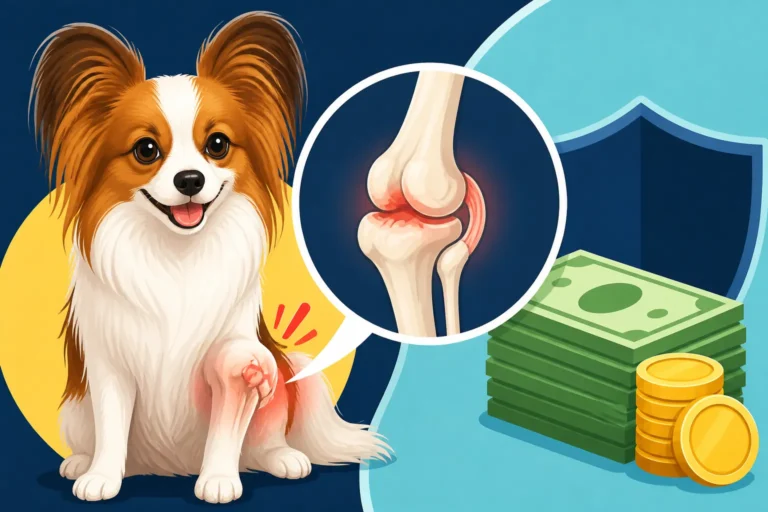
Patellar luxation, or a slipping kneecap, is a fairly common orthopedic issue in small breeds like the Papillon. As explored in How Common Patellar Luxation Is in Papillons, it can range in severity, from mild instances that cause occasional skipping to severe cases requiring surgical correction. If your Papillon develops this condition, the diagnostic tests, medications, and especially surgery can be quite expensive.
Most comprehensive pet insurance policies will cover patellar luxation, provided it is not considered a pre-existing condition. This means your Papillon must be enrolled in the policy before any symptoms of patellar luxation appear or before a diagnosis is made. If your Papillon's knees are already showing signs of looseness or have been diagnosed with luxation prior to your policy's effective date or during a waiting period, it's highly likely to be excluded from coverage. This highlights the importance of enrolling your Papillon when they are young and healthy to ensure this common breed-specific issue is covered.
Dental Disease and Its Impact on Premiums and Claims
Dental disease is incredibly prevalent in small breeds due to their crowded mouths. Tartar buildup, gum disease, and tooth decay are common, often leading to extractions and professional cleanings under anesthesia. As discussed in How Common Dental Disease Is in Papillons, regular dental care is vital but can be costly.
While routine dental cleaning might be covered under a wellness add-on, comprehensive accident and illness policies typically cover dental illness or injury, such as a fractured tooth, an infection, or advanced periodontal disease requiring extractions. However, if your Papillon already has significant dental disease before you enroll them, that specific pre-existing condition might not be covered. Some policies might also have specific waiting periods or limitations for dental care, so it’s essential to read the fine print. Proactive home dental care can help reduce the frequency of professional cleanings, but for complex issues, having insurance coverage can be a huge relief.
Other Health Issues and Proactive Insurance Planning
Beyond patellar luxation and dental concerns, Papillons can, like any dog, be susceptible to other health issues. This can include progressive retinal atrophy (PRA), which affects vision, or conditions requiring careful consideration during medical procedures, such as their sensitivity to Anesthesia and a Five Pound Papillon. While a responsible breeder will perform certain health tests, as outlined in What a Papillon Breeder Should Have Tested, insurance provides a safety net for conditions that are not screened for or that develop spontaneously.
Thinking proactively about insurance means considering the full spectrum of potential health challenges over your Papillon's entire lifespan. From accidental injuries in their energetic youth to the chronic illnesses that might arise in their golden years, a good insurance policy offers a broad safety net. It allows you to focus on getting the best possible treatment without being crippled by the cost. This planning is especially important when you think about What Most Papillons Die Of and the often-expensive treatments associated with those conditions in their later life.
Choosing the Right Provider: What to Look For
Selecting a pet insurance provider can feel overwhelming with so many options available. However, focusing on a few key areas can help you make an informed decision and ensure you're getting the best coverage for your Papillon.
Researching Reputable Insurance Companies
Not all pet insurance companies are created equal. It's vital to research providers thoroughly. Look for companies with a long history, strong financial backing, and positive customer reviews regarding their claims process and customer service. Brands like Healthy Paws are often mentioned for their comprehensive coverage and straightforward claims, but it's important to compare what different providers offer.
Consider their transparency regarding policy terms, exclusions, and how quickly they process claims. A company that makes it easy to understand your policy and pays claims efficiently can make a huge difference during a stressful time. Ask friends or fellow Papillon owners for recommendations, and don't hesitate to contact the insurance companies directly with any questions you might have about their policies, especially concerning breed-specific conditions for your Papillon.
Understanding Waiting Periods and Exclusions
Every pet insurance policy comes with waiting periods. These are specific lengths of time after you purchase a policy before certain coverages become active. For example, there might be a 14-day waiting period for illnesses and a 6-month waiting period for orthopedic conditions like patellar luxation. This is standard practice to prevent people from buying insurance only when their pet is already sick or injured. Be sure to understand these waiting periods before you commit to a policy, as an unexpected emergency during this time would not be covered.
Exclusions are also crucial to understand. While most comprehensive plans cover a wide range of accidents and illnesses, certain things are almost always excluded. These commonly include pre-existing conditions (as discussed), cosmetic procedures, breeding costs, and sometimes even specific alternative therapies unless an add-on is purchased. Make sure you read the policy document carefully to know exactly what is and isn't covered. If you have concerns about a particular condition or treatment, clarify it with the provider before enrolling.
Reading Reviews and Comparing Services
In today's digital age, information is readily available. Take advantage of online reviews, comparison websites, and forums where pet owners share their experiences. Look for patterns in feedback – are people consistently praising a company's quick claim payouts or complaining about denied claims? Pay attention to how companies handle communication and customer service, as this can greatly impact your experience when you need to use your policy.
While online tools can help you get initial quotes, a direct conversation with a representative from a company like Ollie or Healthy Paws can often clarify specific policy details relevant to your Papillon. Prepare a list of questions, especially concerning conditions common to Papillons, and take notes. A reputable provider will be happy to answer your questions thoroughly and clearly, helping you feel confident in your choice.
Here's a simplified comparison table of general pet insurance plan considerations:
| Feature | Accident-Only Plan | Accident & Illness Plan | Wellness Add-On |
|---|---|---|---|
| Typical Monthly Cost | Lower | Moderate to Higher | Adds to existing plan cost |
| Covered Events | Injuries from accidents only | Accidents, illnesses, hereditary conditions | Routine exams, vaccines, preventative meds |
| Pre-existing Conditions | Generally excluded | Generally excluded | Not applicable |
| Major Surgery Coverage | Yes, for accidents | Yes, for accidents & illnesses | No |
| Medication Coverage | Yes, for covered accidents | Yes, for covered accidents & illnesses | Sometimes, for preventative meds |
| Emergency Vet Visits | Yes, for accidents | Yes, for accidents & illnesses | No |
| Routine Vet Visits | No | No | Yes |
| Best For | Budget-conscious, basic injury protection | Comprehensive protection for most health issues | Budgeting for predictable routine care |
Disclaimer
This article is for general informational purposes only and does not constitute professional advice. Laws, prices and regulations vary by location and change over time. Consult a qualified professional for guidance on your specific situation.