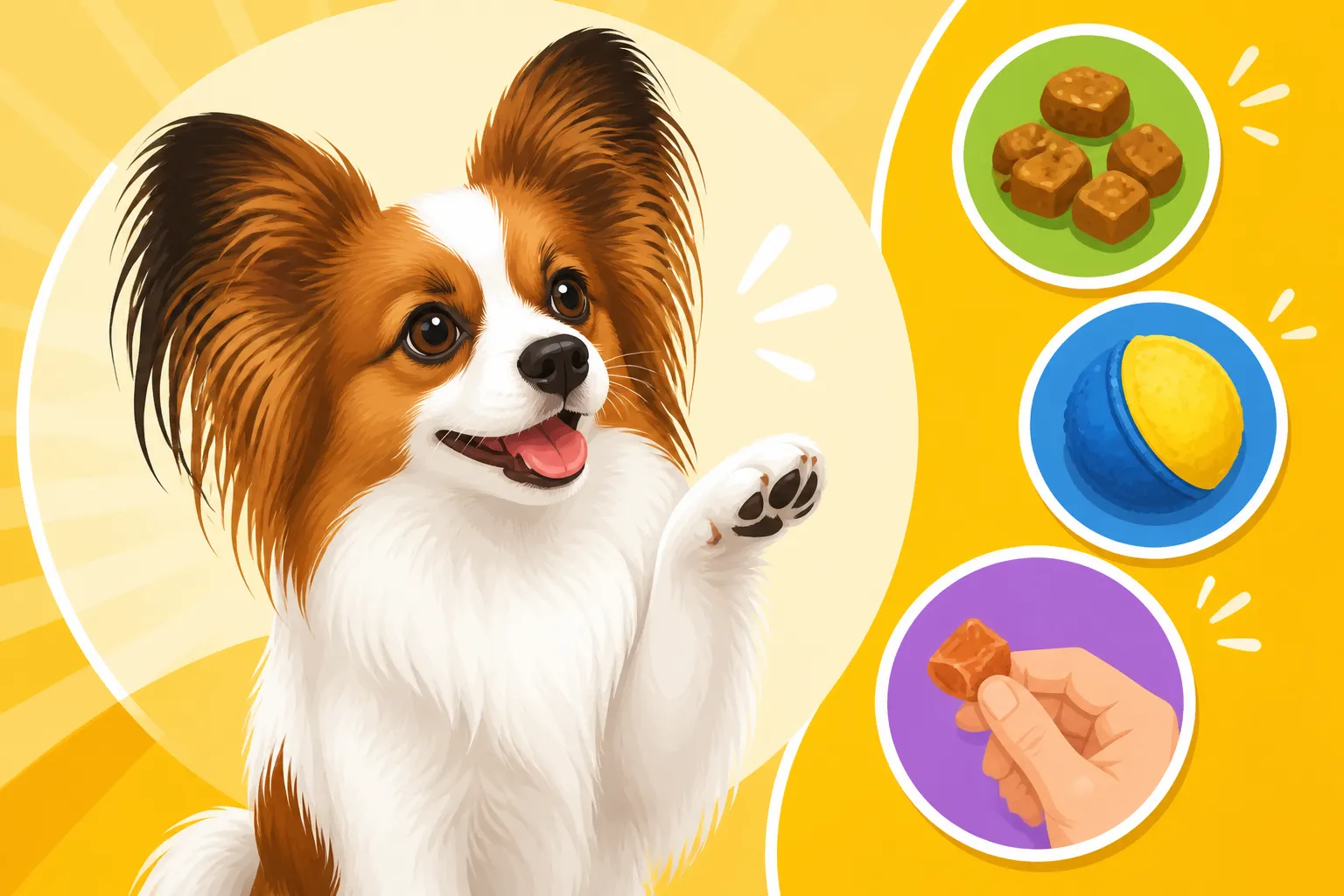
Which Rewards a Papillon Works For
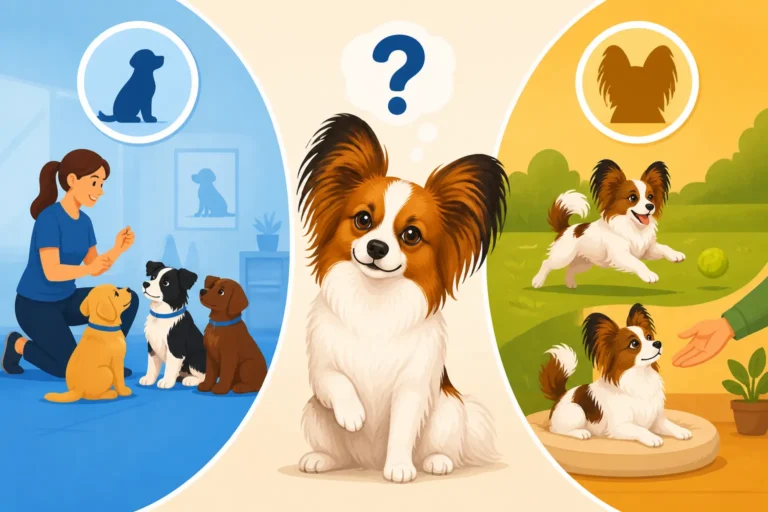
It can be incredibly frustrating when you're trying to teach your clever Papillon something new, or even just reinforce good manners, and they look at your offering with a dismissive little sniff. You've heard they're smart, but sometimes it feels like they're just too smart for the rewards you're providing! This guide is here to help you navigate the wonderful world of Papillon motivation, exploring what truly gets their tiny tails wagging and their bright minds engaged.
The Papillon's Unique Drive: It's Not Always What You Expect
You'd think a small dog would be thrilled with any treat or a quick pat, right? But Papillons are far from "any dog." They're a breed renowned for their intelligence, often ranking incredibly high in canine intelligence studies. This isn't just a fun fact; it profoundly impacts how they learn and what they perceive as a worthwhile reward. Their brains are constantly buzzing, and if a reward isn't stimulating enough, they might just decide it's not worth their effort.
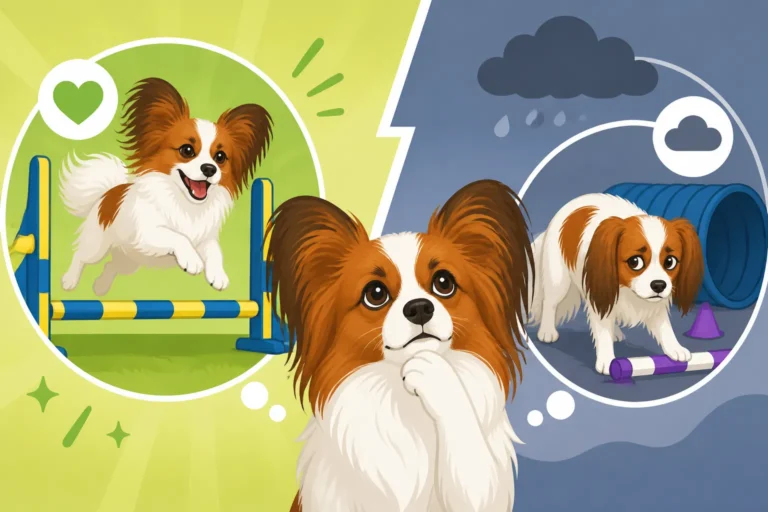
It's easy to get discouraged when your Papillon seems to 'tune out' during a training session. You might wonder if you're doing something wrong, or if your little butterfly dog is just being stubborn. In reality, it's often a sign that you haven't quite tapped into their specific motivational currency yet. What works for a Labrador or a Golden Retriever might not even register on a Papillon's radar, simply because their inherent drives and mental capacities are so different.
Remember, a Papillon isn't just looking for sustenance; they're looking for value. They quickly learn what's truly rewarding and what's just "meh." This discernment is part of their charm, but it also means you need to be a bit more strategic in your approach to rewards.
Beyond the Basic Kibble: Why Variety is Key
Let's be honest, for many dogs, their regular kibble is perfectly acceptable as a training treat. It's convenient, low calorie, and they'll happily work for it. But for a Papillon? Sometimes, you might as well be offering them pebbles. Their sharp minds mean they can get bored with repetition and uninspired rewards very quickly. If the reward isn't exciting enough, their attention will wander, and your training efforts will fizzle.
Think about it from their perspective: "Why should I bother doing this tricky 'spin' trick for the same dry biscuit I get in my bowl every morning? I'd rather just nap on the sunbeam." This isn't defiance; it's an intelligent assessment of value. They quickly learn that if they wait you out, something better might come along. This is why having a range of rewards, from good to truly amazing, is crucial for keeping them engaged.
Moreover, their intelligence means they can easily anticipate your next move. If every successful "sit" gets the exact same boring treat, the novelty wears off fast. Keeping them guessing and varying the reward type and value prevents them from becoming complacent and keeps their little brains actively working to figure out what wonderful thing they might earn next. This is a breed that truly enjoys the game, so make the game itself a part of the reward. If you've ever wondered Whether a Papillon Learns Faster Than a Poodle, you'll understand their need for dynamic and engaging rewards.
The Intelligence Factor: Making Training Engaging
Papillons don't just learn commands; they often seem to understand the concept behind them. This means that for them, the act of learning and solving a problem can itself be incredibly rewarding. If a training session is fun, challenging, and ends with a clear success, they get a mental boost that's almost as good as a tasty treat. This is where positive reinforcement really shines – it builds their confidence and encourages them to participate enthusiastically.
Structuring training sessions to be like mini-games, where they're actively thinking and problem-solving, is key. Instead of endless drills, introduce new variations, combine known behaviors, or try chaining commands together. This mental engagement taps into their innate desire to learn and provides a profound sense of satisfaction. It's not just about getting the treat at the end; it's about the journey of mastering something new.
For many Papillons, the ultimate reward isn't just a physical item, but the opportunity to engage with their favorite person in a meaningful way. They thrive on interaction and mental stimulation. Therefore, a training session that involves complex cues, novel scenarios, or even just working through a puzzle toy together can be highly reinforcing. This engagement caters directly to their sharp intellect and ensures they remain enthusiastic partners in learning.
Food, Glorious Food: High-Value Treats for Tiny Taste Buds
When it comes to training a Papillon, not all treats are created equal. You can have a whole spectrum of goodies, from their everyday kibble up to the absolute "jackpot" rewards that only come out for monumental achievements. Understanding this hierarchy and knowing when to deploy your highest-value items is a game-changer. It's all about making the reward proportional to the effort and the difficulty of the task.
The challenge with small dogs like Papillons is that a "high-value" treat can also be high in calories, and a little bit goes a very long way. You don't want to accidentally turn your lean, agile Papillon into a little roly-poly, which can put undue strain on their delicate joints. This means selecting treats that are not only appealing but also appropriate for their tiny stature and caloric needs.
Finding what truly motivates your Papillon's palate might take a bit of experimentation. Some are cheese fiends, others go wild for meat, and some have a surprising preference for certain fruits or vegetables. Keep a keen eye on what gets the most enthusiastic response and save those top-tier items for when you really need to capture their full attention and drive.
Small Bites, Big Impact: Choosing the Right Treats
For a Papillon, treat size matters. A large biscuit might be too much, requiring them to stop, chew, and potentially lose focus. You want tiny, pea-sized morsels that they can gobble down quickly without distraction. Soft treats are often preferred because they don't crumble everywhere, and they're easier for a small mouth to manage without getting pieces stuck in their abundant fringe.
Think about things like small bits of cooked chicken breast, tiny cubes of mild cheese, or even cooked hot dogs cut into minuscule pieces. These aren't just tasty; they're also easy to prepare and portion out. For commercial options, look for brands specifically designed for small breeds, or soft training treats that you can easily break into smaller portions. Amazon offers a vast selection of training treats, making it easy to find soft, low-calorie options perfect for tiny mouths. Always check the ingredients list to avoid artificial colors, flavors, or excessive fillers.
Remember, the goal is to deliver the reward swiftly and cleanly, allowing you to move on to the next repetition or behavior. If your Papillon is spending too much time chewing, or if the treat is messy, it can break the flow of your training session. Small, soft, high-value treats are truly the secret weapon in a Papillon trainer's arsenal.
When to Use the Best Stuff: Stratifying Your Rewards
Imagine if you got a bonus check every single time you did something at work, no matter how small. Eventually, a small bonus wouldn't feel very special, right? It's the same for your Papillon. You need a reward hierarchy to keep things exciting and ensure your highest-value motivators retain their power.
Here’s a simple structure:
- Low Value: Your dog's regular kibble. Perfect for behaviors they know well, like a quick "sit" or "stay" in a low-distraction environment.
- Medium Value: Slightly tastier than kibble – think plain dog biscuits broken into tiny pieces, or commercial training treats. Use these for practicing known behaviors in new environments or for slightly more challenging cues.
- High Value (Jackpot!): The really good stuff – cooked chicken, cheese, or specialized meaty training paste. These are reserved for introducing new, difficult behaviors, overcoming a fear, or for a particularly brilliant performance (a "jackpot" moment).
By using this system, you ensure that your Papillon is always working for something, but that the special treats truly feel special. It teaches them that bigger effort or new learning leads to bigger, better rewards. This also prevents them from becoming too picky and holding out for only the best. It's also a great way to manage their overall calorie intake for training. If your Papillon seems to be trying to negotiate for better treats, you might find some useful insights in Whether a Papillon Trades Its Dinner for Training Treats.
| Reward Type | Examples | Best Use Cases | Pros | Cons |
|---|---|---|---|---|
| Low Value | Regular Kibble, plain dry biscuits | Maintenance of known behaviors, low-distraction environments | Readily available, low calorie, cost-effective | Less motivating for new or challenging tasks |
| Medium Value | Store-bought training treats, small soft chews | Practicing known behaviors in new settings, moderate difficulty | Good balance of appeal and practicality | Can still become routine if overused |
| High Value | Cooked chicken, cheese, hot dogs, liverwurst | Introducing new behaviors, overcoming fears, jackpot moments | Extremely motivating, captures full attention | Higher calorie, requires preparation, can be messy |
| Play | Tug toy, small squeaky ball | Energetic rewards, breaks during long sessions | Builds bond, releases energy, highly engaging | May distract from task if over-exciting |
| Praise/Affection | Enthusiastic "Good dog!", belly rubs | Reinforcing calm behaviors, building connection | Always available, free, strengthens bond | Not always enough for high-distraction or difficult tasks |
Playtime Power: Toys as Motivators
While food treats are often the go-to for many trainers, never underestimate the power of play for a Papillon. These little dogs are often bundles of energy, and many of them have a surprisingly strong prey drive and a love for interactive games. For some Papillons, a quick game of tug or fetch can be even more motivating than the tastiest treat, especially in certain situations or when working on high-energy behaviors.
Incorporating play into your training regimen not only provides a fantastic reward but also helps to burn off some of that characteristic Papillon energy. This can lead to a more focused and attentive dog during subsequent training sessions. The key is to make the play short, engaging, and directly tied to the successful completion of a behavior, rather than just random playtime.
Understanding your individual Papillon's play preferences is crucial here. Some might be obsessed with a squeaky ball, while others live for a good tug session. Experiment with different types of toys and games to discover what truly ignites their playful spirit and makes them eager to "work" for the opportunity to play.
The Appeal of the Chase: Tug and Fetch
Many Papillons absolutely adore a good game of tug or fetch. For these dogs, the opportunity to grab a toy, shake it, or chase after it can be a phenomenal reward. Think about it: a small dog with a big personality often loves to feel like they're "winning" a little battle, and a game of tug, where they get to hold onto their prize, fulfills that desire.
When using tug as a reward, remember to keep it fair and fun. Use a small, durable tug toy that's appropriate for their mouth size. A quick, enthusiastic ten-second tug session, followed by releasing the toy (perhaps on command, which itself can be a cool trick), can be a huge motivator. For fetch, a soft, lightweight ball or toy that's easy for them to carry back is ideal. The joy they get from chasing and retrieving can make them incredibly eager to perform the behavior that earns them that game.
These interactive play rewards also have the added benefit of strengthening your bond. You're not just a treat dispenser; you're their playmate! This shared activity builds trust and makes you even more valuable in their eyes, which in turn makes them more willing to engage in training with you.
Puzzle Toys and Mental Engagement: Rewarding Their Brains
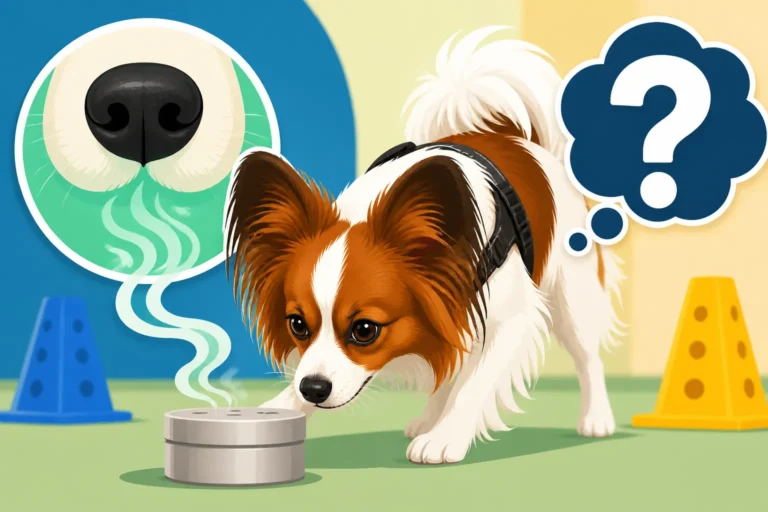
Beyond active play, puzzle toys offer another fantastic way to reward a Papillon, especially when you want to encourage calmer, more focused mental effort. These toys require your dog to figure out how to get a treat or food out, tapping into their natural problem-solving abilities. For a breed as intelligent as the Papillon, this mental workout can be profoundly satisfying.
Imagine your Papillon successfully nudging a lever or pawing at a compartment to release a delicious morsel. The act of figuring it out, the concentration involved, and the eventual payoff is a reward in itself. You can find a wide variety of puzzle toys, from simple treat-dispensing balls to more complex multi-step puzzles, often readily available on Amazon. Start with easier puzzles and gradually introduce more challenging ones as your Papillon's skills grow.
Puzzle toys can be used as a reward for things like settling down in their bed, or for quiet crate time. It's a way to keep their active minds engaged when you can't be directly interacting with them, preventing boredom and potential destructive behaviors. Providing appropriate What Mental Work a Papillon Needs is crucial for their overall well-being and engagement.
Praise and Affection: The Intangible Rewards
Sometimes, the most powerful rewards aren't something you can buy or hold; they're the intangible expressions of your approval and love. For a breed like the Papillon, who often forms incredibly close bonds with their humans, a kind word, an enthusiastic cheer, or a gentle touch can be just as, if not more, motivating than a piece of chicken. This is particularly true once a behavior is well-established, and they are working primarily for the joy of pleasing you.
The key to using praise and affection effectively as rewards is to make them enthusiastic, genuine, and well-timed. A half-hearted "good dog" whispered under your breath won't have the same impact as a bright, happy tone and a genuine smile. Your Papillon is highly attuned to your emotions and body language, and they will pick up on your sincerity.
Remember, every interaction is a chance to build your relationship. When praise and affection are given freely and sincerely, they become powerful tools in your training toolkit, reinforcing not just behaviors but the very bond you share.
The Power of Your Voice and Touch
Have you ever seen your Papillon's tail start to helicopter just because you said their name in a happy tone? That's the power of your voice! For many Papillons, enthusiastic verbal praise – a bright, cheerful "Yes!" or "Good dog!" – is a fantastic reward. They love to please you, and hearing your approval is a huge motivator. Combine this with a happy facial expression and an excited posture, and you've got a winning formula.
Beyond your voice, physical affection can also be a potent reward. For a dog that thrives on connection, a quick, gentle ear scratch, a rub on their favorite spot (often behind the ears or a gentle belly rub), or a few strokes down their back can be incredibly reinforcing. It's not just about the touch itself, but the message it conveys: "You did great, and I love you for it!" The warmth of your hand and the comfort of your presence speak volumes.
However, it's important to know your dog. Some Papillons might get too excited by enthusiastic physical praise and lose focus, while others might find it overstimulating. Gauge their reaction; if they get too wiggly or distracted, perhaps stick to verbal praise and calm, gentle touches. The goal is to reinforce, not to derail the training.
Building Connection: The Ultimate Reward
At its heart, positive reinforcement training isn't just about teaching commands; it's about building an incredible relationship with your dog. When your Papillon learns that interacting with you, listening to you, and working with you consistently leads to good things – whether it's a treat, a game, or heartfelt praise – they learn to trust you and view you as the source of all good things in their life. This deep connection is, in many ways, the ultimate reward for both of you.
This bond makes them eager to engage with you, even when there isn't a tangible treat in sight. They want to participate because they enjoy the interaction and the feeling of accomplishment shared with you. Resources like BAXTER & Bella emphasize this relationship-based training, focusing on strengthening the human-animal bond through positive interactions and clear communication. Their approach often resonates deeply with Papillon owners, as it aligns with the breed's inherent desire for close companionship.
When your Papillon looks up at you with those intelligent, loving eyes, ready for your next cue, that's the real magic. That willingness to learn and engage, stemming from a strong, positive relationship, is something money can't buy. Understanding How a Papillon Shows Affection can help you recognize and reciprocate this invaluable connection.
Real-World Rewards: What Life Offers
Sometimes, the best rewards are simply the things your Papillon already wants to do or experience. This concept, often referred to as the Premack Principle, is incredibly powerful: use a high-probability behavior (something they love to do) as a reward for a low-probability behavior (something you want them to do). It's essentially teaching them to "work" for the privileges and activities they enjoy in their daily lives.
This approach integrates training seamlessly into your everyday routine, making it less like formal drills and more like a natural part of life. It teaches your Papillon impulse control and good manners in real-world scenarios, which is far more practical than just practicing in a sterile training environment. Plus, it leverages their natural desires, making them eager participants.
By making real-life activities contingent on certain behaviors, you're constantly reinforcing that good choices lead to good outcomes. This helps to shape a well-behaved Papillon who understands boundaries and consequences, all while feeling rewarded for their efforts.
Access and Activities: Earning Privileges
Think about all the things your Papillon loves: going for a walk, getting to jump on the sofa for cuddles, playing with their favorite toy, or even just getting through a doorway first. These can all be turned into powerful rewards. For instance, before you open the door for a walk, ask for a "sit" and "stay." Once they comply, the reward is the walk itself! This teaches them that calm, polite behavior earns them access to what they desire.
This applies to so many daily interactions:
- Doorways: "Sit" before going through.
- Meals: "Sit" or "Down" before putting the food bowl down.
- Cuddles: "Come" or "Lap" before they get to jump up.
- Toys: "Leave it" before you throw their favorite ball.
By consistently applying this, your Papillon quickly learns that good manners are the key to unlocking the good stuff in life. It's a highly effective way to teach self-control and reinforce desirable behaviors in context. For example, if your Papillon loves walks, consider how far you can take them when they earn it, by checking out How Far a Papillon Should Walk Daily.
The Joy of a Job: Training as its Own Reward
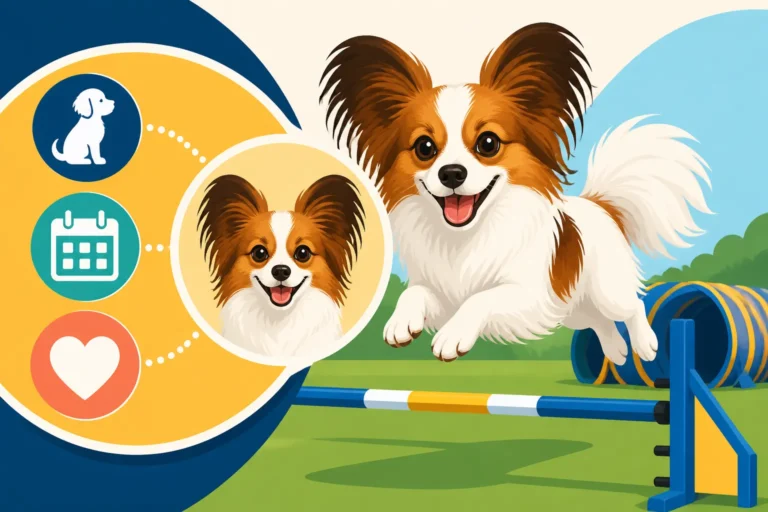
For a breed as intelligent and driven as the Papillon, the actual act of learning and performing complex tasks can become a significant reward in itself. This is especially true in dog sports like agility, rally, or obedience. When they are truly engaged, focused, and performing well, the internal satisfaction they get from using their brains and bodies is immense.
Think of it like a human hobbyist who loves the challenge of mastering a skill – the process itself is enjoyable, not just the end result. For a Papillon, successfully navigating an agility course, learning a new dance routine in canine freestyle, or executing a perfect heeling pattern can be incredibly fulfilling. The positive feedback loop of learning, trying, succeeding, and getting praise reinforces their desire to do more.
This is why many Papillons excel in dog sports. They thrive on the challenge, the partnership with their handler, and the sheer joy of movement and mental engagement. The ribbons and titles are just a bonus; the real reward is the shared experience and the feeling of accomplishment. If you're considering starting your Papillon in competitive endeavors, you'll find great information in Starting a Papillon in Agility.
Common Mistakes and How to Avoid Them
Even with the best intentions, it's easy to fall into common traps when rewarding a Papillon. Their small size, endearing looks, and cleverness can sometimes lead owners down paths that, while seemingly harmless, can create behavioral challenges. Understanding these pitfalls and actively working to avoid them will ensure your Papillon remains well-adjusted, motivated, and a joy to train.
The biggest mistake is often inconsistency. If a behavior sometimes gets a reward and sometimes doesn't, or if the "rules" change frequently, a Papillon will quickly become confused and might stop offering the desired behavior altogether. They thrive on predictability and clear communication, even if that communication is a delicious treat.
Another common issue is underestimating their intelligence and emotional sensitivity. They are not robust, thick-skinned dogs. Harsh corrections or constant "no's" can shut them down, making them reluctant to try new things. Instead, focus on redirecting unwanted behaviors and abundantly rewarding desired ones.
The "Spoiled" Papillon: Avoiding Picky Eaters and Demanding Behavior
It's so easy to spoil a Papillon, isn't it? Their tiny size and captivating charm can make us want to give them everything they desire. But this can quickly lead to a dog who becomes a picky eater during training or starts demanding attention and treats rather than earning them. If you constantly offer higher-value treats because they refuse their regular kibble, they'll learn to hold out for the good stuff.
The key here is consistency and setting clear boundaries. If your Papillon is being picky, don't immediately jump to the "jackpot" treats. Offer the planned reward, and if they refuse, calmly put it away. They'll learn that opportunities aren't endless. This also applies to demanding behaviors like barking for attention or pawing for treats. Ignore these unwanted behaviors, and reward them only when they offer a calm, polite behavior (like sitting quietly). For more specific tips, see Getting a Picky Papillon to Eat.
Remember, you're not being mean by setting boundaries; you're helping your Papillon understand the world in a clear and consistent way, which ultimately leads to a happier, more secure dog. They might test you initially, but consistency will prevail.
Over-Treating and Weight Management
One of the biggest concerns with using food rewards for a tiny Papillon is the risk of over-treating and subsequent weight gain. Even a few extra ounces can put significant strain on their delicate frames and joints, particularly their kneecaps, which are prone to luxation. It’s a real frustration: you want to reward them for good behavior, but you don't want to compromise their health.
To avoid this, be meticulous about portion control. Use extremely tiny pieces of high-value treats – often smaller than a single pea. You can also incorporate a portion of their daily kibble allowance into training sessions, especially for well-known behaviors. This ensures they're still getting their nutrition while earning rewards. Think of each treat as a tiny, delicious speck, not a full bite.
Additionally, remember that not every reward needs to be food. Alternate food treats with verbal praise, a quick pat, or a brief game of tug. This keeps them engaged without constantly adding calories. Regularly monitor your Papillon's weight and body condition. You should be able to easily feel their ribs without pressing hard, and they should have a visible waistline. Being mindful of How Two Extra Ounces Show on a Papillon is critical for their long-term health.
Disclaimer
This article is for general informational purposes only and does not constitute professional advice. Laws, prices and regulations vary by location and change over time. Consult a qualified professional for guidance on your specific situation.