Whether an Aging Papillon Should Still Be Walked
As our beloved Papillons gracefully transition into their senior years, a common question often weighs heavily on our hearts: how do we continue to provide them with a fulfilling life without overtaxing their aging bodies? It's a delicate balance, and many of us worry about doing too much or too little. This guide will explore whether an aging Papillon should still be walked, offering practical advice and empathetic understanding to help you make the best choices for your cherished companion.
Understanding the Aging Papillon's Needs
It's a tough truth that our energetic little butterfly dogs eventually slow down, but recognizing and understanding these changes is the first step in ensuring their comfort and happiness. An aging Papillon still needs activity, just perhaps a different kind of activity.
The Gradual Changes in Senior Papillons
Just like us, Papillons don't wake up one day suddenly "old." The changes are often subtle, creeping in slowly, making it easy to miss the early signs. You might notice your once-tireless companion seems a little less eager for that long afternoon stroll, or perhaps they're taking more naps than before. Their gait might change, becoming a bit stiffer, especially after lying down for a while.
One of the most common issues we see in Papillons as they age, unfortunately, involves their joints. Patellar Luxation Is the Papillon Problem You Will Actually Meet is something many Papillon owners contend with, and while it might have been manageable in their youth, age can exacerbate it. Arthritis can creep in, making those once springy steps feel achy and uncomfortable. They might hide their pain remarkably well, a trait common in many dogs, so you'll need to be extra observant. A slight hesitation before jumping, a more deliberate climb onto the sofa, or even just a change in how they settle down can be a clue. Their hearing or vision might also start to dim, making the outside world a little more challenging to navigate.
Importance of Continued Activity
It might seem counterintuitive, but stopping walks entirely is rarely the best solution for an aging Papillon. While the intensity and duration might need adjusting, continued activity is absolutely vital for their physical and mental well-being. Think of it this way: if we stop moving, our own bodies start to seize up, and it's no different for our furry friends.
Regular, gentle exercise helps to maintain muscle mass, which in turn supports their joints and can even help to alleviate some arthritic discomfort by keeping the surrounding muscles strong. It's also crucial for weight management, as excess pounds put even more strain on already compromised joints. But it's not just about the physical. Walks provide immense mental stimulation. The smells, the sights, the sounds – even a short outing can be a rich tapestry of sensory input that keeps their minds sharp and engaged. It prevents boredom, which can lead to destructive behaviors or even cognitive decline. Plus, for many Papillons, walks are their primary form of social interaction, even if it's just waving to a neighbor or briefly sniffing another dog. Don't forget, What Changes in an Aging Papillon's Care often includes adapting their daily routine to keep them happy and healthy, and that absolutely includes how they get their exercise.
Assessing Your Senior Papillon's Readiness for Walks
Knowing whether your Papillon is ready for a walk, and what kind of walk, involves careful observation and, crucially, a conversation with your veterinarian. They are your best resource for understanding your dog's specific health profile.
Observing Key Indicators of Health
Before you even reach for the leash, take a moment to really look at your Papillon. Are they moving freely and comfortably around the house? Do they seem bright and alert, or are they a bit subdued? A healthy senior Papillon will still show interest in their surroundings, even if their movements are slower.
Look for specific signs that might indicate discomfort or fatigue:
- Changes in Gait: Are they limping, favoring a leg, or walking stiffly? Do they hesitate before putting weight on a paw?
- Reluctance to Move: Do they typically greet you with enthusiasm at the door, but now they stay in their bed? Do they avoid stairs or jumping onto furniture they once loved?
- Increased Panting or Heavy Breathing: If they're panting excessively, even after minimal exertion, it could be a sign of cardiovascular or respiratory issues.
- Lameness or Swelling: Any visible lameness or swelling in their joints or paws should be immediately addressed.
- Behavioral Changes: Are they more irritable, snapping when touched, or withdrawing from interaction? This could be a sign that they are in pain, and How a Papillon Hides Pain means you need to be very attentive to these subtle shifts.
If you observe any of these signs, a vet visit is in order. They can assess for underlying health conditions like arthritis, heart issues, or vision problems that might impact their ability to walk safely and comfortably.
Tailoring the Walk to Their Capabilities
Once you have a clear picture of your Papillon's health, you can start to tailor their walks to their individual capabilities. This isn't a one-size-fits-all approach; every senior dog is unique.
- Shorter Duration: Instead of one long walk, consider several shorter, more frequent outings throughout the day. A 10-15 minute gentle stroll might be perfect, allowing them to stretch their legs and sniff around without becoming overtired.
- Slower Pace: Let your Papillon set the pace. If they want to stop and sniff every blade of grass, let them! This is their time to explore at their leisure. Forget about speed or distance.
- Flat Terrain: Avoid steep hills, stairs, or uneven ground that can put strain on their joints. Stick to smooth, paved paths or soft, grassy areas. A gentle walk around the block or in a local park is often ideal.
- Avoiding Extreme Weather: Papillons, especially as they age, are susceptible to temperature extremes. In summer, walk during the coolest parts of the day – early morning or late evening. In winter, opt for midday when it's warmest, and consider a warm coat if they feel the cold easily. Whether an Old Papillon Feels the Cold is a valid concern for many owners.
- Supportive Gear: Consider a comfortable, well-fitting harness that doesn't put pressure on their delicate trachea. Some older Papillons might also benefit from joint supplements. You can find a wide range of supportive harnesses on sites like Chewy or Amazon, and your vet can advise on the best joint supplements. For example, some brands like Ollie, known for fresh dog food, also offer supplements that can be beneficial. It's worth researching Whether an Aging Papillon Needs Joint Supplements and discussing options with your vet.
Remember, the goal is to enhance their quality of life, not to push them beyond their limits.
Practical Adjustments for Walking an Older Papillon
Making a few smart adjustments to how and where you walk your senior Papillon can make all the difference, transforming a potential struggle into a joyful, enriching experience for both of you.
Choosing the Right Time and Environment
The timing and location of your walks become even more critical for an aging Papillon. Their energy levels might fluctuate, and they'll be more sensitive to environmental factors.
During the summer months, that scorching midday sun can be dangerous for a small, older dog, especially one with a single coat. Opt for those crisp early mornings when the air is cool and the ground hasn't heated up, or take a peaceful stroll in the late evening after the sun has dipped. Conversely, in the depths of winter, choose the warmest part of the day, perhaps when the sun is high, and paths are less icy. A little sweater or coat can do wonders to keep their tiny bodies warm and comfortable.
Think about the environment itself. Your Papillon might appreciate a quieter route, away from the hustle and bustle of a busy dog park if they're more easily startled or overwhelmed. A familiar path around your neighborhood or a peaceful loop in a local park can be far more relaxing and enjoyable. Avoiding areas with loud noises or unpredictable elements can reduce stress and make the outing more pleasant. Remember, their senses might not be as sharp as they once were, so familiar surroundings offer a sense of security.
Supportive Gear and Aids
The right equipment can be a game-changer for senior Papillons, providing comfort and preventing injuries.
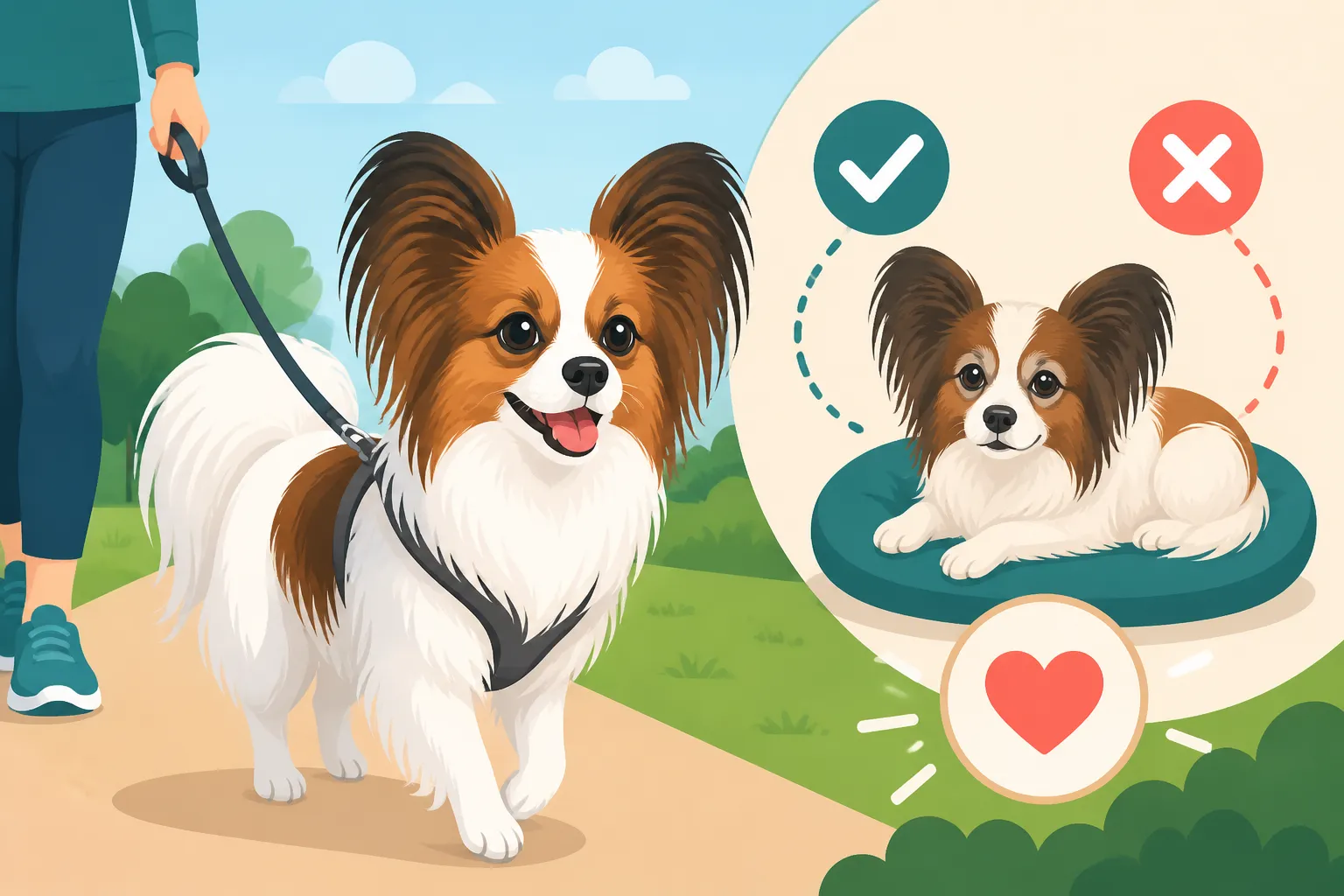
First and foremost, ditch the collar for walks if you haven't already and opt for a high-quality, comfortable harness. Papillons are prone to tracheal issues, and even a slight pull on a collar can cause damage or discomfort, especially for an older dog whose throat tissues might be more delicate. Whether a Papillon Should Wear a Harness Instead of a Collar is a really important consideration. Look for a harness that distributes pressure evenly across their chest and shoulders, without chafing. Brands available on Chewy or Amazon offer a wide variety of styles, so you can find one that fits your Papillon perfectly.
For those days when their legs just aren't up to a full walk, or if you want to take them along for a longer outing without overexerting them, consider a dog stroller or a sling. A stroller allows them to be part of the adventure, enjoying the sights and smells from a comfortable perch, and then they can walk a bit when they feel able. A sling is great for shorter distances, allowing you to carry them comfortably while giving them a sense of closeness. You'll find many options for both on Amazon.
Don't forget their paws! If your Papillon has sensitive paws, or if you're walking on rougher terrain or very hot/cold surfaces, dog booties might be a good idea. Some senior dogs can also develop slipperiness on hard floors due to age-related muscle loss, so keeping their nails short and possibly even using paw wax for grip can help, which you can also find on Chewy.
Monitoring and Adapting on the Go
Flexibility is key when walking an aging Papillon. Every day can be different, and what was comfortable yesterday might be too much today.
Throughout the walk, constantly observe your Papillon for any signs of fatigue or discomfort. Are they lagging behind? Are they starting to pant heavily? Are they holding their tail lower than usual? These are all cues that they might be getting tired. Don't push them. If you see these signs, it's time to take a break. Stop and let them rest, offer some water if you've brought it along (which is always a good idea for seniors), and if they don't perk up quickly, it's time to head home. It's far better to cut a walk short and keep it positive than to push them to the point of pain or exhaustion.
On days when they seem particularly spry, you might extend the walk by a few minutes, but always err on the side of caution. On other days, a very short sniffari around the front yard might be all they can manage. The point isn't the distance or the time; it's the quality of the experience and ensuring they feel good afterwards.
Alternative Activities to Keep Your Senior Papillon Engaged
Sometimes, a traditional walk just isn't feasible or enough to meet all your aging Papillon's needs. Thankfully, there are plenty of wonderful ways to keep them happy, stimulated, and comfortable, even as their bodies slow down.
Indoor Mental Stimulation
When physical walks need to be shorter or less frequent, ramping up mental exercise indoors becomes incredibly important. A tired mind can be just as satisfying as a tired body for a dog, and for seniors, it's often safer.
Puzzle toys are fantastic for this. They encourage your Papillon to use their brain to figure out how to get a treat, which keeps them engaged and thinking. There are many different levels of difficulty, so you can find one that challenges your dog without frustrating them. You can find a huge selection of these on Chewy or Amazon, from simple treat-dispensing balls to more complex sliding puzzles.
Scent games are another excellent option. Hide treats around the house and let your Papillon use their powerful nose to find them. Start easy, then make it more challenging as they get the hang of it. This taps into their natural instincts and is incredibly enriching. Even gentle training refreshers, like practicing "sit" or "stay" with high-value treats, can provide mental stimulation and reinforce your bond. Don't underestimate What Mental Work a Papillon Needs – it's crucial for preventing cognitive decline in their golden years.
Gentle Outdoor Exploration
Even if your Papillon can't manage a long walk, short, gentle outdoor excursions are still incredibly beneficial. The fresh air, natural light, and different smells can lift their spirits.
Consider a "sniffari" in your own backyard. Just letting them leisurely explore and sniff around for 10-15 minutes can be a rich experience. They can discover new scents, mark their territory if they choose, and just enjoy being outside without the pressure of a walk. If you have a quiet park nearby, even a short trip where you carry them to a grassy patch and let them wander for a few minutes can be wonderful.
For those times when they really can't walk much at all, but you want them to experience the world, carrying them in a comfortable sling or even using a dog stroller can be perfect. They get to see and smell everything, feel the breeze, and be part of your outing without having to use their legs. It's about modifying the experience to fit their capabilities, not eliminating it entirely.
Dietary Support for Mobility
Nutrition plays an often-underestimated role in supporting an aging Papillon's mobility and overall health. What they eat can directly impact their comfort levels and energy.
Firstly, weight management is paramount. Even an extra pound or two on a small Papillon can put significant strain on their joints, especially if they already have conditions like patellar luxation or arthritis. Talk to your vet about the ideal weight for your individual dog and adjust their food intake accordingly. Many senior dog foods are formulated with fewer calories and increased fiber to help manage weight.
Secondly, look for foods and supplements that support joint health. Many premium dog foods, including fresh food options like those offered by Ollie, now include ingredients like glucosamine, chondroitin, and omega-3 fatty acids, which are known to help reduce inflammation and support cartilage health. If their current food doesn't provide enough, your vet might recommend specific joint supplements. These can make a noticeable difference in their comfort and willingness to move.
Lastly, as Papillons age, dental health can become a major concern, and they might even lose some teeth. This can make eating difficult. If your Papillon is struggling to eat their regular kibble, consider switching to smaller kibble pieces, softening it with warm water, or even moving to wet or fresh food. Feeding a Papillon With Few Teeth is a real challenge, and softer food can prevent discomfort and ensure they're still getting the nutrition they need. Healthy nutrition supports their body from the inside out, making every movement a little easier.
Disclaimer
This article is for general informational purposes only and does not constitute professional advice. Laws, prices and regulations vary by location and change over time. Consult a qualified professional for guidance on your specific situation.