Whether a Papillon Should Wear a Harness Instead of a Collar
One of the most common worries Papillon owners have, especially if they're new to this delightful breed, is how best to walk their tiny companion without accidentally causing harm. It's a completely valid concern, after all, these little dogs might be bold in spirit, but their physical structure is quite delicate. Many wonder if a traditional collar is truly safe or if a harness is the only way to go. This guide dives deep into the realities of Papillon anatomy, the risks associated with collars, and why a harness often proves to be the safest and most comfortable choice for your beloved butterfly dog.
The Delicate Nature of a Papillon's Neck and Trachea
It’s easy to look at a sturdy Labrador and then at a tiny Papillon and understand intuitively that they’re built differently. But when it comes to their necks and throats, the differences are far more significant than just size. Small breeds, particularly those with finer bone structure, have anatomical quirks that make them predisposed to certain issues, and the trachea is high on that list.
The Anatomy of a Small Dog's Neck
Imagine your own windpipe; it's reinforced with cartilage rings that keep it open. A dog's trachea is similar, but in many small breeds, these cartilaginous rings are naturally weaker and less rigid. For a Papillon, whose neck is already quite slender and graceful, this means their windpipe is much more vulnerable to external pressure. A sudden tug on a collar, even a gentle one, can exert direct force on the trachea. This isn't just uncomfortable; it can be genuinely damaging. The delicate structures in their neck are simply not designed to withstand concentrated pressure from a narrow band like a collar, especially when they are prone to excitedly pulling on the leash.
Moreover, small dogs like Papillons often have very little protective muscle and fat around their necks compared to larger breeds. This lack of cushioning means that any pressure from a collar is transferred almost directly to the trachea and surrounding soft tissues. It's a bit like wearing a tight string around your own throat versus a thick scarf – one offers protection, the other can be a hazard.
The Real Risk of Tracheal Collapse
Perhaps the most significant concern with collars for Papillons is the risk of tracheal collapse. This isn't just a theoretical worry; it’s a very real and unfortunately common condition in small breeds. When the cartilage rings of the trachea weaken, they can flatten, making it difficult for air to pass through. A collar, especially if it’s ill-fitting or if your dog pulls, can exacerbate or even initiate this collapse. Each time pressure is applied, those weakened rings are stressed, potentially causing them to lose their shape over time.
Think of it like repeatedly bending a plastic straw. Eventually, it kinks and makes it harder to drink. The same principle applies to your Papillon's trachea. While some dogs are genetically predisposed to this condition, external factors like constant pressure on the neck from a collar can certainly speed up its onset or worsen existing mild collapse. If you've ever heard a peculiar honking cough from a small dog, there's a good chance you've witnessed a symptom of a collapsing trachea. It’s a sound that immediately signals distress and difficulty breathing. It’s a stark reminder of why we need to be so careful with our little ones. We explore this topic more deeply in our article, "Whether a Papillon Gets a Collapsing Trachea".
Identifying Signs of Tracheal Issues
Recognizing the signs of tracheal problems early is crucial. It’s not always as dramatic as a full-blown honking cough. Sometimes, the signs can be subtle. You might notice your Papillon making a goose-like honking sound, especially when excited, after drinking water, or after even a mild tug on the leash. This is often the most classic symptom. They might also appear to be gagging, as if trying to clear something from their throat.
Other indicators include labored breathing, particularly after exercise, or a reluctance to walk on a leash if it involves any pulling. You might notice that they tire more easily or seem less enthusiastic about their regular walks. In more severe cases, their gums might appear bluish due to lack of oxygen. If you suspect any of these issues, it's vital to consult your veterinarian promptly. Early diagnosis and management can make a huge difference in your Papillon's quality of life. Regular wellness exams, which we cover in "How Often a Papillon Needs a Wellness Exam", are essential for catching these and other health concerns early. Pet insurance, like a plan from Healthy Paws, can be a real lifesaver if medical interventions, diagnostics, or treatments become necessary for conditions like tracheal collapse.
Why Harnesses Offer Superior Protection and Comfort
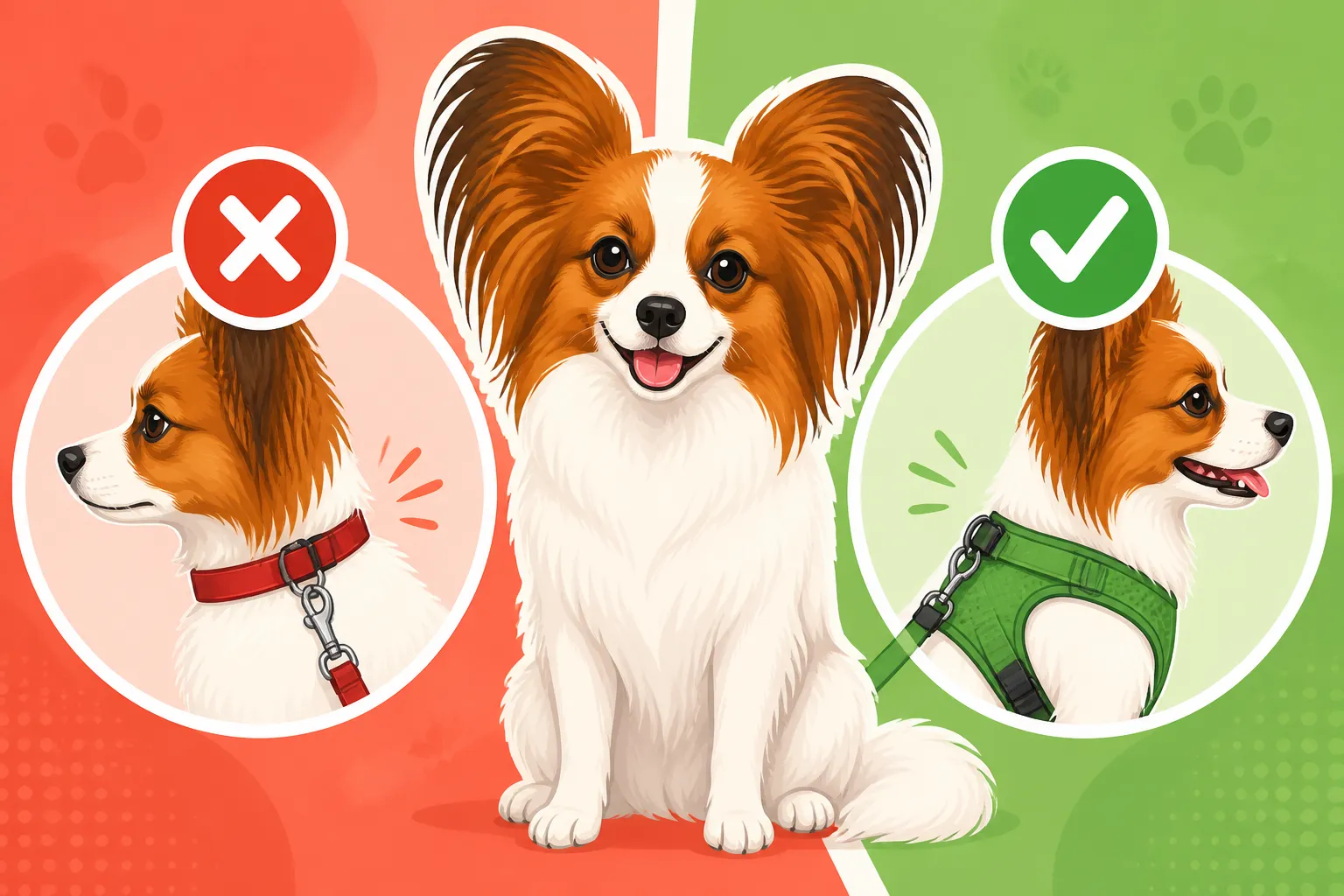
Given the delicate nature of a Papillon’s neck, it's clear why many owners and veterinarians advocate for harnesses. A well-fitting harness fundamentally changes how pressure is distributed, moving it away from the sensitive throat area and onto the stronger parts of the dog's body.
How a Harness Distributes Pressure
The key advantage of a harness is that it wraps around your dog's chest and shoulders, rather than just their neck. When your Papillon pulls on the leash, or when you need to guide them, the pressure is spread across their chest, shoulders, and back. These areas are much more muscular and robust than the throat, making them far better equipped to handle the force. This distribution of pressure prevents direct strain on the trachea, significantly reducing the risk of injury or aggravation of conditions like tracheal collapse.
Consider the difference when you carry a heavy backpack versus a bag with a thin strap over your neck. The backpack distributes weight across your shoulders and back, making it manageable, while the thin strap digs into your neck, causing discomfort and potential harm. A harness functions similarly for your Papillon, ensuring their comfort and safety during walks, even if they get a little excited and decide to dart after a squirrel.
Choosing the Right Harness for a Papillon
Not all harnesses are created equal, especially for a breed as small and agile as a Papillon. The wrong harness can chafe, restrict movement, or even still put pressure on the neck. When selecting a harness, look for designs that prioritize chest and back support, avoiding any straps that sit directly across the throat.
Key features to consider:
- Y-front or H-back design: These styles ensure that the straps go around the chest and behind the front legs, creating a "Y" shape on the chest or an "H" shape on the back, keeping pressure off the throat. Brands like Ruffwear and Kurgo offer harnesses with good design principles for pressure distribution.
- Adjustability: Papillons can vary in size, even within the breed. A harness with multiple adjustable straps will allow for a snug, custom fit without being too tight or too loose. You should be able to fit two fingers comfortably under any strap.
- Soft, lightweight materials: Heavy or stiff materials can be uncomfortable and restrict movement for such a small dog. Look for breathable, padded, and soft fabrics that won't chafe their delicate skin or interfere with their long, flowing coat.
- Front-clip option: While not strictly for tracheal protection, a front-clip harness can be excellent for training if your Papillon is a strong puller. It redirects their forward momentum, encouraging them to walk by your side without putting undue strain on their body.
- Security: Papillons are surprisingly adept at wiggling out of ill-fitting gear. Ensure the harness is secure around the chest and girth so they can't slip out during a sudden fright or burst of energy.
- Visibility: For evening walks, a harness with reflective stitching or bright colors can add an extra layer of safety.
Choosing the right harness is an investment in your Papillon's long-term health and comfort, making walks a joy for both of you.
The Benefits Beyond Tracheal Safety
While protecting the trachea is paramount, harnesses offer several other benefits that enhance your Papillon's overall well-being and your peace of mind.
- Better Control: For a small, quick dog, a harness provides more secure control, especially in busy environments. It’s much harder for a Papillon to slip out of a properly fitted harness than a collar, reducing the risk of them darting into traffic or getting lost. This can be especially important for city dwellers, where sudden movements are a constant concern.
- Reduced Neck and Spinal Strain: Beyond the trachea, a collar can put strain on the cervical spine and neck muscles, potentially leading to long-term issues. A harness alleviates this, promoting better posture and reducing the risk of injury, which is critical for an active breed that loves to engage in sports like agility. We discuss the importance of protecting their joints in topics like "Whether a Papillon Should Be Stopped From Jumping Off Furniture".
- Comfort for the Dog: Many dogs simply find harnesses more comfortable. Without a strap pressing on their throat, they can breathe easier, pant more freely, and move naturally. This comfort can make walks more enjoyable and reduce stress, especially for dogs who might be anxious on a leash.
- Safety in Emergencies: In an emergency, a harness provides a safer way to lift or restrain your dog if needed, distributing pressure rather than concentrating it on the neck. This could be vital if you need to quickly pick up your Papillon to avoid a hazard.
- Ideal for Active Dogs: If your Papillon is an active participant in dog sports, or simply enjoys vigorous playtime, a harness is a must. It allows for full range of motion and protects them during energetic activities. For tips on managing their energy, see "How Much Exercise a Papillon Needs".
All these factors combine to make a harness the overwhelmingly superior choice for the vast majority of Papillons, prioritizing their health and happiness every step of the way. When unexpected health issues arise, having a robust pet insurance plan, perhaps from Healthy Paws, can ensure you can always afford the best care, no matter the accident or illness.
When a Collar Might Still Be Used and Its Limitations
Despite the many benefits of harnesses, collars do still have a place in a Papillon's life, though their primary function shifts significantly. They are generally not recommended for leash attachment, but they can serve other important purposes.
Collars for ID and Tags Only
The most appropriate use for a collar on a Papillon is for carrying identification tags. A lightweight, flat collar that fits comfortably and isn't too tight can safely hold your Papillon's ID tag, rabies tag, and any other essential information. This is critical for their safety, as even the most well-behaved dog can slip away unexpectedly.
It's a good idea to ensure the collar is made of a soft material that won't irritate their skin or tangle in their delicate ear fringe. Always double-check that the collar is loose enough for two fingers to fit underneath easily, but not so loose that it could slip over their head. The goal here is identification, not control. If your Papillon were ever to get lost, having a visible collar with ID tags, alongside their microchip, significantly increases the chances of a safe return.
Training Considerations
For certain types of training, a collar might be used, but extreme caution is advised. For example, some trainers might use a flat collar for very light, off-leash obedience work in a secure area, where no pressure will be put on the leash. However, even in these scenarios, many trainers of small breeds opt for body harnesses for all types of training, simply to avoid any risk.
It's crucial to understand that a choke chain or prong collar should never be used on a Papillon due to the extreme risk of tracheal damage. These tools are inappropriate for any small breed, especially one with such a delicate throat. Positive reinforcement methods, coupled with a well-fitting harness, are always the safest and most effective way to train a Papillon. Our article, "Why Harsh Correction Fails on a Papillon", delves into the sensitive nature of these intelligent dogs and why positive methods are best.
Situations Where a Collar is Not Recommended
There are several scenarios where using a collar for anything other than ID tags is strongly discouraged:
- Leash Walking: As discussed, attaching a leash to a collar is the primary risk factor for tracheal damage. Always use a harness for walks, whether it's a quick trip outside or a longer adventure.
- Tethering: Never tether a Papillon by its collar. A sudden lunge could cause severe neck injury or even strangulation. If you need to briefly secure your dog, a secure, comfortable harness with a proper tethering system is essential.
- Play with Other Dogs: If your Papillon plays with other dogs, especially larger ones, their collar could get snagged or caught, leading to injury. It’s safer to remove collars during supervised play sessions.
- Car Travel: While a collar might carry ID, it should not be used to secure your Papillon in the car. For car safety, always use a crash-tested car harness or a travel crate to protect your dog in case of a sudden stop or accident.
In essence, while a collar has a role for identification, it should take a backseat to a harness when it comes to any situation involving leash pressure or potential strain on your Papillon's neck.
Making the Switch and Training Your Papillon
Transitioning from a collar to a harness, or introducing a harness to a puppy, should be a positive experience. It might take a little patience, but your Papillon's safety and comfort are well worth the effort.
Introducing a Harness to Your Papillon
For many Papillons, especially puppies, wearing a harness will be a new sensation. Some might resist or act a little "dramatic" at first. The key is to make it a positive experience through slow introductions and plenty of treats.
- Positive Association: Start by simply letting your Papillon see and sniff the harness. Offer treats and praise when they interact with it calmly.
- Brief Wearing Sessions: Place the harness on them for very short periods, initially just a few seconds, then immediately remove it and give them a high-value treat. Repeat this several times a day, gradually increasing the duration. Do this indoors first, allowing them to wear it while playing or eating their meal.
- Distraction is Key: While they are wearing the harness, distract them with a favorite toy, a puzzle feeder, or a short play session. This helps them associate the harness with fun and positive things, rather than something restrictive.
- Check the Fit: Ensure the harness fits properly. A poorly fitting harness will be uncomfortable and can lead to continued resistance. You should be able to slide two fingers easily between the harness and your dog's body at all points. Nothing should chafe under their armpits or restrict their natural movement.
- Patience and Praise: Never force the harness on them. If they become stressed, take a break and try again later. Always use a cheerful voice and offer lots of praise and rewards. Your Papillon is intelligent and sensitive, so positive reinforcement works wonders, as we discuss in "The Papillon Is the Smartest Toy Breed There Is".
Training for Leash Manners with a Harness
Once your Papillon is comfortable wearing the harness, it's time to introduce the leash.
- Indoor Practice: Start with short indoor sessions. Attach the leash to the harness and let your Papillon drag it around the house (under strict supervision, of course, so they don't get tangled). This helps them get used to the weight and feel of the leash.
- Short, Positive Walks: Begin with very short walks in a low-distraction environment, like your backyard. Keep these first walks brief and fun, focusing on praise and treats for walking nicely beside you.
- Gentle Guidance: Use the leash and harness for gentle guidance, not pulling. If your Papillon pulls, stop walking until the leash slackens, then reward them when they come back to your side. This teaches them that pulling gets them nowhere, while walking calmly earns rewards.
- Consistency: Be consistent with your training. Everyone who walks your Papillon should use the harness and the same positive reinforcement techniques.
- Address Reactivity: If your Papillon barks or lunges at other dogs or people, a harness gives you much better control to safely manage these situations without putting strain on their neck. For more on their behavior, consider our article, "How a Papillon Behaves With Large Dogs".
Remember, Papillons are smart and eager to please, but like all dogs, they benefit from clear, consistent, and positive training.
Practical Tips for Daily Use
Integrating the harness into daily life means more than just using it for walks.
- Routine: Establish a routine where the harness comes out before every walk or outdoor adventure. Your Papillon will quickly learn to associate it with exciting things.
- Cleaning and Maintenance: Keep the harness clean and inspect it regularly for wear and tear. A dirty or damaged harness can cause discomfort or fail when you need it most. Many harnesses are machine washable on a gentle cycle.
- Comfort in All Seasons: Consider different harness materials for different seasons. A mesh harness might be better in summer to prevent overheating, while a slightly more padded one could offer warmth in colder months. Our article, "Whether a Papillon Feels the Cold", might give you more ideas for winter comfort.
- Never Leave Unsupervised: While comfortable, a harness should generally be removed when your Papillon is unsupervised at home to prevent it from getting snagged on furniture or other objects, potentially causing injury or discomfort.
- Always Have ID: Even when wearing a harness, ensure your Papillon also has a collar with up-to-date ID tags. In the unlikely event they slip out of their harness, they still have identification.
Making the switch to a harness is one of the kindest things you can do for your Papillon. It protects their delicate body, ensures their comfort, and allows both of you to enjoy many happy, safe walks for years to come. Think of it as a small change with a huge impact on their overall health and longevity. Pet insurance, like that offered by Healthy Paws, can provide peace of mind for all their health needs, from routine care to unexpected emergencies.
| Feature | Harness (Recommended) | Collar (Limited Use) |
|---|---|---|
| Pressure Point | Chest, shoulders, back (strongest areas) | Neck, throat (most delicate area) |
| Tracheal Safety | Significantly reduces risk of tracheal collapse/injury | High risk of tracheal damage, especially if dog pulls |
| Control | Excellent, harder for dog to slip out, better guidance | Less control, easier for dog to slip out, can cause gagging |
| Comfort | Generally more comfortable, allows free breathing | Can cause discomfort, choking, coughing |
| Primary Use | Leash walking, training, car safety | ID tags only |
| Best For | All Papillons, especially puppies and pullers | No leash attachment; identification purposes only |
Disclaimer
The information provided in this article is for general informational purposes only and is not a substitute for professional veterinary advice. Always consult with a qualified veterinarian regarding your Papillon's health and specific care needs, especially concerning medical conditions like tracheal collapse or before making any significant changes to their routine or equipment.