How a Blind Papillon Learns a House
It's absolutely heartbreaking to realize your beloved Papillon, who once navigated your home with such joyful abandon, is now bumping into furniture or hesitating at familiar doorways. Watching them struggle with something as fundamental as finding their water bowl can leave you feeling lost and unsure how to help. This guide is here to walk you through the practical, empathetic steps you can take to help your blind Papillon learn their house and regain their confidence, ensuring they continue to live a full and happy life.
Understanding the Challenges for a Blind Papillon
When vision begins to fade, it's not just a physical change; it's a profound shift in how your Papillon experiences the world. Their once-familiar home can suddenly feel like a labyrinth, leading to anxiety and confusion. It’s a huge adjustment for both of you, but understanding what they’re going through is the first step toward effective help.
The Emotional Impact on Your Papillon
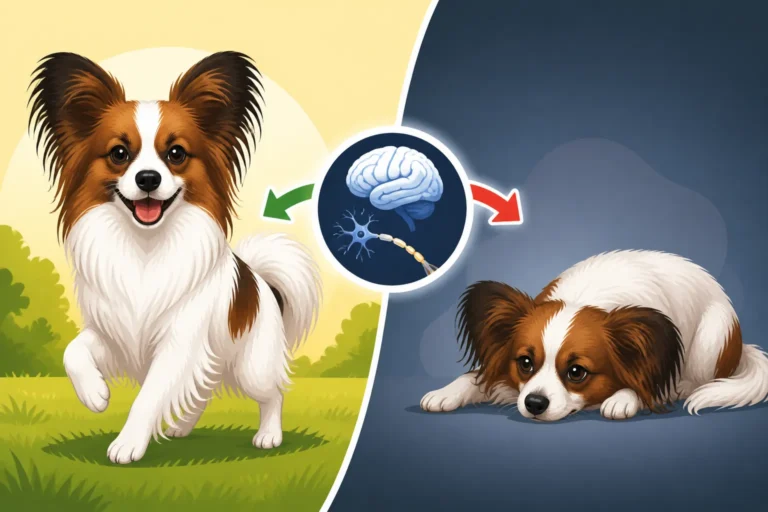
Imagine suddenly being plunged into darkness in your own home. That's a bit like what your Papillon experiences. Initially, they might show signs of fear, becoming more clingy, hesitant to move, or even snapping if startled. It's a natural reaction to a world that no longer makes sense visually. They might sleep more, lose interest in toys, or even seem a bit depressed. This isn't naughtiness; it's fear and disorientation. As their primary caregiver, your calm reassurance and consistent support are vital during this stressful transition. They rely on you now more than ever to be their eyes and their rock, helping them navigate not just physical space, but also the emotional landscape of their new reality.
It's common to wonder if they’re in pain or just confused. Sometimes, vision loss can be a symptom of underlying health issues, or it could be a condition like Progressive Retinal Atrophy (PRA), which is relatively common in Papillons. If you're noticing early signs, such as your Papillon appearing hesitant in dim light, you might find our article on Signs a Papillon Is Losing Night Vision helpful. Early diagnosis and understanding the progression, such as whether a Papillon with PRA goes fully blind, can ease your mind and help you prepare.
How Vision Loss Affects Their Senses
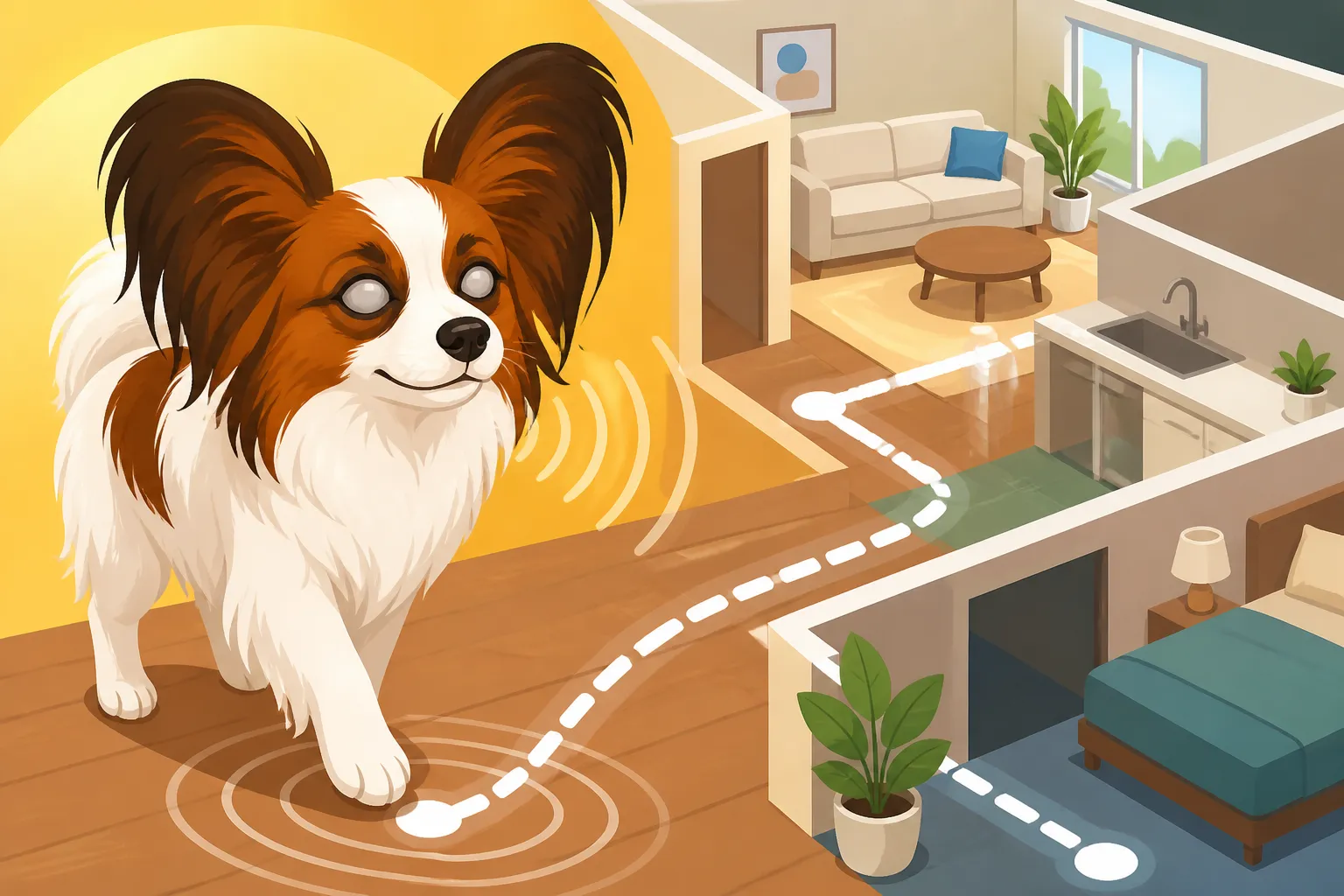
The amazing thing about dogs is their incredible adaptability. When sight diminishes, their other senses don't just pick up the slack; they go into overdrive. Your Papillon's nose, already a powerful tool, becomes their primary map. They'll start mapping your home through scent trails, recognizing the unique smells of furniture, your scent on the couch, or even the subtle odors of different rooms. Their hearing also becomes incredibly acute, allowing them to pinpoint your location, identify family members, and detect obstacles based on echoes.
Their whiskers, or vibrissae, which are often overlooked, become super-sensitive feelers, helping them detect nearby objects and changes in air currents as they move. It’s a whole new way of experiencing the world, and you can leverage these heightened senses to help them learn their new internal map of the house. For instance, a subtle change in the air current from an open doorway can be a signal. They learn to interpret these tiny details, which means your job is to make those details consistent and helpful.
Creating a Safe and Predictable Environment
The most important thing you can do for a blind Papillon is to provide a stable, unchanging environment. Consistency breeds confidence, and for a dog that can’t see, knowing what to expect is paramount.
Securing Your Home Environment
The first order of business is to make your home a safe haven, free from bumps and scrapes. Start by walking through your home from your Papillon's perspective – get down on their level. Remove any potential trip hazards like throw rugs, shoes, or loose cords. Pad sharp corners of coffee tables, chairs, and hearths with childproof corner protectors. You might even consider baby gates for stairways or to restrict access to particularly dangerous areas, at least until your dog has fully adjusted.
Maintaining a consistent layout is critical. Once your Papillon learns the placement of furniture, even a small shift can cause them to become disoriented and frustrated. Try to keep food and water bowls, their bed, and their favorite toys in the exact same spots every day. This predictability helps them build a mental map based on touch, scent, and memory. If you must move something, do it gradually and guide your Papillon around the new setup several times. Remember, even a small change like opening a cupboard door can create a new obstacle, so be mindful of these temporary changes and guide your pup around them.
Utilizing Scent and Texture Cues
Since your Papillon's sense of smell is now their superpower, use it to your advantage. You can create "scent trails" or markers to help them navigate. Place a drop of a unique, non-toxic essential oil (like lavender or vanilla, heavily diluted) on a cotton ball and dab it on a specific piece of furniture or a doorway threshold. Use a different scent for different rooms or to mark dangerous areas, like the edge of a step. Always introduce these scents positively, associating them with treats or praise. Similarly, textured mats or rugs can be placed at the top and bottom of stairs, in front of the food bowl, or at a doorway to signal a change in environment. A small, textured mat before a door, for example, can be their signal to slow down and investigate. This allows them to "feel" their way around without constantly bumping into things.
Consistency with these markers is key. Don't change the scents or textures once established, as this will only add to their confusion. This technique works incredibly well for a small dog like a Papillon, whose nose is close to the ground, allowing them to easily pick up these subtle cues.
Establishing a Routine
A predictable daily routine is like a comfortable blanket for a blind dog; it provides immense security. They will learn the rhythm of your day: when they eat, when they go outside, when they play, and when they nap. Stick to consistent feeding times, potty breaks, and walking schedules. This consistency reduces anxiety and helps them anticipate events.
For example, if their morning walk always happens right after you finish your coffee, they’ll learn to associate the smell of coffee with the upcoming walk. When taking them outside for potty breaks, always use the same door and take the same route to a designated potty spot. Use consistent verbal cues too. A phrase like "outside now" or "time for dinner" delivered in a happy, consistent tone will help them understand what's coming next. This steadfast routine, combined with a secure home environment, builds a strong foundation for their confidence and ability to navigate their world. You might be interested in our article on What a Papillon Needs Every Day for more insights into structuring their day, especially as they adjust to new challenges.
Teaching Your Blind Papillon to Navigate
Once your home is safe and predictable, you can actively teach your Papillon how to navigate it using new cues and patient training methods.
Verbal Cues and Touch Signals
Verbal cues become invaluable communication tools for your blind Papillon. Start with simple, consistent commands that relate to movement and obstacles. For instance:
- "Step up" for thresholds or small steps.
- "Watch out" or "Careful" for an impending obstacle.
- "Stop" when they are about to bump into something.
- "Left" or "Right" for directional guidance.
- "Food" or "Water" to help them locate their bowls.
Always use a clear, calm, and consistent tone. Practice these commands frequently, associating them with positive reinforcement like treats and praise. For example, when approaching a step, say "step up" right before they encounter it, then reward them as they successfully navigate it. Touch signals can also be incredibly effective. A gentle tap on their left side can indicate "turn left," and a tap on their right for "turn right." A soft nudge on their rear can mean "move forward." These signals become their new language for moving safely through the world.
"Piecemeal" Learning: Room by Room
Don't overwhelm your Papillon by expecting them to learn the entire house at once. Instead, break it down into manageable segments, focusing on one room at a time. Start with a room where they spend a lot of time, like the living room or your bedroom. Keep them confined to this area (using baby gates if necessary) for a day or two. Walk them around the perimeter, letting them sniff every piece of furniture, and using your verbal cues. Gradually introduce one new room at a time, allowing them to explore thoroughly and build their mental map before expanding their territory.
Positive reinforcement is key during this exploration. When they successfully navigate around a chair, offer a treat and praise. Celebrate every small victory! This methodical approach prevents frustration and builds confidence. For a small breed like a Papillon, whose primary method of exploration is often by nose, this detailed, tactile, and scent-based learning is very effective. Remember, a common issue some owners face is whether a Papillon with PRA bumps into things, and this method directly addresses that by helping them map out obstacles.
Using a Halo or Bumper Vest
For some blind dogs, especially in the initial stages of adjustment or in unfamiliar environments, a halo or bumper vest can be a fantastic tool. These devices feature a lightweight ring that extends around your dog's head at nose level. When they approach an object, the halo bumps into it first, providing tactile feedback that helps them avoid collisions. This gives them confidence to move forward without fear of impact, allowing them to explore more freely.
Brands like Muffin's Halo or the Blind Dog Halo are designed specifically for this purpose, providing a gentle warning system without obstructing their hearing or comfort. It’s not a permanent solution for every dog, but for many, it's a crucial stepping stone to independence. Think of it as temporary training wheels, helping them gain the courage to move about until their other senses fully adapt and they develop a comprehensive mental map of their surroundings. This can be especially helpful if your Papillon is still developing their compensatory skills.
Here’s a quick overview of how different navigational aids can help your Papillon:
| Aid Type | Description | Benefits | Considerations |
|---|---|---|---|
| Verbal Cues | Consistent spoken commands (e.g., "step up," "left," "stop") | Highly adaptable, strengthens bond, no equipment needed. | Requires consistent training and repetition. |
| Scent Markers | Dabbing unique, diluted essential oils on furniture or thresholds. | Utilizes dog's strong sense of smell, subtle, non-intrusive. | Scents must be dog-safe and consistently applied. |
| Texture Cues | Using different mats/rugs to signal changes in environment or obstacles. | Provides tactile feedback, helps map space. | Can be tripped over if not secured, may not be suitable for all floor types. |
| Halo/Bumper Vest | A lightweight ring attached to a harness that extends beyond the dog's nose, preventing head-on collisions. | Prevents bumping, builds confidence, allows for freer movement. | Some dogs may initially resist wearing it, not a permanent solution, requires supervision, may not be covered by insurance like Healthy Paws. |
| Long Leash/Tether | Used for guided exploration, especially outdoors or in new indoor spaces. | Allows owner to gently guide dog away from hazards, offers security. | Requires constant owner attention, limits independent exploration. |
Maintaining Their Quality of Life and Well-being
A blind Papillon can still lead an incredibly rich and happy life. It just takes a little more thought and adaptation from their human companions to ensure their physical and mental needs are met.
Enrichment Activities for Blind Dogs
Blindness doesn't mean the end of fun and engagement for your Papillon. In fact, mental stimulation becomes even more crucial. Scent games are fantastic! Hide treats around the house (in safe, consistent spots, of course) and encourage them to "find it" using their nose. Snuffle mats and puzzle toys that dispense treats when manipulated are excellent for engaging their brain and sense of smell. Interactive toys with bells or squeakers can also be great for playtime, helping them locate the toy by sound.
Familiar walks are still very important for exercise and mental stimulation. Stick to routes they know well and keep them on a leash, providing verbal cues about upcoming curbs, steps, or changes in terrain. Exploring new, safe, fenced-in areas, while continuously communicating, can also be stimulating. Don't forget the joy of touch – gentle massages, grooming, and lots of cuddles provide comfort and reinforce your bond. Even if they can't see you, they can feel your presence and love. For more ideas on keeping your Papillon active, even with limitations, you might refer to our guide on How Much Exercise a Papillon Needs.
Ongoing Support and Adaptation
Helping a blind Papillon adjust is an ongoing journey, not a one-time fix. There will be good days and challenging days. Patience is your most important virtue. Accidents might happen, or they might get momentarily disoriented. Your calm, reassuring response will make all the difference. Celebrate every small victory – finding their bed on their own, navigating a doorway confidently, or playing with a toy they couldn't see. These milestones are huge for them and for you.
Regular veterinary check-ups are also crucial to monitor their overall health, especially for older Papillons. Conditions like PRA can progress, and other age-related issues might arise. Discuss any changes in behavior or navigation with your vet. Having pet insurance, perhaps from a provider like Healthy Paws, can be a real lifeline here, helping to cover the costs of these ongoing vet visits, specialist consultations, and any necessary medications, giving you peace of mind to focus on your Papillon's comfort and happiness. Even if the condition causing blindness isn't covered, insurance can still help with other unforeseen health issues. This level of comprehensive care ensures your Papillon receives the best possible support throughout their life.
When to Seek Professional Help
While many Papillons adapt remarkably well to blindness with your help, there are times when professional guidance can be invaluable. If your dog is exhibiting severe anxiety, aggression, or an inability to cope with their vision loss despite your best efforts, a certified professional dog trainer or a veterinary behaviorist experienced with blind dogs can offer tailored strategies. They can assess your dog's specific challenges and provide advanced training techniques, behavioral modification plans, or even suggest medication to manage anxiety if necessary.
Additionally, if you suspect their blindness is progressing rapidly or if you're noticing other health symptoms, always consult your veterinarian. They can rule out underlying medical conditions, manage pain, and provide guidance on nutrition and general well-being. Knowing when to get professional help ensures your Papillon has every opportunity to thrive. With the potential for significant medical costs, especially if other issues arise, having a robust pet insurance plan like Healthy Paws could mitigate financial stress, allowing you to pursue the best possible care without hesitation. You might also want to read our article on Caring for a Papillon Past Eleven if your dog is older, as vision loss is often a part of the aging process.
Disclaimer
The information provided in this article is for general informational purposes only and is not a substitute for professional veterinary advice. Always consult with a qualified veterinarian regarding your Papillon's specific health concerns, diagnosis, and treatment options.