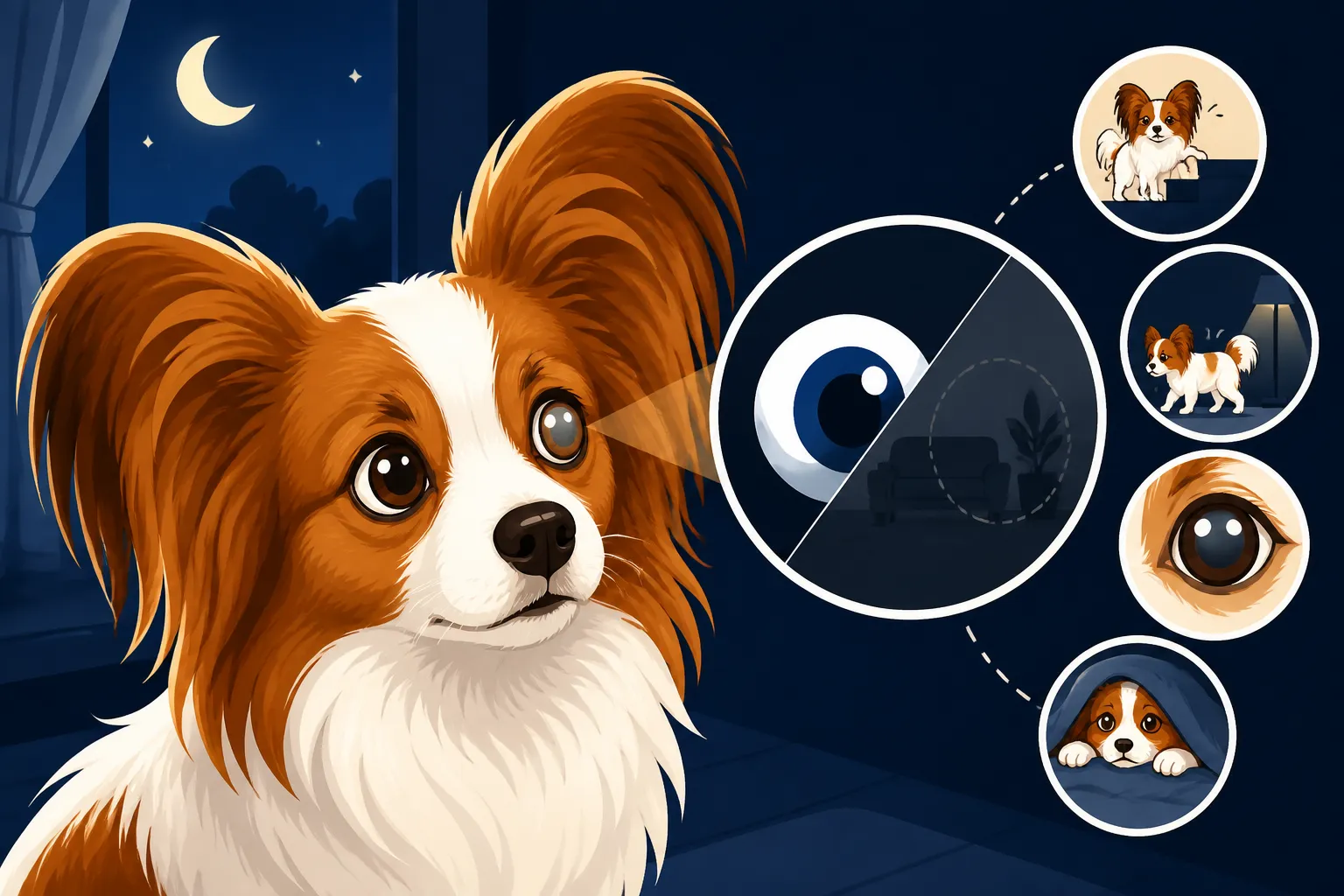
Signs a Papillon Is Losing Night Vision
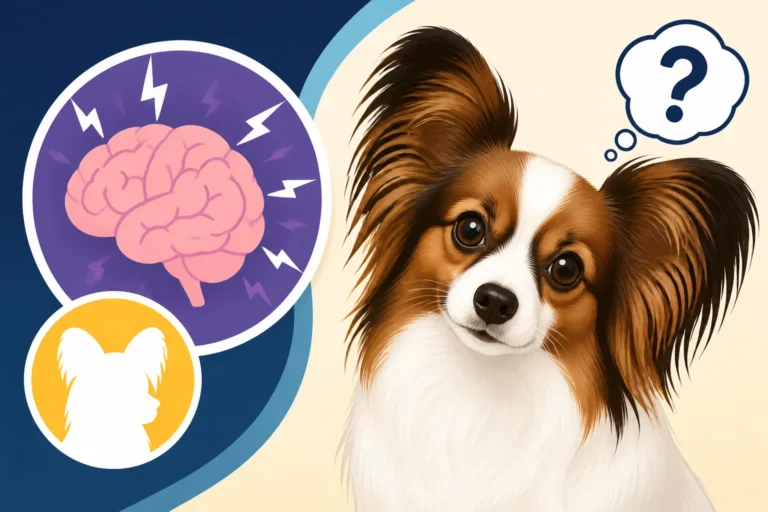
It's incredibly distressing to notice changes in your beloved Papillon, especially when those changes seem to affect their ability to navigate the world around them. Many Papillon owners, myself included, have worried when our tiny companions suddenly hesitate in a dimly lit hallway or bump into a familiar piece of furniture after dusk. This isn't just "getting old" for many Papillons; it can often be the early, subtle signs of a genetic condition causing a loss of night vision. This guide will meticulously break down the indicators, both behavioral and physical, that suggest your Papillon might be struggling to see in low light, helping you understand what's happening and how to help them.
Understanding Progressive Retinal Atrophy PRA in Papillons
The most common culprit behind a Papillon losing its night vision is a hereditary condition called Progressive Retinal Atrophy (PRA), specifically a type known as PRA1. This isn't something that happens overnight, but rather a gradual deterioration that can be heartbreaking to witness. Recognizing it early makes all the difference in managing their comfort and safety.
The Genetics Behind Papillon PRA1
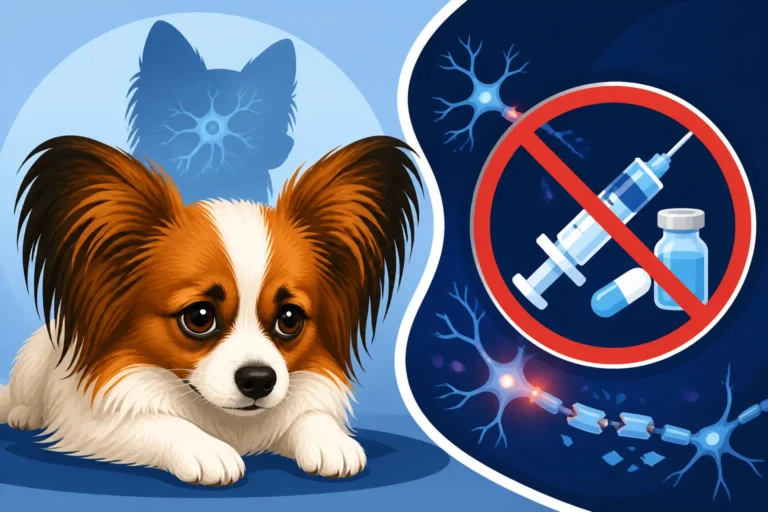
PRA1 in Papillons is an autosomal recessive genetic disorder. What this means in plain language is that a puppy needs to inherit a copy of the faulty gene from both parents to be affected by the disease. If they only get one copy, they're considered a "carrier" – they won't typically show signs of PRA themselves, but they can pass the gene on to their own offspring. This particular form of PRA in Papillons has been linked to a specific mutation in the CNGB1 gene. If you're looking into adding a Papillon to your family, it's absolutely crucial that you ask about DNA testing for this condition. A responsible breeder will be transparent about their breeding stock and testing results, helping to reduce the incidence of affected puppies. For a deeper dive into this, you might find "The Papillon Type of Progressive Retinal Atrophy and the CNGB1 Gene" to be incredibly informative.
Understanding the inheritance pattern is vital for breeders and potential puppy buyers alike. The unfortunate reality is that sometimes, even if a breeder is diligent, a carrier might be unknowingly bred to another carrier, resulting in affected puppies. This highlights the importance of genetic screening before breeding. Thankfully, there are DNA tests available today that can identify carriers and affected dogs, allowing breeders to make informed decisions and hopefully, one day, eradicate this specific type of PRA from the breed. You can learn more about "The DNA Test for Papillon Retinal Atrophy" to understand how this testing works.
How PRA Affects the Retina
The retina is a layer of tissue at the back of the eye that contains light-sensitive cells called photoreceptors. There are two main types: rods and cones. Rods are responsible for vision in dim light and detecting movement, while cones are responsible for color vision and sharp, detailed vision in bright light. In Papillon PRA1, the rod cells are the first to degenerate, leading directly to a loss of night vision. This is why the first signs you'll notice in your Papillon are typically related to their ability to see in low-light conditions.
As the rods gradually lose their function, your Papillon's ability to see in twilight, at night, or in dimly lit rooms will diminish. Think of it like a faulty dimmer switch – the light just can't get as bright as it used to. Over time, the cone cells can also be affected, leading to a more complete loss of vision, even in daylight. However, the initial phase is predominantly nocturnal blindness. This progressive degeneration is what gives the condition its name, Progressive Retinal Atrophy. If you want to know more about the specific mechanisms, "What PRA1 Does to a Papillon's Retina" provides a detailed explanation.
The Progression of Vision Loss
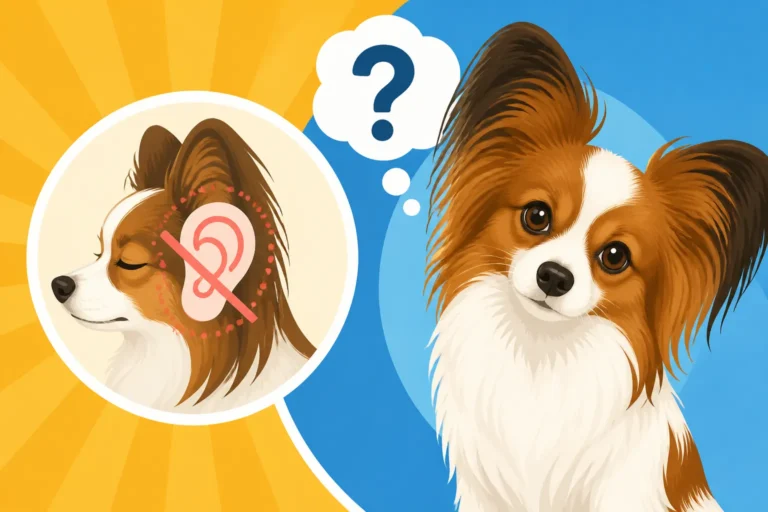
The progression of PRA1 in Papillons is typically slow, but it is unfortunately irreversible. The age at which the signs first appear can vary, but it often becomes noticeable between 3 to 6 years of age, though it can manifest earlier or later. It starts with an inability to see well in low light, often prompting owners to wonder, "Why a Papillon Can Go Blind at Night and Still See in Daylight".
Initially, your Papillon might just seem a little hesitant on an evening walk or when entering a darker room. As the disease advances, their discomfort in dim lighting becomes more pronounced. They might start bumping into objects, particularly if those objects have been moved or if they are in an unfamiliar environment. While their night vision might disappear entirely, it can take many years for their daylight vision to be significantly affected, and some Papillons with PRA may retain some daylight vision for their entire lives. The full timeline can vary, but typically daylight vision loss, if it occurs, happens much later than the onset of night blindness.
Early Behavioral Clues of Night Blindness
Observing your Papillon's behavior can provide the earliest indications of night blindness. These subtle shifts are often missed because dogs are incredibly adaptable and will try their best to compensate for vision loss. Owners usually attribute these changes to aging or simple clumsiness before realizing it's a vision issue.
Hesitation in Dimly Lit Areas
One of the first and most common signs you might notice is your Papillon hesitating or showing reluctance to enter dimly lit areas. This could be anything from a dark hallway in your own home, stepping outside for an evening potty break, or navigating stairs when the lights are low. They might slow down considerably, sniff the ground more, or even stop completely, waiting for you to lead the way or turn on a light.
During evening walks, you might see them cling closer to your side or seem more hesitant to explore familiar bushes or paths that they used to confidently investigate. They might even try to avoid certain darker spots in the yard altogether. This isn't them being stubborn or suddenly scared; it's their inability to accurately perceive their surroundings in low light, making them feel insecure. They rely more on their other senses, like smell and hearing, to compensate, but the visual void causes a noticeable dip in their confidence.
Increased Startle Response
A Papillon losing its night vision might become more easily startled, especially if something approaches them from their peripheral vision or if they're in a dark environment. Imagine walking into a dark room and someone suddenly touches you – that's how a visually impaired dog might feel more often. They might jump at unexpected sounds or movements that wouldn't have bothered them before.
This increased startle response can sometimes be misinterpreted as aggression or fear. Your Papillon might snap or growl if approached suddenly, not out of malice, but because they couldn't see you coming and felt threatened. It's a defensive reaction to feeling vulnerable. Being aware of this can help you approach them more gently and verbally announce your presence, particularly in low-light conditions, to prevent unnecessary stress for both of you.
Changes in Play and Interaction
Another subtle but significant sign can be changes in how your Papillon plays, especially during evening hours or indoors with reduced lighting. They might struggle to find toys that have been thrown, even if they are brightly colored. A game of fetch might become a game of "sniff out the toy," or they might give up searching for it entirely.
You might also notice them being less enthusiastic about playing with other dogs in dimmer settings, as they might have difficulty tracking their movements. Their interaction with you might also shift; instead of making direct eye contact, they might rely more on your voice and scent to locate you. These changes, though seemingly minor, are often indications that their world is literally getting darker. It's not that they've lost interest; it's that they are losing the ability to participate in the same way.
Physical and Environmental Indicators to Watch For
Beyond behavioral changes, there are also more observable physical signs and environmental factors that can help you confirm your suspicions about your Papillon's diminishing night vision. These signs often appear as the condition progresses.
Altered Gait and Clumsiness
As night vision deteriorates, a Papillon's confidence in their footing can waver, leading to an altered gait or increased clumsiness. They might start to trip more often, misjudge steps, or hesitate when stepping from one surface to another, like from carpet to hardwood. You might notice them walking with their head lower to the ground, trying to use their scent to navigate, or taking shorter, more deliberate steps.
This clumsiness becomes particularly evident in low-light conditions. They might bump into furniture they usually navigate with ease, especially if it has been moved even slightly. Stairs can become a major challenge, and they might entirely refuse to go up or down them without assistance or bright lighting. This isn't just a sign of age; it's a clear indication that their visual input is compromised, making simple navigation feel like walking through a maze in the dark.
Dilated Pupils and Eye Shine
A more direct physical sign to observe, particularly in low light, is the appearance of your Papillon's eyes. Dogs with PRA often develop pupils that appear persistently dilated, even in moderately lit environments. This is a compensatory mechanism – their eyes are trying to let in as much light as possible to make up for the deteriorating photoreceptors.
You might also notice an increased "eye shine" or "tapetal reflection" when light hits their eyes in the dark, much more prominent than before. This is due to changes in the tapetum lucidum, a reflective layer behind the retina. While some eye shine is normal, an exaggerated or unusual glow, coupled with dilated pupils, can be a strong indicator of retinal degeneration. These signs are often best noticed in a darkened room using a very low light source, or by observing them from across the room in the evening.
Increased Dependency on Familiar Routines
Dogs thrive on routine, and a Papillon with progressive night blindness will become even more reliant on it. They will stick to known paths within your home, avoiding detours or unfamiliar routes, especially at night. If you move furniture, even slightly, they might become disoriented, bump into it, or refuse to pass by it until they have thoroughly sniffed it out.
This dependency is their way of coping. Their mental map of your home, combined with scent cues, helps them navigate. However, any disruption to this map can cause significant anxiety and disorientation. You might notice they prefer to stay in well-lit areas or close to you, seeking your guidance and reassurance when moving from one room to another. Consistency in their environment becomes paramount for their comfort and safety. For guidance on keeping your older Papillon happy and safe, consider reading "Caring for a Papillon Past Eleven," as many of these care aspects overlap.
| Sign of Night Blindness | Description | What it might be confused with | Key Differentiating Factor |
|---|---|---|---|
| Hesitation in Dark | Reluctance to enter dim rooms or walk outside at night; slows down. | General anxiety, fear of specific objects, age-related mobility issues. | Primarily occurs only in low light; confidence returns in bright light. |
| Increased Startle | Jumps or growls at unexpected sounds/movements in dim settings. | General nervousness, hearing loss, pain reaction. | Often accompanied by bumping into things; better reaction in bright light. |
| Clumsiness/Tripping | Bumping into furniture, misjudging steps, especially after dark. | Arthritis, joint pain (e.g., luxating patella), general coordination issues. | Specifically worse in low light; normal coordination in bright, familiar environments. |
| Dilated Pupils | Pupils appear large even in moderate light. | Medications, excitement, fear, other eye diseases. | Persistent, bilateral dilation without other acute signs; often accompanied by eye shine. |
| Environmental Avoidance | Sticks to familiar paths, disoriented if furniture is moved. | General stubbornness, boredom with routine. | High anxiety/disorientation when confronted with new layouts in low light; resolves when lights are on. |
Differentiating Night Blindness from Other Conditions
It’s easy to jump to conclusions when you see your Papillon struggling, but it's important to rule out other potential health issues that can mimic or contribute to vision problems. A proper veterinary diagnosis is always the first and most crucial step.
Ruling Out Other Eye Issues
While PRA is a common cause of progressive vision loss in Papillons, it's not the only one. Other conditions can also affect a dog's eyesight, and some can even be treated. For instance, cataracts, which cause clouding of the eye's lens, can significantly impair vision, though they often affect daylight vision more prominently. Glaucoma, a condition where pressure builds up inside the eye, can also lead to blindness and is often painful. Sudden vision loss could be indicative of conditions like Sudden Acquired Retinal Degeneration Syndrome (SARDS), which progresses very rapidly.
It's critical to have your Papillon's eyes thoroughly examined by a veterinary ophthalmologist to differentiate between these conditions. An ophthalmologist can perform specific tests, such as electroretinography (ERG) which measures retinal function, to definitively diagnose PRA. Regular eye exams are an important part of a Papillon's preventative care, helping to catch issues early. If you're wondering about routine checks, you might be interested in "Whether a Papillon Needs a Yearly Eye Exam".
Cognitive Dysfunction Syndrome CDS vs. Vision Loss
Sometimes, what appears to be night blindness or disorientation can actually be a sign of Canine Cognitive Dysfunction Syndrome (CDS), often referred to as "doggy dementia." Old Papillons, like older humans, can experience cognitive decline, which can manifest as disorientation, altered sleep-wake cycles, anxiety, and even bumping into things due to a lack of awareness rather than pure vision loss. It's a cruel twist of fate when our senior companions start to lose their bearings.
The key difference lies in the context. A dog with night blindness due to PRA will typically navigate perfectly well in bright, familiar environments, only struggling when the lights dim. A dog with CDS, however, might show disorientation and confusion even in well-lit, familiar surroundings, particularly if their routine is disrupted. They might stare blankly at walls, forget house-training, or seem "lost" in their own home at any time of day. This "night confusion" in an old Papillon is a distinct symptom often associated with CDS. A veterinarian can help distinguish between these two conditions through careful observation and ruling out physical ailments.
When to Consult Your Veterinarian
If you're noticing any of the signs we've discussed – hesitation in the dark, increased clumsiness, changes in pupil size, or startle response – it's time to make an appointment with your veterinarian. Don't delay. The sooner you seek professional advice, the better. While PRA is not curable, an early diagnosis allows you to plan and adapt your home environment to make life safer and more comfortable for your Papillon.
When you go to the vet, be prepared to describe in detail the changes you've observed, including when they started, how frequently they occur, and under what circumstances. It's helpful to keep a small journal of these observations. Your vet may conduct a general physical exam, an ophthalmic exam, and potentially refer you to a veterinary ophthalmologist for specialized testing. Discussing your Papillon's history and symptoms thoroughly will significantly aid in an accurate diagnosis. Remember, your vet is your partner in ensuring the best quality of life for your furry family member. Pet insurance providers like Healthy Paws often cover diagnostic tests and specialist visits for conditions like PRA, so it's worth checking your policy.
Living with a Papillon Experiencing Night Blindness
Discovering that your Papillon is losing their night vision can be disheartening, but it doesn't mean their quality of life has to diminish. With a few thoughtful adaptations and a lot of love, you can help them continue to live a happy and fulfilling life.
Adapting Your Home Environment
The single most impactful thing you can do for a Papillon with night blindness is to make their home environment as safe and predictable as possible. Start by increasing illumination in your home, especially in hallways, stairwells, and areas where your Papillon spends a lot of time. Nightlights are your new best friends; strategically place them in every room, ensuring there are no dark corridors where your dog might feel lost or bump into things. Remember, dogs perceive light differently, so brighter is usually better for them.
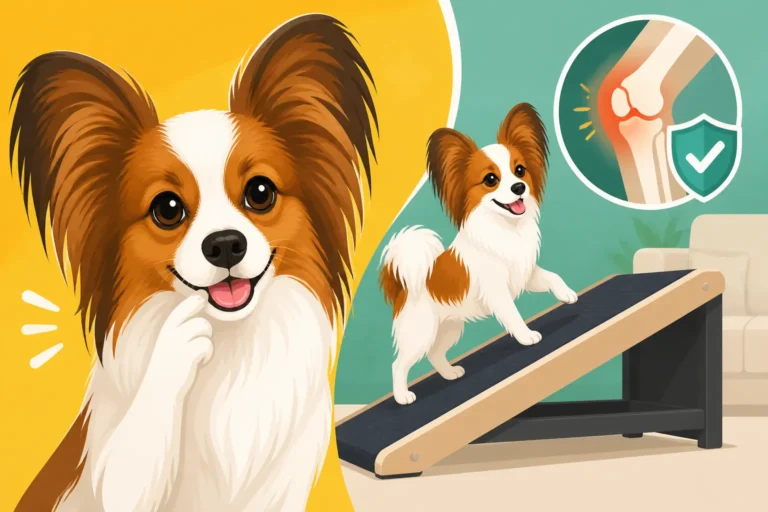
Beyond lighting, consistency is key. Try to avoid moving furniture around, as this can disorient a dog who relies on memory and scent to navigate. If you must move something, guide your Papillon around the new obstacle several times, helping them create a new mental map. Use baby gates or pet gates to block off stairs or other potentially hazardous areas, especially at night. Consider adding non-slip mats or runners to hardwood or tile floors to provide better traction, which can be crucial for a dog who can't see precisely where they're stepping. Installing ramps or steps for access to furniture they like to jump on, even if they can still see in daylight, can prevent injuries and build their confidence, particularly in lower light.
Maintaining Routine and Comfort
Maintaining a consistent daily routine is incredibly reassuring for a dog with vision loss. Feed them at the same times, take them out for potty breaks on a predictable schedule, and keep playtime consistent. This predictability helps reduce anxiety and builds confidence, as they know what to expect. Try to take your evening walks on familiar, well-lit routes where they know the smells and sounds.
Consider incorporating other senses into their daily life. Scent cues can be very powerful; for instance, you could place a specific scented mat near their water bowl or bed to help them locate it. Use verbal cues more frequently, always speaking in a calm, reassuring tone to let them know where you are and what's happening. A Papillon relies heavily on their humans, and your steady presence and voice become even more important as their vision fades. Giving them a familiar, comfortable bed in a consistent spot will also provide a safe haven they can always find. Your pet insurance, like Healthy Paws, can also provide peace of mind for any future veterinary needs as your Papillon ages and potentially develops other conditions.
Support and Resources for Owners
Living with a dog who has a progressive condition like PRA can be challenging, and it's okay to seek support. Your veterinarian is an invaluable resource, offering advice on management, pain relief if needed, and emotional support. They can also connect you with veterinary ophthalmologists or specialized rehabilitation services if required. Don't forget that organizations exist that provide resources and support specifically for owners of blind or visually impaired dogs. These communities can offer practical tips, shared experiences, and emotional understanding.
Remember, a diagnosis of night blindness is not a death sentence for your Papillon. With proactive care, environmental adjustments, and your unwavering love and patience, they can continue to live a high-quality life. Focus on their other senses, celebrate their adaptability, and cherish every moment with your resilient little companion. Investing in a good pet insurance plan, such as one from Healthy Paws, early in your Papillon's life can help defray the costs of diagnostic tests, specialist visits, and ongoing care for conditions like PRA, making it easier for you to provide the best possible support. For additional insights on supporting an aging Papillon, including advice on vision loss, you may find the information in "How Long a Papillon Lives" and "Caring for a Papillon Past Eleven" beneficial.
Disclaimer
This article is for general informational purposes only and does not constitute professional advice. Laws, prices and regulations vary by location and change over time. Consult a qualified professional for guidance on your specific situation.