What PRA1 Does to a Papillon’s Retina
It's truly heartbreaking to witness a beloved pet begin to lose their eyesight. For us Papillon parents, the thought of our vibrant, intelligent little companions navigating a world that's gradually fading to darkness is a fear that can weigh heavily. Among the various health concerns a Papillon might face, Progressive Retinal Atrophy type 1, or PRA1, stands out as a particularly cruel genetic thief of vision. This guide is here to shed light on exactly what PRA1 does to a Papillon's retina, helping you understand its progression, the signs to look for, and how to best support your furry family member through such a challenging journey.
Understanding Progressive Retinal Atrophy (PRA) in Papillons
Progressive Retinal Atrophy, often simply called PRA, isn't just one single disease but rather a blanket term for a group of inherited degenerative diseases that affect the retina. In simple terms, it's like a slow, irreversible breakdown of the crucial cells at the back of the eye that are responsible for detecting light and sending those signals to the brain. Over time, this leads to profound vision impairment and, eventually, total blindness. For Papillons, a specific form of this condition, known as PRA1, is a recognized concern within the breed.
The Basics of PRA: What It Is and How It Progresses
Imagine the retina as the film in an old-fashioned camera, converting light into images. In dogs with PRA, this "film" slowly deteriorates. The cells that make up the retina, primarily photoreceptor cells (rods and cones), begin to malfunction and die off. This isn't a sudden event; it's a gradual, relentless process that can span months or even years. Initially, a dog might only have trouble in dimly lit environments, but as more and more retinal cells are lost, their vision degrades further until they can no longer perceive light at all.
There are many different types of PRA, each caused by a unique genetic mutation and affecting different breeds at different ages and rates. Some forms are "early-onset," appearing in puppies, while others are "late-onset," not showing symptoms until a dog is middle-aged or senior. Regardless of the specific type, the outcome is unfortunately the same: progressive, irreversible vision loss.
The Specifics of PRA1 in Papillons: A Genetic Predisposition
For our intelligent and agile Papillons, the specific form we're most concerned with is PRA1. This isn't just a general eye condition; it's linked to a particular genetic mutation that's been identified and characterized in the breed. This means that if a Papillon inherits the wrong combination of genes from its parents, it is destined to develop PRA1. It's an autosomal recessive condition, which means a puppy must inherit two copies of the defective gene—one from each parent—to be affected. Dogs with only one copy of the gene are considered "carriers"; they don't develop the disease themselves but can pass it on to their offspring.
The identification of the specific genetic mutation responsible for PRA1 in Papillons has been a huge step forward for responsible breeders. It allows them to use DNA testing to identify carriers and affected dogs, making informed decisions to prevent breeding affected puppies. You can learn more about Which Gene Causes PRA in a Papillon in another one of our detailed guides. While it's still present in the breed, responsible breeding practices are working hard to minimize its occurrence.
The Retina: A Closer Look at How Vision Works
To truly grasp the impact of PRA1, it helps to understand a little bit about how a healthy retina functions. It's an intricate, delicate tissue lining the back of your Papillon's eye, packed with specialized cells that are essentially miniature light detectors. When light enters the eye, it hits the retina, and these cells spring into action, converting light into electrical signals that are then sent to the brain, which interprets them as images.
Rods and Cones: The Light-Sensitive Cells
The retina contains two primary types of photoreceptor cells: rods and cones. Think of them as two different kinds of camera sensors, each optimized for different conditions.
- Rods: These are the superstars of low-light vision and motion detection. Your Papillon relies heavily on their rods for navigating in dim environments, like at dawn or dusk, or when exploring a house at night. They're also incredibly good at picking up subtle movements, which is crucial for a dog's natural instincts, even if it's just spotting a dropped treat under the couch in a shadowed room. Dogs, including Papillons, have a much higher concentration of rods than humans, which is why their night vision is generally superior to ours. This is also why a Papillon might begin to struggle specifically with night vision first when PRA1 starts to take hold, as you'll see in our piece on Why a Papillon Can Go Blind at Night and Still See in Daylight.
- Cones: While rods handle the gloom, cones are all about brightness, color, and sharp detail. They're essential for seeing in well-lit conditions. Compared to rods, dogs have fewer cones, and their color vision spectrum is more limited than a human's, but these cells are still vital for their daylight activities, recognizing faces, and distinguishing objects in a bright room.
These two types of cells work in harmony in a healthy eye, allowing your Papillon to see clearly in a wide range of lighting conditions and perceive the vibrant world around them.
The Papillon Retina Under the Influence of PRA1
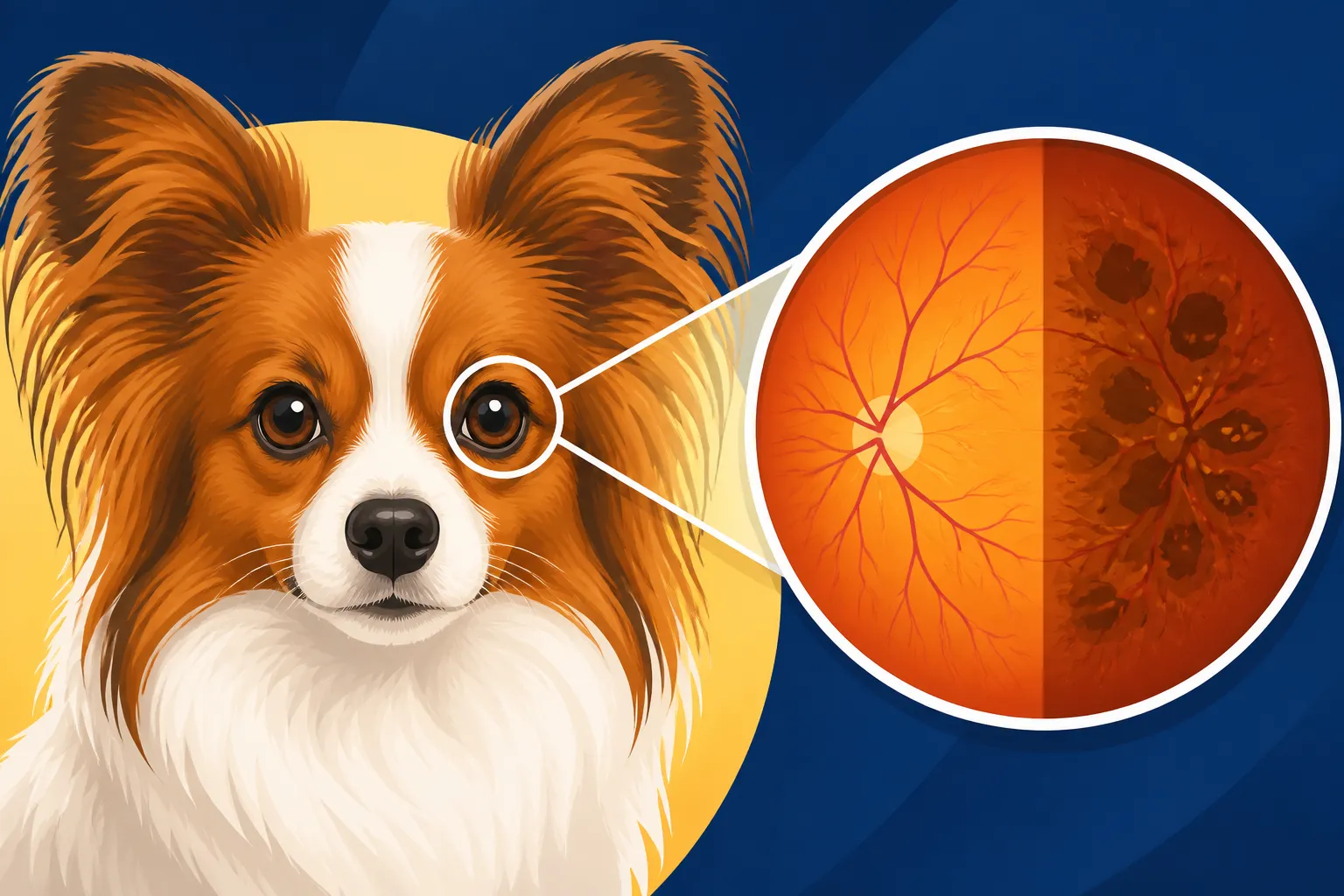
Now, let's talk about what happens when PRA1 begins its work on this delicate system. In Papillons, PRA1 is typically characterized by what's known as a "rod-cone degeneration," meaning the rod cells are usually affected first and more severely, followed by the cone cells.
Initially, the mutation impacts the rod cells, causing them to degenerate. This means they stop functioning correctly and slowly die off. As these rods diminish, your Papillon gradually loses their ability to see in low light. This is why "night blindness" is often the first, most subtle symptom owners notice. They might hesitate on stairs after sunset, bump into furniture in a dimly lit hallway, or become more hesitant to explore their familiar yard once twilight sets in. This isn't just them being clumsy; it's a genuine struggle to process the limited light available.
As the disease progresses, the cone cells, which handle daylight vision, also start to degrade. This phase is usually slower than the initial rod degeneration, but it's equally relentless. As the cones are affected, your Papillon's ability to see in brighter light, perceive detail, and navigate familiar spaces during the day will also diminish. What starts as a minor inconvenience in the dark slowly encroaches on their daytime world, eventually leading to complete blindness. This slow, predictable sequence is a hallmark of PRA1 in Papillons, making it a particularly challenging diagnosis for pet parents.
The Progression of Vision Loss with PRA1
Understanding that PRA1 is a progressive disease is key to recognizing its signs and supporting your Papillon. It's not a sudden switch flicking off their vision; it's more like a dimmer switch slowly being turned down over time. This gradual onset can make early detection tricky, as dogs are incredibly adept at compensating for their diminishing sight using their other heightened senses.
Early Signs: The Onset of Night Blindness
The first and most common symptom you'll likely observe is a subtle, yet persistent, difficulty with vision in low-light conditions. Your Papillon might start to exhibit signs of nyctalopia, or night blindness. This can manifest in several ways:
- Hesitation in dim areas: They might become reluctant to go into a dimly lit room, or hesitate at the top or bottom of stairs when the light isn't bright. What used to be a confident trot might become a slow, cautious shuffle.
- Bumping into familiar objects: In the evening or early morning, you might notice them gently bumping into furniture they usually navigate with ease. This isn't outright crashing, but more of a tentative nudge as they misjudge distances in the dark.
- Difficulty finding toys or treats in low light: If you play fetch or hide treats at dusk, they might struggle to locate them, even if they're right under their nose.
- Increased clinginess at night: Some Papillons might become more anxious or clingy as their night vision declines, sticking closer to their owners for reassurance when the lights go down.
It's easy to dismiss these early signs as simply "getting older" or "being tired," which is why many owners don't realize what's happening until the problem is more advanced. But paying close attention to these subtle changes in your Papillon's behavior, particularly after sunset, can be crucial. Our article on Signs a Papillon Is Losing Night Vision offers an even more detailed look at these early indicators.
Advancing Stages: Deterioration of Daylight Vision
As PRA1 inexorably progresses, the degeneration extends beyond the rod cells to affect the cone cells as well. This is when daylight vision begins to suffer, and the signs become much more apparent, and often, more distressing for owners to witness.
- Difficulty in bright light: Paradoxically, while they struggled in the dark, now they might also squint or seem uncomfortable in very bright light, as their pupils may be more dilated than usual to try and capture more light, making them more sensitive.
- Bumping into objects during the day: You might notice them walking into stationary objects, misjudging steps, or having trouble finding food bowls or toys in a well-lit room. This is when the impact becomes undeniable.
- Changes in eye appearance: Their eyes might start to look a little different. The pupils may appear consistently dilated, even in bright light, and sometimes the eyes take on a cloudy or reflective sheen due to secondary cataracts or changes within the retina.
- Increased reliance on other senses: You'll see them using their nose and ears more. They might sniff along walls to navigate or perk up their ears more frequently to locate sounds.
This stage can be particularly challenging as their world visibly shrinks. It's important to remember that this is not their fault; it's the relentless march of the disease. While the progression can vary, it typically takes How Many Years Before a Papillon's Daylight Vision Goes from the onset of night blindness until significant daylight vision loss.
Complete Blindness and Adaptation
Eventually, in most cases of PRA1, the degeneration of both rod and cone cells leads to complete blindness. The retina can no longer effectively convert light into signals, and your Papillon will lose all functional vision. This is, understandably, a devastating prospect for any pet owner.
However, it's incredibly important to stress that a Papillon with complete blindness can still lead a wonderfully full, happy, and active life. Dogs are remarkably resilient and adaptable. Their sense of smell, hearing, and tactile senses are far more developed than ours, and they learn to rely on these other senses to navigate their world. You might be surprised at how quickly they adjust. For a deeper dive into this incredible ability, you might want to read Whether a Papillon With PRA Goes Fully Blind and How a Blind Papillon Learns a House.
By keeping their environment consistent, using scent markers, gentle verbal cues, and maintaining a predictable routine, you can help your blind Papillon thrive. They will map out their home in their minds, creating a sensory guide, and often continue to play, snuggle, and enjoy life with the same joyous spirit that makes Papillons so special.
Diagnosing and Managing PRA1 in Papillons
Facing the possibility of PRA1 can feel overwhelming, but modern veterinary medicine offers clear pathways for diagnosis and strategies for managing life with an affected Papillon. Early and accurate diagnosis is crucial, not just for your individual dog but also for responsible breeding efforts to reduce the prevalence of this genetic condition.
The Diagnostic Journey: From Ocular Exams to DNA Tests
If you suspect your Papillon is experiencing vision issues, the first step is always a visit to your regular veterinarian. They will perform a thorough general examination, including a basic ocular exam, and can rule out other common eye problems like cataracts or glaucoma, which might have similar symptoms. If PRA is suspected, your vet will likely refer you to a veterinary ophthalmologist – a specialist in animal eye health.
The ophthalmologist has advanced tools and techniques to diagnose PRA1:
- Indirect Ophthalmoscopy: This allows the specialist to view the retina and look for characteristic changes, such as thinning or vascular attenuation (shrinking blood vessels), which are signs of retinal degeneration.
- Electroretinography (ERG): This is a specialized test that measures the electrical activity of the retinal cells in response to light. It's like an "ECG for the eye" and can detect retinal dysfunction long before outward signs of vision loss are obvious. An ERG can definitively confirm PRA and often identify the specific type, or at least rule out other causes of blindness.
- Genetic DNA Test: This is the gold standard for diagnosing PRA1 in Papillons. A simple cheek swab or blood sample can be sent to a specialized lab to check for the specific genetic mutation known to cause PRA1 in the breed. This test can identify if a dog is clear, a carrier (one copy of the gene), or affected (two copies of the gene). This test is invaluable for diagnosis and crucial for breeding decisions. For more details on this, see The DNA Test for Papillon Retinal Atrophy.
Getting a definitive diagnosis can be emotionally taxing, but it empowers you to make informed decisions about your Papillon's care and future. While the cost of these specialized tests can be a concern, comprehensive pet insurance providers like Healthy Paws often cover diagnostic procedures for genetic conditions if your policy was in place before the onset of symptoms, helping ease the financial burden.
Living with a PRA1-Affected Papillon: Support and Care
There is currently no cure or effective treatment to halt or reverse the progression of PRA1. This can be a tough pill to swallow for many owners, but it doesn't mean you can't provide an excellent quality of life for your Papillon. The focus shifts from treatment to supportive care and helping them adapt to their changing world.
Here are some key strategies:
- Maintain a Consistent Environment: Avoid rearranging furniture or leaving obstacles in unexpected places. Your Papillon will memorize the layout of your home, and consistency helps them navigate confidently.
- Use Scent Markers: You can use essential oils (safe for dogs, like lavender or vanilla applied sparingly) or different textured mats near doorways or steps to provide sensory cues for navigation.
- Verbal Cues and Commands: Become very consistent with verbal commands like "step up," "step down," "stop," or "watch out." Use a cheerful tone to guide them.
- Safe Exploration: Continue to take them for walks, but always on a leash. Allow them to sniff and explore with their nose, which becomes their primary way of experiencing the outside world.
- Safety First: Block off stairs if necessary, use baby gates, and supervise them closely, especially outdoors. Ensure their food and water bowls are always in the same spot.
- Mental Stimulation: Even without sight, Papillons are highly intelligent and need mental exercise. Continue to play scent games, puzzle toys, and offer plenty of positive reinforcement for their successes.
- Regular Vet Check-ups: Continue with routine veterinary care. While PRA1 isn't treatable, other eye conditions or general health issues can arise, and a blind dog might hide other ailments more effectively. Regular check-ups are especially important as you start Caring for a Papillon Past Eleven. A good pet insurance plan from a provider like Healthy Paws can be a real lifeline for managing these ongoing veterinary costs, ensuring you can always provide the best care without undue financial stress.
Your Papillon relies on your leadership, patience, and love. They will adapt, and with your support, they will continue to be the joyous, loving companions you know.
The Breeder's Role in Eradicating PRA1
This is where responsible breeding practices come into sharp focus. Since PRA1 is a known genetic condition with an identifiable mutation, breeders have a powerful tool at their disposal to prevent its spread.
- Mandatory Genetic Testing: Reputable Papillon breeders should be testing all their breeding stock for the PRA1 gene. This means testing both the sire and dam before they are ever bred. The results will show if a dog is "clear" (no copies of the gene), a "carrier" (one copy), or "affected" (two copies).
- Informed Breeding Decisions: Breeders should never breed two carriers together, as this carries a 25% risk of producing affected puppies. Breeding an affected dog is also irresponsible. The goal is to gradually eliminate the gene from the breed's gene pool without excessively narrowing genetic diversity.
- Transparency: A responsible breeder will be transparent about their testing practices and openly share the results of their breeding dogs with prospective puppy buyers. Don't be shy about asking to see proof of these tests. This proactive approach ensures that puppies born into their care have the best possible chance at a long, healthy life free from the devastating effects of PRA1. You can find more information about the essential health screenings a breeder should conduct in What a Papillon Breeder Should Have Tested.
Choosing a puppy from a breeder who prioritizes health testing is one of the most significant steps you can take to ensure your Papillon avoids conditions like PRA1. It's an investment in their future, much like considering proactive health coverage through a company like Healthy Paws, which champions overall pet wellness and responsible ownership.
Frequently Asked Questions About PRA1 and Papillon Vision
It's natural to have a lot of questions when learning about a serious genetic condition like PRA1. Let's tackle some of the most common concerns that Papillon owners and prospective owners often have.
Age of Onset and Progression Rate
One of the most frequent questions is, "When will PRA1 start, and how fast will it progress?" Unfortunately, there isn't a single, straightforward answer, as the specific mutation and individual variations can lead to slightly different timelines.
- Typical Age of Onset: While some forms of PRA can manifest in puppyhood, PRA1 in Papillons is generally considered a late-onset form. This means symptoms often don't become noticeable until a Papillon reaches middle age, typically between 3 and 6 years old, though some may show signs earlier or later. It's a cruel irony that these intelligent, lively dogs can live for many years before their vision begins to fade. Our article on The Age PRA1 Appears in a Papillon delves into this topic in more detail.
- Progression Rate: Once symptoms of night blindness begin, the progression to full blindness can vary. It's usually a gradual process, spanning months to a few years. Some Papillons might lose their sight more rapidly than others, while some might have a slower decline. Factors like environmental stress and overall health might play a minor role, but largely, the progression is determined by the underlying genetic defect. It’s important to monitor changes closely with your vet.
Preventing PRA1: The Power of Genetic Testing
Can PRA1 be prevented? Yes, absolutely, but only through responsible breeding practices utilizing genetic testing.
- The Crucial Role of DNA Testing: Since PRA1 is caused by a specific, identifiable genetic mutation, DNA testing is the only definitive way to know if a dog is affected, a carrier, or clear. Without this test, even a visually clear dog could be a carrier and unwittingly pass the gene on to their puppies.
- Choosing a Responsible Breeder: This cannot be stressed enough: if you are acquiring a Papillon puppy, choose a breeder who actively tests their breeding stock for PRA1 and can provide verifiable results. A responsible breeder will be breeding only "clear" dogs, or carefully breeding a "clear" dog to a "carrier" (never two carriers) to ensure no affected puppies are produced while maintaining genetic diversity. This is the cornerstone of preventing PRA1 from being passed down through generations.
- Impact on the Breed: Widespread genetic testing and selective breeding practices are the only path to reducing the incidence of PRA1 within the Papillon breed over time. It's a collective effort involving breeders, veterinary geneticists, and informed buyers.
Life Quality for a Blind Papillon
This is perhaps the most reassuring answer we can give: A blind Papillon can absolutely lead a full, happy, and incredibly rich life. While the initial diagnosis can be devastating, our little Papillons are resilient, adaptable, and live very much in the present moment.
- Sensory Compensation: Dogs rely heavily on their sense of smell and hearing, much more so than humans do for navigation and information gathering. When their sight diminishes, these other senses become even more acute. They'll use their nose to "read" their environment and their ears to orient themselves to sounds.
- Emotional Resilience: Papillons, with their joyful and loving dispositions, tend to adapt well to blindness, especially if the vision loss is gradual. They don't dwell on what they've lost but focus on what they can still do. Your calm, confident attitude is paramount in helping them adjust.
- Continued Activity and Joy: A blind Papillon can still play, go for walks (on leash for safety), snuggle on the couch, learn new scent-based games, and enjoy all the love and interaction they've always cherished. They find joy in familiar routines, comforting voices, and the warmth of their family. Just because their eyes don't work doesn't mean their heart and spirit dim.
In essence, PRA1 might change how your Papillon experiences the world, but it doesn't have to diminish their zest for life or the profound bond you share.
PRA1 and the Papillon Retina: Key Differences
| Feature | Healthy Retina (Rods & Cones) | PRA1 Affected Retina (Early Stage) | PRA1 Affected Retina (Advanced Stage) |
|---|---|---|---|
| Rods Function | Excellent for low light, motion detection | Rods begin to degenerate, leading to night blindness | Significant to complete rod degeneration |
| Cones Function | Good for daylight, color, detail | Cones largely unaffected, daylight vision remains good | Cones begin to degenerate, leading to daylight vision loss |
| Vision Impact | Clear vision in all light conditions | Difficulty seeing in dim light; normal daylight vision | Severely impaired to complete blindness in all light conditions |
| Progression | Stable, functional photoreceptors | Gradual degeneration of rods first | Continued degeneration of both rods and cones |
| Primary Symptom | None | Night blindness (nyctalopia) | Bumping into objects, hesitation, dilated pupils |
| Irreversibility | N/A | Progressive and irreversible | Complete and irreversible |
Disclaimer
The information provided in this article is for educational purposes only and is not intended to be a substitute for professional veterinary advice, diagnosis, or treatment. Always seek the advice of your veterinarian or other qualified animal health provider with any questions you may have regarding a medical condition. Never disregard professional veterinary advice or delay in seeking it because of something you have read here.