The Age PRA1 Appears in a Papillon
One of the most heart-wrenching concerns for any Papillon parent is the thought of their beloved butterfly dog facing a serious health challenge, especially one that impacts their quality of life so dramatically. Progressive Retinal Atrophy type 1 (PRA1) is a genetic eye disease that, unfortunately, many Papillon owners worry about, and understanding when this condition typically begins to manifest is crucial for early detection and preparing for the future. This guide aims to shed light on the common age of onset for PRA1 in Papillons, helping you navigate this complex issue with clarity and empathy.
Understanding PRA1 in Papillons: A Genetic Overview
It can be incredibly distressing to learn that such a vibrant, intelligent breed like the Papillon can be susceptible to a genetic condition that ultimately leads to blindness. Progressive Retinal Atrophy (PRA) isn't just one disease; it's a blanket term for a group of inherited disorders that cause the retina to degenerate over time. In Papillons, we're primarily concerned with a specific type known as PRA1, or sometimes referred to as the Papillon type of PRA, which has its own unique characteristics and progression.
The Specifics of Papillon PRA1
Unlike some other forms of PRA seen in different breeds, the Papillon type of Progressive Retinal Atrophy (PRA1) is quite specific to these enchanting little dogs. It's caused by a mutation in the CNGB1 gene, which plays a vital role in the function of the rod photoreceptor cells in the retina. Imagine these rod cells as the tiny light sensors responsible for vision in dim light – they're your dog's night vision specialists. When this gene is faulty, these cells don't develop properly or they degenerate prematurely, leading to night blindness as the first noticeable symptom. You can read more about The Papillon Type of Progressive Retinal Atrophy and the CNGB1 Gene to understand the scientific details.
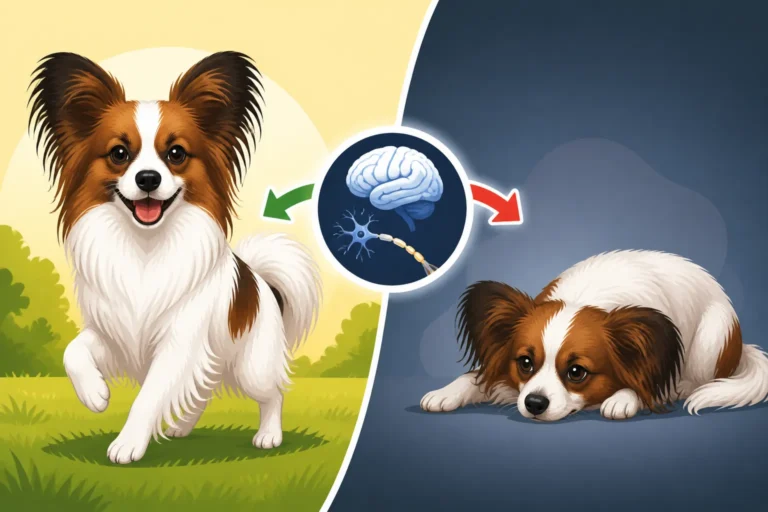
What makes PRA1 particularly insidious is that it's a progressive disease, meaning it gets worse over time. It's not an overnight switch to blindness, but a gradual decline. This slow progression can sometimes make it difficult for owners to pinpoint exactly when their dog's vision started to change, especially in the very early stages. Many owners first notice subtle changes in their dog's behavior in low-light conditions, long before they might suspect a serious eye condition. The impact of What PRA1 Does to a Papillon's Retina is a gradual loss of function rather than sudden damage.
How PRA1 is Inherited
The inheritance pattern for PRA1 in Papillons is autosomal recessive. Now, that might sound like a mouthful of scientific jargon, but it's really important for understanding how the disease passes down through generations and why responsible breeding is so vital. In simple terms, for a Papillon to actually be affected by PRA1 and develop symptoms, it needs to inherit two copies of the faulty gene – one from its mother and one from its father.
If a Papillon inherits only one copy of the faulty gene and one normal copy, it's considered a "carrier." A carrier Papillon will not develop PRA1 itself, meaning its own vision will remain perfectly normal throughout its life. However, they carry the potential to pass that faulty gene on to their offspring. This is why testing breeding dogs is absolutely essential. Two carrier Papillons, if bred together, have a 25% chance of producing an affected puppy, a 50% chance of producing carrier puppies, and a 25% chance of producing clear, non-carrier puppies. You might wonder Whether a Carrier Papillon Ever Goes Blind, and the answer is no, they won't. This understanding underpins much of the advice given by responsible Papillon breeders.
The Typical Onset Age of PRA1 Symptoms
This is the big question, isn't it? When do you really need to start watching for those tell-tale signs? For most Papillons affected by PRA1, the initial symptoms, particularly night blindness, tend to appear in early to mid-adulthood. We're generally talking about a window between 3 to 6 years of age, though there can certainly be individual variations. It's a cruel twist that this often happens when your Papillon is in the prime of their life, full of energy and personality.
Early Signs and Subtle Changes
The very first symptom you'll likely notice is a subtle but growing difficulty with night vision. Your Papillon might hesitate more when going outside after dusk, or they might seem a bit clumsier in dimly lit rooms. Perhaps they bump into furniture that's been moved, or they're more reluctant to navigate stairs when the lights are low. These are classic Signs a Papillon Is Losing Night Vision. It’s easy to dismiss these things at first, thinking they’re just tired or being a bit goofy, but if you notice a consistent pattern, it's definitely something to pay attention to.
Think about how you move around your own home in the dark. You know where everything is, so you can navigate fairly well. But imagine if suddenly the familiar shadows started playing tricks on you, or you couldn't quite make out the edge of a step. That's a bit like what your Papillon might be experiencing. They rely on their spatial memory, but when their vision in low light starts to fail, that memory alone isn't quite enough. They become more reliant on their other senses – hearing and smell – to guide them, which might manifest as a heightened startle response to unexpected sounds in the dark.
When Night Vision Starts to Fade
For many Papillons with PRA1, the initial phase is exclusively about night vision. The rods, which are responsible for low-light vision, are the first to be affected by the genetic mutation. So, your dog might seem perfectly normal during the day, happily chasing toys in the sun or confidently navigating familiar surroundings. But as evening approaches, their confidence can plummet. You might notice them clinging closer to you, or preferring to stay in well-lit areas. This is why many owners report that their Papillon can still see perfectly well in daylight but struggles significantly after dark. For a deeper dive into this phenomenon, check out Why a Papillon Can Go Blind at Night and Still See in Daylight.
The progression of night blindness isn't usually sudden. It's a gradual diminishment, which means your Papillon might initially adapt incredibly well. Dogs are masters of compensation, and they'll try their best to hide their vision problems from you. This makes it even more important for owners to be observant and sensitive to subtle behavioral shifts. If you notice a pattern of increased caution or hesitation in low light, especially as your Papillon moves into that 3-6 year age range, it's wise to consult your vet.
Progression to Daylight Vision Loss
While night blindness is the hallmark first symptom, PRA1 is, as the name suggests, progressive. This means that eventually, the degeneration of the retinal cells will extend to the cone photoreceptors, which are responsible for daylight vision and color perception. This transition from night blindness to more generalized vision loss can vary significantly in its timeline. Some Papillons might retain useful daylight vision for many years after the onset of night blindness, while others may progress more rapidly.
Typically, it can take How Many Years Before a Papillon's Daylight Vision Goes to fully lose their sight. Once daylight vision starts to decline, you'll notice your Papillon bumping into objects even in bright rooms, misjudging distances, or having trouble finding dropped treats. Their overall confidence in navigating their environment will decrease, and they might become more hesitant to explore new places. This stage is often more apparent and therefore, more quickly identified by owners than the initial night blindness. It's a challenging period, but with proper care and adaptations, affected Papillons can still lead full and happy lives.
Why Age of Onset Varies Among Affected Papillons
It's natural to want a clear, definitive answer – "PRA1 will show up at exactly X age." However, biology is rarely that neat. While the 3 to 6-year window is a good guideline, there are always outliers, and understanding why that variability exists can help manage expectations and provide a more realistic picture. It's not uncommon to hear stories of Papillons showing signs slightly earlier or later than this average, leading to a lot of owner anxiety and questions.
Genetic Factors and Individual Differences
Even within a single breed and a specific genetic mutation like the one causing Papillon PRA1, there can be genetic modifiers and other factors at play that influence the exact timing and severity of the disease. Think of it like a dimmer switch rather than an on-off switch. The faulty gene sets the stage for PRA1, but other genes might subtly influence how quickly those retinal cells degenerate or how resilient your dog's eyes are to the process. Some dogs might have a slightly milder expression of the gene, leading to a later onset, while others might have a more aggressive form.
This individual genetic variability highlights why a diagnosis isn't just about "do they have the gene?" but also "how is it affecting this particular dog?" While the primary CNGB1 mutation is known, researchers are constantly learning about other genetic influences that might modulate disease expression. This is also why reputable breeders use genetic testing to identify carriers and affected dogs, aiming to reduce the incidence of PRA1 in future generations. Knowing Which Gene Causes PRA in a Papillon is a huge step, but the full picture is still being understood.
Environmental Influences and Other Health Concerns
While PRA1 is definitively a genetic disease, environmental factors and a dog's overall health can sometimes play a small, secondary role in how symptoms manifest or how quickly they seem to progress. For instance, a Papillon living a very active outdoor life might have more opportunities for their vision limitations to become apparent earlier, simply because they're constantly challenged by varying light conditions. Conversely, a more sedentary indoor dog might have its early night blindness go unnoticed for longer.
Furthermore, other co-existing health conditions can sometimes mask or complicate the diagnosis of PRA1. For example, if a Papillon also develops cataracts, which are common in older dogs, it can exacerbate vision loss and make it harder to discern what's solely due to PRA1 and what's due to the cataracts. Ensuring your Papillon receives regular veterinary check-ups, maintaining a healthy weight, and providing a balanced diet contribute to their overall well-being, which can, at the very least, ensure they are as robust as possible to face any health challenges, including PRA1. Even though PRA1 cannot be cured, maintaining general good health can make a huge difference in how your dog copes with the condition.
Confirming a Diagnosis: When to Test and What to Expect
The thought of your dog losing their sight is terrifying, and uncertainty can be even worse. That's why getting a definitive diagnosis is so important, not just for your peace of mind, but for planning your Papillon's future care. Thankfully, with modern veterinary medicine, we have tools to identify PRA1 early, even before major symptoms appear.
The Importance of Early Genetic Testing
One of the most powerful tools we have against PRA1 is genetic testing. Because the specific gene mutation responsible for Papillon PRA1 is known, a simple DNA test can determine whether a dog is clear, a carrier, or affected by the disease. This test can be performed at any age, even on puppies, and only needs to be done once in a dog's lifetime. Reputable Papillon breeders will routinely test their breeding stock for PRA1, and they should be transparent with you about the results of the parents of any puppy you consider. This is a critical question to ask any breeder, along with Which Health Tests a Papillon Breeder Should Run.
If you have a Papillon whose parents weren't tested, or if you've adopted a rescue and are unsure of its genetic history, you can absolutely have your dog tested. A buccal swab (a simple cheek swab) is usually all that's needed, and it can be sent to specialized veterinary genetics labs. Knowing your dog's genetic status allows for proactive management. If your Papillon tests as affected, you'll know to start observing for subtle signs of night blindness in that 3-6 year age window and can begin adapting your home environment early. This knowledge is invaluable for giving your dog the best possible quality of life. The cost of a DNA test like What a Papillon's PRA1 Test Costs is a small investment for such crucial information.
What an Ophthalmic Exam Reveals
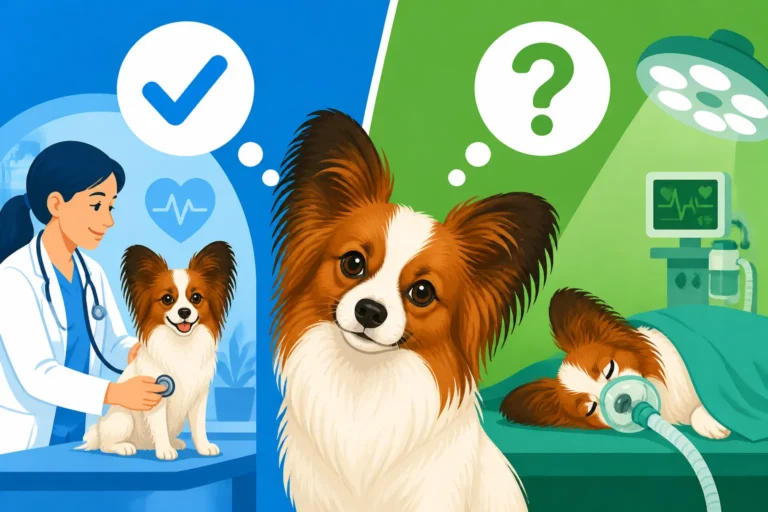
Beyond genetic testing, a comprehensive ophthalmic examination by a veterinary ophthalmologist can provide a clinical diagnosis of PRA1. While genetic testing identifies the potential for the disease, a clinical exam confirms its presence and stage. When PRA1 is in its early stages, an ophthalmologist might notice subtle changes in the retina even before you detect significant vision loss. They'll use specialized equipment to look at the structures at the back of the eye, observing for signs of retinal thinning or changes in the reflective layer behind the retina (the tapetum).
As the disease progresses, these changes become more pronounced. An electroretinogram (ERG) is another diagnostic tool that measures the electrical activity of the retinal cells in response to light. An ERG can detect the dysfunction of the rod and cone cells long before visible signs of degeneration appear. This test is often recommended if PRA1 is suspected, even if genetic testing hasn't been done or if there are other complicating eye conditions. Regular eye exams, perhaps annually as your Papillon approaches that typical onset age, can be incredibly beneficial for monitoring eye health, especially if you have concerns.
Living with a Papillon Affected by PRA1
Receiving a diagnosis of PRA1 for your Papillon can feel devastating. It's perfectly normal to feel a range of emotions, from sadness to frustration. But it's crucial to remember that a diagnosis is not an ending; it's a new beginning in how you care for your dog. Papillons are resilient, intelligent, and deeply bonded to their humans. With your love and a few thoughtful adjustments, they can continue to live joyful and fulfilling lives, even as their vision declines or is completely lost. Whether a Papillon With PRA Goes Fully Blind is a common concern, and the answer is that while daylight vision will eventually be lost, their quality of life can remain high.
Adapting Your Home Environment
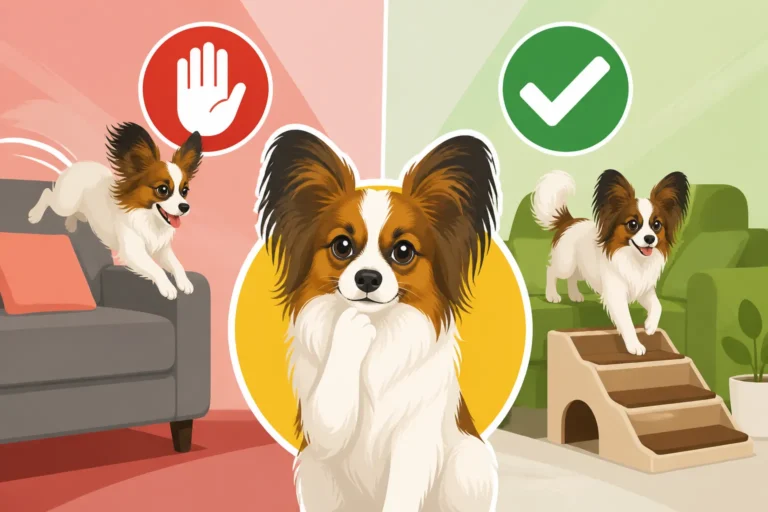
Making your home safe and navigable for a vision-impaired Papillon is one of the most impactful things you can do. The key is consistency and minimizing surprises. Try to keep furniture and dog beds in the same places. Avoid rearranging things frequently, as your Papillon will develop a mental map of their environment. Blocking off dangerous areas like stairs with baby gates can prevent falls, particularly if their night vision is gone. For a comprehensive look at how they manage, consider reading How a Blind Papillon Learns a House.
Consider using different textures of rugs or mats at transitions between rooms or before steps to give them tactile cues. Scent markers, like a drop of essential oil (safe for dogs, diluted, and placed where they won't ingest it) at key points, can also help them orient themselves. Invest in good lighting, especially in areas where they spend a lot of time, and consider nightlights for evening excursions. Remember that they will still love their toys, even if they can't see them as well. Scented toys or toys that make noise when moved can be great for playtime. And remember, your voice is a powerful guide; use verbal cues to help them navigate and reassure them.
Maintaining Quality of Life and Comfort
While PRA1 is progressive and there's currently no cure or way to reverse the damage, focusing on your Papillon's overall well-being is paramount. Regular veterinary check-ups remain important, as vision loss can sometimes make other health issues harder to spot. Discuss with your vet whether any supplements might offer general retinal support, although it's important to have realistic expectations as to their impact on PRA1 progression. Some pet insurance providers, like Healthy Paws, may offer coverage for diagnostic tests and ongoing care related to conditions like PRA1, especially if the policy was in place before symptoms appeared. It's always worth reviewing your policy or researching options to understand what's covered for chronic conditions.
Your Papillon relies on you for reassurance and guidance. Maintaining routines for feeding, walks, and playtime will help them feel secure. Continue to engage them mentally with puzzle toys, scent games, and short, consistent training sessions using verbal cues. Many Papillons with vision loss thrive on mental stimulation. Socialization with familiar, gentle dogs and people can also keep them happy and engaged. Remember, your Papillon doesn't pity itself for its vision loss; they simply adapt. Your calm, confident leadership will be their guiding light, allowing them to continue to be the playful, affectionate companions they've always been. Even when Caring for a Papillon Past Eleven, these strategies will continue to be important.
Disclaimer
This article is for general informational purposes only and does not constitute professional advice. Laws, prices and regulations vary by location and change over time. Consult a qualified professional for guidance on your specific situation.