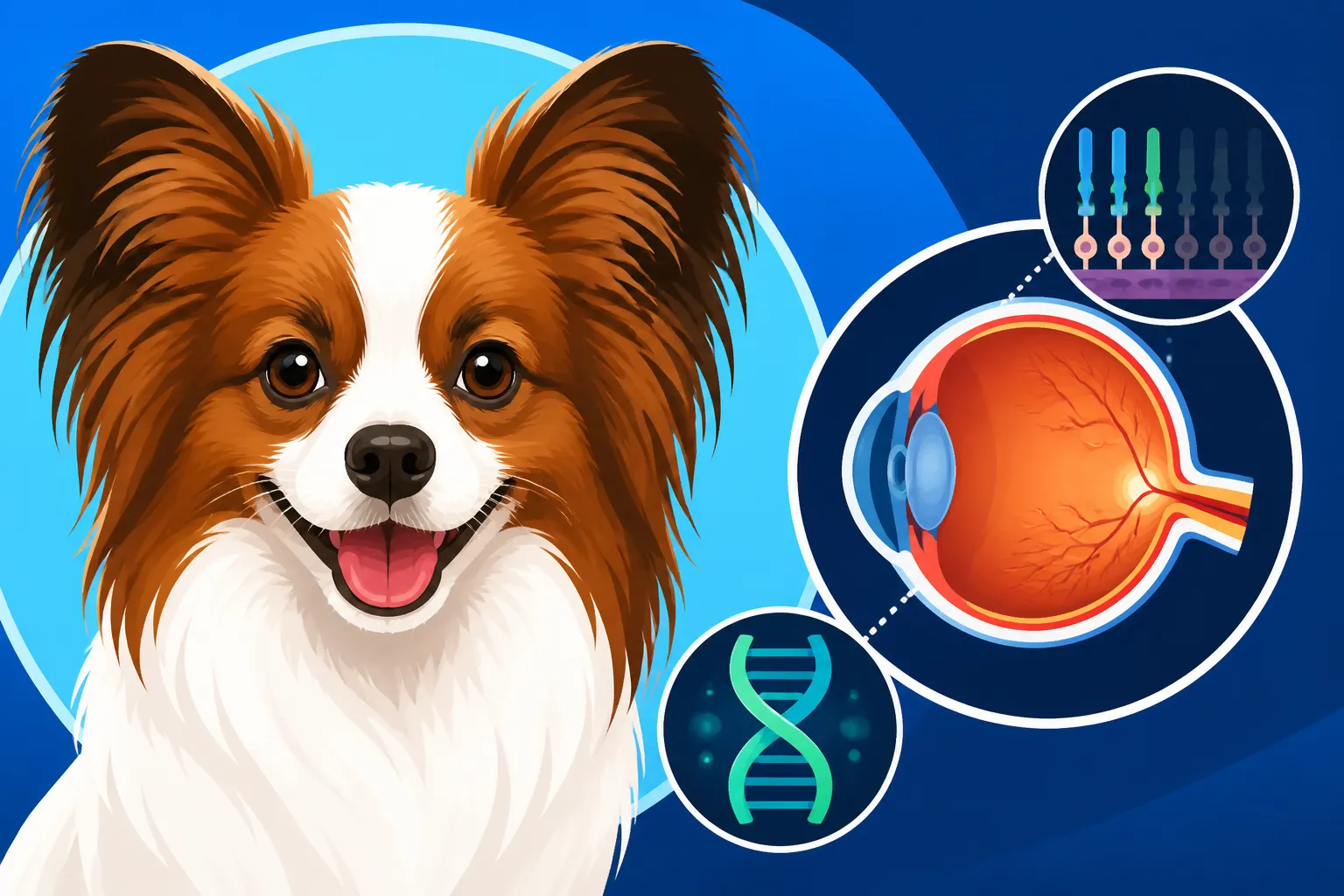
The Papillon Type of Progressive Retinal Atrophy and the CNGB1 Gene
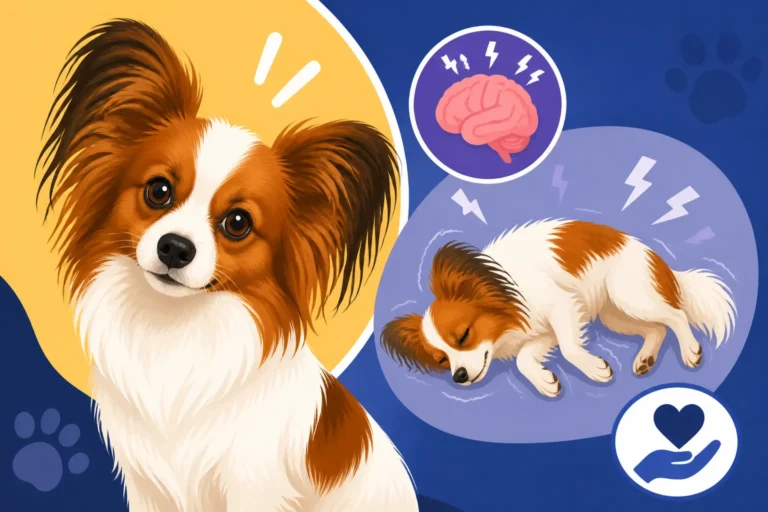
It's absolutely heartbreaking to watch your vibrant, curious Papillon start to hesitate in dim light, bump into familiar furniture, or become disoriented as evening falls. This guide is dedicated to shedding light on Progressive Retinal Atrophy (PRA) in Papillons, specifically the type linked to the CNGB1 gene, helping you understand this condition, its progression, and how to best support your beloved companion.
Understanding Progressive Retinal Atrophy in Papillons
Progressive Retinal Atrophy, often abbreviated to PRA, isn't a single disease but rather a blanket term for a group of inherited degenerative eye conditions that affect the retina. Think of the retina as the film in a camera; it captures light and sends those images to the brain. When PRA strikes, the cells in this critical part of the eye begin to deteriorate, leading to a gradual, and eventually complete, loss of vision. For us Papillon owners, understanding this silent thief of sight is crucial, especially because our breed is particularly susceptible to a specific form.
What is Progressive Retinal Atrophy?
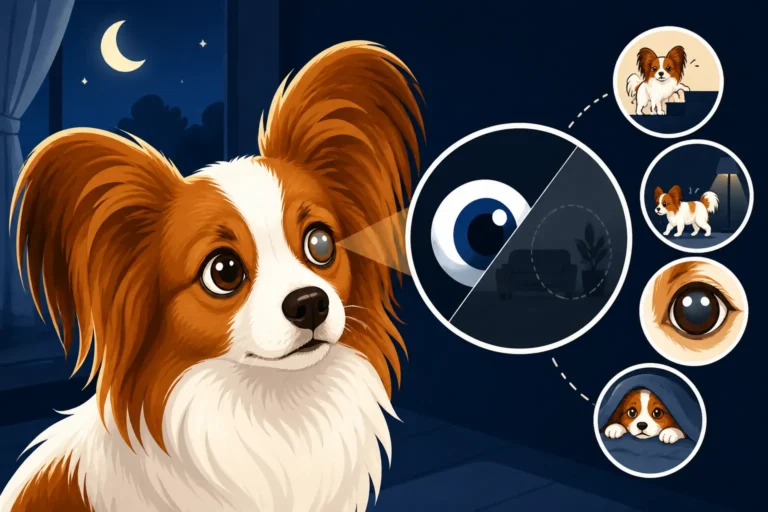
At its core, PRA involves the slow, relentless breakdown of the photoreceptor cells within the retina. These cells, known as rods and cones, are responsible for detecting light. Rods handle vision in low light conditions (think night vision and peripheral sight), while cones are responsible for daylight vision and color perception. In most forms of PRA, including the one common in Papillons, the rods are affected first, which explains why the initial signs often appear as night blindness.
As these cells degenerate, they lose their ability to send signals to the brain, and the dog's vision diminishes. It's not usually painful, which can make it even harder for owners to detect in the early stages, as dogs are masters at compensating and adapting to their environment. The term "progressive" truly emphasizes that this condition will worsen over time, though the rate of progression can vary significantly between individual dogs and different types of PRA.
The Specific Challenge of PRA in Papillons
While PRA can affect many dog breeds, Papillons are particularly prone to a type known as PRA1, specifically linked to a mutation in the CNGB1 gene. This isn't just a generic form of PRA; it's a specific genetic defect that has been identified and studied within our breed. This genetic predisposition means that if a Papillon inherits the faulty gene from both parents, they will develop the condition. This makes it a very real concern for anyone involved with Papillons, from breeders striving to produce healthy puppies to owners who want to understand the potential health challenges their dog might face.
Unlike some other breeds where PRA might manifest differently or be caused by other genes, in Papillons, the CNGB1-related PRA follows a predictable, albeit sometimes slow, course. This knowledge is a powerful tool, allowing for genetic screening and responsible breeding practices, which we’ll delve into further. The impact on a Papillon's daily life can be profound, transforming a once confident, agile companion into one that needs more guidance and reassurance.
The Role of the CNGB1 Gene
When we talk about PRA in Papillons, the conversation inevitably turns to the CNGB1 gene. This isn't just some abstract scientific term; it's the specific genetic key that unlocks the mystery behind this particular form of retinal atrophy in our beloved butterfly dogs. Understanding its function and how a mutation affects it is fundamental to grasping the condition itself.
Unpacking the CNGB1 Gene's Function
The CNGB1 gene, or cyclic nucleotide-gated channel beta 1, plays a critical role in the intricate process of vision. Specifically, it's instrumental in the proper functioning of the rod photoreceptor cells in the retina. Imagine a microscopic switch that needs to be perfectly tuned to convert light signals into electrical impulses that the brain can understand. The protein produced by the CNGB1 gene is a vital component of this switch, particularly for how rods react to light.
In a healthy eye, this gene ensures that the rods can effectively detect even faint light, which is why they are essential for night vision. Without a properly functioning CNGB1 gene, this entire pathway breaks down. The gene is a foundational piece of the visual puzzle, located on a specific chromosome, and any disruption to its code can have devastating consequences for a Papillon's sight.
How a Mutation in CNGB1 Leads to PRA1
The specific issue for Papillons isn't just any mutation; it's a particular frameshift mutation within the CNGB1 gene. Think of a genetic code as a long sentence. A frameshift mutation is like accidentally deleting or inserting a letter early in the sentence, which then throws off every subsequent word, making the rest of the sentence nonsensical. In the case of CNGB1, this frameshift causes the gene to produce a truncated, non-functional protein.
Without the correct protein, the rod photoreceptor cells cannot function properly. They become defective, leading to their premature degeneration and death. This process starts with the rods, explaining What the CNGB1 Frameshift Does to a Papillon's Rods and why night blindness is the very first symptom owners typically notice. The body tries to compensate, but ultimately, the cells are unable to survive, and the retina slowly loses its ability to process light.
The Autosomal Recessive Inheritance Pattern
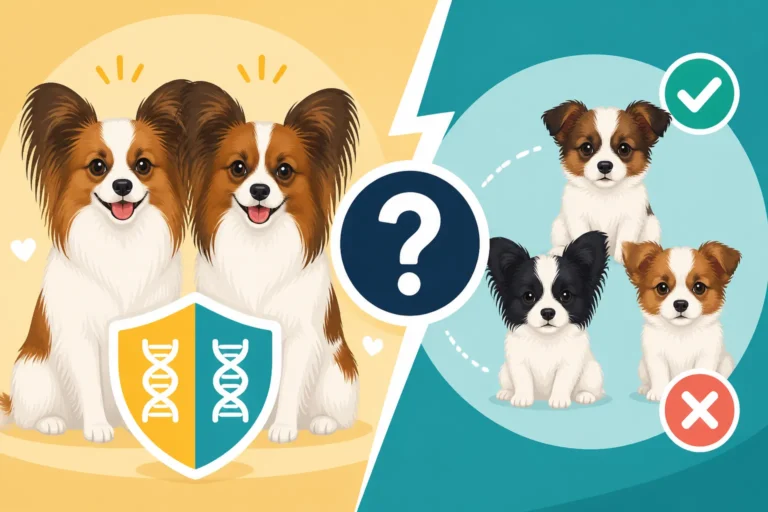
The PRA1 linked to the CNGB1 gene in Papillons follows an autosomal recessive inheritance pattern. This is a crucial piece of information for breeders and owners alike. What does "autosomal recessive" mean in plain language?
It means that a Papillon needs to inherit two copies of the mutated gene – one from each parent – to actually develop the disease.
- Clear dogs have two normal copies of the gene. They won't get PRA1 and won't pass the mutated gene to their offspring.
- Carrier dogs have one normal copy and one mutated copy. They do not develop the disease themselves, but they can pass the mutated gene to their puppies.
- Affected dogs have two mutated copies of the gene. They will develop PRA1.
The implications for breeding are profound. If you breed two carriers together, there's a 25% chance of producing an affected puppy, a 50% chance of producing carrier puppies, and a 25% chance of producing clear puppies. This is why genetic testing is so vital for responsible breeding programs to understand How PRA1 Is Inherited in Papillons and prevent affected puppies from being born.
How PRA1 Manifests in Papillons
The progression of PRA1 in Papillons can be a subtle and often distressing journey for owners. It usually starts with small, almost imperceptible changes before gradually progressing to more noticeable vision loss. Understanding these stages can help you recognize the signs early and make timely adjustments for your Papillon's comfort and safety.
Early Signs: The Loss of Night Vision
The first indicator that something might be amiss usually involves your Papillon's night vision. Since the rod photoreceptors are primarily affected first by the CNGB1 mutation, dogs begin to struggle in dim light. You might notice your spirited little companion, who once zipped through the house after dark, now hesitates at thresholds or seems reluctant to enter dimly lit rooms. Perhaps they'll bump into furniture in the evening, or become a bit clumsier on stairs after the sun goes down. Signs a Papillon Is Losing Night Vision are often subtle at first: a bit more clinginess, an increased reliance on you in unfamiliar twilight settings, or a general wariness when moving from a brightly lit room to a darker one.
It's a gradual process, so these changes can be easy to miss initially. The dog might still navigate perfectly well during the day, making it hard to pinpoint the exact problem. You might find yourself wondering if they're just getting older, or if they're simply being a bit dramatic. But eventually, the inability to see in low light becomes undeniable, and it’s important to understand Why a Papillon Loses Night Vision First to grasp the nature of this disease.
Progression to Daylight Vision Loss
As PRA1 progresses, the cone photoreceptors, responsible for daylight and color vision, also begin to degenerate, though typically at a much slower rate than the rods. This means that after losing their night vision, Papillons will eventually start to experience diminished daylight vision as well. This part of the journey can take months or even years. Some Papillons, remarkably, may retain a good degree of daylight vision for a very long time, with some owners reporting that How Many Years Before a Papillon's Daylight Vision Goes can be quite extended, or even that Whether some Papillons Never Lose Daylight Vision can be true.
When daylight vision starts to go, your Papillon's overall confidence will likely dip further. They might become more hesitant outdoors, struggle to find their toys in open spaces, or show increased anxiety when navigating unfamiliar environments. Owners often report their dogs starting to "moonwalk" or walk with their noses to the ground to pick up scent cues. This total reliance on other senses highlights the significant impact on their quality of life.
Secondary Complications and Behavioral Changes
Beyond the direct loss of vision, PRA1 can lead to other complications and noticeable behavioral shifts. As the retinal cells degenerate, cataracts often develop as a secondary issue. These cloudy lenses can further obscure any remaining vision and sometimes cause discomfort. While cataracts in a Papillon can also occur independently or due to other factors, they are a common accompanying problem with advanced PRA.
Behaviorally, vision loss can be incredibly stressful for a dog. Your Papillon might become more anxious, startled easily, or bark more frequently as they rely on their hearing to interpret their surroundings. Some dogs become more clingy, needing constant reassurance from their owners, while others might become more withdrawn or even irritable if approached suddenly. It's common for Papillons with PRA to start Whether a Papillon With PRA Bumps Into Things as their vision deteriorates. Patience, understanding, and a consistent routine become paramount during this time.
Diagnosing PRA1: Beyond the Eye Exam
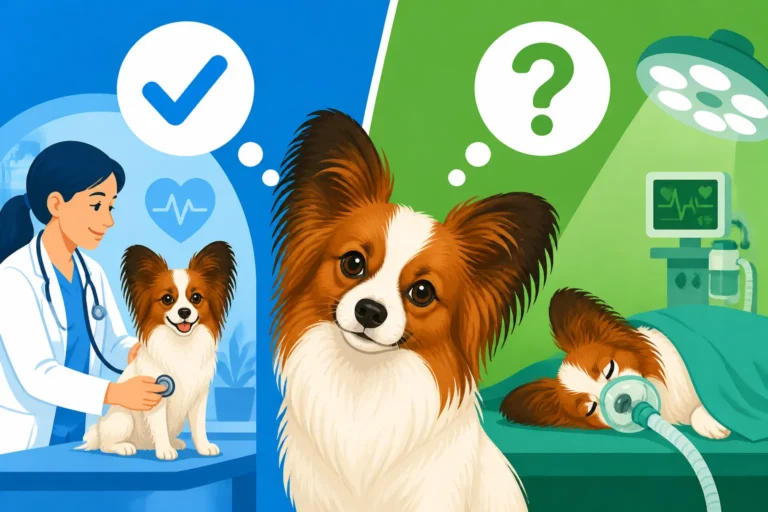
When you suspect your Papillon might be losing its sight, it's natural to immediately think of a vet visit. While a general eye exam is a good start, accurately diagnosing PRA1, especially the CNGB1-linked type, requires a more specialized approach that dives into your dog's genetics.
The Crucial Role of Genetic Testing
For Papillons, genetic testing is not just helpful; it’s absolutely crucial for a definitive diagnosis of PRA1. Unlike some other eye conditions that can be identified with a simple visual inspection, PRA1, especially in its early stages, can look similar to other issues. A regular vet visit might spot general signs of retinal degeneration, but only a DNA test can confirm if your Papillon carries the specific CNGB1 mutation responsible for PRA1.
Thankfully, there is a reliable The DNA Test for Papillon Retinal Atrophy available. This test typically involves collecting a simple cheek swab or a blood sample from your dog, which is then sent to a specialized veterinary genetics laboratory. Reputable labs like OptiGen or the Orthopedic Foundation for Animals (OFA) are common choices, and they will be able to confirm Where to Send a Papillon's PRA1 Swab for accurate analysis. Receiving an "affected" result confirms the presence of PRA1 due to the CNGB1 mutation, while a "carrier" result means your dog carries one copy of the gene but won't develop the disease itself. A "clear" result is the best news, indicating your Papillon has two normal copies of the gene.
Specialist Ophthalmic Examinations
While genetic testing provides the definitive "why," a specialist ophthalmic examination by a board-certified veterinary ophthalmologist is invaluable for assessing the "how" and "how much." These specialists have advanced equipment and expertise to thoroughly examine the retina and other structures of the eye. They can perform procedures like ophthalmoscopy to look directly at the back of the eye, checking for changes in the retina and optic nerve. They might also perform an electroretinography (ERG), which measures the electrical responses of the retina to light. This test can detect retinal dysfunction even before clinical signs of vision loss are obvious, and it can help differentiate PRA from other retinal diseases.
A veterinary ophthalmologist can also identify secondary conditions, such as cataracts, that might accompany PRA1. Although Whether a Papillon Needs a Yearly Eye Exam is a question many owners have, regular check-ups with a specialist, especially if PRA is suspected, are highly recommended. Furthermore, for breeding animals, comprehensive eye examinations, including those performed by specialists to ensure Whether a Papillon's Eyes Should Be CERF Checked, are essential to certify overall eye health beyond just genetic status.
Interpreting Test Results
Understanding your Papillon's genetic test results is key.
- Clear: Your dog does not have the CNGB1 mutation and cannot pass it on.
- Carrier: Your dog has one copy of the mutated gene but will not develop PRA1. However, they can pass the gene to their offspring. This is why Whether a Carrier Papillon Ever Goes Blind is a common question, and the answer is generally no, not from this specific PRA1 type.
- Affected: Your dog has two copies of the mutated gene and will develop PRA1.
For breeders, these results are paramount. Responsible breeders will use this information to make informed decisions about breeding pairs, ensuring they do not breed two carriers together, which would produce affected puppies. While some breeders may choose to breed a carrier to a clear dog (producing only clear or carrier puppies, but no affected), transparency and proper disclosure of these results are critical. Owners looking for puppies should always ask Whether Papillon Breeders Publish PRA Results as a sign of their commitment to breed health.
This proactive approach through genetic testing, combined with specialist examinations, provides the most comprehensive picture of your Papillon's eye health and allows for the best possible management strategies.
Living with a Papillon Affected by PRA1
Discovering your Papillon has PRA1 can be emotionally challenging, but it doesn't mean the end of a happy, fulfilling life for your dog. Papillons are incredibly resilient and adaptable, and with some thoughtful adjustments to their environment and routine, they can continue to thrive. Your role shifts from just owning a dog to becoming a supportive guide and advocate, helping them navigate a world that is gradually becoming darker.
Adapting the Home Environment
The key to helping a blind or vision-impaired Papillon is consistency and safety. Their world is already changing, so minimize further changes.
- Maintain Consistency: Avoid rearranging furniture or placing new obstacles in their common paths. Keep food and water bowls, beds, and toy bins in the same, easily accessible locations. Your Papillon will quickly create a mental map of their home, and consistency helps reinforce this.
- Safety First: Gates can be invaluable to block off dangerous areas like stairs or rooms with sharp corners. Consider padding sharp edges of furniture at your dog's eye level. Keep floors clear of clutter, especially small items that could be tripped over. For dogs prone to jumping off furniture, consider pet steps or ramps to reduce the risk of injury.
- Tactile and Scent Cues: Introduce different textures on the floor to signal different areas. A small rug near their water bowl, a different mat by the door, or a strip of carpet leading to their bed can all provide helpful sensory cues. You can also use distinct, non-toxic scents (like a drop of vanilla extract on a doorframe, or a specific essential oil on their bed – always diluted and away from where they can lick it) to mark important locations.
- Helping Them Learn the House: It can be remarkable How a Blind Papillon Learns a House. They use their excellent sense of smell, hearing, and touch to build a comprehensive understanding of their surroundings. You can aid this by gently guiding them through new spaces, talking to them reassuringly, and letting them explore at their own pace.
Enrichment and Maintaining Quality of Life
Vision loss doesn't mean your Papillon has to stop enjoying life. In fact, engaging their other senses becomes even more important for their mental and physical well-being.
- Establish Predictable Routines: Dogs thrive on routine, and for a vision-impaired dog, it's a lifeline. Consistent feeding times, potty breaks, and walk schedules provide a sense of security and predictability in a world that might feel confusing.
- Engage Other Senses: Scent work is fantastic for blind dogs. Hide treats around the house, or invest in puzzle toys that dispense treats when manipulated. Verbal cues become incredibly important, so practice using clear, consistent commands for "step up," "watch out," "this way," or "stop."
- Safe Outdoor Exploration: Leashed walks are essential, always on familiar routes initially. A harness is usually preferred over a collar to avoid neck strain. Let your Papillon explore safe, enclosed areas like a securely fenced yard, guiding them with your voice. Let them sniff and experience the world through their nose.
- Consistent Vocal Communication: Always speak to your Papillon before approaching them, especially when they are sleeping or startled. This prevents them from being surprised and potentially snapping out of fear.
Supporting Your Papillon Emotionally
The emotional toll on a vision-impaired Papillon can be significant, and your unwavering support is vital. Their trust in you becomes paramount.
- Gentle Handling: Approach them gently, letting them know you're there with your voice and a light touch. Avoid sudden movements or loud noises that might startle them.
- Dealing with Anxiety: It's normal for blind dogs to experience anxiety or fear, especially in new situations. Offer extra comfort, praise, and gentle reassurance. If anxiety is severe, consult your veterinarian. Sometimes, anti-anxiety wraps or even medication might be considered. It's also wise to prepare for potential vet bills, which is why some owners consider pet insurance like Healthy Paws, which can help cover unexpected medical expenses including specialist visits or medications for managing secondary issues.
- Patience and Understanding: This journey requires immense patience. There will be days when your Papillon struggles, or when you feel frustrated. Remember that they are doing their best to adapt. Celebrate small victories and focus on their enduring spirit. Your calm, loving presence is their strongest anchor.
Breeding Considerations and Prevention
For a beloved breed like the Papillon, understanding and preventing inherited conditions like PRA1 isn't just a suggestion; it's an ethical imperative. Responsible breeding practices are the cornerstone of safeguarding the health and longevity of the breed for future generations. Ignoring the genetic realities of PRA1 would be a disservice to these wonderful dogs.
The Ethical Imperative for Breeders
Responsible breeders carry a significant burden of care. They are not just creating puppies; they are shaping the future health of the entire breed. For Papillons, this means proactively addressing PRA1 by utilizing the genetic tools available. Simply put, What a Papillon Breeder Should Have Tested includes, without question, the CNGB1 gene. A breeder who truly prioritizes the health of their lines will ensure that all breeding stock is tested for PRA1.
The ultimate goal is to avoid producing affected puppies entirely. This means breeders should never breed two carrier dogs together, as this carries a 25% risk of affected offspring, which is unacceptable given the availability of a DNA test. While breeding a carrier to a clear dog is sometimes done (producing only clear or carrier puppies), the utmost transparency about carrier status should be maintained. The ethical imperative extends to full disclosure to puppy buyers, ensuring they understand the genetic health of their new companion and the health of its lineage.
DNA Testing Programs and Databases
Fortunately, the science is here to help. DNA testing for the CNGB1 mutation is readily available and relatively inexpensive compared to the potential costs and heartbreak of dealing with an affected dog. Programs like those offered through the Orthopedic Foundation for Animals (OFA) or other reputable genetic testing laboratories provide clear, reliable results. These organizations often maintain public databases where breeders can list their dogs' health test results, including PRA1 status. This transparency is invaluable for potential puppy buyers and for the collective health of the breed.
Breeders should be happy to show you the test results for both parents of a litter. If they aren't, or if they claim testing isn't necessary, that should be a significant red flag. The What a Papillon's PRA1 Test Costs is a small investment for the peace of mind it provides and the ethical responsibility it fulfills. Widespread testing and the sharing of results are critical steps in making sure future generations of Papillons don't suffer from this preventable disease.
Impact on the Breed's Future
The widespread adoption of genetic testing and responsible breeding practices has a profound impact on the future of the Papillon breed. By systematically removing affected and carefully managing carrier dogs from breeding programs, we can significantly reduce, and ideally, eradicate the incidence of PRA1. This isn't about eliminating dogs from the gene pool entirely, but rather about making informed decisions to prevent suffering.
The challenge lies in balancing genetic health with maintaining genetic diversity. Over-selecting for specific traits or too aggressively removing carriers could inadvertently shrink the gene pool too much. However, with careful planning and the collaborative effort of dedicated breeders and researchers, it's possible to breed healthy Papillons while preserving the wonderful characteristics of the breed. It’s a commitment to long-term health, ensuring that these intelligent, vibrant dogs continue to grace our lives with excellent vision for years to come.
The Future of PRA1 Research and Treatment
While living with a Papillon affected by PRA1 focuses on adaptation and support, the scientific community is constantly working toward better understanding and, ultimately, finding treatments for these conditions. There's a lot of hope on the horizon, with ongoing research and advancements in veterinary medicine offering potential solutions for the future.
Current Research and Gene Therapy Developments
The field of canine genetics and veterinary ophthalmology is rapidly evolving. Researchers are continuously studying the mechanisms of PRA in various breeds, including Papillons, to understand exactly why and how these photoreceptor cells degenerate. This fundamental knowledge is the first step toward developing effective treatments.
One of the most exciting areas of research is gene therapy. While not yet widely available for PRA1 in Papillons, gene therapy has shown promising results in clinical trials for certain types of PRA in other breeds. The idea is to introduce a functional copy of the mutated gene into the retinal cells, effectively replacing the faulty gene and restoring normal protein production. This could potentially halt or even reverse the degeneration process. While we're not there yet for CNGB1-PRA1 in Papillons, these breakthroughs in other breeds offer a beacon of hope that similar therapies might one day become a reality for our butterfly-eared friends. For now, the question Whether a Papillon's PRA Can Be Slowed remains a topic of ongoing study, with no definitive cure currently available.
Supportive Therapies and Nutritional Approaches
While gene therapy is on the horizon, current treatments for PRA1 are primarily supportive. These focus on maintaining overall eye health and slowing any secondary damage.
- Antioxidants and Omega-3 Fatty Acids: Some veterinarians recommend supplements rich in antioxidants (like Vitamins C and E, lutein, and zeaxanthin) and Omega-3 fatty acids (DHA and EPA). While these won't reverse PRA, they are believed to support overall retinal health and potentially help protect cells from further damage. Always consult your vet before starting any supplements to ensure they are appropriate for your Papillon.
- Managing Secondary Issues: As mentioned earlier, cataracts are a common secondary complication. Regular veterinary check-ups allow for early detection and management of these issues. If cataracts become debilitating, surgical removal might be an option, depending on the individual case and the overall health of your Papillon. This is another area where a comprehensive pet insurance plan, such as Healthy Paws, can provide significant financial relief, helping owners afford specialist care and potential surgical procedures for their Papillon's ongoing health needs.
- Regular Veterinary Oversight: Consistent visits to your general veterinarian, and ideally a veterinary ophthalmologist, are critical. They can monitor the progression of the disease, recommend environmental adaptations, and address any new concerns that arise, ensuring your Papillon remains as comfortable and healthy as possible.
The Promise of Genetic Advances
The widespread availability of genetic testing has already revolutionized how we approach inherited diseases like PRA1. Every "clear" Papillon born from tested parents is a step forward in strengthening the breed's genetic health. The long-term goal for the Papillon community, fueled by these genetic advances, is to significantly reduce the incidence of PRA1, eventually making it a rare diagnosis rather than a common concern. This requires continued commitment from breeders, shared knowledge among owners, and ongoing scientific exploration. The future of genetic research holds immense promise, not just for treatment but for prevention, ensuring that future generations of Papillons can enjoy their long, happy lives with the gift of sight.
| PRA1 Genetic Status | CNGB1 Gene Copies | Develops PRA1? | Breeding Implications (with another Papillon) |
|---|---|---|---|
| Clear | Two normal copies | No | Can be bred to Clear or Carrier without risk of affected puppies. |
| Carrier | One normal, one mutated | No | Should only be bred to a Clear dog. Never to another Carrier or Affected dog. |
| Affected | Two mutated copies | Yes | Should not be used for breeding. |
Disclaimer
This article is intended for informational purposes only and does not constitute professional veterinary advice. Always consult with a qualified veterinarian or veterinary ophthalmologist for any health concerns or before making any decisions about your Papillon's care or breeding.