Why a Papillon Loses Night Vision First
It can be truly heartbreaking and confusing when you notice your beloved Papillon starting to struggle in dimly lit rooms, bumping into furniture, or hesitating on evening walks. Many Papillon owners, understandably, wonder why their agile, intelligent little companion seems to lose its ability to see specifically at night, often long before any issues appear in daylight. This guide will meticulously explain the underlying reasons for this specific pattern of vision loss, primarily due to a common genetic condition, and what you can expect as a devoted owner.
Understanding Papillon Vision and Its Challenges
Our Papillons are known for their bright, alert eyes, which are a hallmark of their engaging personality. But beneath that charming exterior, their visual system, like ours, is a complex biological marvel. When that system begins to falter, especially in ways that seem selective, it can be quite alarming.
The Intricacies of Canine Night Vision
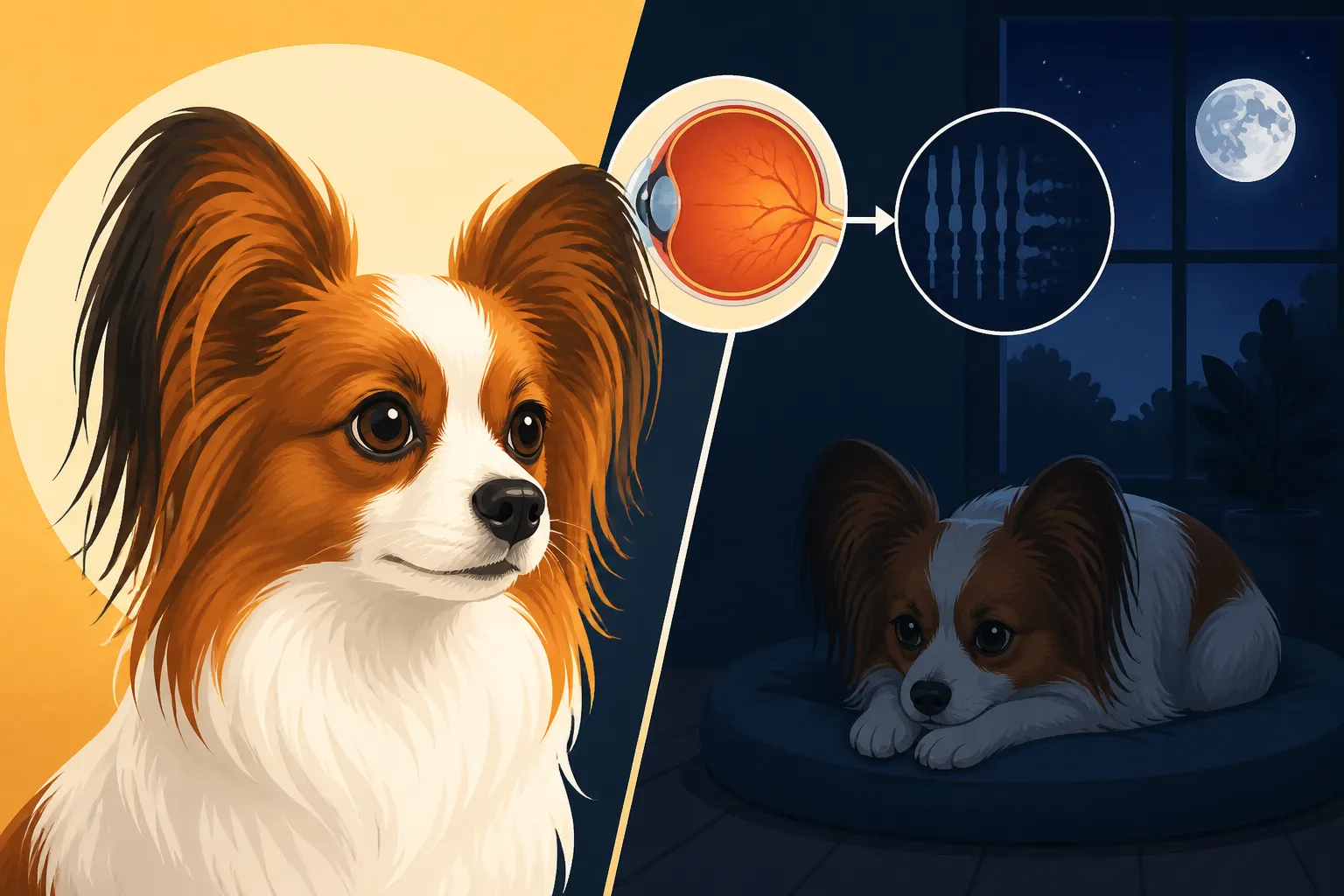
To grasp why night vision goes first, we need a quick dive into how vision works. The retina at the back of your Papillon's eye contains millions of specialized cells called photoreceptors. There are two main types: rods and cones. Rods are the workhorses of night vision and motion detection. They are incredibly sensitive to low light, allowing your dog to navigate in near darkness far better than humans can. Cones, on the other hand, are responsible for daylight vision, color perception (though dogs see a more limited spectrum than us), and fine detail. Because dogs have a much higher concentration of rods in their retinas compared to cones, their natural night vision is exceptionally good. This abundance of rods means they rely heavily on them for navigating in anything less than bright sunshine.
Think about how your Papillon confidently darts through the house at dusk, or how they spot a squirrel twitching in the shadows. This is all thanks to their robust rod system. When these delicate cells start to deteriorate, it's those low-light capabilities that will be impacted first, long before you notice any issues with their vision during a sunny afternoon walk.
The Specific Predisposition of Papillons
Unfortunately, the Papillon breed carries a specific genetic predisposition that makes them particularly vulnerable to a condition that targets these rod cells. While other breeds might experience various eye conditions, a particular form of progressive retinal atrophy (PRA) is notable in Papillons for its early and specific impact on night vision. This isn't just a random occurrence; it's rooted deeply in their genetic makeup, a silent inheritance that can unfortunately manifest later in life.
This genetic vulnerability is why conversations about What a Papillon Breeder Should Have Tested are so crucial. Reputable breeders are keenly aware of these predispositions and actively work to minimize the risk in their lines through careful genetic screening. Without these preventative measures, the chance of a Papillon developing vision issues, starting with night blindness, increases significantly. It’s a stark reminder that even the healthiest-looking puppy can carry hidden genetic risks.
The Role of Progressive Retinal Atrophy (PRA)
Progressive Retinal Atrophy, or PRA, isn't a single disease but a group of inherited degenerative diseases that affect the photoreceptor cells in the retina. In Papillons, a specific type known as PRA1, or sometimes referred to as CNGB1-PRA, is the primary culprit behind the loss of night vision.
How PRA Impacts Photoreceptor Cells
PRA works by systematically destroying the photoreceptor cells. In the Papillon-specific PRA1, the rods are primarily affected first. Imagine your Papillon's retina as a field of tiny, highly sensitive light detectors. In a healthy eye, both rods and cones are functioning, sending signals to the brain that form a complete picture of the world. With PRA, the rods begin to degenerate. They either don't develop properly in the first place, or they slowly waste away over time. Since rods are responsible for detecting dim light, their deterioration immediately compromises the dog's ability to see in low-light conditions.
This means that as the rod cells progressively fail, your Papillon literally cannot gather enough light information to form clear images when it’s dark. This leads to the characteristic "night blindness" where they might stumble or act disoriented in the evening, but appear perfectly normal during the day. This is why a Papillon can go blind at night and still see in daylight for quite some time. The cones, which handle daylight vision, remain functional initially, giving a false sense of security that their eyesight is generally fine.
The Genetic Link in Papillons
The specific genetic mutation linked to PRA1 in Papillons is found in the CNGB1 gene. This gene is vital for the proper function of rod photoreceptors. When a Papillon inherits two copies of this mutated gene (one from each parent), they are "affected" and will develop PRA. Dogs that inherit only one copy are "carriers" – they typically won't develop the disease themselves but can pass the mutation on to their offspring. This pattern of inheritance is known as an autosomal recessive trait.
Understanding Which Gene Causes PRA in a Papillon is incredibly important for breeders and owners alike. Thankfully, there are now DNA tests available, such as The DNA Test for Papillon Retinal Atrophy, that can identify whether a Papillon is clear, a carrier, or affected. This knowledge empowers breeders to make informed decisions and helps potential puppy buyers choose responsibly bred dogs, significantly reducing the incidence of this devastating disease. Brands like OptiGen and Animal Genetics offer these types of screening services, allowing for proactive health management within the breed.
Progressive Nature of PRA
As the name suggests, Progressive Retinal Atrophy doesn't stop with night vision. While the rods are the first to go, the disease will eventually affect the cone cells as well. This means that over time, the daylight vision of an affected Papillon will also begin to deteriorate. The timeline for this full progression can vary significantly from dog to dog. Some Papillons might live for many years with only night blindness, adapting remarkably well, while for others, the decline in daylight vision might be more rapid.
This progression often leads owners to wonder How Many Years Before a Papillon's Daylight Vision Goes. Unfortunately, there's no single answer, as it depends on the individual dog and the specific progression of the disease. What is certain, however, is that PRA is irreversible. There is currently no cure or treatment to stop or reverse the degeneration of the retina. This makes early detection and proactive management even more critical for maintaining your Papillon's quality of life.
Here's a quick overview of how photoreceptors function in different light conditions:
| Photoreceptor Type | Primary Function | Light Sensitivity | Location in Retina | Affected First by PRA1 |
|---|---|---|---|---|
| Rods | Night vision, motion, peripheral | High (low light) | Throughout | Yes |
| Cones | Daylight vision, color, detail | Low (bright light) | Central region | Later |
Early Signs of Night Blindness in Papillons
Observing your Papillon closely, especially as they get older or in different lighting conditions, is paramount for early detection. The subtle changes often precede more obvious struggles.
Behavioral Clues in Low Light
The most common and earliest sign of night blindness in a Papillon is a marked change in their behavior when the lights dim. You might notice them becoming more hesitant to move from room to room after sunset, or they might stick closer to your legs during an evening potty break. They may also seem more easily startled by sudden noises or movements, as their impaired vision makes them less aware of their surroundings. This isn't naughtiness or a sudden personality shift; it's a genuine struggle to navigate.
Owners often report that their Papillon seems "off" or "nervous" in the dark. They might bump into familiar objects, like the corner of a coffee table or a chair leg, that they would normally navigate with ease. If your Papillon, who used to happily chase a toy across a darkened floor, now stops at the edge of the light, that's a significant indicator that their rod cells are struggling. This can be particularly noticeable if you're playing fetch in the yard as dusk settles; they might lose sight of the toy or appear confused about where it landed. These subtle shifts are often the first Signs a Papillon Is Losing Night Vision.
Navigating Familiar Environments
One of the most telling signs is how a Papillon navigates its own home. A house that has been their castle for years suddenly becomes a maze in the evening. They might hesitate before jumping off a sofa, or refuse to go down a short set of stairs they've always managed. You might find them sticking rigidly to well-lit paths, even if it means taking a longer route around the living room. It's a clear indication that their internal map, usually guided by sight, is failing them in low light.
This isn't just about bumping into things; it's about a loss of confidence. A once-bold Papillon might become clingy, preferring to stay right by your side rather than explore. They may become hesitant to enter a dark hallway or a room that isn't illuminated. This can be incredibly distressing for both the dog and the owner, as the dog's world literally shrinks when the sun goes down. Ensuring your home is safe and consistent can help, especially by minimizing changes to furniture placement and providing nightlights in key areas.
Changes in Play and Interaction
Another area where night blindness becomes apparent is during playtime and social interactions. If your Papillon loves to play fetch in the garden, you might notice them struggling to track the ball as evening approaches. They might seem less interested in evening games, or their retrieve might become less reliable. With other dogs, especially in dimly lit dog parks or during evening walks, they might miss social cues, leading to unexpected reactions or increased anxiety.
A Papillon with declining night vision might also be more reluctant to interact with strangers or other dogs in low light, as they can't clearly see their approach or read body language. This can lead to what appears to be shyness or even aggression, when in reality, it's a fear-based response to not being able to see clearly. Keeping a close eye on these subtle shifts in behavior can help you intervene early and seek veterinary advice. If you notice your Papillon seems to be bumping into things with PRA, it's time to talk to your vet about an eye exam.
Managing and Adapting to Night Vision Loss
While there's no cure for PRA, there's a great deal you can do to help your Papillon live a full and happy life, even as their vision declines. It’s all about adaptation and support.
Creating a Safe Home Environment
When your Papillon starts losing its night vision, making your home as safe and predictable as possible becomes crucial. Consistency is key. Try to avoid rearranging furniture, as your dog relies on their memory of the layout. Use nightlights in hallways, bathrooms, and any areas your Papillon frequently uses after dark. Consider adding non-slip runners or rugs to hardwood or tile floors to help them feel more secure and prevent slips and falls, which can be particularly dangerous for a breed prone to What Patellar Luxation Does to a Papillon.
Also, be mindful of tripping hazards. Keep pathways clear of clutter, shoes, or anything that could be unexpectedly in their way. Blocking off stairs with baby gates, especially at night, can prevent dangerous falls. Remember, your dog is relying on other senses, like smell and hearing, more heavily now, so ensure they can still easily find their food and water bowls, and their bed. Having a designated "safe zone" for them, with their favorite bed and toys, can also provide comfort and security.
Veterinary Care and Monitoring
Regular veterinary check-ups, including specialized eye exams, are vital. Your vet can monitor the progression of the PRA and rule out any other concurrent eye conditions like cataracts, which can also affect a Papillon's vision. An ophthalmologist can provide a definitive diagnosis and help you understand the specific stage of your Papillon's PRA. Many owners wonder Whether a Papillon Needs a Yearly Eye Exam, and for breeds with known predispositions like Papillons, the answer is a resounding yes, especially as they age.
While there isn't a cure for PRA, your vet might recommend certain supplements, though their efficacy in slowing PRA progression is not scientifically proven. The main focus of veterinary care will be on supportive measures and managing any secondary issues that arise from impaired vision. Discussing options for long-term care and quality of life is important. Pet insurance plans, like those offered by Healthy Paws, can be incredibly helpful in covering the costs associated with specialist veterinary care and ongoing monitoring for conditions like PRA, ensuring you can provide the best possible support for your furry family member without financial strain.
Supporting Your Papillon's Quality of Life
Beyond physical adaptations, emotional support is incredibly important. A Papillon experiencing vision loss can become anxious or insecure. Maintain a consistent daily routine, as predictability helps reduce stress. Use verbal cues more frequently to guide them, such as "step up," "watch out," or "this way." Scent markers, like a drop of essential oil (safe for dogs) on key furniture items, can also help them navigate.
Engage their other senses! Provide puzzle toys, offer scent-work games, and continue with walks in familiar, safe areas. Let them sniff to their heart's content, which provides mental stimulation and reinforces their connection to the world. And most importantly, offer plenty of reassurance and affection. Your calm presence and loving touch will be a huge comfort. While it's tough to witness their struggles, your Papillon still has a lot of love to give and receive, and with your help, they can continue to enjoy a wonderful life. Learning How a Blind Papillon Learns a House can provide valuable insights into helping them adapt.
Disclaimer
The information provided in this article is for general informational purposes only and is not intended as a substitute for professional veterinary advice. Always consult with a qualified veterinarian for any health concerns or before making any decisions about your pet's health or treatment.