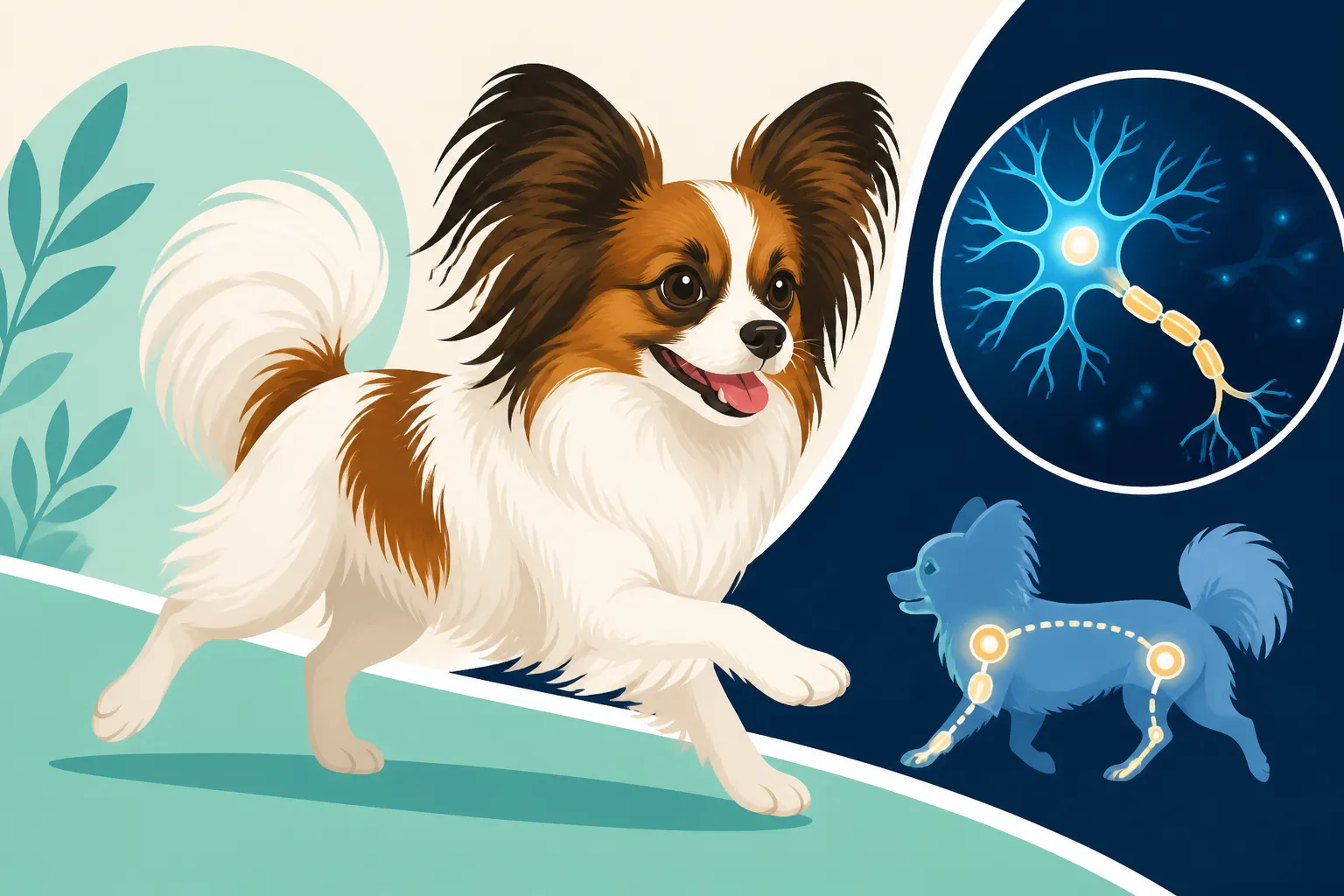
How a Papillon With Neuroaxonal Dystrophy Moves
It's absolutely heartbreaking to watch your vibrant, usually agile Papillon start to struggle with something as fundamental as movement. One minute they're zipping around with boundless energy, and the next, you're noticing a subtle stumble or an awkwardness in their gait that just isn't right. This guide is here to shed light on exactly how a Papillon affected by Neuroaxonal Dystrophy moves, helping you understand the specific challenges your beloved companion might face and how you can best support them through this difficult condition.
Understanding Neuroaxonal Dystrophy in Papillons
Neuroaxonal Dystrophy (NAD) is a devastating inherited neurological disorder that specifically impacts the nerve fibers, or axons, within a Papillon's nervous system. Imagine the intricate wiring of a tiny, high-performance machine – in this case, your Papillon's brain and spinal cord. Now picture those wires gradually fraying and degenerating. When these vital communication lines break down, the signals from the brain that tell the body how to move, balance, and coordinate become severely disrupted. This degeneration isn't just a minor glitch; it profoundly impairs a dog's ability to control its own body, leading to the characteristic movement issues we’ll discuss. It's a condition that no owner wants to hear their dog has, and understanding its root cause is the first step in comprehending the physical changes it brings.
The Neurological Basis of Movement Issues
At its core, NAD in Papillons is a problem of nerve signal transmission. Axons are the long, slender projections of nerve cells that conduct electrical impulses away from the cell body to other neurons, muscles, or glands. When these axons degenerate, the messages simply can't get through efficiently or accurately. This is why you see such profound effects on motor control. The brain might send a command to move a leg, but the frayed "wire" means that command either doesn't arrive at the muscle, or it arrives distorted.
This breakdown in communication particularly affects areas responsible for movement, balance, and proprioception. Proprioception is your dog's unconscious awareness of its body's position in space – knowing where its feet are without having to look. When this sense is compromised, simple acts like walking a straight line or navigating a rug become monumental tasks. The cerebellum, a part of the brain crucial for coordinating voluntary movements, balance, and posture, is often significantly impacted, leading to many of the hallmark signs of incoordination. It’s a relentless attack on the very systems that allow a Papillon to be the agile, graceful dog we know and love.
Early Signs and Subtle Changes in Gait
One of the most frustrating aspects of Neuroaxonal Dystrophy for owners is that the initial signs can be incredibly subtle, leaving you wondering if you're overthinking things. Your Papillon might just seem a little bit "off," perhaps not quite as precise in their movements as usual. You might notice a slight awkwardness when they turn quickly or a minor stumble that they quickly recover from. They might not jump with the same effortless grace they once did, or they could seem a tiny bit clumsy when navigating a doorway. These early changes often start to appear when the dog is still quite young, sometimes as early as 6 to 12 months of age, which is a devastating time to learn about such a condition. It’s important to remember that these aren't just quirks; they are often the first whispers of a deeper neurological issue.
As the condition progresses, these subtle hints become more pronounced. What started as an occasional stumble might turn into a more frequent loss of balance. You might observe a slight tremor, especially when your Papillon is standing still or trying to focus on a task. Their once-confident stride might become hesitant or uneven. Recognizing these initial, often fleeting, changes is crucial, even though it can be emotionally challenging to acknowledge that something serious might be developing in your precious puppy. For more on the early presentation, you can look into "The Age Neuroaxonal Dystrophy Shows in a Papillon".
Specific Movement Characteristics in Affected Papillons
When Neuroaxonal Dystrophy takes hold, the graceful, lively movement typical of a Papillon is dramatically altered. The specific ways an affected Papillon moves are often characterized by a combination of uncoordinated steps, involuntary movements, and a profound lack of spatial awareness. It’s not just a matter of weakness; it’s a breakdown in the finely tuned systems that allow for precise and intentional motion. Observing these specific movement patterns is key to understanding the daily struggles your dog might face.
Ataxia and Incoordination
Ataxia is perhaps the most noticeable and distressing symptom of NAD, characterized by a distinct loss of full control of bodily movements. For a Papillon, whose natural state is one of elegant agility, this manifests as a "drunken" or wobbly gait. Instead of light, precise steps, their movements become broad, exaggerated, and often off-balance. They might overreach with their paws, lifting them higher than necessary, or underreach, barely clearing the ground. This leads to a wide-based stance, where they spread their legs further apart than normal in an attempt to maintain balance, resembling a tightrope walker trying not to fall.
Daily activities become incredibly difficult. Climbing stairs, which a healthy Papillon would bound up, becomes a perilous, if not impossible, task. Jumping on or off furniture, something we usually try to discourage to protect their delicate knees, becomes completely unmanageable. They might struggle significantly when trying to turn corners, often needing to take a wider arc or losing their footing altogether. Even navigating familiar household spaces can result in bumping into furniture or doorframes, transforming their once confident exploration into a series of clumsy encounters.
Tremors and Spasticity
Beyond the overt incoordination, Papillons with NAD often exhibit involuntary movements such as tremors and spasticity. Tremors are rhythmic, involuntary muscle contractions that can manifest as subtle quivering or more pronounced shaking. These might be most noticeable when the dog is at rest, or they can become exacerbated when the Papillon attempts to initiate a movement or maintain a posture. You might see a head bob, or their legs might visibly shake as they try to stand still, making them look perpetually cold or anxious even when they aren't.
Spasticity, on the other hand, refers to an increase in muscle tone, resulting in stiff, rigid movements. This can make their limbs feel inflexible, as if they are constantly tense. Instead of a fluid, natural stride, a Papillon with spasticity might take short, choppy steps, or their legs might swing out stiffly to the side. Bending or extending their joints becomes challenging, making it harder for them to move freely and comfortably. This combination of tremors and spasticity creates a complex picture of motor dysfunction, where their body seems to be working against their will, making even simple acts of movement an exhausting struggle. The overall impact on the dog's physical state can be quite profound; for a deeper dive into the condition, you might want to read "What Neuroaxonal Dystrophy Does to a Papillon".
Proprioceptive Deficits and Stumbling
One of the most frustrating and potentially dangerous aspects of NAD for a Papillon is the severe proprioceptive deficit. Proprioception is the body's internal GPS, the unconscious sense of where limbs and body parts are in relation to each other and the surrounding environment. When this sense is impaired, a Papillon essentially loses awareness of where its feet are. This leads to common observations such as knuckling over, where the dog walks on the tops of its paws rather than the pads, or dragging its feet. They might frequently stumble over their own paws, an invisible obstacle, or even flat surfaces that pose no challenge to a healthy dog.
You might notice your Papillon standing with a paw curled under, seemingly unaware that it’s in an unnatural and uncomfortable position. This lack of accurate foot placement makes them highly prone to tripping and falling, even during routine walks or when just moving from one room to another. This constant disorientation about their body's position in space isn't just clumsy; it can lead to anxiety, fear of movement, and a higher risk of injuries. Imagine trying to navigate the world without knowing where your legs are – it's an incredibly disorienting and frightening experience for these little dogs.
| Symptom Group | Movement Description | Owner Observation |
|---|---|---|
| Ataxia | Uncoordinated, "drunken" gait, wide stance | Stumbling, falling, difficulty with turns and stairs |
| Tremors | Involuntary shaking, especially during effort or rest | Shivering, unstable standing, head bobbing, quivering limbs |
| Spasticity | Stiff, rigid limbs, difficulty bending/extending | Short, choppy steps; reluctance to move freely; stiff-legged walk |
| Proprioception | Misplacement of feet, lack of body awareness | Knuckling over paws, paw dragging, bumping into objects |
Progression of Movement Challenges
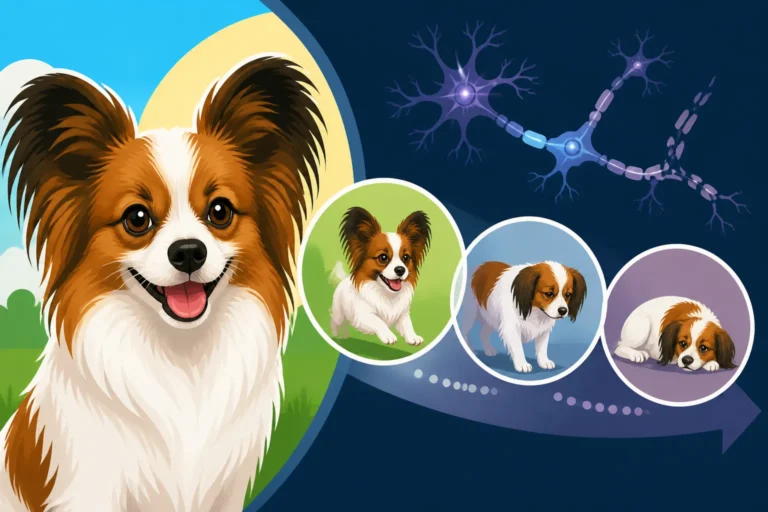
Neuroaxonal Dystrophy is not a static condition; it is inherently progressive. This means that the movement difficulties observed will typically worsen over time, presenting new and increasingly challenging realities for both the Papillon and their devoted owners. It's a journey from subtle changes to significant disability, and understanding this trajectory is crucial for providing compassionate and effective care.
Worsening Symptoms Over Time
The progression of NAD can be heartbreaking to witness. What begins as a slight wobble or occasional stumble inevitably advances to more severe forms of motor dysfunction. A Papillon that initially manages to walk with some difficulty may eventually lose the ability to stand or walk independently, needing constant support. The tremors might become more pronounced, the ataxia more debilitating, and the spasticity more restrictive. The pace of this progression can vary, but generally, it leads to a significant decline in mobility. It’s a sad reality that while some Papillons might have a slower decline, others might experience a more rapid deterioration. For further details on how quickly the condition can advance, it's beneficial to understand "How Fast Neuroaxonal Dystrophy Progresses in a Papillon".
Eventually, many affected Papillons will become non-ambulatory, meaning they can no longer walk on their own. This stage presents new challenges, as even basic functions like moving to eat, drink, or relieve themselves require assistance. The risk of secondary injuries from falls increases dramatically, and maintaining good hygiene becomes more difficult. This period demands immense patience, dedication, and a deep well of empathy from owners, as their once sprightly companion transforms into a dog entirely dependent on them for movement and care.
Adapting to Limited Mobility
Despite the severe physical limitations, Papillons are remarkably resilient and often try their best to adapt to their dwindling mobility. You might see them attempting to drag themselves across the floor using their front legs, or relying heavily on their hindquarters for balance, even as those muscles weaken. They learn to compensate in various ways, using their heads for balance or bracing themselves against furniture. While their spirits often remain bright, the sheer effort required for any movement can be exhausting and, at times, visibly frustrating for them.
This phase takes a significant emotional toll on owners. It's tough to watch a dog that once pranced with such joy now struggle to take a single step. Owners often become their dog's legs, lifting them, supporting them, and carrying them wherever they need to go. Providing a consistent and loving environment becomes even more critical, as their reliance on their human companions deepens. It's a testament to the bond between Papillon and owner that despite these challenges, many families continue to provide a high quality of life, focusing on comfort and companionship rather than full mobility.
Managing Movement Challenges and Supporting Quality of Life
While there is currently no cure for Neuroaxonal Dystrophy in Papillons, and indeed, no effective treatment for the underlying neurological degeneration, focusing on supportive care and managing their symptoms is paramount. The goal shifts from treatment to enhancing comfort, preventing secondary complications, and maintaining the best possible quality of life for as long as possible. Understanding that there's no treatment, as explored in "Why Neuroaxonal Dystrophy Has No Treatment in a Papillon", can be tough, but it helps direct your efforts towards practical support. This approach requires creativity, vigilance, and a deep commitment to your Papillon's well-being.
Environmental Modifications and Support
Making your home a safe and accessible haven for a Papillon with NAD is one of the most impactful things you can do. Start by eliminating potential hazards: cover slippery floors with non-slip rugs or runners, especially in high-traffic areas. Use baby gates to block off stairs, preventing dangerous falls. Ramps, rather than steps, can be invaluable for accessing furniture or even getting in and out of the house if there are small ledges. Think about your Papillon's eye level and their limited mobility – what might be a minor bump for you is a major obstacle for them.
Mobility aids can also become essential tools. A supportive harness, such as a Help 'Em Up harness that supports both front and hindquarters, can make it easier for you to assist your Papillon in standing, walking, and even going outside to relieve themselves. For Papillons with advanced stages of the disease, a custom-fitted dog wheelchair can offer a surprising degree of independence and joy, allowing them to move around and explore again, albeit with assistance. Ensure food and water bowls are easily accessible, perhaps elevated to a comfortable height so they don't have to bend too much. Providing soft, orthopedic bedding is also vital to prevent pressure sores, especially if your Papillon spends a lot of time lying down. Creating a predictable and calm environment helps reduce anxiety and makes navigation easier for a dog with neurological deficits.
Therapeutic Approaches
Even without a cure, various therapeutic approaches can help manage symptoms and improve your Papillon's comfort. Physical therapy, tailored by a veterinary professional, can be incredibly beneficial. Gentle exercises, passive range of motion stretches, and controlled movements can help maintain muscle mass, prevent joint stiffness, and improve circulation. Hydrotherapy, or swimming in a heated pool, is often an excellent option as the buoyancy of the water reduces strain on joints and muscles, allowing for movement that might be impossible on land. These sessions, overseen by a certified therapist, can provide not just physical benefits but also mental stimulation and a sense of freedom.
Nutritional support is also important. Ensure your Papillon is receiving a high-quality, easily digestible diet. If they struggle to eat due to tremors or difficulty getting to their bowl, you might need to adjust their feeding method, offering smaller, more frequent meals, or even hand-feeding. While NAD itself isn't typically a painful condition, the abnormal gait and compensatory movements can lead to muscle strain or joint discomfort. Consulting with your veterinarian about appropriate pain management, such as anti-inflammatory medications or supplements, can address these secondary issues. Many owners find relief in knowing that a good pet insurance plan, like those offered by Healthy Paws, can help cover the costs of these ongoing therapies, diagnostic tests, and veterinary consultations, easing the financial burden during such a challenging time. Having pet insurance with Healthy Paws in place early can make a significant difference in access to ongoing specialized care and quality of life treatments, covering everything from routine vet visits to more specialized therapeutic interventions.
When considering a long-term care plan for a Papillon with a serious condition like NAD, researching comprehensive coverage from providers like Healthy Paws becomes really important. This proactive step ensures you can provide the best possible care without constant worry about escalating costs, allowing you to focus on your dog's comfort and happiness. While it’s a difficult journey, providing these layers of support can truly make a difference in your Papillon’s day-to-day well-being, allowing them to experience love and comfort despite their physical limitations. For general advice on living with a senior dog, which can offer insights into caring for a dog with limited mobility, you might find "Caring for an Aging Papillon" helpful.
Disclaimer
This article is for general informational purposes only and does not constitute professional advice. Laws, prices and regulations vary by location and change over time. Consult a qualified professional for guidance on your specific situation.