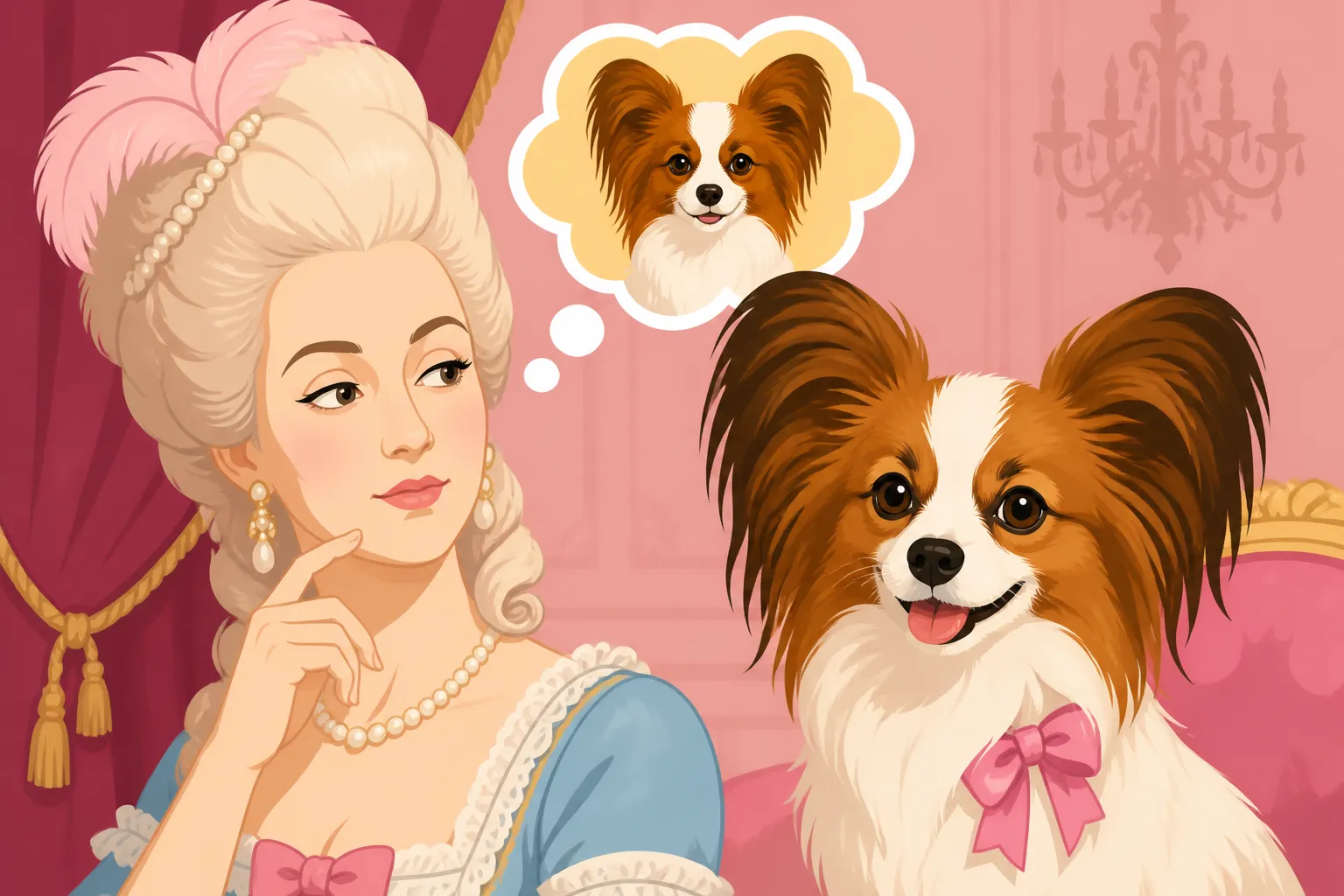
Whether Marie Antoinette Owned a Papillon
It's a common and rather charming image, isn't it? Marie Antoinette, the ill-fated queen of France, holding a tiny, elegant dog with butterfly ears. This romantic notion has persisted for centuries, weaving itself into the fabric of Papillon breed lore. But for anyone trying to understand the true history of this delightful breed, separating historical fact from delightful fable can be a real head-scratcher. This guide aims to dig deep into the origins of this popular story, examining the historical context and the actual evidence to see if the Papillon truly graced the arms of French royalty during such a tumultuous era.
The Enduring Allure of the Royal Canine Companion
The idea of royalty and their beloved pets has always captured our imagination. There’s something deeply humanizing about picturing powerful figures doting on a tiny, furry friend. For a breed as graceful and historically significant as the Papillon, it’s only natural that people want to connect it to some of history's most iconic figures. The image of Marie Antoinette, especially, resonates deeply due to her lavish lifestyle and tragic end.
Why the Myth Persists
The story of Marie Antoinette and her dog endures partly because it paints a vivid, poignant picture. Imagine the Queen, in her final moments, finding solace in the unwavering loyalty of her small companion. It adds a layer of pathos to her already dramatic narrative. Furthermore, small companion dogs were undeniably fashionable among European aristocracy for centuries. This historical truth makes the specific connection to Marie Antoinette and a Papillon feel entirely plausible, even if the details are somewhat blurred by time and storytelling. People love a good story, and a royal pet facing the same fate as its owner is certainly a memorable one.
The Broader French Court Connection
Even before Marie Antoinette, small dogs held a special place in the French court. From the time of the Renaissance, tiny "comforter" dogs were cherished companions, often depicted in portraits alongside their noble owners. These dogs were more than just pets; they were symbols of status, luxury, and often, emotional support. The French aristocracy, known for its refined tastes, naturally gravitated towards elegant, diminutive breeds. It's easy to see how a dog, which would eventually evolve into the Papillon, could become intrinsically linked with this opulent era. The very name "Papillon" is French for "butterfly," hinting at the breed's strong ties to French culture, even if the modern breed we know today took a little longer to fully develop its signature look.
Examining the Historical Record: Fact Versus Fiction
When we look beyond the romantic narratives, we have to turn to the tangible evidence that historians rely on: written accounts, official inventories, and, crucially, artwork from the period. It's often through these windows into the past that we can piece together what was truly happening.
Identifying Dogs in Historical Art
Art from the 17th and 18th centuries often features small dogs, particularly in portraits of noblewomen. These dogs are generally referred to as "Dwarf Spaniels" or "Continental Toy Spaniels." Many of them bear a striking resemblance to a long-coated, drop-eared dog, quite similar to what we now call a Phalene, which is the drop-eared variety of the Papillon. You can see dogs of this type in many works by old masters. For instance, Titian Painted the Dog the Papillon Came From, and these early depictions show dogs with soft, flowing coats and ears that hang down, framing their faces. The iconic erect, butterfly-like ears that define the modern Papillon were not yet universally established or dominant in the breed during Marie Antoinette's time.
When examining portraits from her era, while small, long-haired dogs are present, none definitively show the fully erect, butterfly ears characteristic of the modern Papillon. Instead, the dogs depicted tend to have drop ears. This doesn't mean they weren't ancestors of the Papillon; it means the specific, erect-eared mutation hadn't become the prevailing characteristic yet, or at least wasn't being specifically emphasized or bred for to the extent it would be later. Understanding What a Titian Spaniel Looked Like is key to appreciating this distinction.
What Written Records and Royal Inventories Reveal
Unfortunately for the enduring myth, specific written records or royal inventories from Marie Antoinette's court that unequivocally identify a "Papillon" are notably absent. While she certainly owned dogs, often larger, more utilitarian breeds used for hunting or guarding, and some smaller companion dogs, the term "Papillon" as we understand it today wasn't commonly in use to describe a distinct breed with erect ears during her reign.
The records often refer to "toy spaniels" or simply "small dogs." Given the meticulous record-keeping of royal households, the lack of a clear mention of a dog matching the modern Papillon's description, especially its most defining characteristic—the butterfly ears—suggests that while she undoubtedly had beloved canine companions, they were most likely the drop-eared precursors, the Phalene type. Whether Marie Antoinette's Dog Survived Her is another piece of the puzzle, often tied into the guillotine story, but without clear identification of the dog itself, it remains a narrative rather than a documented fact.
The Papillon's Ancestry: The Dwarf Spaniels of Europe
To truly understand the Papillon's history, we need to go further back than Marie Antoinette. The breed didn't just appear fully formed; it evolved from a long line of toy spaniels that were popular across Europe for centuries.
The Titian Spaniel and Its Lineage
The ancestors of the Papillon are known as Continental Toy Spaniels or sometimes, quite romantically, "Titian Spaniels," after the Renaissance painter Titian, who frequently included these charming dogs in his portraits. These dogs were characterized by their small size, luxurious long coats, and most notably, their drop ears. They were particularly beloved by the nobility in Italy, Spain, and France. Which Century the Dwarf Spaniel First Appears In dates back hundreds of years before Marie Antoinette, showing a long tradition of these companions. These were the dogs carried by ladies in waiting, tucked into sleeves, and warming laps in drafty castles. They were prized for their affectionate nature and decorative appearance.
It's crucial to remember that what we today recognize as the Papillon, with its distinct upright ears, emerged as a later variation of this original drop-eared type, the Phalene. So, while Marie Antoinette might have owned a dog that was an ancestor of the Papillon, it likely wasn't what we would call a Papillon today. These early "spaniels" were the foundation upon which the Papillon was later developed.
The Popularity of Small Dogs Among the Nobility
From the time of Henry III of France, who carried small dogs in a basket around his neck, to Louis XIV and the Sun King's court, small dogs were indispensable accessories for European royalty and aristocracy. They served as fashion statements, comforters, and even status symbols. Why Renaissance Ladies Carried a Dwarf Spaniel goes beyond mere fashion; these tiny dogs were thought to ward off fleas, and in an age of less than perfect hygiene, offered a warm companion.
Which Courts Kept Dwarf Spaniels reads like a who's who of European nobility. These little dogs were found in the royal residences of Spain, Italy, France, and beyond. This widespread adoration for toy spaniels underscores that while Marie Antoinette's specific Papillon might be a myth, her owning a small, elegant dog was entirely in keeping with centuries of royal tradition. The breed was evolving, and the love for small, portable companions was well-established.
The French Revolution and the Fate of Royal Pets
The French Revolution was a cataclysmic event that reshaped France and sent shockwaves across Europe. It was a time of immense upheaval, and the lives of animals, especially those associated with the monarchy, were undoubtedly impacted.
The Guillotine Story and Its Poignant Origins
One of the most enduring elements of the Marie Antoinette Papillon myth is the tragic tale that her little dog accompanied her to the guillotine, waiting patiently for her return. This story is incredibly moving and adds a layer of heartbreaking loyalty to the Queen's final moments. However, like many dramatic historical anecdotes, it lacks concrete historical backing. While pets of condemned individuals often faced uncertain fates, it's highly improbable that a dog would have been permitted to accompany a prisoner to such a public and grim execution. Security would have been paramount, and such an emotional display would likely have been prevented.
The story likely emerged from a desire to humanize Marie Antoinette and to highlight the unconditional love between a human and their pet, even in the direst circumstances. It's a testament to the power of narrative and how a compelling, emotionally resonant detail can become accepted "truth" over time. Whether the Guillotine Story Is True can generally be answered with a historical no, despite its persistent charm.
Survival Stories of Other Royal Animals
While the fate of Marie Antoinette's specific companion dog isn't clearly documented, other royal pets during revolutionary periods often faced varied outcomes. Some were abandoned, some were taken in by sympathetic staff or citizens, and others sadly perished. It wasn't uncommon for revolutionaries to view royal possessions, including pets, as symbols of the overthrown regime, leading to their neglect or destruction.
However, many pets were simply animals, and some may have been quietly rehomed. Without specific records, it's difficult to know the precise end for Marie Antoinette's companion. What we can infer is that the chaos and violence of the Revolution would have made it very challenging for any royal pet to maintain its pampered existence, let alone accompany its owner to such a public execution.
Distinguishing the Papillon from its Forebears
The key to understanding why Marie Antoinette likely didn't own a Papillon as we know it today lies in the evolution of the breed itself. The erect, butterfly ear wasn't always the dominant trait.
The Evolution of the Erect Ear
The transition from the drop-eared Continental Toy Spaniel (Phalene) to the erect-eared Papillon was a gradual one. It's believed that a spontaneous mutation or selective breeding for upright ears began to gain popularity in the late 17th and 18th centuries, primarily in Spain and Belgium, before spreading to France. When the Erect Ear First Appeared is generally attributed to this later period. Initially, both ear types would have coexisted, and even been born in the same litters, which still happens today! The trend towards the erect ears began to really pick up momentum in the 19th century, after Marie Antoinette's time, as breeders actively sought to enhance this distinctive "butterfly" look.
This means that while tiny, long-haired dogs were certainly popular during her lifetime, the image of a fully modern Papillon with its large, high-set, fringed butterfly ears is likely anachronistic. Her dogs would have been more akin to the Phalene, with their charming drop ears. This distinction is crucial for understanding the historical accuracy of the claim.
The Rise of the Papillon Name
The name "Papillon," meaning "butterfly" in French, became firmly associated with the breed specifically because of those magnificent erect ears, fringed with long hair that gives them the appearance of a butterfly with outstretched wings. Before this distinct feature became prevalent and widely admired, the dogs were more generically known as Dwarf Spaniels.
The formalization of the breed name and standard, emphasizing the erect ear, largely occurred in the late 19th and early 20th centuries. So, even if Marie Antoinette had a dog with slightly more erect ears than average, it wouldn't have been referred to as a "Papillon" in the way we use the term today. The breed, as a distinct entity with its signature ears, was still in its developmental stages during her reign. This historical timeline is critical for placing the myth in its proper context.
The Papillon's Enduring Legacy in Popular Culture
Despite the historical inaccuracies, the story of Marie Antoinette and her Papillon continues to captivate. This enduring myth has undoubtedly shaped the breed's public image and contributed to its mystique.
Modern Portrayals and Misconceptions
You'll often see Papillons featured in period dramas or historical fiction set in the French court, sometimes even specifically depicted with Marie Antoinette. These portrayals, while charming, often perpetuate the misconception that the modern Papillon was a common fixture during her time. They choose the instantly recognizable butterfly ears for visual appeal, even if historical accuracy would dictate a drop-eared Phalene. This isn't necessarily a bad thing; it helps to solidify the Papillon's image as an aristocratic, elegant companion.
However, it’s important for prospective Papillon owners and history enthusiasts alike to understand that these are artistic liberties. The breed's elegance and intelligence are certainly worthy of such associations, but the precise historical details are a bit more nuanced. It highlights how powerful imagery can sometimes override factual accounts.
Why the Story Continues to Charm Us
The myth persists because it taps into something deeply resonant within us: the power of loyalty, the romanticism of a bygone era, and the undeniable appeal of a small, beautiful dog. The Papillon, with its delicate appearance and intelligent gaze, perfectly fits the image of a treasured royal companion. The story also adds to the breed's mystique, lending it an air of historical grandeur and significance.
Ultimately, whether Marie Antoinette officially owned a "Papillon" in the strictest modern sense or a beloved Phalene ancestor, the connection to French royalty has become an integral part of the breed's identity. It's a testament to the Papillon's enduring charm and its historical lineage as a cherished companion of the elite. Even if the details are blurred, the sentiment behind the story—a queen's love for her dog—remains powerfully appealing.
This table provides a quick visual summary of the key differences and historical context:
| Feature | Continental Toy Spaniel (Pre-19th Century) | Modern Papillon (Post-19th Century) |
|---|---|---|
| Common Ear Type | Drop ears (Phalene type) | Erect, butterfly ears (Papillon type) |
| Primary Name | Dwarf Spaniel, Continental Toy Spaniel, Titian Spaniel | Papillon (meaning "butterfly") |
| Prevalence at Court | Widely popular across European courts, including France | Gaining popularity, but not yet dominant during French Revolution |
| Association with Royals | Documented companions of many historical figures | Often associated with Marie Antoinette, though historically debated |
| Breed Standard | Less formalized, diverse regional variations | Clearly defined, emphasizing erect ears and specific features |
Disclaimer
This article is for general informational purposes only and does not constitute professional advice. Laws, prices and regulations vary by location and change over time. Consult a qualified professional for guidance on your specific situation.