What Shape a Papillon’s Feet Are
A Papillon’s feet are meant to look fine-boned and slightly elongated, more like hare feet than round cat feet. That shape can seem unusual if you are used to sturdier little-dog paws, and long feathering can make it harder to see what is underneath. This guide explains the breed’s foot shape, what normal grooming looks like, and which changes deserve a closer look.
The typical shape of a Papillon’s feet
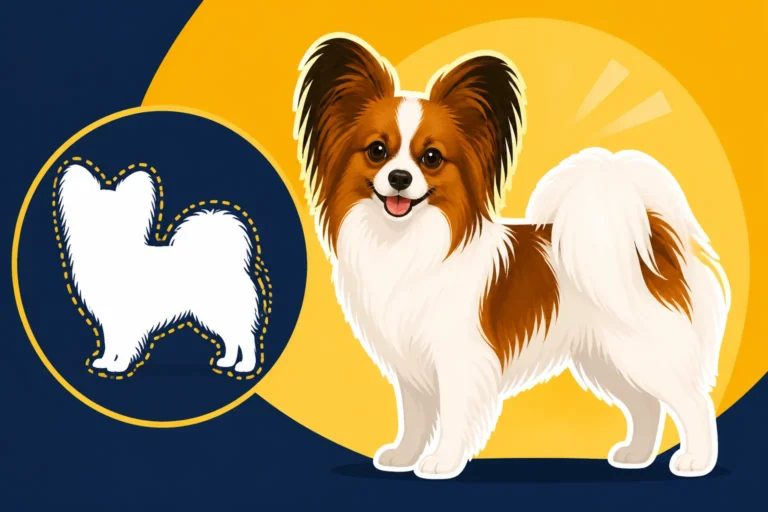
Papillon feet are elongated and hare-like
The Papillon’s feet are generally described as hare-like: relatively long and narrow compared with a rounded, compact paw. The toes are arched, and the pads provide the paw’s contact with the ground. The overall impression should be neat and delicate, but not weak or misshapen.
That “hare foot” description refers to the paw’s proportions, not to an exaggeratedly long or splayed foot. A Papillon should still be able to stand comfortably and move with a balanced, easy stride. The toes should not look painfully cramped, and the paw should not roll or collapse awkwardly when the dog is standing.
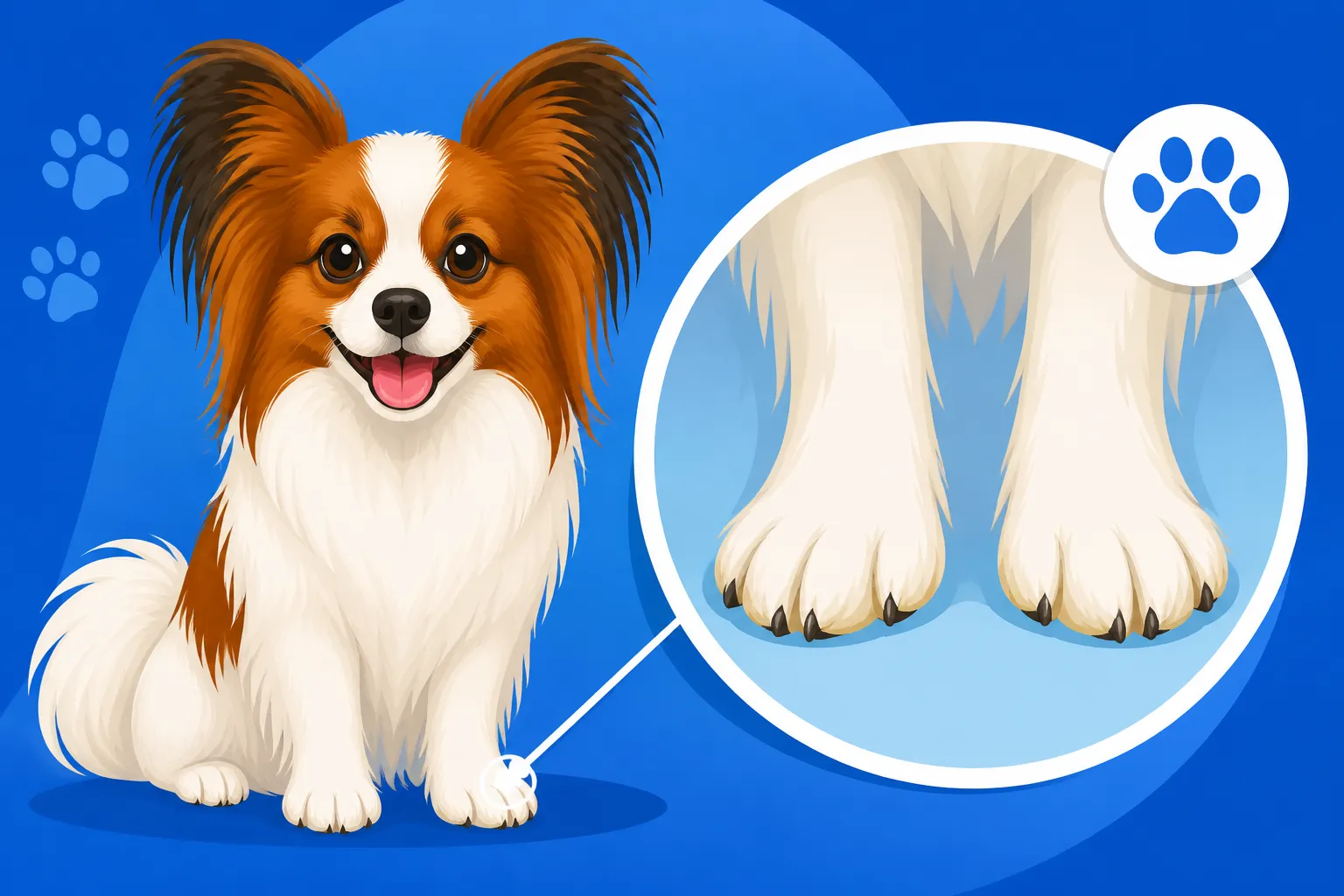
The hair around the feet can make the shape harder to judge. Papillons grow fine feathering on their legs and feet, so a dog may look as though it has a much wider paw than it does. Part the hair gently and look at the foot itself rather than judging by the outer fringe. For more on the breed’s overall proportions, see What a Correct Papillon's Outline Looks Like.
How the feet fit the breed’s overall build
Papillons are small, fine-boned dogs, but “fine-boned” does not mean frail. Their feet should look in proportion to their legs and body: tidy enough to suit the breed, but substantial enough to support comfortable movement. A paw that looks a little longer than you expect may be perfectly consistent with the breed’s hare-like foot shape.
There is natural variation between individual dogs. Age, coat length, nail length, and the angle at which a dog is standing can all change how the feet appear. A puppy’s proportions also change as it grows, so it is more useful to consider the whole dog’s comfort and movement than to compare one paw with a photograph of another Papillon.
Breed type is only one part of the picture. If the paws suddenly look swollen, tender, unusually turned, or different from one another, that is not simply a question of whether the dog has the “right” shape. It is a reason to check for irritation or injury and, if the change persists or the dog seems uncomfortable, ask a veterinarian.
How to tell whether a Papillon’s feet look healthy
Look at the paw from above and underneath
For a calm at-home check, choose a moment when your Papillon is relaxed. Separate the feathering with your fingers and look at each foot from above. You should be able to see the toes and nails without pulling at the hair. Check whether the toes sit naturally together and whether the nails appear to be a similar, manageable length.
Then look at the pads and the spaces around the toes. The pads should not have obvious cuts, embedded debris, or raw-looking patches. A dog may pull a paw away simply because it dislikes having its feet handled, so one quick flinch does not necessarily mean there is a problem. Repeated licking, limping, or a clear reaction when you touch one specific spot is more meaningful.
Try to compare all four feet rather than focusing on a single angle. A Papillon may stand with one paw turned slightly outward while resting, then place it differently when walking. If you are unsure whether the stance is typical, observe the dog walking on a level, nonslip surface and note whether the foot lands comfortably. How a Papillon Should Move offers more context for assessing the breed’s movement as a whole.
Notice changes in comfort, not just appearance
A foot can look unusual without bothering the dog, while a small splinter or sore spot may be difficult to see beneath the feathering. Pay attention to how your Papillon behaves: repeated paw licking, reluctance to walk, suddenly favoring one leg, or stopping during a familiar route can tell you more than the silhouette of the paw alone.
A minor difference in nail color or hair length is not automatically a concern. A sudden change, such as redness between the toes, swelling, a broken nail, bleeding, or persistent tenderness, deserves closer attention. If your dog will not let you inspect the area, do not force the paw open; a frightened struggle can make a small problem worse.
When documenting a change, take a clear photo of the paw and note when you first noticed it and whether your dog is walking normally. That can help you describe the issue at a veterinary appointment. If discomfort is significant, worsening, or accompanied by an obvious wound, contact your veterinarian rather than waiting for grooming to resolve it.
Grooming the feet without changing their natural shape
Keep the nails and pad hair manageable
Long nails can alter how a dog places its feet. When nails touch the floor before the pads do, they may affect the dog’s stance and traction. Feathering can also hide nail length, so check the nails directly instead of assuming they are short because they are hard to see. The connection between nail care and movement is discussed in How a Papillon's Nails Affect Its Knees.
Hair between the pads may need tidying if it grows far enough to interfere with traction or collect dirt and debris. The goal is practical care, not reshaping the paw to make it look rounder or more like another breed’s foot. If you are unsure where the hair ends and the sensitive pad begins, have a groomer or veterinary professional show you the safe areas to trim.
A small comb and grooming scissors may be enough for routine upkeep, but scissors near a moving paw require patience and a steady hand. If your Papillon squirms, has thick mats, or dislikes foot handling, ask a professional for help. For details on the coat around the paws, read Whether a Papillon's Feet Need Trimming and Whether Hair Between a Papillon's Pads Causes Slipping.
Make handling a calm, repeatable routine
Papillons often have delicate-looking feet and abundant feathering, which can make owners nervous about grooming too close. Start with brief, gentle handling when the dog is relaxed: touch a shoulder, move down the leg, and briefly hold one paw before letting go and rewarding calm behavior. Gradually build up to checking the toes and nails over several sessions.
Keep tools within reach before you begin, and work in a place where your dog cannot slip off a table or jump down unexpectedly. A nonslip mat on the floor can make the experience steadier for both of you. If you need a basic comb or nail-care supplies, Chewy is one place owners may look for general grooming items; choose tools that suit your dog and ask a groomer to demonstrate safe use if you are new to paw care.
Avoid cutting mats out close to the skin, especially between the toes, where it can be difficult to see exactly where the skin folds. If the hair is tangled tightly or your dog is distressed, stop and get help rather than turning a routine trim into a struggle. Which Brush a Papillon Needs and How Often a Papillon Needs Brushing can help you build a broader coat-care routine.
When foot shape or movement merits professional attention
Separate normal breed shape from a new problem
A Papillon’s naturally elongated foot is not, by itself, a sign of trouble. What matters is whether the shape is paired with discomfort or a change in function. For example, a dog that has always had narrow-looking hare feet and walks happily is different from a dog whose paw suddenly becomes swollen, twisted-looking, or painful.
Consider the context. Has your dog recently walked on hot pavement, rough ground, or icy surfaces? Is there a new limp after a jump or a long outing? Is one paw affected while the others look and feel normal? These details can help distinguish a grooming issue from a possible injury or irritation.
Do not try to correct a suspected structural problem by trimming the hair into a different outline or changing the nails dramatically at home. A veterinarian can assess pain, swelling, and gait, while a qualified groomer can help with coat and nail maintenance. If the concern is about breed-standard appearance rather than comfort, a knowledgeable breed mentor or conformation judge may be able to explain how the foot is viewed in context. See Which Faults Judges Penalize in a Papillon for the broader distinction between breed presentation and everyday health.
Watch footing around the home
Smooth floors can make even a healthy Papillon look uncertain, particularly if the dog is moving quickly or its nails and pad hair need attention. If your dog skids, take a look at the floor surface, nail length, and hair around the pads before assuming the paw shape is the cause. A runner or nonslip mat in a frequently used hallway may make the route more comfortable.
Stairs and jumps can also draw attention to how a small dog lands. A Papillon that hesitates on a slick step may be reacting to poor traction or lack of confidence, not to an abnormal foot. Make changes gradually and supervise your dog on surfaces where a slip could lead to a fall. The home-safety discussion in Whether a Papillon Slips on Hardwood and Whether Stairs Are Safe for a Papillon may help you think through those everyday situations.
If your dog’s footing changes suddenly, or slipping is accompanied by weakness, pain, or limping, do not rely on floor adjustments alone. Keep your Papillon from repeatedly jumping or running on a surface that seems unsafe, and ask your veterinarian what to do next. Practical prevention is helpful, but a new movement problem deserves an explanation.
| What you notice | What it may mean | A sensible next step |
|---|---|---|
| A neat, slightly elongated paw with comfortable movement | Typical hare-like Papillon foot shape | Keep up routine nail and paw checks |
| Feathering that makes the paw look wider | Coat obscuring the actual foot outline | Part the hair gently and inspect the toes |
| Hair extending between the pads | Possible grooming or traction issue | Ask a groomer about a careful tidy-up |
| Nails touching the floor or clicking heavily | Nails may need attention | Check length and arrange a safe trim |
| New swelling, redness, bleeding, or persistent licking | Possible irritation or injury | Contact a veterinarian if it persists or is painful |
| Sudden limping or reluctance to bear weight | A movement or pain concern, not just a shape question | Limit activity and seek veterinary guidance |
A Papillon’s feet are supposed to look somewhat elongated and fine, with the tidy hare-like outline that suits the breed. Feathering can disguise that shape, and nails or pad hair can affect how the feet function, so regular gentle checks are useful. Judge the paws alongside your dog’s comfort and movement; a sudden change or sign of pain calls for more than a cosmetic trim.
Disclaimer
This article is for general informational purposes only and does not constitute professional advice. Laws, prices and regulations vary by location and change over time. Consult a qualified professional for guidance on your specific situation.