Why a Papillon’s Nails Affect Its Knees
It might seem like a small detail, something easily overlooked amidst all the joys and challenges of owning one of these intelligent, energetic little dogs. But the length of your Papillon's nails can actually have a profound and detrimental impact on their overall musculoskeletal health, particularly on those delicate knees. If you've ever wondered why your vet or groomer stresses nail trims so much, or why your Papillon occasionally takes an odd step, this guide will explain the crucial connection between healthy nails and healthy joints, offering practical advice to keep your butterfly dog striding confidently.
The Delicate Balance of a Papillon's Structure
Papillons, with their fine bones and spirited nature, are athletes in miniature. Every part of their physical structure works in concert to support their movements, from their graceful high-stepping gait to their impressive agility. When one part of this system is out of balance, it can create a ripple effect, putting strain on other areas, and their knees are often the first to feel the pressure.
Understanding the Papillon's Anatomy and Gait
Imagine your Papillon, prancing across the lawn, ears flying like wings. Their natural gait is light, free, and elegant. Their small, hare-like feet are designed to provide nimble traction and absorb impact, and their toes spread slightly to grip surfaces. This design relies on their nails being short enough that they don't interfere with the natural splay and contact of the paw pads on the ground. When they walk, their toes should be able to flex, and their paw pads should bear the primary weight. Their entire leg structure, from hip to toe, is aligned to distribute force efficiently.
A Papillon's structure, while delicate in appearance, is built for activity. They are not merely lap warmers; they are agile companions who thrive on movement. This natural design, however, makes them particularly susceptible to issues when their biomechanics are compromised, even by something as seemingly minor as overgrown nails. Think of it like a finely tuned machine; if one cog is slightly off, it impacts the entire mechanism.
The Role of Paws in Weight Distribution
The paws are the foundation of your Papillon's entire body. They are the first point of contact with the ground, acting as shock absorbers and providing stability. Each toe, pad, and nail plays a role in how weight is distributed and how force is transmitted up the leg. Ideally, a Papillon walks with its paw pads flat on the ground, allowing their strong, flexible toes to grip and push off. This natural footfall ensures that the weight is evenly distributed across the pads, and the bones and joints of the paw, ankle, and knee are aligned correctly.
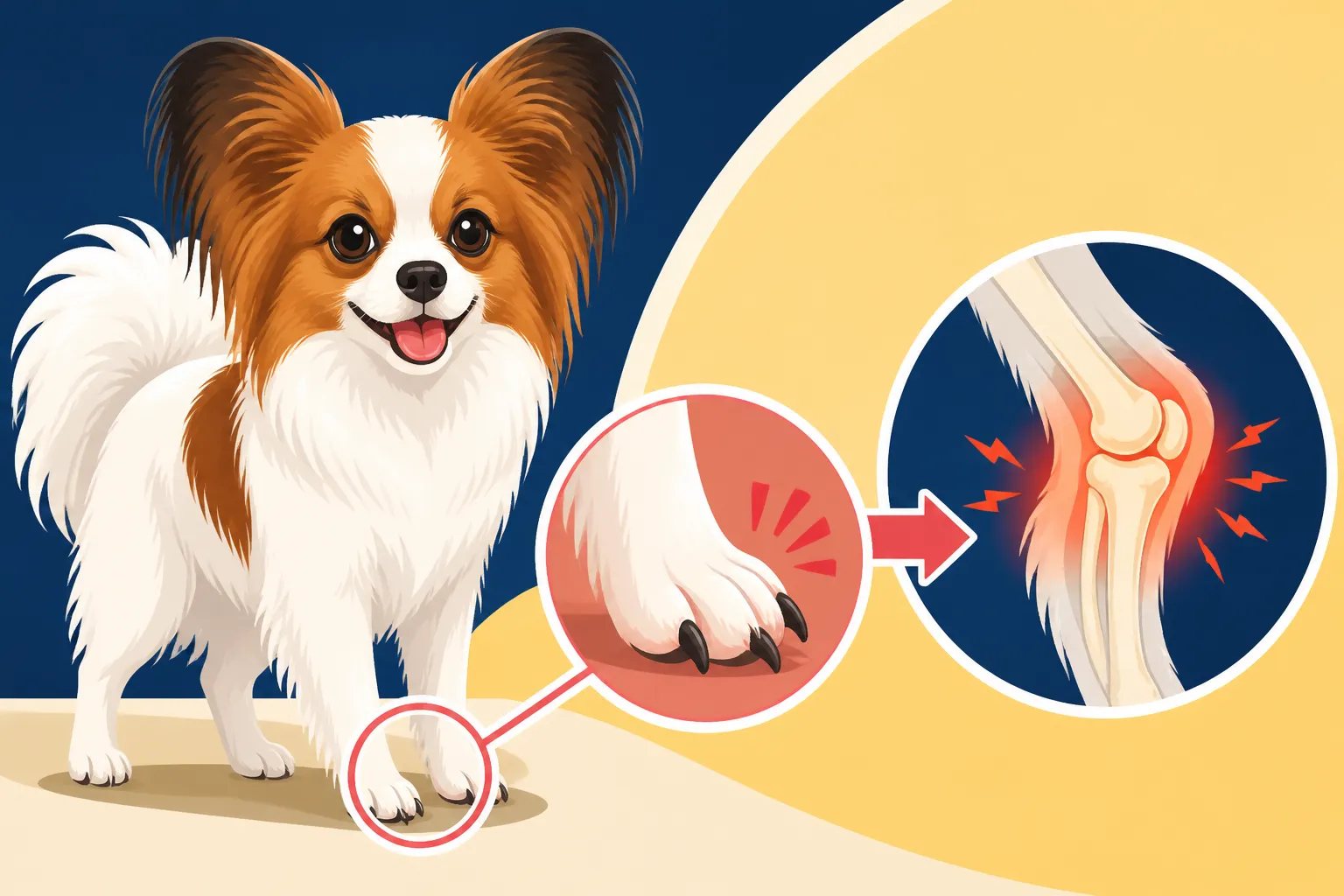
When nails become too long, they force the toes upwards, pushing the entire paw into an unnatural position. Instead of the paw pads bearing the brunt of impact, the nails themselves start to hit the ground first. This changes the angle of the foot, which in turn alters the angle of the ankle, then the knee, and ultimately the hip. This subtle but constant shift in weight-bearing is a recipe for long-term joint strain, as the body attempts to compensate for the incorrect footfall.
The Connection to Patellar Luxation
One of the most common orthopedic concerns in Papillons is patellar luxation, a condition where the kneecap (patella) slips out of its groove. Patellar Luxation Is the Papillon Problem You Will Actually Meet. While patellar luxation is often a genetic predisposition, environmental factors and physical stresses can certainly exacerbate it or even contribute to its development. The constant, unnatural pressure placed on the knee joint due to overgrown nails can significantly worsen an existing luxation, making it more painful and more frequent.
Even in a Papillon with perfectly healthy knees, chronically long nails can introduce an abnormal gait that stresses the ligaments and tendons surrounding the kneecap. This continuous strain can, over time, weaken these supporting structures, making the knee more vulnerable to slipping. It’s a vicious cycle: long nails cause improper movement, which stresses the knee, which makes it more prone to luxation, and a luxating patella makes proper movement even harder. It's truly a silent stressor that many owners don't immediately connect to knee issues.
How Overgrown Nails Disrupt Biomechanics
It’s easy to dismiss long nails as merely a cosmetic issue or a source of annoying clicking on hard floors. However, for a Papillon, whose very structure is built for nimble, precise movements, overgrown nails fundamentally alter the way they stand, walk, and run. This alteration in their natural biomechanics is where the real problems begin, ultimately impacting their knee health in significant ways.
The Mechanics of a Long Nail
Imagine wearing shoes that are constantly too big, forcing your toes to curl up and preventing your foot from sitting flat. That's essentially what long nails do to a Papillon's paw. When the nails extend beyond the paw pads and touch the ground, they act like tiny stilts. This isn't how a dog's paw is designed to work. The pressure points shift from the sturdy paw pads to the tips of the nails, which are not equipped to bear weight.
This constant contact with the ground, even when standing still, forces the toes to splay and hyperextend. The sensitive quick, which contains blood vessels and nerves, grows longer with the nail, making it even harder to trim them back without causing pain or bleeding. The longer the nails get, the further they push the foot out of its natural alignment, creating a cascade of biomechanical issues up the leg. It becomes a deeply ingrained habit, even if the Papillon isn't consciously aware of the discomfort it causes.
Forced Changes in Stance and Posture
With long nails, a Papillon can't stand or walk normally. To compensate for the "stilts," they adjust their posture in subtle but damaging ways. Instead of standing squarely with their weight distributed evenly over their paw pads, they might shift their weight back onto their heels or try to stand "over" their toes, curling them back to lift the nails off the ground. This creates a perpetually unbalanced stance.
When they walk, their stride shortens, and they might adopt a flat-footed, shuffling gait rather than their natural light trot. This is because they're trying to avoid the discomfort of their nails pushing into the ground. These compensatory movements, while seemingly minor, force muscles to work differently, altering the alignment of the bones and joints in their legs. Over time, these unnatural movements become ingrained, leading to chronic muscle strain and joint stress. Whether a Papillon Skips a Step When Running might be one of the signs you notice.
Increased Stress on Joints and Ligaments
The consistent changes in posture and gait directly translate to increased stress on the joints and ligaments throughout the Papillon's legs, especially the knees. Each time they take a step with overgrown nails, the force is not absorbed correctly by the paw pads. Instead, the impact travels up the misaligned bones and puts undue strain on the knee joint. The ligaments that hold the kneecap in place and stabilize the knee are constantly stretched or compressed in abnormal ways.
Imagine a rope being pulled from the side instead of straight on; it weakens over time. Similarly, the ligaments around the Papillon's patella are subjected to forces they weren't designed to handle. This constant, low-grade trauma can lead to inflammation, pain, and eventually, the loosening of structures that are meant to keep the kneecap firmly in its groove. Over time, this cumulative stress can make an otherwise healthy knee prone to issues, or significantly worsen existing problems like patellar luxation.
The Cumulative Impact on Knees
The subtle, ongoing stress caused by overgrown nails doesn't just create momentary discomfort; it can lead to chronic pain and long-term joint damage in your Papillon. Understanding this cumulative impact is key to appreciating why consistent nail care is such a vital part of their overall health regimen. It's not just about aesthetics; it's about preserving their mobility and comfort for years to come.
Exacerbating Existing Patellar Luxation
If your Papillon already has a predisposition to patellar luxation, or has been diagnosed with it, long nails are a major contributor to worsening the condition. What Patellar Luxation Does to a Papillon. The misaligned footfall caused by overgrown nails puts additional rotational and shearing forces on the knee joint. This means the kneecap, which already struggles to stay in its groove, is under even greater pressure to slip out.
Every time the kneecap luxates, it can cause pain, inflammation, and further damage to the articular cartilage, the smooth tissue that covers the ends of the bones within the joint. This repeated trauma accelerates the degenerative process within the joint, potentially leading to earlier onset and more severe arthritis. You might notice your Papillon's luxation occurring more frequently, or perhaps they show more pronounced signs of pain, reluctance to jump, or a more obvious "skip" in their step. The longer the nails are neglected, the more pronounced and debilitating the knee issues can become, making their daily life a constant struggle against discomfort.
Contributing to the Development of Knee Issues
Even if your Papillon starts life with perfect, sound knees, chronically long nails can, over time, contribute to the development of patellar luxation or other knee problems. The persistent, abnormal stress on the knee joint from improper weight distribution and altered gait mechanics creates an environment ripe for injury. The ligaments and tendons surrounding the knee gradually stretch and weaken, losing their ability to hold the patella securely.
This isn't an overnight phenomenon; it's a slow, insidious process. Imagine a tiny drip of water eventually carving a groove in stone. Similarly, the continuous strain, day after day, week after week, slowly wears down the resilience of the knee structures. For active Papillons who love to run and jump, this silent stressor becomes even more critical. Whether a Papillon Should Be Stopped From Jumping Off Furniture is also a key consideration, as repeated impacts can compound the problem caused by poor foot mechanics. Prevention through diligent nail care is far easier, and less costly, than managing established knee conditions.
Beyond the Knees: Wider Musculoskeletal Effects
While the knees are a primary concern, the ripple effect of overgrown nails extends far beyond them. The entire musculoskeletal system of your Papillon is interconnected, and compensating for poor foot mechanics can lead to strain in other areas. This can manifest as issues in the hips, spine, and even the neck. When a dog walks unnaturally, their spine might twist or arch differently, causing muscle tension and discomfort.
Over time, this can lead to generalized stiffness, reduced flexibility, and even compensatory pain in other joints. An overweight Papillon will experience even greater strain on all its joints, and coupled with long nails, the risk of problems escalates significantly. Why an Overweight Papillon Strains Its Knees. It's a holistic issue: proper foot health underpins the health of the entire locomotive system. Ignoring nail length is like ignoring the foundation of a house; cracks will eventually appear elsewhere.
Proactive Nail Care as a Preventative Measure
Understanding the potential damage from long nails isn't meant to cause anxiety, but rather to empower you with knowledge. The good news is that nail care is a completely manageable aspect of your Papillon's routine, and proactive attention can make a world of difference in preventing discomfort and serious knee issues. It's a small investment of time for a huge return in your dog's long-term health and happiness.
The Importance of Regular Trimming
Regular nail trimming is, without exaggeration, one of the most fundamental aspects of preventative health care for your Papillon. It’s not just about preventing scratches on your hardwood floors; it’s about maintaining their natural gait, protecting their joints, and ensuring their comfort. The goal is to keep their nails short enough so they do not touch the ground when your Papillon is standing. If you can hear a click-click-click as they walk across a hard surface, their nails are too long.
The frequency of trimming will vary for each dog, depending on their activity level, the surfaces they walk on, and individual nail growth rate. Generally, for most Papillons, this means a trim every 2-4 weeks. Consistency is key, not just for the length of the nail, but also for gradually receding the quick, allowing the nail to be cut shorter over time. Think of it as a crucial routine, like brushing their teeth. How Often a Papillon's Teeth Need Brushing is another critical aspect of their small breed care.
Techniques for Safe and Effective Nail Care
Nail trimming can be intimidating for both owner and dog, but with the right technique and a positive approach, it can become a stress-free routine. Here's a basic approach:
- Gather your tools: Good quality clippers (guillotine or scissor style, whichever you prefer), styptic powder (just in case you cut too short), and plenty of high-value treats.
- Choose the right environment: A quiet, well-lit space where both you and your Papillon feel comfortable.
- Positive reinforcement: Start by simply handling their paws, then tapping the clippers against a nail, followed by a treat. Build up slowly.
- The actual trim: Hold the paw firmly but gently. Identify the quick – it's often visible as a pinkish area inside the nail, especially on lighter nails. For dark nails, it's harder, so trim tiny bits at a time. You want to cut just before the quick, taking off the very tip. If you're unsure, it's always better to take off too little than too much. How Fast a Papillon's Nails Grow means you'll have plenty of chances to get it right.
- Don't forget the dewclaws: If your Papillon has them (often on the front legs, sometimes on the back), they don't wear down naturally and can curl back into the paw pad, causing pain.
If your Papillon is particularly resistant, consider taking them to a professional groomer or your vet for their trims. They can often provide a quick, efficient trim and may offer tips for making it easier at home. Brands like Chewy and Amazon offer a variety of clippers and grinding tools, making it easy to find what suits you and your Papillon best.
Tools and Tips for At-Home Maintenance
Having the right tools can make all the difference in successful at-home nail care. Here's what you might need:
- Nail Clippers: There are two main types:
- Scissor-style: These are often preferred for smaller breeds like Papillons as they give you more control.
- Guillotine-style: Some owners prefer these, but ensure you get a size appropriate for small nails.
- Nail Grinder (Dremel-style tool): Many owners find grinders less intimidating than clippers, especially if their dog has dark nails where the quick is hard to see. Grinding allows you to remove tiny layers at a time, slowly pushing the quick back. It also leaves a smoother edge.
- Styptic Powder: This is a must-have. Even the most experienced owners can accidentally "quick" a dog. A tiny pinch of styptic powder will quickly stop the bleeding and alleviate discomfort.
- High-Value Treats: Keep plenty of your Papillon's favorite treats on hand. Positive association is crucial.
- Non-Slip Mat: A non-slip surface helps your Papillon feel more secure during the process.
Tips for Success:
- Start young: If you have a puppy, start handling their paws and introducing clippers/grinders early to desensitize them.
- Make it positive: Always end on a good note, even if you only managed one nail. Lots of praise and treats!
- Take breaks: Don't try to do all four paws in one go if your Papillon is anxious. Do one paw, take a break, or spread it out over a day or two.
- Observe their feet: Whether a Papillon's Feathered Feet Hide Long Nails is a real consideration. Their beautiful long feathering can easily obscure overgrown nails, so you need to be proactive about checking them. Regular brushing can also help you notice any matting around the feet that might indicate difficulty walking due to nail length.
- Consider floor surfaces: If your Papillon spends a lot of time on soft surfaces like carpets, their nails will wear down less naturally, requiring more frequent trims.
Recognizing the Signs and Seeking Professional Help
Even with the best intentions, it's possible for nails to become overgrown or for underlying knee issues to develop. Knowing what to look for and when to involve a professional is crucial for ensuring your Papillon receives timely and appropriate care, protecting their precious mobility and quality of life.
Identifying Overgrown Nails and Their Effects
The most obvious sign of overgrown nails is the audible clicking sound when your Papillon walks on hard floors. If you can hear their nails tapping, they are too long. Beyond the sound, visually inspect their paws. When your Papillon is standing, their nails should ideally not touch the ground. If they are pushing up the toes or extending noticeably beyond the paw pads, it's time for a trim.
Other signs of long nails and their related issues might be:
- Altered gait: A shuffling walk, a reluctance to fully extend their paws, or a bouncy, high-stepping gait that's an attempt to avoid nail contact.
- Soreness or lameness: Your Papillon might be reluctant to walk, jump, or play as much. They might favor one leg or lift a paw.
- Foot splaying: The toes might appear splayed or pushed apart due to the pressure from the long nails.
- Licking or chewing at paws: This can indicate discomfort or pain.
- Changes in paw pad texture: Over time, the paw pads may become tougher or develop calluses in unusual spots due to altered weight distribution.
- Reluctance to have paws handled: If trimming has been painful in the past, your Papillon might become highly resistant.
It’s worth noting that How Short a Papillon's Nails Must Stay for Agility is a common concern for active owners, highlighting the direct connection between nail length and performance, which ties directly into joint health.
When to Consult Your Veterinarian or Groomer
Don't hesitate to seek professional help if you're struggling with your Papillon's nail care or if you suspect they are experiencing pain or mobility issues.
Consult a groomer if:
- You're uncomfortable or unsure about trimming their nails yourself.
- Your Papillon is highly resistant, and you need professional assistance to make it a positive experience.
- You need guidance on proper technique or tools.
- Their nails are very long and have developed long quicks, making at-home trimming difficult or risky.
Consult your veterinarian if:
- You notice persistent lameness, limping, or a pronounced change in gait.
- Your Papillon is showing signs of pain, vocalizing, or avoiding movement.
- You suspect patellar luxation or other orthopedic issues. Your vet can diagnose the grade of luxation and discuss treatment options. Which Grade of Luxation Needs Fixing in a Papillon
- Their nails are extremely overgrown, potentially curling into the paw pad, or appear infected.
- You've tried trimming but keep hitting the quick, and the nails bleed easily, indicating the quick has grown out significantly.
Your vet can not only help with nail issues but also provide advice on Whether a Papillon's Knees Get Worse With Age and suggest strategies to mitigate progression of joint issues.
Long-Term Management and Lifestyle Adjustments
Long-term management of your Papillon's nail and knee health involves a combination of consistent care, environmental considerations, and professional oversight.
Here’s a practical table summarizing critical aspects of nail and knee care:
| Aspect | Recommendation | Why It Matters |
|---|---|---|
| Nail Trimming | Every 2-4 weeks, or as needed to prevent ground contact. Use clippers or grinder. | Prevents toe splaying, maintains natural gait, protects knee alignment. |
| Footwear/Paw Balm | Consider paw protection in extreme weather; keep paw pads moisturized. | Prevents cracks/injuries that can alter footfall, adding to discomfort. |
| Flooring | Provide non-slip rugs on hard floors (wood, tile). | Reduces slipping, which can exacerbate knee issues and lead to injury. |
| Ramps/Steps | Install ramps or steps for furniture access (sofas, beds). | Minimizes high-impact jumps that stress fragile knee joints. |
| Weight Management | Maintain ideal body weight with appropriate diet and exercise. | Excess weight puts immense strain on all joints, particularly the knees. |
| Regular Vet Checks | Annual wellness exams, discussing any mobility concerns with your vet. | Early detection of joint issues allows for proactive management and treatment. |
| Supplements | Discuss joint supplements (glucosamine, chondroitin) with your vet, if appropriate. | Can support joint health and potentially slow progression of degenerative changes. |
Remember that a Papillon's long life means their joints need to last a long time. Caring for a Papillon Past Eleven highlights that senior Papillons often face increased mobility challenges, making preventative care in their younger years even more critical. Consistent, loving attention to their basic needs, like proper nail care, will ensure your Papillon remains a lively, happy companion for years to come.
Disclaimer
This article is for general informational purposes only and does not constitute professional advice. Laws, prices and regulations vary by location and change over time. Consult a qualified professional for guidance on your specific situation.