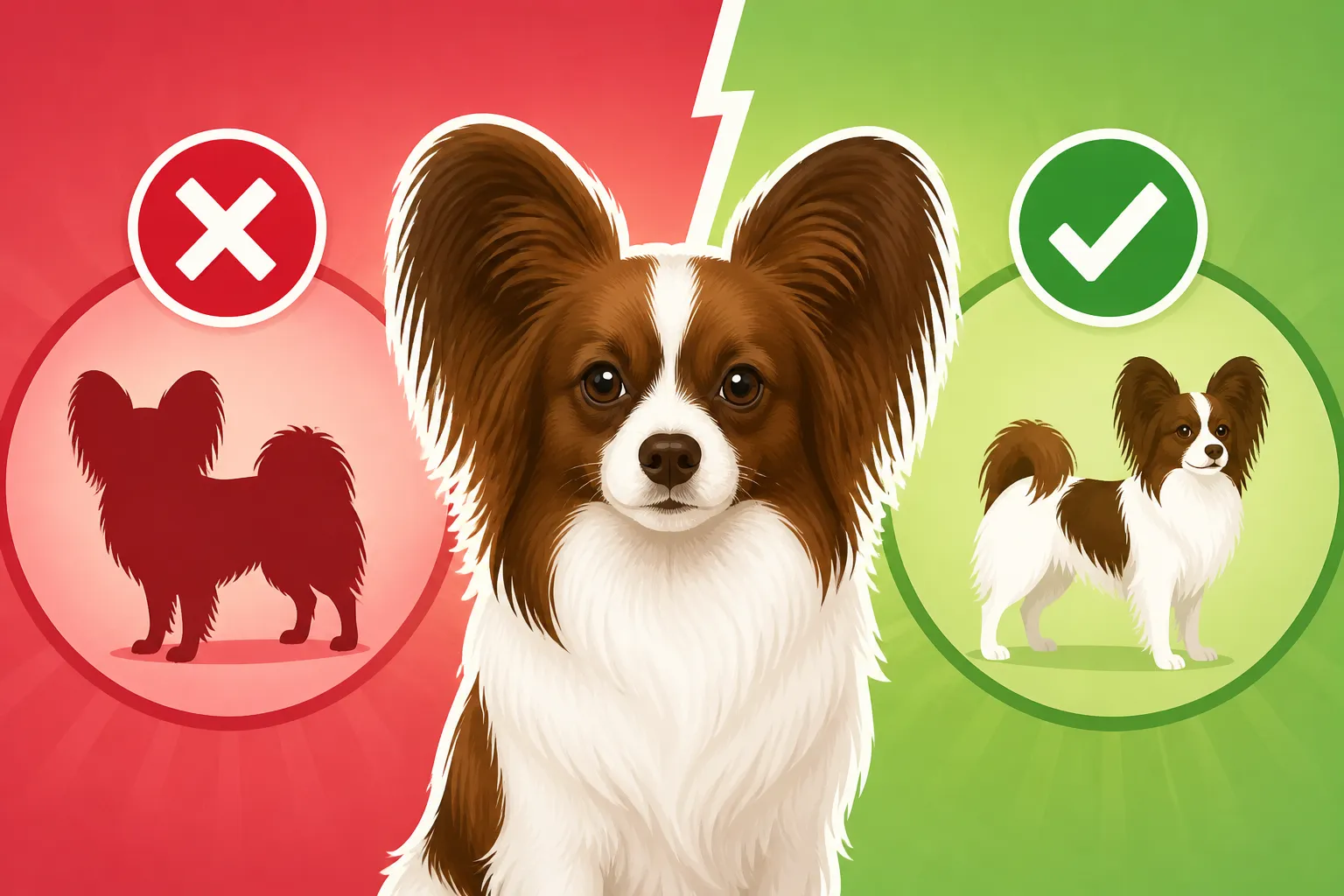
Whether a Liver Papillon Is Disqualified
A Papillon with a brown coat can prompt an uncomfortable question at a dog show: is the dog simply an unusual color, or does its pigmentation make it ineligible? The distinction matters because a liver-colored coat and liver-colored nose are not the same thing under the AKC breed standard. This guide explains what the standard says, what to check, and what the ruling means for a family pet.
Is a liver Papillon disqualified from the show ring
The AKC standard focuses on more than coat color
Under the American Kennel Club Papillon standard, a Papillon’s coat may be white with patches of any color, but the nose, eye rims, and lips are required to be black. The standard’s disqualification applies when those features are a color other than black. So when someone describes a dog as a “liver Papillon,” the key question is not only whether its coat looks brown. It is also whether the dog has liver-colored pigment on its nose, eye rims, or lips.
That distinction can be easy to miss in a photograph. A brown patch in the coat may appear alongside a dark nose, while a close look in good light reveals that the nose is brown rather than black. Conversely, people sometimes use “liver” loosely to describe a warm reddish-brown coat, even when the dog’s nose and other pigment are black. The word alone does not settle the question.
If you are comparing a dog’s markings with the standard, it can help to read Which Colors the Papillon Standard Accepts alongside What a Papillon's Nose Should Be. The exact text of the registry’s standard is the important reference for show eligibility; casual color descriptions are not a substitute.
Brown coat patches and liver pigment are different details
“Liver” generally refers to brown rather than black pigment in areas that would otherwise be dark, such as the nose. Coat color and skin pigmentation can be related, but they are not interchangeable descriptions. A Papillon may have a brown-looking coat marking without having the nonblack nose, eye rims, or lips that the AKC standard names as a disqualification.
This is why a quick online photo search can leave owners more confused than reassured. Lighting, camera settings, wet fur, and the dog’s age can all change how a color appears. A warm sable or red marking may look chocolate-brown in one picture and much lighter in another. If a show decision depends on the detail, inspect the dog in natural light and ask an experienced breeder or show official to help interpret the pigmentation.
| What you notice | Why it matters | What to check |
|---|---|---|
| Brown or reddish-brown coat patch | Coat color alone does not establish that the dog has nonblack pigment | Check the nose, eye rims, and lips separately |
| Brown or liver-colored nose | The AKC standard requires black nose pigment | Confirm the color in clear, natural light |
| Dark nose that looks brown in a photo | Lighting and image quality can be misleading | Inspect the dog directly rather than relying on a picture |
| White markings or a blaze | Markings are considered separately from pigment color | Review the standard’s requirements for white and colored areas |
The standard also has requirements for where color appears on the head. For more on that separate issue, see Whether a Papillon Needs Color Over Both Ears. A dog can meet one marking requirement and still have a separate concern, or meet the pigment requirement while having a marking question. It is best to assess each feature on its own.
What people mean when they call a Papillon liver
Color labels can be imprecise
Papillon owners and breeders may use color words informally, especially when describing puppies whose adult coats have not fully come in. A reddish-brown marking might be called red, sable, chocolate, or liver depending on the speaker. Those labels may communicate a general impression, but they do not necessarily establish the dog’s genetic color or whether its nose pigment meets a show standard.
Puppy coats can also change as the dog matures. Markings may become lighter, darker, or more clearly defined, and the full coat often looks different from the soft puppy coat. If you are trying to understand how a young dog’s appearance may develop, Whether a Papillon Puppy's Markings Change offers useful context. Keep in mind that coat changes do not automatically mean the nose or eye rims will change in the same way.
When a breeder uses the word “liver,” ask what they mean specifically. Are they describing the coat, the nose, the eye rims, or a known inherited color? Ask for clear pictures in natural light, and if show eligibility matters, ask whether the dog’s pigment has been assessed against the registry standard. A straightforward answer should distinguish between the dog’s coat markings and the color of its nose and other exposed pigment.
Check the nose, eye rims, and lips carefully
Start with the nose, since it is usually the easiest feature to inspect. Look when the dog is calm and the nose is clean and dry. Then check the eye rims and lips; on a heavily feathered Papillon, fur can make those areas harder to see. Do not mistake shadows, staining, or a phone camera’s color balance for actual pigment.
A breeder, veterinarian, or experienced Papillon exhibitor may be able to help you describe what you see, but the person making a show decision should use the applicable standard and show rules. If the color is borderline or genuinely difficult to classify, do not rely on a casual opinion from a social media comment. Ask the relevant kennel club or show officials how they handle questions of eligibility.
Other coat features can lead to separate questions. For example, a mostly white coat raises different considerations from a liver-colored nose; Whether an All White Papillon Can Be Shown covers that distinct issue. Similarly, the preferred shape and balance of the face markings are not the same as the required pigment color, as explained in Whether a Papillon's Blaze Should Be Even.
What disqualification means for a Papillon
Show eligibility is not the same as being a good pet
In dog-show language, a disqualification means the dog is not eligible to compete in that conformation class under the relevant rules. It does not mean the dog is unhealthy, badly cared for, or unsuitable as a companion. A Papillon with nonblack pigment can still be a much-loved family dog with the same lively, alert personality its owner treasures.
That distinction matters because the word “disqualified” can sound far more alarming than it is. If a judge or show official finds that a dog meets a disqualifying condition, the ruling concerns competition eligibility. It is not a diagnosis, and it does not mean the dog needs treatment simply because its nose is brown.
The question may also differ depending on the registry and the event. The AKC standard is relevant to AKC conformation shows, while another organization may have its own standard or procedures. Before entering a show, read the rules for that organization rather than assuming that a decision in one setting automatically applies everywhere.
Registration does not guarantee conformation eligibility
A dog’s registration paperwork and its eligibility to compete in a particular class are separate matters. Registration records identify the dog within a registry’s system; a show judge evaluates the dog under the applicable competition standard. Having registration papers does not by itself guarantee that every physical feature meets the conformation standard.
If you are planning to show a Papillon, contact the registry or show organizer if you are uncertain. Share clear, unedited photographs of the nose, eye rims, lips, and markings, but understand that photos may not be enough for an official determination. Ask whether the organization can explain the relevant rule before you pay entry fees or make travel plans.
For new owners, this can be an emotionally loaded conversation. You may have chosen a puppy because you loved its expression and unusual coloring, then later learned that a feature could limit show participation. It is reasonable to feel disappointed, especially if showing was part of your plan. But a conformation disqualification does not erase the qualities that made you choose that particular dog.
What owners should do next
If you are considering a puppy
Ask the breeder to describe the puppy’s coloring precisely. If the breeder says “liver,” follow up by asking whether they mean a brown coat marking or brown pigment on the nose, eye rims, or lips. Request recent, well-lit pictures and ask what the breeder understands about the puppy’s conformation-show eligibility. A responsible breeder should be willing to talk plainly about both the puppy’s strengths and any limits.
If the breeder is not sure, that is a reason to seek clarification, not necessarily a reason to assume the worst. You can compare the dog’s appearance with the official standard and ask an experienced Papillon exhibitor or the registry for guidance. Which Colors a Papillon Comes In provides broader background on the breed’s color patterns, while Whether a Papillon Can Be All One Color addresses a separate question about solid coloring.
If you are buying a companion rather than a show prospect, decide what matters most to you. A possible show disqualification may be important if you specifically hope to compete in conformation. It may have little practical importance if your goal is to share your home with a healthy, well-matched dog. Either way, ask about the puppy’s overall health, temperament, and care—not just its color.
If you already own a Papillon with brown coloring
There is no special home treatment needed just because a Papillon has brown coat markings or a brown nose. Keep up with ordinary grooming, dental care, veterinary checkups, and the routines that help your individual dog thrive. If you are assembling basic grooming supplies, a suitable comb or brush from a local pet shop or Chewy may be useful; choose tools for your dog’s coat and comfort, not because the dog has a particular color.
Color alone is not a reason to apply products to the nose or try to darken it. Avoid dyes, stains, or cosmetic products intended to alter pigment, particularly near the eyes and mouth. If the nose changes appearance suddenly, becomes irritated, cracks, or develops sores, ask your veterinarian rather than assuming the change is simply a breed-color feature.
For everyday coat care, gentle grooming tools are more useful than products marketed as color fixes. If you shop at Chewy or another pet retailer, check that any wipes or grooming products are intended for dogs and appropriate for the area where you plan to use them. Keep products away from the eyes and mouth unless their directions specifically allow that use. A dog’s comfort and skin health come first; show appearance is a separate concern.
If you hope to breed or show the dog
If conformation showing is a serious goal, seek an assessment before making plans around the ring. Ask a breed mentor or show official to review the dog against the relevant written standard, and confirm the rule with the organization hosting the event. A careful review can prevent an avoidable surprise on show day, when travel and entry arrangements have already been made.
For breeding, do not make decisions based on color alone. Talk with a knowledgeable breeder and veterinarian about health, temperament, structure, and appropriate health screening. A dog’s eligibility for conformation competition is not a complete measure of its value as an individual, and a desirable coat color does not compensate for concerns in other areas.
Chewy may be a convenient place to find routine grooming supplies, but color questions and breeding decisions call for guidance from people familiar with Papillons and the relevant registry standard. Keep the practical questions separate: use pet-care products for comfort and upkeep, and use the official standard and qualified breed guidance to understand show eligibility.
Disclaimer
This article is for general informational purposes only and does not constitute professional advice. Laws, prices and regulations vary by location and change over time. Consult a qualified professional for guidance on your specific situation.