What a Papillon’s Nose Should Be
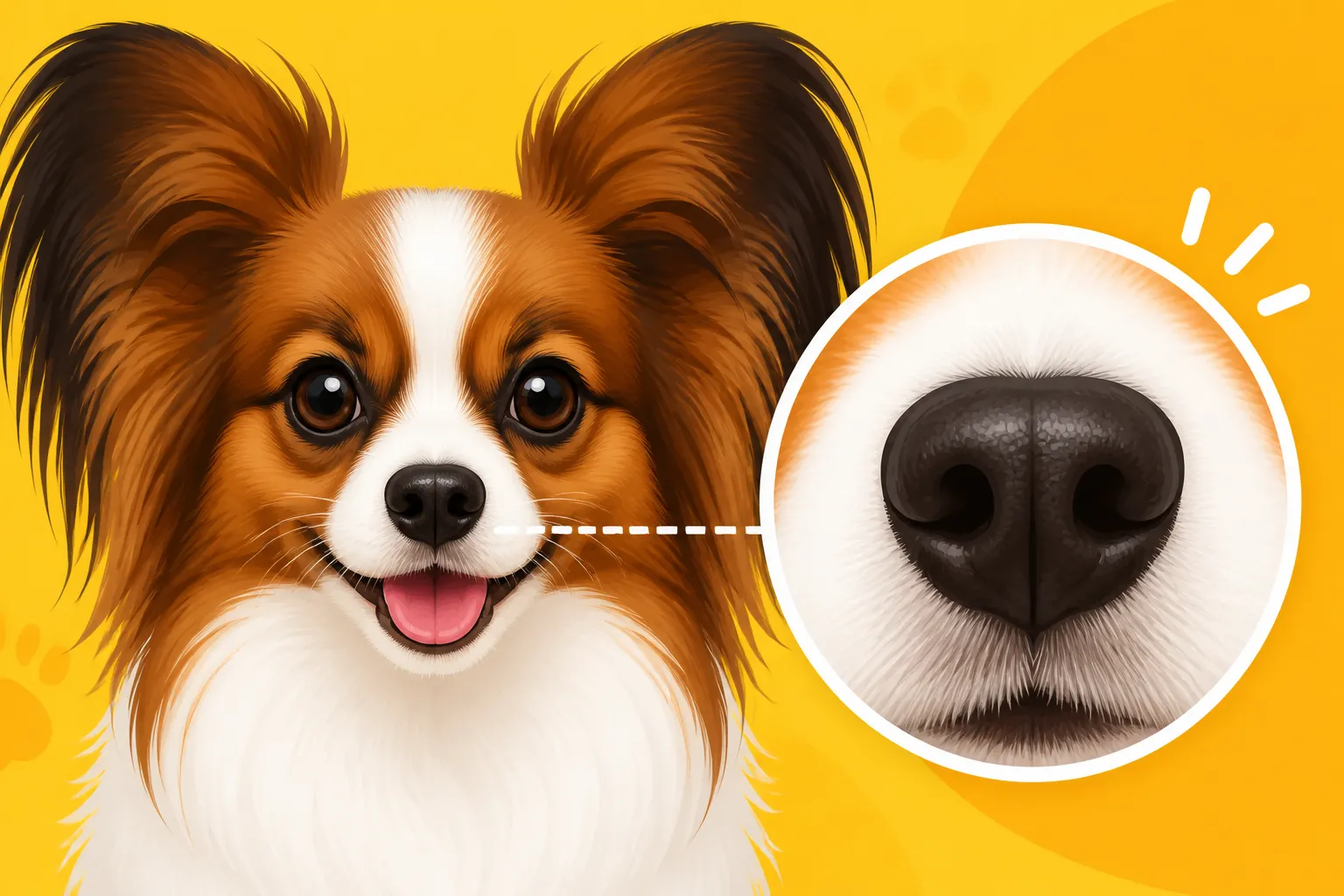
A Papillon’s nose should be black, with dark pigment that frames the muzzle and matches the breed’s characteristic facial features. It can be unsettling to notice a pink patch, a change in color, or a dry, crusty surface, especially on a tiny dog. This guide explains what is normal, what may need attention, and how to care for your Papillon’s nose safely.
What a Papillon’s Nose Should Look Like
The breed standard calls for a black nose
In a Papillon, the nose should be black. The lips and eye rims are also expected to have dark pigment, giving the face a defined look even when the coat has striking white markings. The nose should sit at the end of a moderate muzzle rather than looking pinched or overly short. For a broader look at how these features fit together, see What a Papillon's Head Should Look Like.
Coat color does not change the expected nose color. Papillons come in a variety of colors and patterns, but the nose is still supposed to be black. A white blaze or patches of color on the face can make the nose stand out visually; they do not mean that a pink or brown nose is the expected match. The variety of coat patterns is covered in Which Colors a Papillon Comes In and Whether a Papillon Must Have a White Blaze.
A breed standard describes an ideal appearance for showing and breeding, not a diagnosis. A Papillon with a nose that is not fully black is not automatically sick, uncomfortable, or a poor companion. If you are choosing a puppy for show prospects, ask the breeder how nose pigment develops in that family and whether the puppy’s color is still changing. If you are choosing a pet, focus first on health, temperament, and a responsible breeder rather than treating one pigment detail as a measure of the dog’s worth.
Pigment and facial markings are separate features
Nose pigment is different from the white stripe or colored patches on a Papillon’s face. A puppy may have an uneven blaze, a large area of white, or markings that look different on each side, while still having a black nose. Facial symmetry and nose color are not the same question; Whether a Papillon's Face Markings Should Be Symmetrical explains how markings are considered.
Puppies can look a little different as they mature. Coat color and markings may become more or less noticeable with age, and the face can change as the puppy grows into its adult coat. Pigment can also take time to become more defined in some young dogs. If the nose appears partly pink in a puppy, take a clear photo and ask the breeder or veterinarian whether the appearance is expected for that individual. Avoid assuming that it is harmless or that it indicates a health problem based on color alone.
| Feature | What is generally expected in a Papillon | What to keep in mind |
|---|---|---|
| Nose | Black pigment | A new or spreading change deserves attention |
| Lips | Dark pigment | Compare appearance over time rather than relying on one glance |
| Eye rims | Dark pigment | Eye changes or irritation should be discussed with a veterinarian |
| Facial blaze | White markings may vary | A blaze does not determine nose color |
| Nose surface | Usually smooth and comfortable | Cracks, sores, bleeding, or persistent crusting are not simply cosmetic |
A nose can look different in different light
Bright sunlight, indoor lighting, dampness, and the angle of a photograph can all affect how dark a nose looks. A wet surface may reflect light and appear paler in one spot; a shadow can make another area look darker. Before worrying about a suspected change, look at the nose in even natural light and compare it with older photographs if you have them.
The eye-catching markings around a Papillon’s face can also make a nose seem lighter by contrast. If you are trying to assess pigment, look at the nose itself rather than judging from the overall balance of the face. For a complete picture of the breed’s facial details, What Color a Papillon's Eyes Should Be is a useful companion topic.
Why a Papillon’s Nose May Look Pink or Lighter
Changes in pigment are not all the same
A nose that has always been partly pink is different from one that was black and has recently developed a pale patch. A stable appearance may simply be an individual pigmentation feature. A new, enlarging, or irregular area is more important to track, especially if the skin also looks swollen, sore, or rough.
Try to note when you first saw the change, whether it is growing, and whether the surface has changed as well. A dated photo taken in similar lighting can help you describe what you are seeing at a veterinary appointment. This is more useful than trying to remember whether a small patch seemed darker several weeks ago.
A color change alone does not identify its cause. Pigment can vary, but irritation, injury, inflammation, or other skin conditions may also affect how the nose looks. A veterinarian can examine the area and decide whether observation, testing, or treatment is appropriate. Do not try to diagnose a new patch by comparing it with online photographs.
Watch the skin as well as the color
Look for changes in texture and comfort, not just color. A nose that is persistently crusty, cracked, bleeding, swollen, unusually tender, or developing sores should be checked. Pay attention if your Papillon rubs its face, paws at the muzzle, seems reluctant to eat, or reacts when you touch near the nose. These signs matter more than whether the nose feels wet at one particular moment.
If the nose change appears alongside eye discomfort, discharge, or other facial symptoms, mention those too. A veterinarian may want to assess the eyes and surrounding skin rather than treating the nose as an isolated cosmetic concern. You can read more about another eye-related issue in Whether a Papillon Gets Dry Eye, but do not use a nose symptom to assume that your dog has an eye condition.
Contact your veterinary clinic for guidance if the change is persistent, worsening, or accompanied by pain, bleeding, discharge, or a general change in your dog’s behavior. Seek prompt care if your Papillon has trouble breathing, has significant swelling, or seems acutely unwell. These situations call for professional assessment rather than home remedies.
Nose Care for a Papillon
Keep routine cleaning gentle
Most Papillons do not need a complicated nose-care routine. If there is a little food or dirt around the muzzle, use a soft cloth dampened with plain water and wipe gently. Do not scrub, pull at crusts, or use alcohol, peroxide, fragranced wipes, or human skin products. The nose is sensitive, and irritating it can make a minor issue worse.
If you shop at Chewy for basic pet-care supplies, a soft cloth or other simple grooming item may be convenient to add to your routine. Keep the approach uncomplicated: gentle wiping is different from applying a treatment. If your dog has a persistent crust, lesion, or patch of irritation, ask your veterinarian what is safe before putting anything on it.
A Papillon’s face is small, so restraint matters. Let your dog sniff the cloth, use a calm voice, and stop if the dog becomes distressed. You can build cooperation gradually by rewarding a brief touch near the muzzle before attempting a wipe. This is especially helpful for puppies who are still learning to tolerate handling; Teaching a Papillon Puppy to Be Handled All Over offers related guidance.
Be cautious with balms and home treatments
A dry-looking nose does not automatically need balm. A dog’s nose can feel different at different times, and moisture alone is not a dependable test of health. Do not apply a human lip balm, essential oil, sunscreen, or a product meant for another animal unless your veterinarian confirms it is suitable. Dogs lick their noses, so whatever is applied may be swallowed.
If your veterinarian recommends a nose product, follow the directions they provide and ask how often to use it, what signs mean you should stop, and whether your dog can safely lick it. Chewy may be a place to find a product your veterinarian has specifically recommended, but the product’s suitability should come from the veterinary advice, not from a label that simply says it is for pets.
If your Papillon’s nose is repeatedly dry, cracked, or sore, treat that as a reason to investigate rather than masking the surface with a cosmetic product. Make a note of possible triggers, such as a recent change in food, a new cleaning product, time spent outdoors, or a habit of rubbing the muzzle. These details can help your veterinarian ask better questions, though they do not establish the cause on their own.
Keep small-dog safety in mind
Papillons are lively and often eager to investigate the world at floor level. A scrape from rough play, a thorny plant, or a collision with furniture may be easy to miss because the dog is small and energetic. If the nose looks injured after an incident, check for bleeding, swelling, tenderness, or a change in breathing, and contact your veterinarian for advice.
When cleaning around the face, avoid pushing anything into the nostrils. If there is discharge from one or both nostrils, repeated sneezing, noisy breathing, or visible discomfort, do not try to flush the nose at home. A veterinarian can determine whether the symptoms need examination and what treatment, if any, is appropriate.
When to Ask a Veterinarian
Use a simple observation checklist
You do not need to inspect your Papillon’s nose constantly. A quick look during ordinary grooming or cuddling is enough to notice a meaningful change. Compare the nose with its usual appearance, and pay attention to whether the surface is comfortable and intact.
Before calling the clinic, write down what changed and when you first noticed it. If possible, take a clear photograph in natural light without flash. Note whether the area is spreading, whether there is crusting or bleeding, and whether your dog is rubbing its face or acting differently. This gives the veterinary team a more useful starting point than “the nose looks odd.”
A routine appointment is reasonable for a stable but unusual pigment pattern that you have not previously discussed, or for a change that persists without obvious distress. Call sooner if symptoms worsen, the area becomes painful or swollen, or your dog has discharge or repeated rubbing. The clinic can help you decide how quickly an examination is needed.
Do not let appearance distract from overall health
A black nose is the expected Papillon look, but color by itself does not tell you whether a dog is healthy. A healthy pet may have a small pigment variation, while a nose that looks black may still have a sore or injury that needs attention. Focus on the whole picture: comfort, eating, breathing, behavior, and changes over time.
If you are researching breed health more broadly, Whether the Papillon Is a Healthy Breed can help put individual concerns into context. For regular preventive care, How Often a Papillon Needs a Wellness Exam can help you think about checkups as an ongoing relationship with your veterinary team, not only something to arrange when a visible symptom appears.
For routine grooming supplies, Chewy can be useful when you already know what you need, but avoid choosing a treatment for a changing or damaged nose without veterinary guidance. If you have questions about a product, bring its name or ingredient list to your clinic. That small step can prevent well-meant home care from irritating the skin or complicating the assessment.
Disclaimer
This article is for general informational purposes only and does not constitute professional advice. Laws, prices and regulations vary by location and change over time. Consult a qualified professional for guidance on your specific situation.