What Color a Papillon’s Eyes Should Be
Papillon owners sometimes look at a bright-eyed puppy and wonder whether its eyes are supposed to be blue, amber, or brown. Breed descriptions can be hard to interpret, and lighting can make the same eyes look different from one photo to the next. This guide explains the expected Papillon eye color, what can change it, and when a change calls for a veterinary check.
The expected eye color in a Papillon
Dark brown is the breed-standard look
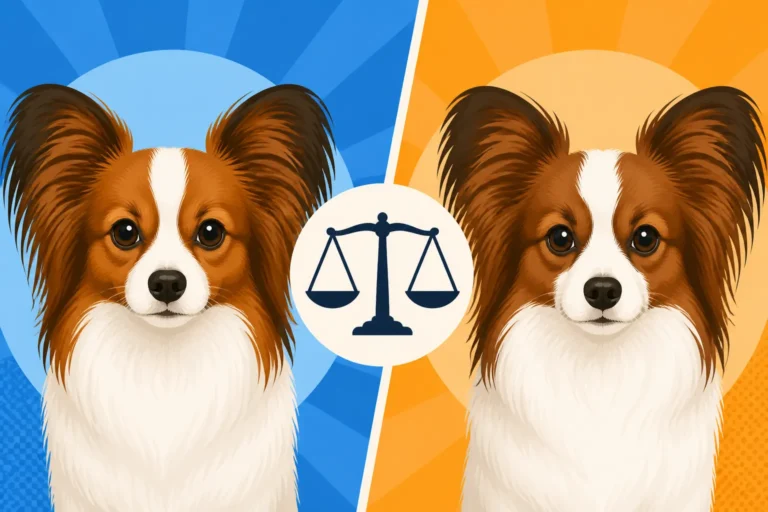
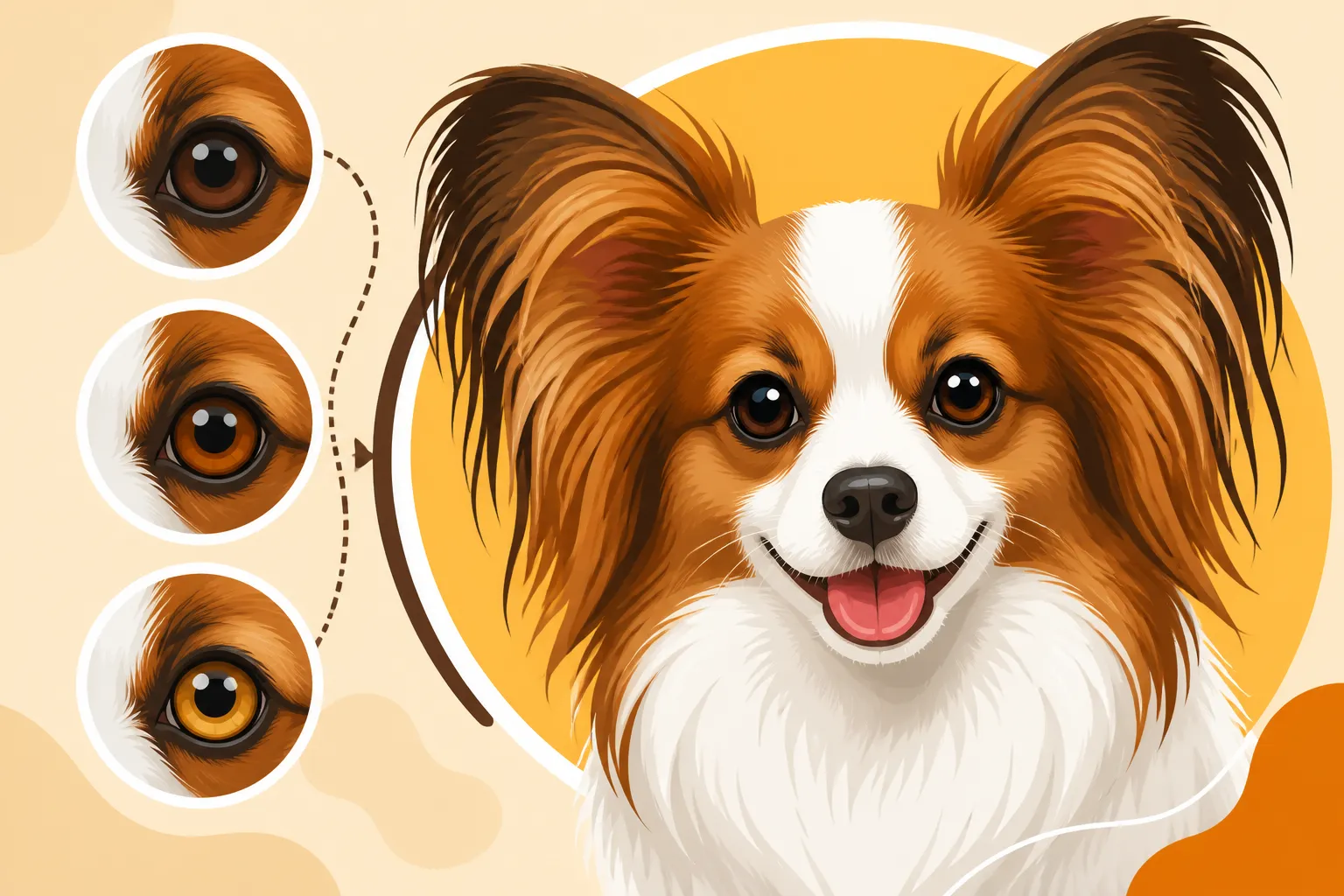
A Papillon’s eyes should be dark, generally understood as dark brown, and should give the dog an alert, expressive appearance. The breed’s eyes are also described as round and medium in size, without being overly prominent. Their shape and placement matter alongside color: a correct-looking eye is not simply a particular shade, but part of the dog’s overall expression and head.
The dark color is a breed ideal, not a promise that every Papillon will have identical-looking eyes. Brown can look nearly black in some dogs, especially in indoor photographs or when the pupils are large. In bright daylight, the iris may be easier to see and appear lighter. Natural variation in the depth of brown does not, by itself, mean that a dog has an eye problem.
If you are comparing your dog with a written description, remember that breed standards are used to assess conformation, not to diagnose health. A dog can have eyes that differ from the ideal and still see comfortably and live a happy life. For the broader picture of head shape and expression, see What a Papillon's Head Should Look Like.
Eye color is only one part of the description
The iris is the colored ring around the pupil. In a Papillon, the iris should appear dark, while the pupil is normally black and changes size with the lighting. The white part of the eye, called the sclera, may be visible at the edges when a dog looks to the side. It should not be confused with iris color.
Breed descriptions also refer to the eye rims, the skin bordering the eyelids. Papillons are expected to have dark, typically black, eye rims. This is a separate feature from the color of the iris. A dog with dark brown eyes and dark rims fits the general appearance described for the breed; a pale-looking rim does not automatically tell you anything about the dog’s vision or eye health.
When judging appearance, look at both eyes in soft, natural light and when the dog is looking straight ahead. Avoid drawing conclusions from a flash photo: flash, shadows, reflections, and pupil size can change how the eyes look. The color and markings of the coat are another topic entirely, so it can help to read Which Colors the Papillon Standard Accepts separately rather than assuming coat color predicts eye color.
Blue, very light, or mismatched eyes deserve a closer look
Blue or very light eyes are not the typical dark-eyed Papillon look. A distinct difference between the two eyes, sometimes called heterochromia, is also unusual for the breed. These appearances may be a natural individual variation, but they are worth discussing with a veterinarian, particularly if they are new or accompanied by discomfort, cloudiness, redness, or a change in how the dog navigates.
Do not treat a light eye color alone as proof of illness. Eye color can be influenced by inherited traits, and a dog’s overall health cannot be assessed from appearance in a picture. If you are evaluating a puppy or considering a dog for breeding or showing, ask the breeder or an experienced breed mentor how the dog’s eyes compare with the relevant standard. For a pet, the more important question is whether the eyes are comfortable and functioning normally.
A sudden difference is more concerning than a stable appearance the dog has had since puppyhood. If one iris seems to change color over a short period, or one eye begins to look cloudy or hazy, arrange veterinary advice rather than waiting to see whether it resolves. A new appearance can have causes that need an eye examination, and a photograph cannot reliably distinguish them.
Why a Papillon’s eyes may look different from one day to another
Lighting and pupil size change the impression
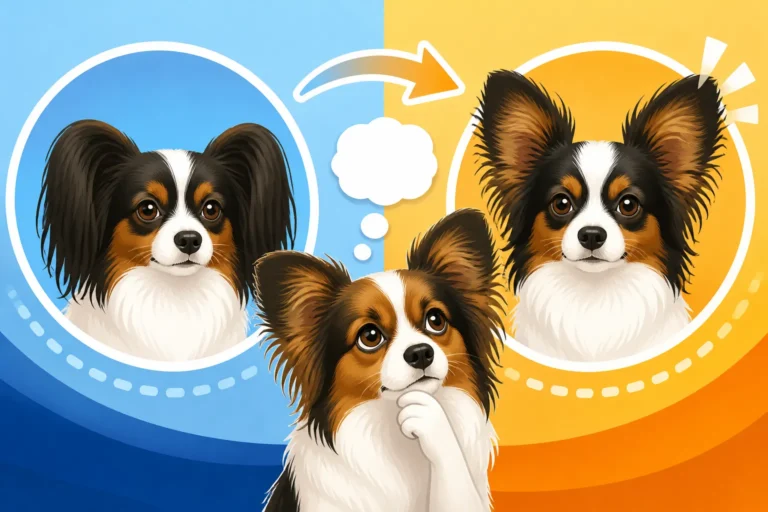
The pupil expands in dim light and becomes smaller in bright light. When it is wide, it takes up more of the visible eye, leaving less iris to see; the remaining iris can seem darker or harder to identify. In bright, even light, more of the iris may be visible, which can make the eyes appear lighter than they did indoors.
Camera flash adds another complication. It can create reflections, wash out color, or make the pupil look unusual in a photo. A close-up taken under a warm lamp may make brown eyes look amber, while a shaded outdoor picture may make them look almost black. These differences are often about the conditions of the photograph, not a change in the dog.
For a simple comparison, look at both eyes in indirect daylight, without shining a flashlight into them. Check whether the apparent color difference remains when the dog is calm and facing you. If you are concerned about a genuine change rather than a photographic effect, take a clear photo in ordinary light and share it with your veterinarian.
Puppies’ eyes can change as they mature
A puppy’s eyes may not look exactly like an adult dog’s. As the eyes develop, their appearance can change, and the final shade may become clearer over time. The timing and amount of change vary, so a puppy’s early eye color is not always a reliable prediction of its adult appearance.
A breeder can often tell you whether the puppy’s eyes are developing as expected in its family line, but that should not replace a veterinary check when there are signs of a problem. If one eye looks different from the other, or the puppy squints, rubs its face, has discharge, or seems reluctant to open an eye, contact a veterinarian rather than assuming it is a normal part of growing up.
It is also useful to separate eye color from eye development more broadly. A puppy may have normal-looking dark eyes and still need routine health care, while a puppy with a lighter iris may have no obvious functional problem. For any new concern, the dog’s comfort, vision, and examination findings matter more than a quick judgment about shade.
Coat markings do not tell you the whole story
Papillons have varied coat patterns, and facial markings can make the eyes look more or less prominent. A dark patch near one eye, for example, may create the impression that the eyes differ even when their irises are similar. The surrounding coat can also affect how color appears in pictures.
Do not assume that a particular coat color means a Papillon should have a particular eye color. The breed standard addresses coat and eye characteristics as distinct features. If you are comparing a dog’s overall appearance, Whether a Papillon's Face Markings Should Be Symmetrical may help explain why facial pattern and eye appearance are easy to conflate.
A practical check is to compare the irises themselves, not the color of the fur around them. Look at each eye in the same lighting and from the same angle. If they still appear substantially different, or the difference has recently developed, bring it up at the next veterinary visit—or sooner if there are other symptoms.
When an eye color difference may signal a health concern
Color change is different from cloudiness
A normal iris has a defined color. Cloudiness, a bluish-white haze, or a film over the eye is not simply a lighter iris. It may involve the surface or structures inside the eye, and it deserves veterinary assessment—especially if it appears suddenly or is getting worse.
Other changes to watch for include persistent redness, squinting, excessive tearing, pawing at the face, light sensitivity, unusual discharge, or a pupil that looks different in size from the other. A dog that bumps into objects, hesitates in familiar places, or struggles in dim light may also need an eye and vision assessment. These signs do not identify a specific condition on their own, but they are useful details to report.
If your Papillon has watery eyes without apparent pain, note when it happens and whether there is redness, staining, or discharge. The causes of watering vary, so a short observation log can help your veterinarian. You can read more in Whether a Papillon's Eyes Water, but worsening symptoms or discomfort should not be managed by relying on online descriptions alone.
Seek veterinary advice for sudden changes or discomfort
Contact a veterinarian if an eye changes appearance quickly, looks cloudy, becomes very red, or seems painful. Squinting, keeping the eye closed, rubbing at it, and sudden sensitivity to light are also reasons to seek prompt guidance. Eye problems can become uncomfortable quickly, and a vet can examine the eye rather than guessing from color or a photograph.
If your dog has had a stable eye-color difference for years and is comfortable, mention it during a routine exam. If the difference is new, or if it comes with reduced vision or other symptoms, do not wait for a routine appointment. A veterinarian can decide whether an examination, testing, or referral to a veterinary eye specialist is appropriate.
Avoid putting human eye drops, leftover prescription medication, or unverified remedies into your Papillon’s eyes. Even products that seem mild may be unsuitable for a specific problem. If you use an online retailer such as Chewy for routine pet supplies, do not choose an eye medication based only on a product description; ask your veterinarian what, if anything, is appropriate for your dog.
Routine eye checks help establish what is normal
During wellness visits, your veterinarian can look for visible changes and ask about your dog’s behavior and vision. It helps to mention small observations that might otherwise seem unrelated: a new hesitation on stairs, bumping into a chair in a dim room, or frequent rubbing after walks. A comparison with your dog’s usual behavior can be more informative than a single snapshot.
Some eye conditions develop gradually and may not be obvious from color alone. A dog can have dark brown eyes and still develop an eye problem; conversely, an eye that looks lighter in a photograph may be completely healthy. That is why routine checks and attention to changes are more useful than trying to identify disease by eye shade.
For more on preventive assessment, see Whether a Papillon Needs a Yearly Eye Exam and Whether a Papillon's Eyes Should Be CERF Checked. If your veterinarian recommends a specific approved product or prescription, confirm the exact name and instructions before ordering it. For owners who manage refills through Chewy, keeping the veterinarian’s directions and product details together can reduce mix-ups—but the veterinary plan should guide the purchase.
How to assess your Papillon’s eyes at home
Make a calm, consistent visual check
Choose a quiet moment when your dog is relaxed. In indirect daylight, look at each eye from the front and then gently observe whether the dog follows a familiar person or object with its gaze. You are not trying to perform a medical examination; you are noticing whether both eyes appear similar and whether anything has changed from your dog’s usual appearance.
Watch for symmetry, clear-looking eye surfaces, comfortable blinking, and normal behavior. Do not force the eyelids open or shine a bright light directly into the eyes. If your dog pulls away or seems distressed, stop. A calm observation is more helpful than repeatedly handling an irritated eye.
When something seems different, write down when you first noticed it and whether it is getting better, worse, or staying the same. A short phone video in normal room light may show a behavior change more clearly than several close-up photos. Share these observations with your veterinary team rather than trying to diagnose the cause yourself.
Keep useful records without overchecking
It can be helpful to keep a baseline photo of your Papillon’s face in ordinary natural light, especially if you are unsure whether a subtle difference is longstanding. The photo is a reference, not a test. Try to use a similar angle and lighting if you take another picture later, since changes in conditions can make the same eyes look different.
There is no need to inspect your dog’s eyes constantly or worry over every reflection. Instead, notice meaningful changes during normal care—such as brushing, cuddling, or wiping away ordinary facial moisture. If your Papillon’s eyes look comfortable and remain consistent, mention questions at the next routine appointment.
If you need to buy veterinarian-approved supplies, check the product name and directions with the clinic first. Chewy may be one place owners use to manage routine pet orders, but an online listing cannot determine whether a product is right for a particular eye problem. When symptoms are present, call the veterinary practice before ordering or applying anything.
Use appearance as a clue, not a diagnosis
The simplest takeaway is that a Papillon is expected to have dark brown eyes, but eye color alone cannot tell you whether the dog is healthy, can see well, or meets every aspect of the breed standard. Look at the whole picture: whether the appearance is stable, whether both eyes seem comfortable, and whether your dog behaves as usual.
If a color difference has always been present, raise it at a routine visit or with a knowledgeable breeder if you are asking about conformation. If it appears suddenly, is paired with cloudiness, redness, discharge, squinting, or changes in vision, ask a veterinarian for guidance. That distinction helps keep a harmless variation from becoming a source of needless worry—and helps make sure a genuine eye problem is not dismissed as a cosmetic difference.
Disclaimer
This article is for general informational purposes only and does not constitute professional advice. Laws, prices and regulations vary by location and change over time. Consult a qualified professional for guidance on your specific situation.