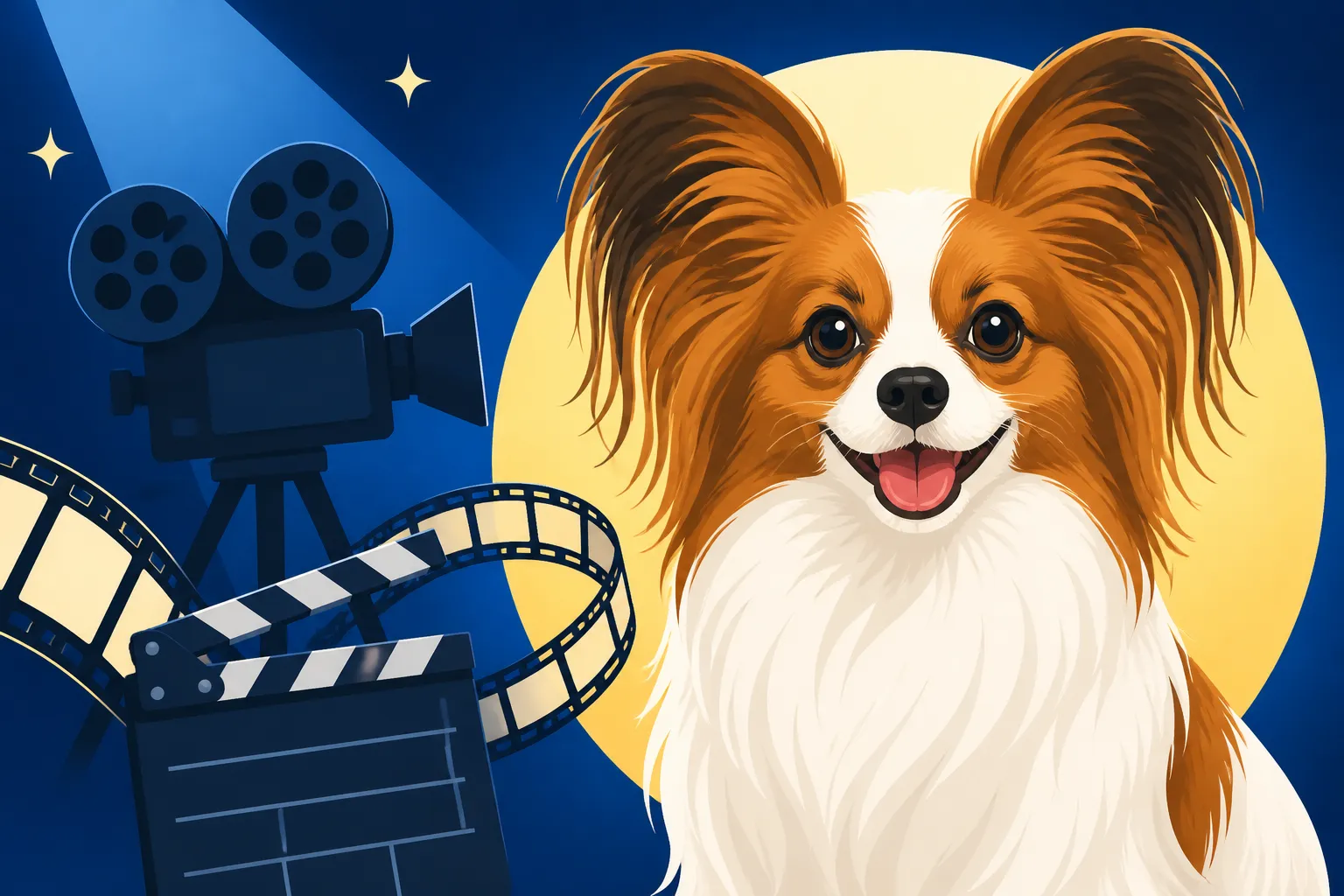
Whether the Papillon Appears in Film
A Papillon may appear on screen without being identified by breed, which makes film lists surprisingly hard to verify. The short answer is that Papillons can turn up in movies and television, but the breed is not widely associated with one famous, unmistakable film role. This guide explains the title confusion, how to check a claimed appearance, and what to look for when a small, fringed dog catches your eye.
Does the Papillon Appear in Film
The short answer is yes, but not as a famous screen-dog breed
Papillons can appear in films, television programs, and other screen productions, just as many companion breeds do. They may be a featured animal, a background pet, or a dog shown briefly in a crowd scene. The catch is that being visible on screen is not the same as having a documented, well-known role.
Unlike breeds strongly associated with particular movie characters, the Papillon does not have a widely recognized signature film appearance. That doesn’t mean one has never been cast or filmed. It means viewers are less likely to find a familiar, consistently cited Papillon character when searching for “famous movie dogs.”
A dog’s breed may also go unmentioned in the credits and publicity. Production notes might call it simply “the dog,” while a fan page may identify it as a Papillon based on appearance. Those are different levels of evidence, so it helps to treat a breed identification as tentative unless reliable production information confirms it.
A dog in a film is not always a Papillon
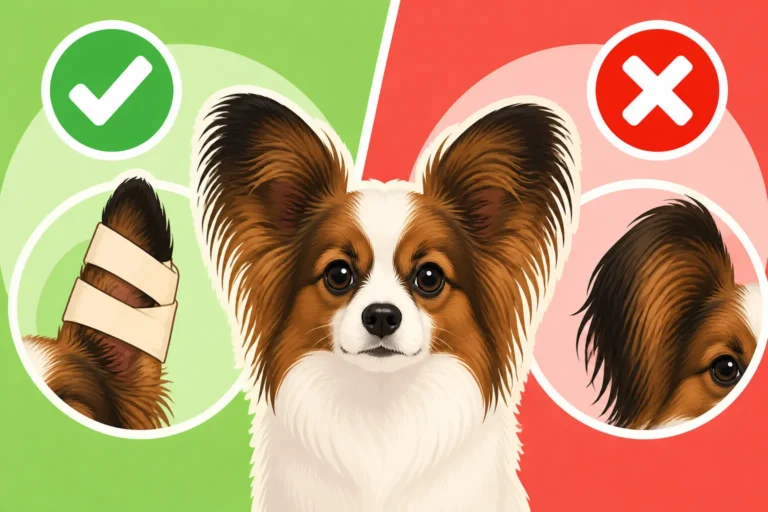
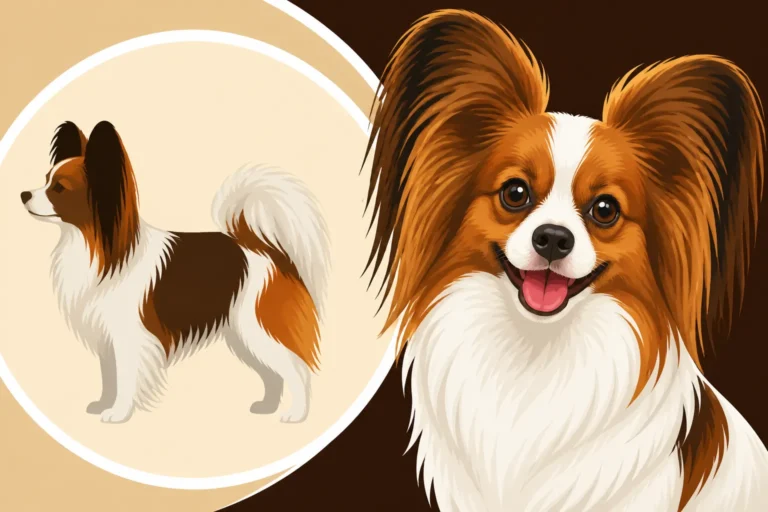
Papillons are small, fine-boned dogs with a silky coat, a plumed tail, and distinctive fringed ears. The name refers to the butterfly-like upright ears of the Papillon variety. Its close relative, the Phalène, has drop ears. On screen, those visual clues can help narrow down a guess, but they cannot confirm breed by themselves.
Camera angles, grooming, age, lighting, and mixed ancestry can all make a dog look different from the breed standard. A Papillon puppy, for instance, may not yet have the long adult coat people expect. A dog with drop ears might be a Phalène, another breed, or a mixed-breed dog. For a quick overview of the name and its meaning, see What the Name Papillon Refers To.
It’s also easy to mistake another small, long-coated dog for a Papillon when a scene lasts only a few seconds. The Pomeranian, long-coated Chihuahua, and small mixed-breed dogs can share some visual features. A confident-looking little dog with a fluffy outline is not automatically a Papillon; the details of the face, ears, coat, and body matter.
Why Papillons Are Not Often Recognized as Movie Dogs
Their screen appearances may be brief or uncredited
Film audiences tend to remember a dog when it has a substantial role, a memorable name, or a recurring part in the story. A Papillon seen in the background may be difficult to identify later, even if the dog is clearly visible. Viewers may recall “the small white dog” without knowing its breed or whether it appears again.
Credits do not always make the answer easy. Animal performers may be listed by a handler, trainer, or production company rather than by breed. Some films provide little detail about animal casting, and older or less widely distributed productions can be especially hard to research. That leaves a gap between “I spotted a dog that looks like a Papillon” and “the production confirms it was a Papillon.”
This is one reason an online list of movie breeds should be read carefully. A list might repeat a fan’s identification, omit its evidence, or confuse a dog’s appearance with a verified casting detail. If a page gives no role name, production note, or reliable credit to follow up, consider the claim unconfirmed rather than treating it as fact.
The breed’s history is more visible in art than in modern film trivia
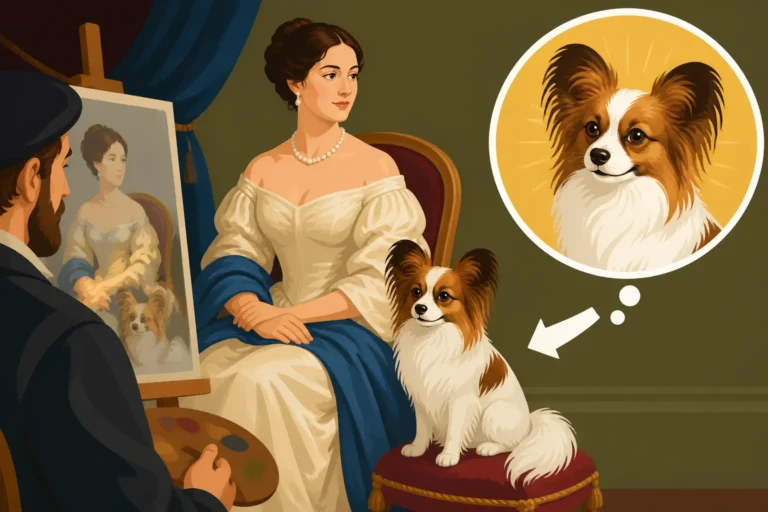
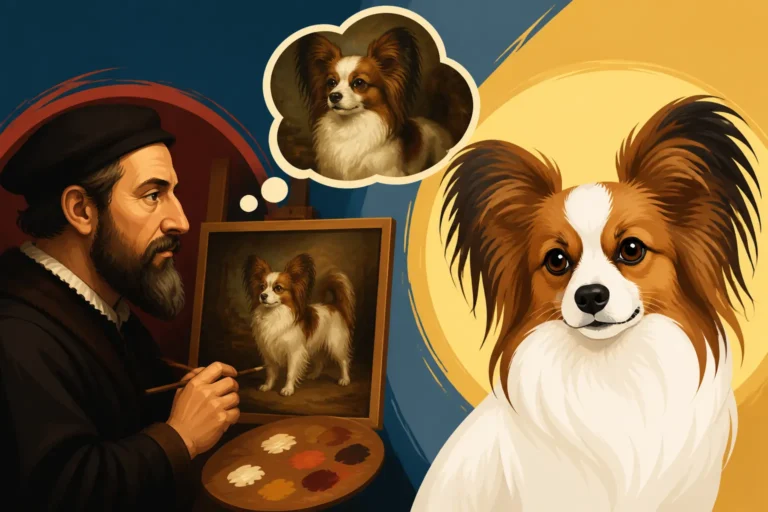
Papillon-like dwarf spaniels have appeared in European portraiture and historical depictions, giving the breed a notable visual history. But that historical presence does not automatically translate into a famous modern film identity. The two forms of recognition work differently: a portrait may preserve a dog’s appearance, while a movie audience usually remembers a character, performance, or story.
That distinction is useful when searching. If you find a Papillon in a painting, it may be described as a dwarf spaniel or by another historical term rather than by the breed name people use today. If you find a small dog in a film, the available description may be even less specific. For more on the breed’s visual history, Which Other Painters Included Dwarf Spaniels is a helpful related topic.
The Papillon’s lack of a widely known movie-star identity also says little about the breed’s personality or suitability as a companion. It is an alert, active toy dog, not merely a decorative animal. The lively, expressive look that makes a Papillon memorable in person can be harder to convey in a brief scene or a wide shot. What People Get Wrong About the Papillon explores why the breed can be underestimated when people focus only on its size and appearance.
How to Check a Claimed Papillon Film Appearance
Start with the production’s own information
When you come across a claim that a Papillon appears in a particular film, begin with the most direct evidence available. Check the film’s official credits, production notes, studio publicity, or reliable interviews with the animal trainer. These sources may not always name the breed, but they are more useful than an unsourced social media caption.
Then compare independent references. If several credible accounts identify the same dog and point back to production information, the claim is stronger. If every page appears to repeat the same unsupported description, you may be looking at one guess copied many times rather than multiple confirmations.
A practical way to keep the evidence straight is to sort claims into three categories:
| Type of claim | What it tells you | How to treat it |
|---|---|---|
| The production identifies the dog as a Papillon | The breed is confirmed by a direct or credible production source | Strong evidence |
| A reputable report names the breed but gives limited detail | The identification may be credible, but the source trail is incomplete | Useful, with some caution |
| A viewer says the dog looks like a Papillon | The dog resembles the breed in that person’s view | A visual guess, not confirmation |
This simple check avoids a common frustration: finding a confident breed claim, following it through several pages, and discovering that none of them cite where the information came from.
Use visual clues as clues, not proof
If you are watching a scene and trying to identify the dog, look for more than a pair of fringed ears. Papillons are generally small and fine-boned, with a silky coat and a tail carried as a plume over the back. The face often has a lively, alert expression. Still, a single shot may not show enough of the dog to judge these features.
Notice whether the dog’s ears are upright or drop-eared, but don’t treat ear shape as the sole test. A Phalène is the drop-eared variety of the Continental Toy Spaniel, and Papillon and Phalène puppies can occur in the same breed population. A production may also use a mixed-breed dog whose appearance resembles one variety more than the other. Why a Papillon and a Phalene Are Born in the Same Litter explains that relationship in more detail.
If a claimed appearance matters to you, keep the wording precise. “This dog looks like a Papillon” is fair when you are making a visual observation. “This film features a Papillon” is a stronger statement and should ideally be supported by a reliable source. That distinction makes discussions more accurate without taking away the fun of spotting a possible breed onscreen.
What to Do If a Movie Makes You Interested in Papillons
Look beyond the movie-star image
A film can make any breed seem appealing, but a screen appearance tells you very little about what daily life with that dog is like. A trained animal performer may have a dedicated handler, a carefully managed set, and a temperament that suits a specific job. Those circumstances are not a guide to how every Papillon behaves at home.
Before deciding whether the breed fits your household, consider its exercise, training, grooming, and companionship needs. Papillons are often keen learners, but they need more than admiring their looks or taking an occasional short stroll. They can be alert and vocal, and their small size means a household needs to handle them thoughtfully, especially around young children or larger, boisterous dogs. For a broader fit check, see Who the Papillon Actually Suits and Whether a Papillon Suits a Family.
It can also help to talk with owners, responsible breeders, or rescue volunteers rather than relying on a character portrayal. Ask about the dog’s usual energy, how it responds to being left alone, what grooming actually involves, and what health questions to ask. What Papillon Owners Wish They Had Known offers another useful perspective on the everyday realities that a film rarely shows.
Make movie night comfortable for your own dog
If you have a Papillon, a quiet movie night can be a nice chance to let the dog settle nearby, but do not assume every dog enjoys the television. Some will nap through the soundtrack; others may bark at animals, doorbells, or sudden noises. Give your dog a comfortable resting spot and let it move away if the screen or sound is unsettling.
For a dog that gets restless while you watch, a short walk, a sniffing game, or a food puzzle beforehand may help it settle. Chewy is one place owners may look for puzzle feeders and enrichment toys, but choose an item that is appropriately sized and safe for your individual dog. Supervise new toys, especially if your Papillon tends to chew or swallow pieces.
If the film inspires you to dress your dog like a character, prioritize comfort over the costume. A Papillon’s ear fringe and delicate coat can snag, and clothing should not restrict movement, breathing, or access to water. Chewy also carries basic pet clothing and accessories, but a costume is optional; a relaxed dog is a better companion than one made to tolerate an outfit it dislikes.
For travel to a dog-friendly event or a visit to a set, focus on safe transport rather than trying to recreate a movie scene. A well-fitted harness, secure carrier, identification, and a calm introduction to unfamiliar places are more useful than elaborate props. Owners comparing carriers or harnesses may find options through Chewy, but fit matters more than appearance, and a dog should be gradually acclimated to any new equipment.
Ultimately, the most accurate answer is modest: Papillons may appear in screen productions, but they are not broadly known for one defining movie role. When you spot a little dog with butterfly ears, enjoy the possibility—and check reliable credits before calling it a confirmed Papillon.
Disclaimer
This article is for general informational purposes only and does not constitute professional advice. Laws, prices and regulations vary by location and change over time. Consult a qualified professional for guidance on your specific situation.