Whether a Papillon Can Do Scent Work
It's a common misconception that only big, serious working breeds with deep, powerful snouts are cut out for scent work. Many people look at a tiny Papillon, all elegant ears and delicate frame, and think they're purely lap warmers or agility stars. But if you're wondering if your clever, curious Papillon can dive into the fascinating world of scent work, let me assure you, they absolutely can. This guide will walk you through why Papillons are surprisingly good at nose work, how to get started, and the many benefits this activity offers for your little butterfly dog.
Understanding Scent Work for Dogs
Let's demystify scent work first, because it's often imagined as something only police dogs or search and rescue teams do. While those are certainly advanced forms, the foundational principles are accessible and incredibly rewarding for any dog.
What Exactly Is Scent Work?
At its heart, scent work, also often called "Nose Work" or "detection sports," is about teaching your dog to find a specific scent and alert you to its location. Think of it as a game of hide-and-seek, but for smells. Instead of relying on sight or sound, your dog uses its most incredible sense – smell – to solve a puzzle. The "target odors" can vary, but in competitive scent work, they are usually essential oils like birch, anise, and clove, hidden in various containers, rooms, or outdoor areas. It mimics the work of professional detection dogs but in a fun, accessible way for pet owners. It's a low-impact sport that engages your dog's brain and body, offering a fantastic outlet for their natural instincts.
Why Scent Work Appeals to Dogs
Dogs live in a world of scent that we can barely imagine. Their noses are their primary way of understanding the world around them, interpreting everything from who visited the mailbox to what you had for lunch. When we engage them in scent work, we're essentially giving them a job that speaks to their deepest, most primal drives. It's incredibly motivating for them because it's inherently pleasurable. The act of hunting and discovering a hidden "prey" (the target odor, often paired with food reward initially) is deeply satisfying. This activity provides intense mental stimulation, which can be just as tiring, if not more so, than a long walk, helping to curb boredom and destructive behaviors. It taps into their natural curiosity and problem-solving skills, allowing them to excel at something uniquely canine.
The Papillon's Natural Aptitude for Scent Work
Now, let's talk about why your Papillon, despite its dainty appearance, is a fantastic candidate for scent work. You might be surprised.
Dispelling the "Tiny Dog" Myth
It's a tale as old as time: little dogs are just for cuddles, big dogs are for work. This couldn't be further from the truth, especially when it comes to mental sports like scent work. The size of a dog has absolutely no bearing on the power of its nose or its cognitive abilities. In fact, smaller dogs can sometimes have an advantage in scent work. They can navigate tight spaces, squeeze into nooks and crannies, and often have a lower center of gravity that allows them to get very close to the ground, where scents settle. Many Papillons have a boundless energy and a zest for life that belies their size, which translates wonderfully into a keen desire to engage in activities with their people. Don't let anyone tell you your Papillon is "too small" for anything beyond a pretty face.
The Papillon's Intelligence and Drive
If you've ever owned a Papillon, you know they are far from mere decorative accessories. They are whip-smart, eager to please, and incredibly trainable. The breed consistently ranks high in canine intelligence studies, often surprising people who underestimate toy breeds. This high intelligence means they pick up new concepts quickly and can understand complex sequences, which is a huge advantage in scent work. They aren't just intelligent; they also possess a wonderful drive to work and interact with their humans. This isn't a breed that’s content to simply sit on the sofa all day. They thrive on challenges and enjoy having a "job" to do, which is precisely what scent work provides. Their focus and enthusiasm make them quick studies, eager to learn what you're asking of them and to earn that reward. As a Papillon owner, you'll know that The Papillon Is the Smartest Toy Breed There Is, and this intelligence truly shines in activities like scent work. They love to learn new things, which means Teaching a Papillon Tricks Faster Than You Think of Them is a real possibility, and scent work is just another extension of that innate desire to problem-solve.
A Papillon's Nose: More Powerful Than You Think
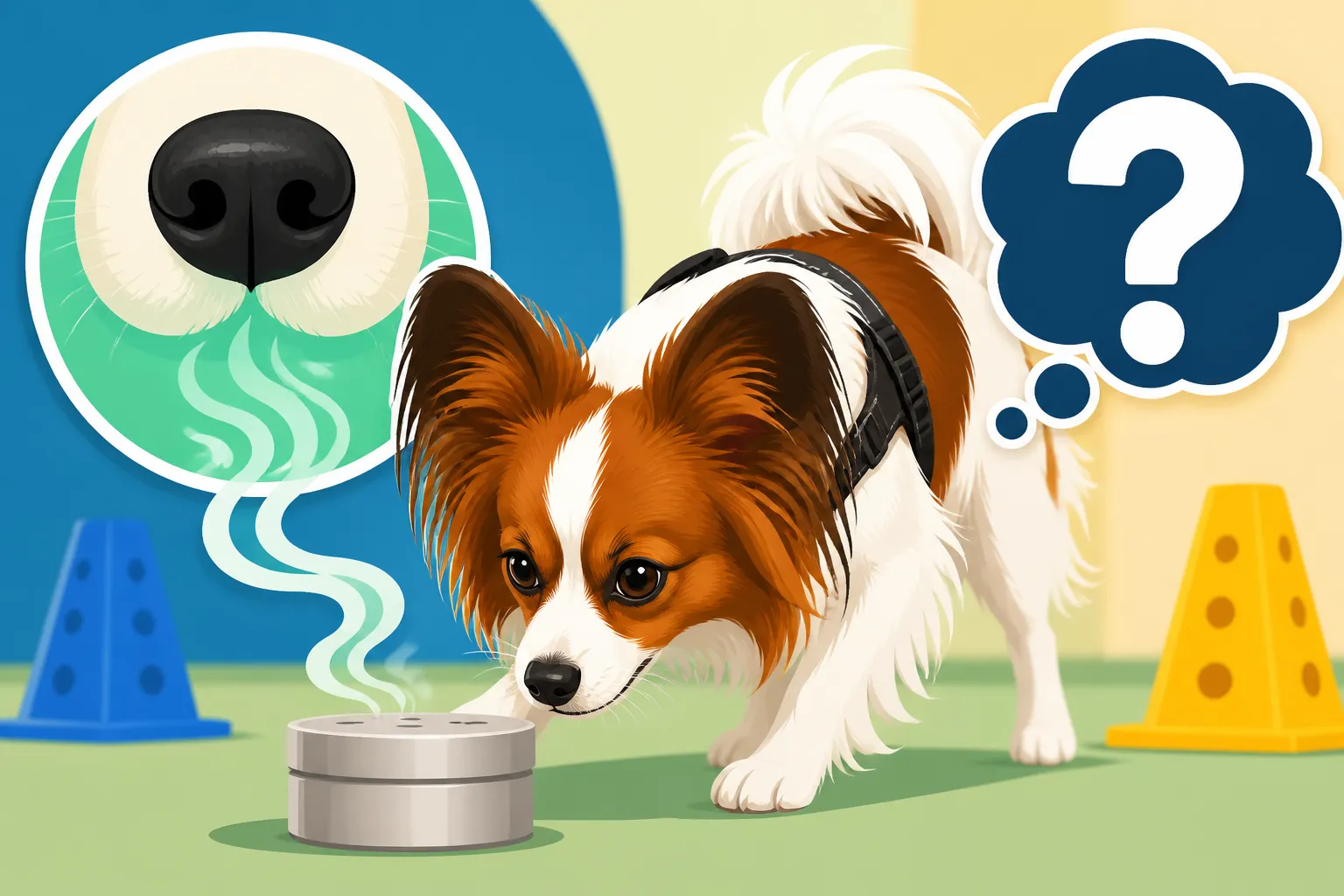
While a Papillon's muzzle might be shorter than that of a German Shepherd or a Beagle, it doesn't mean their olfactory system is inferior. All dogs, regardless of breed, possess an incredible sense of smell, far surpassing our own. A dog's nose has millions more scent receptors than a human's, and they have the ability to detect odors in incredibly low concentrations and to "smell in stereo," meaning they can tell which nostril is picking up a stronger scent, helping them pinpoint its source. A Papillon's delicate nose is perfectly capable of discerning target odors, even when they are faint or well-hidden. They might not have the stamina for hours of tracking through dense wilderness, but for precision detection in various environments, their nose is absolutely up to the task. What matters most is the dog's drive and the handler's ability to interpret their cues, not the length of their snout.
Getting Started with Scent Work for Your Papillon
Ready to dive in? Getting started with scent work with your Papillon is easier and less intimidating than you might think. You don't need fancy equipment or a huge training space.
Essential Gear and Setting Up
One of the beauties of scent work is how little gear you truly need to begin. For your Papillon, a few basics will get you far:
- High-Value Treats: Small, soft, incredibly tasty treats are paramount. Think bits of cheese, cooked chicken, or hot dogs. These are the primary motivators.
- Target Odor: While you can start with a favorite toy or a unique food item, eventually you'll want to introduce a specific essential oil. Birch, anise, and clove are standard for competitive Nose Work. These are typically diluted and applied to cotton swabs, then placed in scent-proof containers. You can find starter kits and essential oils suitable for dog training on platforms like Amazon.
- Hides: These are simply the objects you'll hide the scent under or in. Everyday household items work perfectly: cardboard boxes, plastic containers, coffee mugs, even socks. For outdoor work, you might use small garden pots or branches.
- Leash and Harness: A comfortable harness is ideal to avoid putting pressure on your Papillon's delicate neck as they focus and pull towards a scent. A regular leash will do the trick.
Setting up is simple. Start in a quiet, low-distraction environment, like a spare room in your house. The goal is to make it easy for your Papillon to succeed initially, building their confidence and understanding of the game.
Beginner Training Steps
The key to successful scent work training is making it a positive, rewarding experience, especially for a sensitive and intelligent breed like the Papillon.
- The "Paired Scent" Game: Start by associating the target odor with a high-value treat. Take a cotton swab with a drop of birch oil (or whatever scent you choose) and place it directly next to a treat your Papillon absolutely loves. Let them discover it together. Repeat this several times, ensuring they associate the new smell with the fantastic reward.
- Easy Hides: Once they've got the association, place the paired scent (swab + treat) under an overturned cup or in an open box. Let your Papillon sniff it out and reward them immediately when they find it. Don't make it a challenge yet; just reinforce the idea that "this smell means treats!"
- Gradual Separation: Slowly start separating the treat from the scent. Place the scented swab in a box, and then place the treat very close to it, but not touching. As your Papillon investigates the scent, they'll find the treat nearby. Over time, you'll put the treat further and further away, only rewarding when they clearly indicate they've found the scent.
- Introducing the "Search" Cue: As your Papillon understands the game, introduce a verbal cue like "Search!" before you release them to find the scent. This helps them transition into working mode.
- Increasing Difficulty: Once your Papillon consistently finds the scent in easy hides, gradually increase the challenge:
- More Hides: Use more empty boxes alongside the one with the scent.
- Different Environments: Move to different rooms, then outdoors in your yard.
- Higher Hides: Place the scent at different heights (on a chair leg, under a shelf).
- Container Hides: Use closed containers with small holes for the scent to escape.
- Blind Hides: Where you don't know the exact location of the scent, just that it's in the search area.
Remember to keep sessions short, positive, and end on a high note. What Motivates a Papillon is often food and praise, so make sure those rewards are plentiful and enthusiastic! If you're looking for structured guidance, online platforms like BAXTER & Bella offer comprehensive puppy and dog training programs that can easily integrate scent work concepts into their curriculum, providing step-by-step videos and support.
Common Challenges and How to Overcome Them
Even with a bright Papillon, you might encounter a few bumps in the road.
- Frustration: If your Papillon seems to give up or gets frustrated, the hide is likely too hard. Go back to an easier level where they can succeed quickly. Success builds confidence!
- Distractions: Outdoors, there are a million interesting smells. Start in a very calm area, and gradually introduce more complex environments. Build up their focus and stamina. How Long a Papillon Will Work in a Session is usually fairly short initially, so be mindful of their attention span.
- Handler Error: Sometimes we inadvertently give our dogs too many cues or block them. Try to be a "silent partner," letting your Papillon do the work. Don't point to the hide or lean in its direction. Let them lead.
- "False Alerts": Your Papillon might alert to something that isn't the target scent. This usually means you need to go back and reinforce the specific target odor more strongly, perhaps by pairing it with more fantastic treats.
Consistency and patience are your best friends here. Celebrate every small victory, and remember it's a game, not a test.
Benefits of Scent Work for Papillons
The advantages of engaging your Papillon in scent work extend far beyond just having a fun activity. It genuinely enriches their lives in multiple ways.
Mental Stimulation and Enrichment
Papillons are smart cookies, and they need mental challenges just as much as they need physical exercise. A bored Papillon can quickly become a destructive or overly vocal one. Scent work provides an incredible outlet for their brainpower. It requires concentration, problem-solving, and decision-making, burning mental energy in a way that a simple walk might not. Think of it as intellectual enrichment for your dog, similar to how puzzle toys provide What Mental Work a Papillon Needs. This mental workout can lead to a calmer, more contented dog at home, reducing unwanted behaviors stemming from boredom or excess energy.
Building Confidence and Focus
For some Papillons, especially those who might be a little shy, timid, or easily overwhelmed by new situations, scent work can be a game-changer. It's an activity where they are in charge, where their natural abilities are celebrated. They learn to trust their own nose and instincts, leading to a significant boost in confidence. This newfound confidence can spill over into other areas of their life, making them more resilient and outgoing. The intense focus required to find a hidden scent also helps to improve their overall concentration and ability to tune out distractions, which can be invaluable for general obedience and manners. It truly empowers them, allowing them to feel successful and capable.
Strengthening the Bond
Working together as a team on a scent puzzle is a fantastic way to deepen the relationship between you and your Papillon. You become your dog's partner and cheerleader, celebrating their successes and guiding them through challenges. This shared activity builds trust and understanding. You learn to read your Papillon's subtle body language, understanding their indications and frustrations, and they learn to rely on your cues and support. This collaborative effort creates a unique bond based on mutual respect and shared accomplishment. It's a wonderful way to connect with your Papillon on a deeper level, appreciating their incredible abilities and celebrating their joy in working with you.
Scent Work Disciplines for Your Papillon
While "scent work" is a broad term, there are specific disciplines you might explore with your Papillon. Here's a brief overview:
| Discipline | Description | Papillon Suitability |
|---|---|---|
| K9 Nose Work/NACSW | Competitive sport focusing on finding target essential oils in various environments (containers, interiors, exteriors, vehicles). | Excellent. Low physical impact, high mental engagement, perfect for Papillon's size and intelligence. |
| Detection Sports | Similar to K9 Nose Work but often includes other organizations and target odors. | Excellent. Highly adaptable for Papillons. |
| Tracking | Dog follows a human scent trail for a specific distance and time, often over varied terrain. | Good, with caveats. More physically demanding, requires sustained focus outdoors. Papillons can track, but perhaps not for miles like a Bloodhound. |
| Trafficking | Following a track of a specific animal scent, often for conservation purposes. | Possible, but challenging. Requires a very high prey drive and stamina. How Much Prey Drive a Papillon Has varies, but generally, this is a tougher fit for most Papillons. |
As you can see, the K9 Nose Work style of scent detection is particularly well-suited for Papillons. It's designed to be accessible to all dogs, regardless of breed, size, age, or physical ability.
Scent work offers an incredibly rewarding experience for both you and your Papillon. It’s a natural fit for their bright minds and keen senses, providing mental stimulation, building confidence, and strengthening the unique bond you share. So go ahead, grab some treats and a few boxes, and unleash your Papillon's inner detective! You might be amazed at what they can achieve.
Disclaimer
This article is for general informational purposes only and does not constitute professional advice. Laws, prices and regulations vary by location and change over time. Consult a qualified professional for guidance on your specific situation.