Teaching a Papillon Tricks Faster Than You Think of Them
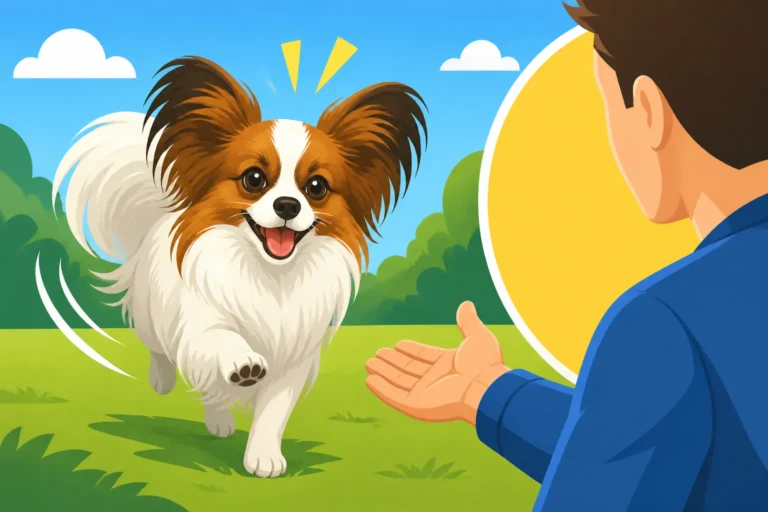
It's a common misconception that small dogs are just for cuddling and looking pretty, often seen perched delicately on a lap. Many people don't realize the vibrant, sharp mind ticking behind those adorable butterfly ears. If you've ever felt like your Papillon is constantly trying to figure you out or seems to learn new things almost before you teach them, you're not imagining it! This comprehensive guide will show you how to harness that incredible intelligence and turn your Papillon into a trick-training superstar, often learning new commands faster than you can even come up with them.
Why Papillons Excel at Trick Training
Papillons aren't just pretty faces; they are powerhouse brains wrapped in elegant fur. Their inherent intelligence, coupled with a genuine desire to engage with their human companions, makes them exceptionally well-suited for trick training. You might be surprised to learn just how capable they are once you start tapping into their mental prowess.
The Papillon's Innate Intelligence
Let's be real, Papillons consistently rank among the most intelligent dog breeds, often making the top ten lists for working intelligence and obedience. This isn't just a fluff claim; it's a recognition of their incredible capacity for learning, problem-solving, and retaining commands. They absorb new information with astonishing speed, making them a joy to train. It's almost like they're sponges, soaking up every cue and concept you throw their way. You'll find yourself wondering, "Did I really just teach them that in five minutes?" The answer is often a resounding yes! This high intelligence means they not only learn what to do but often why they are doing it, leading to a deeper understanding and more reliable performance. If you've ever heard that The Papillon Is the Smartest Toy Breed There Is, you're getting a glimpse into their fantastic capabilities.
Eagerness to Please and Natural Drive
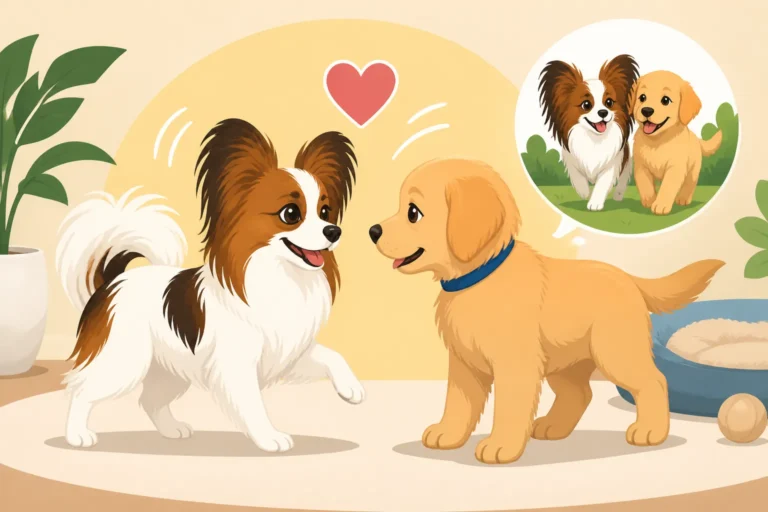
Beyond their raw brainpower, Papillons possess a delightful eagerness to please their owners. They thrive on interaction and positive attention, viewing training sessions as a fun game rather than a chore. This isn't a breed that you have to drag into training; they practically beg for it! Their natural drive to work with you, combined with their sharp minds, means they're always ready for the next challenge. For many Papillons, the greatest reward isn't just the treat, but the praise and connection they share with you. They genuinely enjoy the process of learning and showing off their skills, which is a huge motivator for both dog and handler.
How Their Size Can Be an Advantage
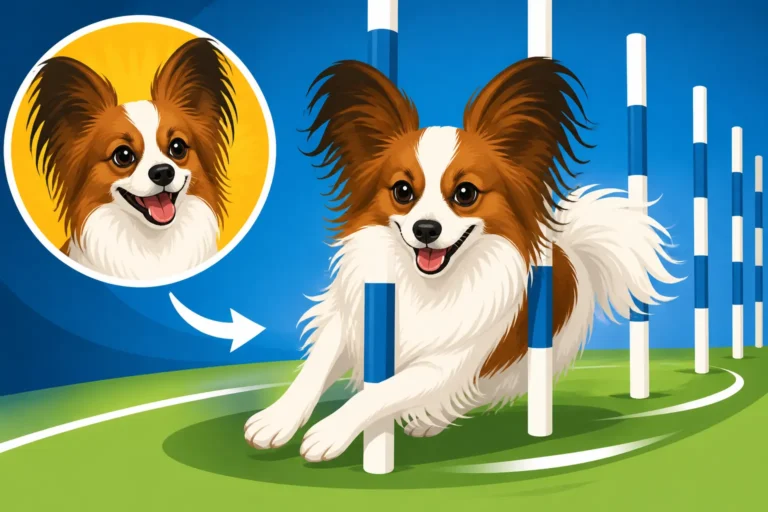
While sometimes their small size means they get overlooked in discussions about "working breeds," it's actually a massive advantage in trick training. Their agility and compact stature allow them to perform intricate movements with grace and precision. A Papillon can spin in a tight circle, weave through your legs, or jump over small obstacles with an elegance that larger breeds might struggle to replicate. Furthermore, their small body means they're less likely to put strain on joints during repetitive tricks, which can be a concern for bigger dogs. Plus, it's just plain adorable to see such a tiny dog perform complex sequences! This small size also makes them incredibly portable, allowing you to train them almost anywhere, whether it's your living room, a park, or even a quiet corner of a pet-friendly cafe.
Getting Started: Foundation for Trick Success
Before you dive headfirst into teaching your Papillon advanced maneuvers, it’s crucial to lay a solid foundation. Just like building a house, a strong base ensures everything else stands firm. This means focusing on your relationship, basic obedience, and having the right tools at hand.
Building a Strong Relationship and Trust
The single most important component of successful trick training with your Papillon is the bond you share. These dogs are incredibly sensitive and thrive on a trusting relationship. If your Papillon feels secure, loved, and knows you're a fair and consistent leader, they will be far more willing to engage and learn. Spend quality time together outside of formal training: play fetch, go for walks, or simply have cuddle sessions. Hand-feeding some meals can also strengthen this bond and establish you as the provider of all good things. A Papillon that trusts and respects you will view training as a collaborative, enjoyable activity rather than a demanding task. This foundation of trust makes all the difference in their willingness to experiment and try new things, especially when a trick might initially feel a bit awkward or challenging.
Mastering Basic Obedience Cues First
While exciting, jumping straight into "play dead" without mastering "sit" or "stay" can lead to frustration for both of you. Basic obedience cues aren't just about manners; they are the building blocks for more complex tricks. A solid "stay" allows you to set up for a retrieve, and a reliable "come" is essential for tricks involving distance. Ensure your Papillon is proficient in cues like "sit," "down," "stay," "come," and "leave it." These commands teach them focus, self-control, and responsiveness, all of which are vital for advanced trick work. Think of them as the vocabulary words they need before they can write a story. You'll be amazed at How Fast a Papillon Learns a New Cue once these foundations are in place. If you're struggling with the basics, consider structured online programs, like those offered by BAXTER & Bella, which can provide a step-by-step approach to foundation training.
Essential Tools and Supplies for Training
You don't need a huge array of gadgets to start trick training, but a few key items will make your life much easier and your Papillon's learning more efficient.
- High-Value Treats: Papillons are often very food-motivated. Small, soft, and extra-tasty treats (think tiny pieces of cooked chicken, cheese, or specialized training treats) are ideal. They should be easy for your Papillon to swallow quickly so as not to interrupt the flow of training.
- Clicker: A clicker is an incredibly precise communication tool. It marks the exact moment your dog performs the desired action, making it clear to them what earned the reward. Many different types are available on Amazon.
- Leash and Harness: For controlled environments or when practicing outside, a comfortable harness and a lightweight leash are essential. This prevents your Papillon from getting distracted or running off, especially when first learning new cues.
- Quiet Training Space: Initially, choose a distraction-free area in your home where your Papillon can focus entirely on you. As they progress, you can gradually introduce more challenging environments.
Having these basics ready sets the stage for a positive and productive training experience.
Effective Training Techniques for Papillons
Papillons respond best to specific training methodologies that leverage their intelligence and sensitive nature. Forget harsh corrections or long, drawn-out sessions; these little dynamos thrive on clarity, positive reinforcement, and engaging, brief interactions.
Positive Reinforcement: The Golden Rule
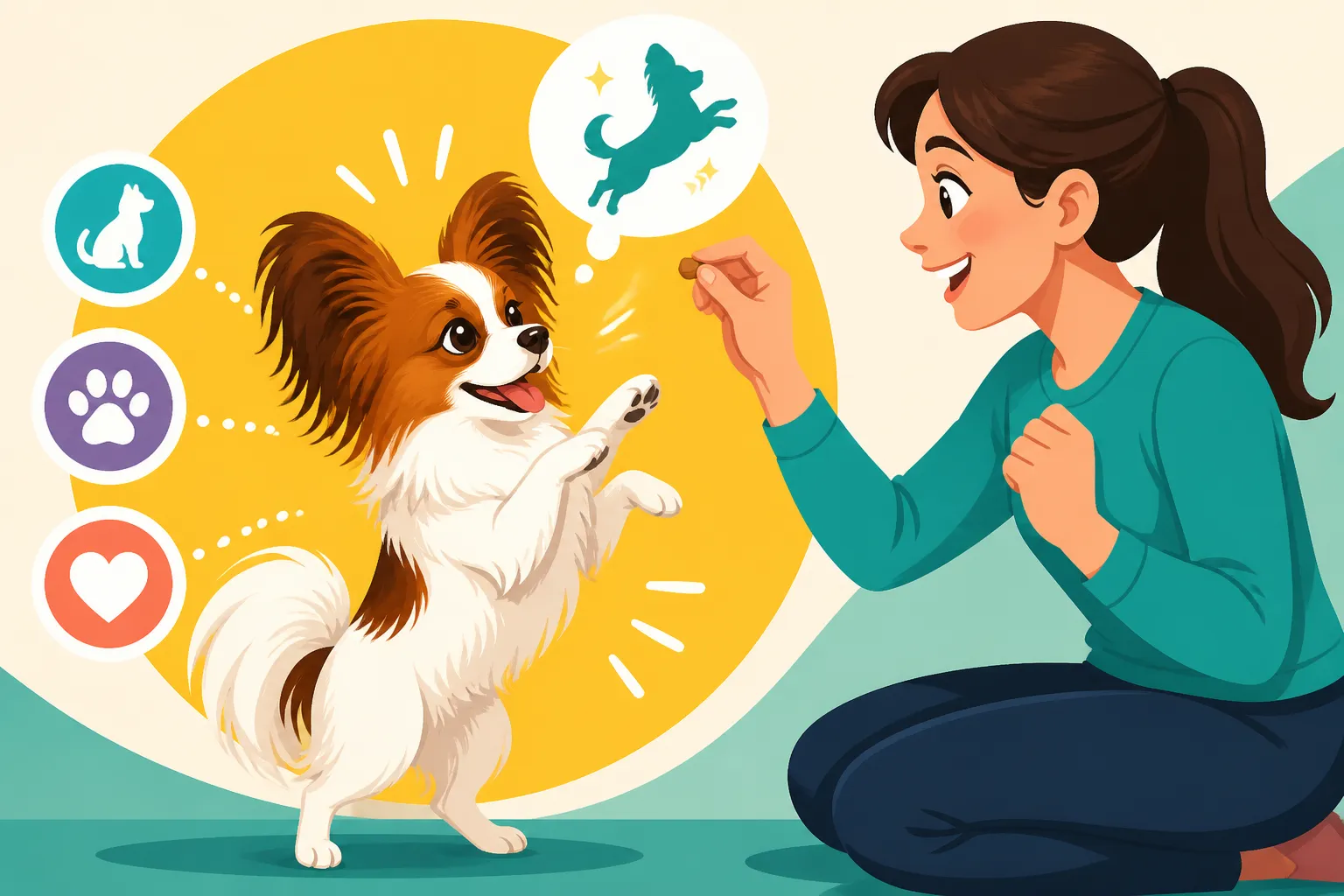
For a Papillon, positive reinforcement isn't just a suggestion; it's the golden rule. They are incredibly sensitive souls, and any harsh words or physical corrections can quickly shut them down, making them hesitant or fearful. Instead, focus on rewarding the behaviors you want to see. When your Papillon performs a trick, even partially, immediately follow it with a click (if you're using one), enthusiastic praise, and a high-value treat. This creates a positive association, making them more likely to repeat the action.
Imagine trying to teach your Papillon "play dead." If they flop over even slightly, click and treat! Gradually, you can ask for more of the full behavior before rewarding. This method builds confidence, encourages enthusiasm, and strengthens your bond. Papillons respond beautifully to this approach, eager to figure out what earns them that coveted praise and tasty snack.
Clicker Training for Precision and Clarity
While not strictly necessary, clicker training is exceptionally effective with intelligent breeds like the Papillon. The clicker acts as a precise marker, pinpointing the exact moment your dog performs the desired action. Unlike a verbal "good job," which can be drawn out or vary in tone, the click is always consistent and immediate.
Here's how it generally works:
- Load the clicker: Click, then immediately give a treat. Repeat this 10-20 times in a short session until your Papillon associates the click with something good.
- Capture behavior: Wait for your Papillon to naturally offer a behavior you want (e.g., sit). The instant their rear touches the ground, click, then treat.
- Lure or shape: For new tricks, you might use a treat to lure them into position (e.g., hold a treat to their nose and move it in an arc over their head to get a sit). As soon as they perform the action, click, then treat.
The clarity provided by the clicker significantly speeds up the learning process, especially for complex or multi-step tricks. It helps your Papillon understand precisely what they did right, which is especially useful given Whether a Papillon Learns by Watching.
Keeping Sessions Short, Sweet, and Engaging
Papillons are intelligent, but they also have relatively short attention spans, especially when they're young. Long, repetitive training sessions will quickly lead to boredom and disengagement. The key is to keep training sessions brief, lively, and fun.
Aim for 5-10 minute sessions, two to three times a day. End each session on a high note, even if it means asking for an easy, already-mastered trick and rewarding heavily. This leaves your Papillon feeling successful and eager for the next session. Vary the tricks you work on, incorporate play breaks, and change your location to keep things fresh. Remember, the goal is to make learning an enjoyable game. You'll find that for a Papillon, How Short a Papillon's Training Session Should Be is critical to maintaining their enthusiasm and preventing burnout. This approach ensures they remain mentally stimulated without becoming overwhelmed or frustrated.
Beginning Tricks: Easy Wins to Build Confidence
Once your Papillon has a good handle on basic obedience and understands the positive reinforcement system, it's time to dive into some fun, confidence-building tricks. Starting with simpler tricks provides a fantastic foundation and gets them excited for more complex challenges.
Sit, Stay, and Come with a Flourish
You might think "sit," "stay," and "come" are just basic obedience, but they can easily be turned into impressive tricks with a bit of pizzazz. For example, instead of just a plain "sit," teach your Papillon to "sit pretty" by balancing on their hind legs for a treat. Or, teach them to "stay" in a specific spot while you walk a distance, then have them "come" to you with a speedy, enthusiastic recall.
These seemingly simple commands can be enhanced by adding hand signals or verbal cues with more emphasis. Practice "come" by having them weave through your legs as they approach, or "stay" until you give a specific release word, then have them jump into your arms. These variations build on established knowledge and demonstrate your Papillon's excellent control and responsiveness.
Spin and Twirl: Natural Papillon Movements
The "spin" and "twirl" are fantastic starting tricks because they often feel very natural to a Papillon. Their agile bodies and love for movement make these easy wins that look impressive.
To teach "spin":
- Hold a high-value treat close to your Papillon's nose.
- Slowly move the treat in a circle, just above their head, guiding them to follow their nose in a full circle.
- As soon as they complete the circle, click and treat!
- Repeat a few times, then add your verbal cue ("spin!") just as you start the lure.
- Gradually fade the lure, eventually just using your hand signal and verbal cue.
"Twirl" is simply doing the same thing in the opposite direction. These tricks require very little physical effort for a Papillon and provide instant gratification, boosting their confidence and making them eager to learn more. They’re excellent for demonstrating What Motivates a Papillon, which is often a combination of food and praise.
"Shake a Paw" and High Five
"Shake a paw" and "high five" are classic tricks that are relatively straightforward and incredibly endearing. Papillons, with their delicate paws, usually pick these up quickly.
To teach "shake a paw":
- Ask your Papillon to "sit."
- Hold a treat in your closed fist, near the ground in front of them.
- Your Papillon will likely try to paw at your hand to get the treat. The moment their paw touches your hand, open your hand, say "shake," click, and treat.
- Repeat several times.
- Once they consistently paw at your hand, start asking for "shake" before they offer the paw.
"High five" is a simple progression. Once they "shake," lift your hand a bit higher, palm open, and reward when they lift their paw to touch it. These tricks are great for showcasing their gentle nature and are always crowd-pleasers. They also subtly teach your Papillon about targeting, which is useful for more advanced maneuvers.
Intermediate Tricks: Expanding Their Repertoire
Once your Papillon has mastered the basics and is brimming with confidence, you can start introducing more complex tricks. These intermediate challenges will further engage their intelligent minds and demonstrate their growing skills.
Play Dead and Roll Over
These two tricks often go hand-in-hand and are incredibly impressive when performed seamlessly. They require a bit more body awareness and a sequence of movements.
To teach "roll over":
- Start with your Papillon in a "down" position.
- Hold a treat at their nose and slowly lure their head towards their shoulder, encouraging them to roll onto their side.
- Continue the lure, guiding their nose further to complete the roll onto their back and over to the other side.
- The instant they complete the roll, click and treat.
- Once they're consistently rolling over with the lure, add your verbal cue ("roll over!") just before you start the movement.
"Play dead" is often taught by having them roll onto their side and then remain still. You can add a cue like "bang!" and then reward heavily for stillness. It's about patience and capturing those moments of stillness and rewarding them. These tricks really highlight a Papillon's flexibility and willingness to engage.
Fetching and Retrieving Specific Items
Papillons have a surprising amount of prey drive for their size, and many love to fetch. Taking this a step further by teaching them to retrieve specific items is a testament to their intelligence and Whether a Papillon Can Learn Object Names.
Start with one object, like a specific toy, say "fetch toy" and reward them for bringing it to you. Once they're good with one, introduce a second, distinct toy. Place both on the ground and ask for "fetch [first toy]." Reward only when they pick up the correct one. This can be a challenging but highly rewarding trick, demonstrating their ability to differentiate between objects based on your verbal cues. You'll be amazed at how quickly they pick up on the names of their favorite toys or even household items. This is a brilliant way to provide What Mental Work a Papillon Needs.
Weaving Through Legs and Figure Eights
These tricks are fantastic for showcasing a Papillon's agility and your teamwork. They involve continuous movement and close coordination between you and your dog.
To teach "weave":
- Stand with your feet apart.
- Lure your Papillon through your legs with a treat. As they pass through, take a step forward, shifting your weight, and lure them through the other leg.
- Practice this continuous motion, shaping them to weave back and forth.
- Add your verbal cue ("weave!") as they pass through each leg, or a single cue for the whole sequence.
This trick is a beautiful display of their graceful movement and your ability to work as a team. It's often seen in competitive obedience and freestyle routines, highlighting the Papillon's incredible athleticism and responsiveness. You might even find yourself linking it to Teaching a Papillon to Retrieve by having them pick up an item mid-weave!
Advanced Tricks: Pushing Their Limits (Gently!)
For the truly enthusiastic Papillon and owner, advanced tricks offer incredible mental stimulation and a chance to shine. These often involve chaining multiple behaviors together or performing more complex, multi-step actions. Always remember to keep it fun and never push your Papillon beyond their comfort zone.
Putting Toys Away and Picking Up Items
This is a functional trick that also looks incredibly clever. Teaching your Papillon to "put away" their toys requires them to understand the concepts of "take," "carry," and "drop" into a designated container.
Start by teaching them to pick up a specific toy and hold it. Then, introduce a basket. Reward them for simply putting the toy near the basket. Gradually, only reward when the toy goes into the basket. Finally, add the "put away" cue. Once they understand the concept with one toy, you can expand it to multiple toys. This trick is a fantastic display of their intelligence and problem-solving skills, and it has the added benefit of helping you tidy up!
"Take a Bow" and Other Performance Moves
"Take a bow" is a charming trick often seen in dog shows and performances. It involves the dog lowering their front end while keeping their rear end up.
To teach "take a bow":
- Ask your Papillon to "stand."
- Hold a treat at their nose and slowly lure it downwards, between their front legs, towards their chest.
- As their front legs bend and their chest lowers, with their rear still elevated, click and treat.
- Release them from the position and repeat.
- Once they reliably follow the lure, add your verbal cue ("bow!") as they begin the motion.
Other performance moves can include "limp" (picking up a paw and holding it), "crawl," or even simple dance routines. These tricks build on their existing understanding of body control and offer a creative outlet for their energy and intellect.
Stringing Multiple Tricks Together
The ultimate display of a Papillon's trick-training prowess is to string several tricks into a fluid sequence. This might look like: "Sit, stay, spin, high five, bow!" It requires your Papillon to understand each cue individually and then perform them in a specific order.
Start by practicing two tricks in a row, rewarding after the second one. Gradually add more cues to the chain, always ensuring your Papillon understands each step. The key is to practice the sequence regularly but keep it short and engaging. This demonstrates not only their ability to learn individual tricks but also their memory and focus. Don't be surprised if your Papillon, with their intelligence, starts trying to offer entire sequences without you even asking, as if to say, Whether a Papillon Outsmarts Its Owner! This level of training takes time and consistent practice, but the results are incredibly rewarding.
Troubleshooting Common Trick Training Challenges
Even with a brilliant Papillon, you're bound to encounter a few bumps in the road. Every dog has off days, and sometimes a trick just doesn't click immediately. Don't get discouraged! Understanding common challenges and how to address them will keep your training positive and productive.
When Your Papillon Loses Interest
There will be times when your Papillon, despite their usual enthusiasm, seems to lose interest. This isn't usually a sign of stubbornness, but rather a cue that something needs to change.
- Review Session Length: Are your sessions too long? Papillons thrive on short, impactful bursts of training. Cut sessions down to 3-5 minutes.
- Boost Treat Value: Is your usual kibble not cutting it? Experiment with different, higher-value treats like tiny bits of chicken, cheese, or specialized training morsels. Sometimes, novelty is all it takes to reignite their focus.
- Change the Environment: A new location, even just a different room in your house, can sometimes pique their interest.
- End on a High Note: If they're struggling with a new trick, revert to an easy one they know perfectly, reward them heavily, and end the session there. This leaves them feeling successful.
- Take a Break: Sometimes, a day or two away from a specific trick is all that's needed. Come back to it fresh, and you might find they've processed it in the interim. Remember, How Many Repetitions a Papillon Needs might vary day-to-day.
Dealing with Distractions and Over-Excitement
Papillons are alert and observant, which is great for learning, but can also mean they're easily distracted by novel sights, sounds, or smells. They can also get over-excited, making it hard for them to focus.
- Start in a Quiet Place: Always introduce new tricks in a calm, distraction-free environment.
- Gradual Introduction of Distractions: Once a trick is solid indoors, slowly introduce mild distractions. Practice near an open window, then in the backyard, then in a quiet park.
- Work on Focus Cues: Teach a "watch me" or "look" command. Reward heavily when they make eye contact with you despite distractions.
- Manage Over-Excitement: If your Papillon gets too bouncy or mouthy, calmly disengage for a few seconds. Wait for them to settle, then re-engage. Keeping energy levels balanced is key. Short breaks or a quick game of tug can help them decompress and reset their focus.
Recognizing and Avoiding Frustration
Both you and your Papillon can get frustrated, and that's usually a sign to pause. Your Papillon might show frustration by yawning excessively, licking their lips, sniffing the ground, looking away, or even trying to disengage by walking away.
- Simplify the Trick: If a trick isn't working, break it down into smaller, easier steps. For "roll over," maybe just reward for turning their head, then for lying on their side, then for a partial roll.
- Lower Your Expectations: Some days are better than others. Don't expect perfection, especially with a new trick. Celebrate small successes.
- Stay Positive: Your mood is contagious. If you're getting frustrated, your Papillon will sense it. Take a deep breath, lighten your tone, and remember to have fun.
- Don't Punish Errors: Never scold or punish your Papillon for not getting a trick right. This will only teach them to avoid trying. Instead, redirect them or simplify the task. For Papillons, Why Harsh Correction Fails on a Papillon is a crucial understanding for successful training. It undermines trust and enthusiasm, which are their biggest assets.
Beyond Tricks: The Broader Benefits of Training
While teaching your Papillon tricks is undoubtedly fun and a great way to impress friends, the benefits extend far beyond mere entertainment. This kind of engagement fosters a deeper bond, provides essential mental stimulation, and positively impacts their overall behavior and well-being.
Strengthening the Bond Between You and Your Papillon
Every successful trick learned, every moment of shared concentration, and every treat exchanged strengthens the unique connection you have with your Papillon. Training becomes a shared language, a way to communicate and understand each other on a deeper level. The positive interactions create a foundation of trust and mutual respect, making your Papillon feel secure and cherished. When you work together as a team to achieve a goal, whether it's a perfect "spin" or a flawless "play dead," that bond deepens exponentially. It transforms your relationship from simply owner and pet into true partnership.
Mental Stimulation and Preventing Boredom
Papillons are highly intelligent dogs, and like all intelligent beings, they need mental exercise as much as physical activity. Without adequate mental stimulation, a Papillon can quickly become bored, and a bored Papillon can sometimes become a destructive or "naughty" Papillon. They might start barking excessively, chewing inappropriate items, or developing other unwanted behaviors.
Trick training is an excellent outlet for their sharp minds. It challenges them to think, problem-solve, and apply their intelligence in a constructive way. Learning new tricks, mastering sequences, and figuring out how to earn rewards keeps their brains active and engaged. This mental workout is just as important as their daily walks or games of fetch. It contributes significantly to their overall happiness and contentment, leading to a much more balanced and well-behaved companion. This is why it's so important to understand What Mental Work a Papillon Needs.
Building Confidence and Improving Behavior
For many dogs, especially those who might be a little shy or insecure, trick training can be a huge confidence booster. When a Papillon successfully performs a trick and receives praise and rewards, they learn that they are capable, smart, and can make good things happen. This sense of accomplishment builds self-esteem.
A confident Papillon is generally a better-behaved Papillon. They are less likely to be fearful in new situations, less prone to anxiety, and more adaptable to changes in their routine. The focus and self-control learned during trick training also translate to other areas of their life. For instance, a dog that understands "stay" for a trick is more likely to hold a "stay" when visitors arrive. This structured engagement and positive reinforcement contribute to a well-adjusted, confident, and joyful Papillon who is a pleasure to live with.
| Trick Category | Description | Sample Tricks | Key Benefits |
|---|---|---|---|
| Beginner | Simple, single-step actions, often building on natural behaviors. | Sit, Stay, Come, Spin, Twirl, Shake a Paw, Touch | Builds confidence, introduces positive reinforcement, strengthens basic communication. |
| Intermediate | Two or more steps, or requiring more specific body awareness. | Roll Over, Play Dead, Weave Through Legs, Fetch Specific Item | Enhances body control, improves focus, introduces concept of sequences. |
| Advanced | Multi-step sequences, conceptual understanding, or unique actions. | Put Toys Away, Take a Bow, Ring a Bell, Fetch Named Object | Deepens understanding, provides significant mental stimulation, demonstrates high level of teamwork. |
Disclaimer
This article is for general informational purposes only and does not constitute professional advice. Laws, prices and regulations vary by location and change over time. Consult a qualified professional for guidance on your specific situation.