Teaching a Papillon to Retrieve
Many Papillon owners find themselves with a brilliant, active little dog who is eager to learn, but when it comes to the classic game of fetch, some of these clever pups just look at you like, "You threw it, you go get it!" It's a common frustration when you want to bond over a simple game, but your furry friend isn't quite getting the memo. This guide is here to walk you through how to teach your Papillon to retrieve, turning that quizzical stare into a joyful dash and return, building a stronger connection and providing them with fantastic mental and physical enrichment.
Understanding Your Papillon's Motivation to Retrieve
It’s easy to assume that all dogs naturally love to fetch, but that’s simply not true! Just like people, dogs have different preferences and instincts. Understanding why your Papillon might not be a natural retriever is the first step toward teaching them to love the game.
Why Some Papillons Don't Naturally Retrieve
While Papillons are incredibly intelligent and often excel in dog sports like agility, retrieving isn't always at the top of their instinctual list. Many Papillons have a strong prey drive, which means they love to chase. They'll rocket after a thrown toy, no problem there! The challenge often comes with the return part of the equation. Once they've "caught" their prey, some Papillons feel their job is done. They might guard it, chew it, or simply drop it and move on, expecting you to throw another or come get that one.
Their compact size also plays a role. While they’re sturdy little dogs, they weren’t bred for retrieving large game like a Labrador or a Golden Retriever. Their historical purpose was largely as companion animals, gracing the laps of European nobility. This doesn’t mean they can’t retrieve, of course, but it often means we need to actively teach and encourage the behavior rather than expecting it to be ingrained. It’s not a reflection on their intelligence; it’s just a different set of priorities in their canine brain! You might find your Papillon is brilliant at other things, like learning complex tricks or navigating an agility course, but fetch just needs a bit more guidance.
Finding the Right Motivation for Your Papillon
Every dog is an individual, and discovering what truly lights up your Papillon is key to successful training. For some, it’s all about food. High-value treats – think tiny pieces of cooked chicken, cheese, or specialized training treats – can be incredibly powerful motivators. If your Papillon knows that bringing the toy back to you results in a tasty morsel, they’ll quickly learn the desired behavior.
For others, the reward is less about food and more about interaction. Perhaps they adore a good game of tug-of-war after bringing the toy back, or they thrive on enthusiastic praise and petting. Some Papillons are highly toy-motivated, and the reward is actually getting to play with a different toy once they've returned the first. Observe your Papillon during playtime. Do they go nuts for a squeaky toy? Are they obsessed with a particular texture? Use that knowledge to your advantage.
It's also worth noting that a Papillon's motivation can be a combination of these things. They might start by working for treats, and as they understand the game, the joy of the interaction itself becomes a stronger reward. The key is to make returning the toy the most rewarding part of the entire process. Remember, What Motivates a Papillon can vary greatly, so don't be afraid to experiment!
The Step-by-Step Guide to Teaching Retrieve
Teaching retrieve is like building a house – you need a strong foundation. We’ll break it down into smaller, manageable steps, starting with simply picking up the toy, then bringing it, and finally letting it go.
Starting with "Take It" and "Hold It"
Before your Papillon can bring a toy back, they first need to understand how to pick it up and keep it in their mouth. This is often the initial hurdle. Start in a quiet, distraction-free environment, like a small room in your house. Choose a toy that’s easy for your Papillon to pick up and hold – something lightweight, soft, and appropriately sized. A small fabric or plush toy often works well.
Hold the toy out to your Papillon. When they show interest, even just a sniff, offer a high-value treat right next to the toy. The moment they open their mouth to take the treat, they might accidentally (or intentionally!) put their mouth on the toy. Mark that moment with a verbal "yes!" or a clicker if you use one, and give the treat. Repeat this several times. Once they are consistently mouthing the toy, you can start asking for a slight "take it."
The next step is "hold it." Once your Papillon takes the toy, encourage them to hold it for a second or two before offering the treat and saying "drop it." You can gently support their chin initially to help them hold it. Slowly increase the duration they hold the toy. Keep these sessions extremely short and positive – perhaps just 2-3 minutes at a time, ending before they get bored or frustrated. Remember, How Short a Papillon's Training Session Should Be is crucial for maintaining their focus and enthusiasm.
Moving to "Bring It" (The Toss and Return)
Once your Papillon reliably picks up and holds a toy, you're ready to introduce the "bring it" component. Start by kneeling or sitting on the floor, close to your dog. Toss the toy a very short distance, just a foot or two away. The moment they pick it up, enthusiastically call them back to you with "bring it!" or "come!"
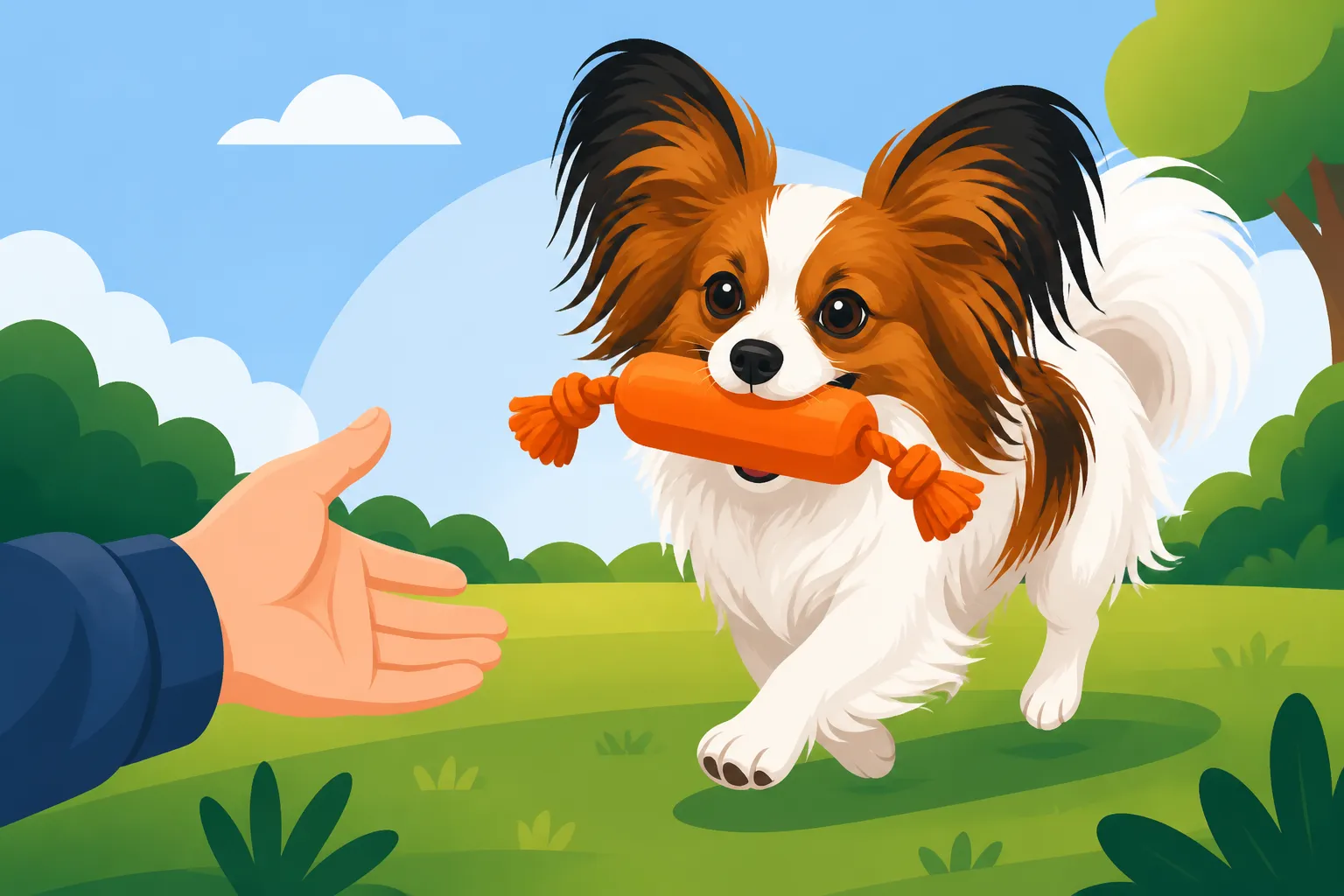
As they approach, lure them in with a treat held near your chest or face, making it clear that coming to you with the toy is what earns the reward. When they reach you, celebrate their return. If they drop the toy right at your feet, great! Give the treat. If they drop it a little short, that’s okay – pick it up and reward them for getting close. The goal at this stage is to make the act of returning the toy to your vicinity highly rewarding.
Avoid chasing your Papillon if they run off with the toy. This can quickly turn into a game of "keep away," which is fun for them but counterproductive for teaching retrieve. Instead, if they run away, disengage briefly, turn your back, or even walk away. Often, this will make them curious and bring the toy back to you. When they do, even if it's just to check on you, enthusiastically praise and reward them. If needed, you can use a lightweight long line in a safe, enclosed area initially to gently guide them back to you if they are prone to making a run for it.
The "two-toy" method can also be very effective here. Have two identical (or equally appealing) toys. Toss one. When your Papillon picks it up, wiggle the second toy enthusiastically. As they approach you, trade the first toy for the second (or for a treat), then immediately toss the second one. This teaches them that letting go of one toy leads to another fun interaction.
Adding "Drop It" or "Give"
The final piece of the retrieve puzzle is teaching your Papillon to willingly release the toy into your hand or at your feet. This is often the trickiest part for dogs who enjoy possessing their treasures.
Once your Papillon has returned to you with the toy, hold a high-value treat right under their nose. As they open their mouth to sniff or take the treat, say "drop it" or "give" and the moment the toy leaves their mouth, give them the treat. Immediately pick up the toy and praise them. The key is to make the exchange quick and rewarding. They learn that letting go leads to something even better, and that they’ll get the toy back for another round of fun.
If your Papillon is reluctant to drop the toy, try a gentle hand-under-chin approach, or softly put a finger in their mouth from the side, near their cheek, which usually causes them to open their mouth slightly to release the toy. As soon as they drop it, reward lavishly. Practice this many, many times in short, positive bursts. You want them to choose to drop it, not feel forced. This also helps prevent any resource guarding from developing, as they learn that giving up an item is a positive experience. Remember, Which Rewards a Papillon Works For will be key here – ensure the reward is better than holding onto the toy!
Common Challenges and Troubleshooting
Even with the best intentions, you might run into some bumps on the road to a perfect retrieve. Here are some common Papillon-specific challenges and how to overcome them.
Papillon Runs Away with the Toy
Ah, the classic "keep away" game! Your Papillon zips off, grabs the toy, and then prances around, tail waving, daring you to chase. This is a very common issue, especially with clever, playful breeds like Papillons. The biggest mistake we can make is to chase them, as this reinforces the behavior they find so rewarding – the chase itself!
Instead, make yourself the most interesting thing in the room. If they run off, calmly turn your back, walk away a few steps, or even sit down. Sometimes, pretending to ignore them (while still keeping an eye on them, of course!) can pique their curiosity and draw them back to you. When they do come closer, even if it's just to investigate, immediately light up with praise and encouragement. Lure them the rest of the way with a treat or another exciting toy.
Another strategy is to manage the environment. Start practicing retrieve in a very small, enclosed space like a hallway or a bathroom. This naturally limits their ability to run far away. You can also use a lightweight house line (a long, light leash that just drags on the ground) indoors. If they try to run off, you can gently step on the line to stop them, then call them back. Once they're back, reward them handsomely. Patience is key here; consistency will teach them that returning the toy to you is far more fun and rewarding than a solo sprint. If you're working on their general recall, this retrieve training can actually enhance it. How Reliably a Papillon Comes When Called is a fundamental skill that underpins successful retrieve training.
Losing Interest or Refusing to Pick Up
Sometimes, your Papillon might just seem bored with the whole idea, or they simply refuse to pick up the toy you've thrown. This can be frustrating, especially when you know they can do it.
First, consider the toy itself. Is it still exciting? Papillons can be particular. Try different textures – a soft plush, a crinkly fabric toy, a rubber ball, or something that squeaks. Some Papillons prefer toys they can really get their tiny jaws around, while others like something lighter. Check the size; if it’s too big, they might struggle. If it’s too small, it might not be interesting enough. Sometimes, a novel toy from Amazon can rekindle their interest!
If the toy isn't the issue, try making the game itself more dynamic. Instead of just tossing it, wiggle it enticingly, make exciting noises, or hide it briefly before "finding" it and tossing. The movement and excitement from you can be contagious. Keep the sessions short and high-energy. End on a positive note, even if it's just for picking up the toy once.
Also, it's always a good idea to rule out any physical discomfort. If your Papillon suddenly loses interest in picking up toys, particularly if it involves their mouth, it might be worth a quick check-up with your vet. Small breeds like Papillons are prone to dental issues, and The Teeth in a Papillon's Small Jaw can sometimes cause discomfort that makes carrying objects painful.
Papillon Dropping the Toy Too Far Away
Your Papillon brings the toy back, but consistently drops it just out of reach, forcing you to get up and retrieve it yourself. This isn't ideal, but it's an easy fix once you understand the mechanism.
The problem often lies in the reward timing. They're dropping the toy when they're close to you, not when they're at you. To refine this, adjust where you deliver the reward. When your Papillon approaches with the toy, hold a treat directly at your feet or right next to your hand. They'll need to come right up to you to get the treat. As they lean in for the treat, they'll often drop the toy right where you want it.
Mark the moment the toy hits the ground at your feet with a "yes!" or a click, and then immediately deliver the treat. Practice this repeatedly. Over time, they'll associate dropping the toy directly at your feet with receiving the reward. Gradually, you can start to phase out the luring treat as the habit forms, and the joy of the game and your praise become enough. How a Clicker Lands With a Papillon can be particularly useful here, as it allows you to precisely mark the exact moment they perform the desired behavior (dropping the toy in the correct spot).
Advanced Retrieving and Fun Variations
Once your Papillon has mastered the basic retrieve, there's a whole world of fun and mental stimulation to explore! Expanding on this skill can keep their brilliant minds engaged and strengthen your bond even further.
Retrieving Different Objects
Once your Papillon is a pro at bringing back their favorite plush toy, start introducing variety. Begin with objects that are similar in size and weight, but perhaps have a different texture. Maybe a smooth rubber ball, or a crinkly fabric toy. Gradually introduce items with different shapes, weights, and even scents.
Always start back in a low-distraction environment and keep the distance short. Reward heavily for success with new objects, just as you did in the initial stages. This process not only makes the game more interesting but also builds your Papillon's confidence and problem-solving skills. You can even teach them to Whether a Papillon Can Learn Object Names, so they can retrieve specific items on command – imagine saying "get your squeaky duck!" and they bring exactly that. This is a fantastic way to engage their high intelligence.
Playing Hide and Seek with Toys
This is where retrieve really shines as a mental exercise! Once your Papillon understands the "take it" and "bring it" cues, you can add a "find it" element. Start by showing your Papillon the toy, let them sniff it, and then place it just out of sight while they watch. Say "find it!" and encourage them to go get it.
As they get the hang of it, you can increase the difficulty. Place the toy in another room, under a blanket, or behind a piece of furniture. Gradually make the hiding spots more challenging. You can even involve them more directly by having them "stay" while you hide the toy, then releasing them with "find it!" This taps into their natural sniffing abilities and provides wonderful mental enrichment. What Mental Work a Papillon Needs is often overlooked, but it's just as important as physical exercise for this breed.
Incorporating Retrieve into Other Games
Retrieve doesn't have to be a standalone activity. It can be integrated into almost any playtime! If you have a larger yard or access to a safe, open space, you can use a mini-launcher or a simple ball thrower to send small balls flying further, giving your Papillon a real sprint. Just be mindful of their small joints; moderation is key, especially if you're concerned about Whether Agility Wears Out a Papillon's Knees. Many small dog toys and launchers can be found on Amazon, perfect for their size.
You can also use retrieve in combination with other commands. Ask for a "sit" before the throw, a "stay" until you release them, and a "come" or "front" as they return. This reinforces multiple cues and makes the game more structured. Some online training programs, like those offered by BAXTER & Bella, incorporate retrieve and other fun games into their curriculum, providing structured guidance for owners looking to expand their dog's repertoire. Making retrieve a part of daily play keeps things fresh and exciting, solidifying it as a favorite activity for your smart little Papillon.
Here’s a quick overview of different motivational rewards you might use:
| Reward Type | Description | Ideal For | Notes |
|---|---|---|---|
| High-Value Treats | Small, soft, and incredibly tasty morsels (e.g., chicken, cheese, special dog treats). | Food-motivated Papillons; initial training stages. | Ensure treats are tiny to avoid overfeeding and allow for quick consumption. |
| Enthusiastic Praise | Cheerful verbal affirmations, happy tones, and gentle petting. | Papillons who crave attention and approval from their owner. | Combine with treats initially, then can be used alone as the primary reward once behavior is established. |
| Favorite Toys | Another preferred toy for a brief game of tug or a quick toss. | Toy-motivated Papillons; useful for the "two-toy" method. | Excellent for Papillons who love playtime more than food. Ensures the fun continues. |
| Play & Interaction | A quick game of chase, gentle wrestling, or belly rubs. | Papillons who thrive on physical interaction and bonding. | Can be a powerful reward, but ensure it doesn't devolve into "keep away." |
Whether a Papillon Can Reach Seventeen with a rich, active life, full of engaging games like retrieve, is definitely a goal worth striving for!
Disclaimer
This article is for general informational purposes only and does not constitute professional advice. Laws, prices and regulations vary by location and change over time. Consult a qualified professional for guidance on your specific situation.