How Short a Papillon’s Training Session Should Be
It’s a common frustration for Papillon owners: you know your little butterfly dog is incredibly smart, perhaps even The Papillon Is the Smartest Toy Breed There Is, but trying to get through a long training session feels like herding cats. You set out with the best intentions, a pocket full of treats, and a specific goal in mind, only to find your bright-eyed pup has completely checked out after just a few minutes, leaving you wondering if you're doing something wrong. The truth is, Papillons thrive on short, impactful training bursts, and pushing beyond that sweet spot can actually be counterproductive for both of you. This guide will walk you through understanding why short sessions are ideal for your Papillon and how to make every minute count.
The Papillon Brain: A Speedy Processor, Not an Endurance Runner
Our Papillons are little dynamos, packed with intelligence and a desire to please, but their mental energy, much like their physical energy, often comes in intense, short bursts. Thinking of them as tiny, highly efficient computers, they can process information incredibly quickly, but their working memory for continuous, repetitive tasks has a limited buffer. This isn't a flaw; it's just how their brilliant little brains are wired, and understanding this is the first step to successful training.
Why Short Bursts Work Best for Toy Breeds
Imagine trying to concentrate on a complex lecture for hours when you're used to quick, stimulating puzzles. That's a bit like what a long training session feels like to a Papillon. They excel at picking up new cues and behaviors rapidly, often needing only a few repetitions before they grasp the concept. This rapid learning curve can sometimes fool us into thinking they can sustain focus for longer periods, but it's precisely this quick absorption that makes longer sessions unnecessary and even detrimental. Their natural inclination is towards variety and mental stimulation rather than prolonged, monotonous drills.
For a young Papillon puppy, this is even more pronounced. Their attention spans are notoriously short, a characteristic shared by many toy breeds. They might be bouncing with energy one minute, ready to learn a new trick, and then suddenly become engrossed in a dust bunny under the sofa the next. Trying to force their focus when it's already drifted away will only lead to frustration for both of you, potentially souring their association with training altogether. Instead, embracing their natural rhythm means leveraging those bursts of concentration to teach, reinforce, and then gracefully disengage before boredom sets in.
It's about making training a game, a fun interaction that they always look forward to, rather than a chore. These short, sharp sessions keep the energy high and the learning positive. You’ll find your Papillon remains eager and engaged, always keen for the next "game," because they know it won't drag on until they're completely fed up. This builds a robust and joyful partnership, where training becomes a source of connection and mental enrichment, rather than a battle of wills.
Avoiding Mental Fatigue and Frustration
Just like humans, dogs can get mentally tired. For a Papillon, pushing past their mental sweet spot can manifest in various ways, none of them positive for training progress. You might notice them starting to offer incorrect behaviors that they usually know, simply because they're trying anything to get you to stop. They might disengage entirely, turning their head, sniffing the ground, or even walking away. Some might even resort to snapping at treats or your hand out of frustration or overstimulation, which is a clear signal that they've had enough.
These behaviors are not defiance; they are signs of a dog that is mentally fatigued and no longer finding the training stimulating or rewarding. When you continue to push, you risk creating a negative association with the very act of training. Your Papillon might start to dread sessions, becoming hesitant to participate, or even developing anxiety around training cues. This undoes all the good work you've put in, turning a potentially fun and enriching activity into something stressful. The goal is always to keep training a happy, positive experience.
It’s crucial to remember that a tired brain doesn't learn effectively. When your Papillon is mentally exhausted, new information doesn't stick, and old cues can become muddled. Ending a session while they are still engaged and successful reinforces the idea that training is fun and they are good at it. This builds confidence and eagerness for the next session, which is far more valuable in the long run than trying to cram too much into one sitting. Listen to your dog, pay attention to their body language, and respect their mental limits.
How Long Is "Short Enough"? Pinpointing the Ideal Session Duration
So, if long sessions are out, what's the magic number? The beauty of training a Papillon is that "short" truly means short. We're not talking about half an hour; we're often talking about minutes. This might feel counterintuitive if you're used to working with larger breeds or have received general training advice, but it's perfectly suited to the Papillon's unique learning style and mental stamina.
The 5-Minute Rule: A Solid Starting Point
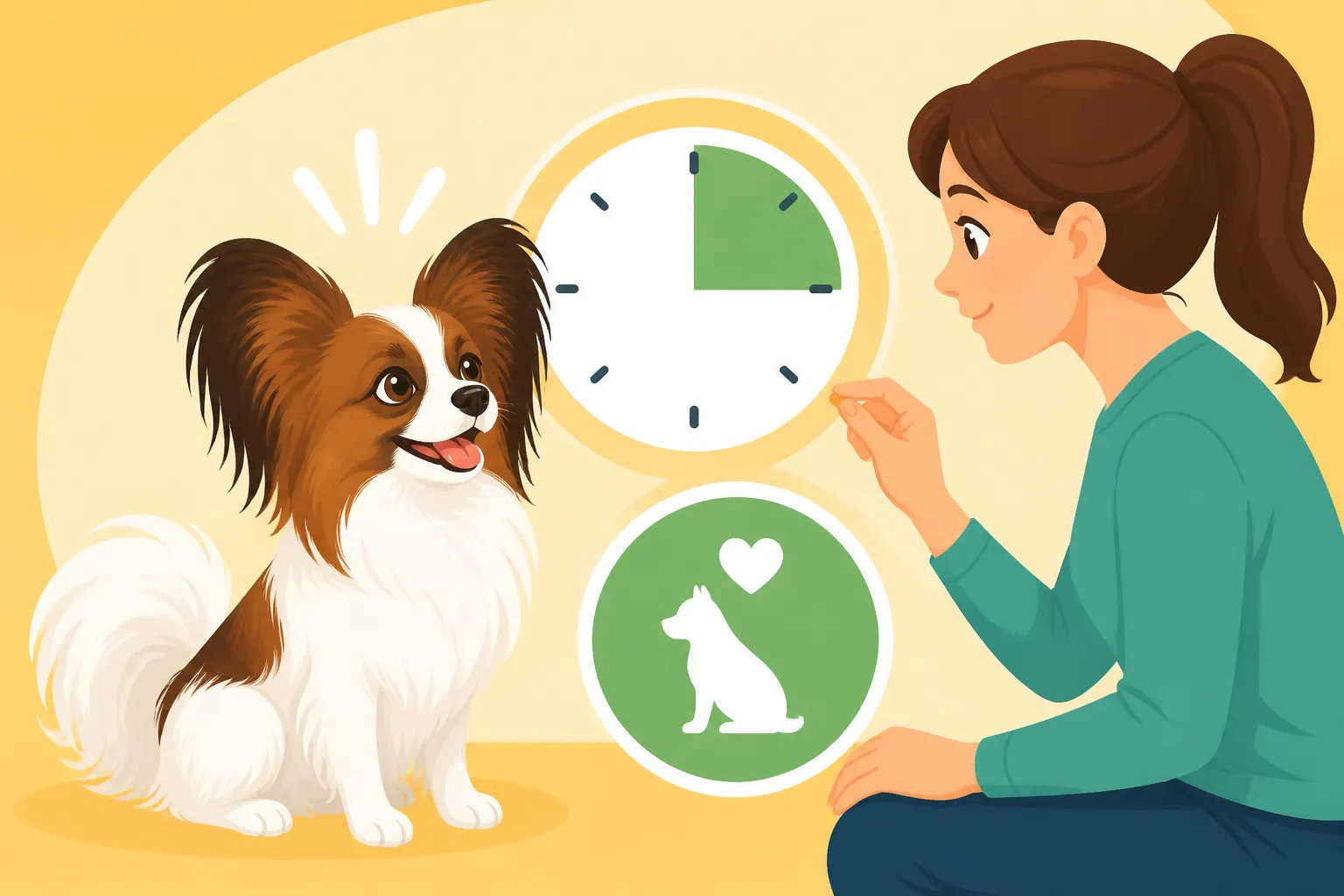
For most Papillons, especially puppies or when introducing a brand-new behavior, a training session should last no more than five minutes. Yes, you read that right: five minutes! And often, even less than that. Think of it as a focused burst of activity. Within those five minutes, you might work on one or two specific cues, such as "sit" and "stay," or practice recall from a short distance. The key is to keep the repetitions quick, positive, and varied enough to maintain their interest.
When you're teaching a new concept, your Papillon's brain is working hard, creating new neural pathways. This intense concentration is exciting but also draining. A few successful repetitions, ending with enthusiasm and a jackpot of treats or praise, are far more effective than twenty drawn-out attempts that lead to confusion. You want to stop before your Papillon loses interest, not after. If you see their gaze wander, their body language soften, or they start sniffing the floor, that's your cue to end the session immediately. Even if it's only been two minutes, it's better to quit while you're ahead.
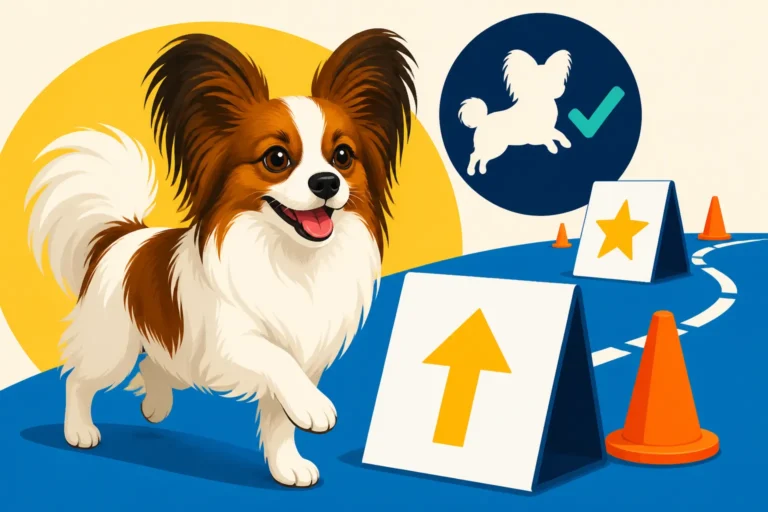
This "5-minute rule" isn't just for puppies. Even experienced adult Papillons benefit from short, focused drills to keep their skills sharp and enthusiasm high. For example, if you're practicing advanced agility sequences or complex trick training, break it down into tiny components. Master one small part for a few minutes, take a break, then work on another. This prevents burnout and keeps the learning process fresh and exciting, ensuring your Papillon remains a willing and happy participant.
Scaling Sessions Based on Age, Skill, and Distractions
While the 5-minute rule is a fantastic starting point, it's not set in stone. As your Papillon matures and becomes more proficient in certain skills, you can gradually, and I mean gradually, extend the duration of some sessions. For a fully trained adult Papillon who's working on known behaviors in a familiar, low-distraction environment, you might be able to stretch a session to 7-10 minutes, but rarely much longer. The critical factor is always your dog's engagement. Are they still bright-eyed, offering behaviors eagerly, and looking to you for the next instruction? If not, it's time to wrap it up.
Consider the level of difficulty and environmental factors. Teaching a new trick in your quiet living room is very different from practicing recall at a busy park. The more distractions there are, or the more challenging the concept, the shorter your session should be. A Papillon needs to focus intently in novel or high-stimulus environments, and that mental energy depletes quickly. Think of it as a burst of mental sprints rather than a marathon.
Here’s a simple guideline to consider:
| Factor | Recommended Session Length | Notes |
|---|---|---|
| Puppy (8-16 weeks) | 1-2 minutes | Very short, frequent bursts. Focus on one simple cue per session. |
| Young Dog (4-12 months) | 2-5 minutes | Can handle slightly more, but still keep it varied and fun. Introduce new concepts gently. |
| Adult Dog (1+ year) | 5-7 minutes | For familiar behaviors. Can stretch to 10 for highly engaging, known tasks in low-distraction settings. |
| New Behavior | 1-3 minutes | Keep it super short and positive to build a strong foundation. |
| High Distraction | 1-3 minutes | Focus on one known behavior; end before they get overwhelmed. |
| Review/Proofing | 5-7 minutes | For already learned skills, to maintain proficiency and enjoyment. |
Remember, these are just starting points. Every Papillon is an individual. Observe your dog's energy levels, enthusiasm, and focus. If they seem bored, distracted, or stressed, shorten the session immediately. You're aiming for quality over quantity, always.
Maximizing Impact: What to Do Within Those Short Sessions
Since your training sessions are going to be brief, it's paramount that every second counts. This means being prepared, enthusiastic, and highly rewarding. The effectiveness of a short session isn't just about its duration, but about the intensity and quality of the interaction within that timeframe. Making the most of those precious minutes will ensure your Papillon stays motivated and eager to learn.
High-Value Rewards and Enthusiasm are Key
Papillons are incredibly intelligent and often have a strong desire to please their people, but they also respond best when the "paycheck" is worth the effort. For most Papillons, food is a powerful motivator, especially small, soft, and extra-tasty treats. Think tiny pieces of cooked chicken, cheese, or specialized training treats that can be swallowed quickly, keeping the session moving. You can find a huge variety of high-value training treats and supplies like clickers on Amazon, ready for your next session. Some Papillons are also incredibly Whether a Papillon Works for Toys, so a quick game of tug or a throw of their favorite squeaky toy can be an excellent reward.
Your enthusiasm is just as vital as the treats. Papillons are highly attuned to their owners' emotions. If you sound bored or frustrated, they'll pick up on that immediately and their motivation will plummet. Keep your voice cheerful, high-pitched, and exciting. Praise them lavishly with "Good dog!" or "Yes!" the moment they perform the correct behavior. This positive feedback, coupled with a high-value reward, creates a powerful association between the action and a positive outcome, making them want to repeat it.
Varying your rewards can also keep things fresh. Don't always use the same treat or the same praise. Sometimes it's a treat, sometimes it's a short game of tug, sometimes it's just exuberant verbal praise and a quick cuddle. This keeps your Papillon guessing and engaged, preventing them from becoming complacent or bored with the reward system. Remember, a Papillon's motivation is directly tied to how much fun and rewarding they perceive the training to be.
Ending on a High Note: Always Leave Them Wanting More
This is perhaps the most crucial rule for short training sessions: always end before your Papillon loses interest. The goal is to finish when they are still engaged, still successful, and still wanting more. This leaves them with a positive feeling about the session, eagerly anticipating the next one. If you wait until they're bored or making mistakes, that negative experience is what they'll remember.
After your Papillon successfully performs a command, especially the last one of the session, give them a huge burst of praise and a special jackpot treat. Then, cheerfully announce "All done!" or "Finished!" and put the treats away. Don't be tempted to squeeze in "just one more." That "one more" is often the one where they fail, and you want to avoid that at all costs. The aim is to build their confidence and make them feel like a superstar every single time.
If your Papillon struggles with a particular behavior during a session, don't dwell on it. Simplify the request, make it easier for them to succeed, or switch to a command they know perfectly. Get one successful repetition, reward heavily, and then end the session. This prevents frustration and reinforces the idea that training is about achievement and fun, not struggle. By consistently ending on a high note, you'll find your Papillon literally bouncing with excitement whenever you bring out the training treats or clicker.
Integrating Training into Daily Life: Beyond Formal Sessions
While short, focused training sessions are incredibly effective for teaching new skills and sharpening existing ones, a Papillon's intelligence and desire for interaction mean that learning doesn't have to be confined to designated training times. In fact, some of the most powerful and long-lasting lessons happen seamlessly within the fabric of your daily routine. This approach makes training a continuous, enriching part of your shared life, rather than a separate, scheduled activity.
Incorporating Mini-Lessons Throughout the Day
Think of all the small moments throughout your day where you can ask for a simple behavior. Before you put down their food bowl, ask for a "sit" or "down." When you open the door to go outside for a potty break, ask for a "wait." Before they jump up onto your lap for cuddles, ask for a "come" and a "sit." These are called "life rewards," and they are incredibly potent. Your Papillon wants that food, that walk, that cuddle, and by asking for a known behavior first, you reinforce the command in a meaningful, real-world context without any formal pressure.
These mini-lessons are often just a few seconds long – maybe one or two repetitions of a single command. They don't count as a "formal" training session, but they build consistency and generalize behaviors across different environments and situations. Your Papillon learns that these commands aren't just for when you have a treat pouch on, but are part of how they interact with the world and earn the things they want. This continuous, low-pressure reinforcement is remarkably powerful for a breed as smart as the Papillon.
This constant, gentle reinforcement helps your Papillon understand the relevance of what they've learned in formal sessions. It also keeps their brain active and engaged throughout the day, which is crucial for such an intelligent breed. They thrive on mental stimulation, and these little "puzzles" prevent boredom and strengthen your bond. Remember to still reward these "life skills" with praise, a small treat, or simply the access to the desired reward (food, walk, cuddles). You'd be surprised at How Much Time a Papillon Takes Each Day when you integrate these small training moments.
Play as a Powerful Training Tool
For a Papillon, play is not just fun; it's a vital component of learning and bonding. These dogs often have a wonderful playful spirit, and channeling that energy into training can yield incredible results. Instead of viewing play as a break from training, integrate it into your training. This is especially effective for teaching cues like "come," "stay," "drop it," and even advanced concepts.
For instance, a game of fetch can easily become a recall practice. Throw the toy, let your Papillon chase it, and as they pick it up, call "Come!" As they approach, reward them with praise and another throw of the toy. This makes coming to you the most fun thing ever. Tug-of-war can be used to practice "drop it" – ask for the drop, reward with a treat or release of the toy, and then immediately re-engage in play. This teaches them that letting go doesn't mean the fun ends; it means the fun restarts.
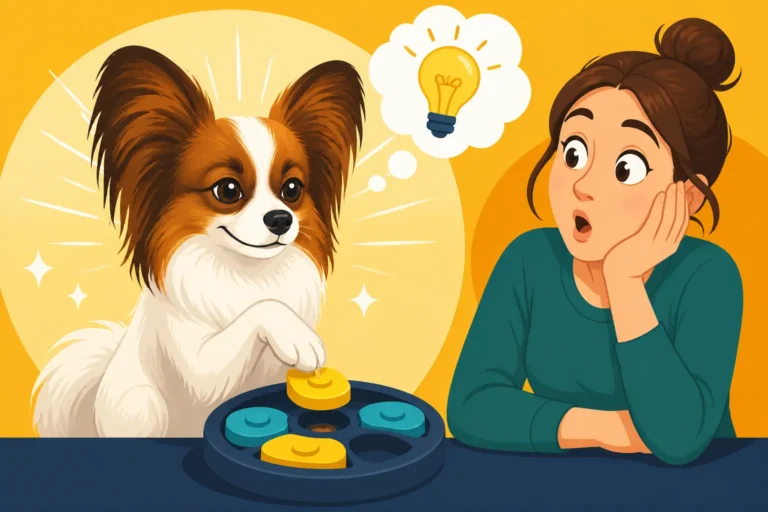
Papillons also love to solve puzzles and engage in interactive games. Hide-and-seek, where you hide and call them, reinforces "come" in an exciting way. Using puzzle toys that dispense treats when manipulated provides mental stimulation and can keep their sharp minds busy. Platforms like BAXTER & Bella offer structured guidance on using play effectively in training, helping you tap into your Papillon's natural drive. The beauty of training through play is that it keeps the experience positive, high-energy, and deeply engaging, exactly what a Papillon thrives on. It also helps reinforce the idea that interacting with you is the most rewarding thing they can do.
Disclaimer
This article is for general informational purposes only and does not constitute professional advice. Laws, prices and regulations vary by location and change over time. Consult a qualified professional for guidance on your specific situation.