How Reliably a Papillon Comes When Called
Few things are more unsettling for a Papillon owner than calling your beloved butterfly dog, only to have them look at you, perhaps wag their tail, and then bolt off after a squirrel or a waft of an interesting smell. That moment of panic, wondering if they'll ever come back, is a universal fear. This guide is dedicated to helping you build a consistently reliable recall, transforming that heart-stopping moment into a confident, joyful reunion, and teaching your Papillon that coming when called is the absolute best choice they can make.
Why "Come" Is So Hard (and So Important) for Papillons
Let's be real: teaching any dog a rock-solid recall is tough. For Papillons, with their unique blend of intelligence and independence, it can feel like an Olympic sport. But it's also arguably the most critical command you can teach. A reliable recall is not just about convenience; it's about safety. It means you can call your dog back from a dangerous situation – a busy road, an aggressive dog, or something they shouldn't eat. Without it, off-leash adventures become a source of anxiety, not joy.
The Independent Streak
Papillons are often lauded for their intelligence – and for good reason! They are exceptionally clever, often ranking very high on lists of canine intelligence, as you can read in The Papillon Is the Smartest Toy Breed There Is. This means they learn quickly, but it also means they can be independently minded. They're not always eager to simply comply without understanding the benefit to them. If something more interesting is happening on the other side of the park, your voice might just become background noise. They weigh the options, and if the squirrel is more enticing than your "come," they might just choose the squirrel. This isn't defiance; it's often a calculated choice from a smart dog.
Their heritage as companion dogs doesn't mean they lack drive. Far from it! They were bred to be alert and engaging, and that translates into a keen awareness of their environment. They might not have the relentless prey drive of a terrier, but a rustle in the leaves or a distant bird can capture their attention completely, making your call fade into insignificance. Their intelligence can also sometimes lead to them feeling like they can outsmart their owner, which is why some wonder Whether a Papillon Outsmarts Its Owner.
Distractions, Distractions Everywhere
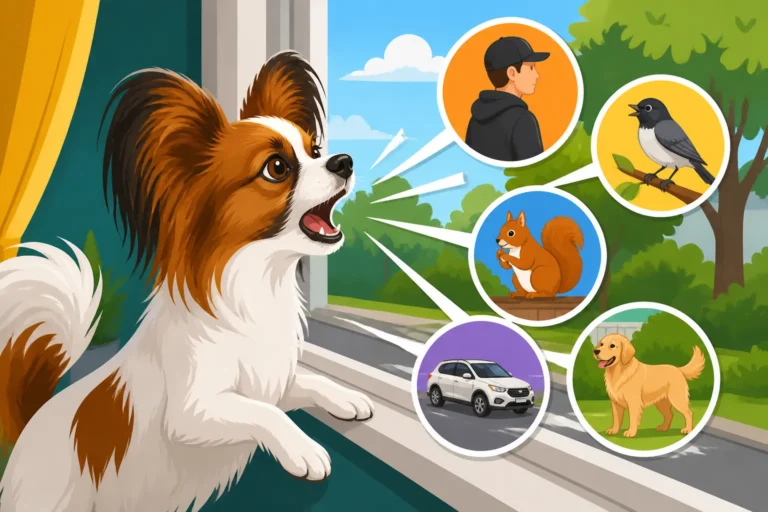
Imagine trying to concentrate on a task while a parade is going by, a delicious meal is cooking, and your favorite song is playing all at once. That's a bit like what the world is for a Papillon. Every smell, every movement, every sound is a potential adventure. Their small size makes the world a vast, overwhelming place with endless stimuli. A patch of grass might hold a thousand fascinating scents that a larger dog would barely register. For a Papillon, a butterfly truly is a siren call.
These distractions are not just external. Your Papillon might also be distracted by their own desire to explore, to mark territory, or to simply revel in the joy of being off-leash. It's not that they don't love you; it's that the world is incredibly stimulating, and their natural curiosity is powerful. Overcoming these distractions requires making yourself even more interesting and rewarding than the environment itself.
Their Small Size, Big World
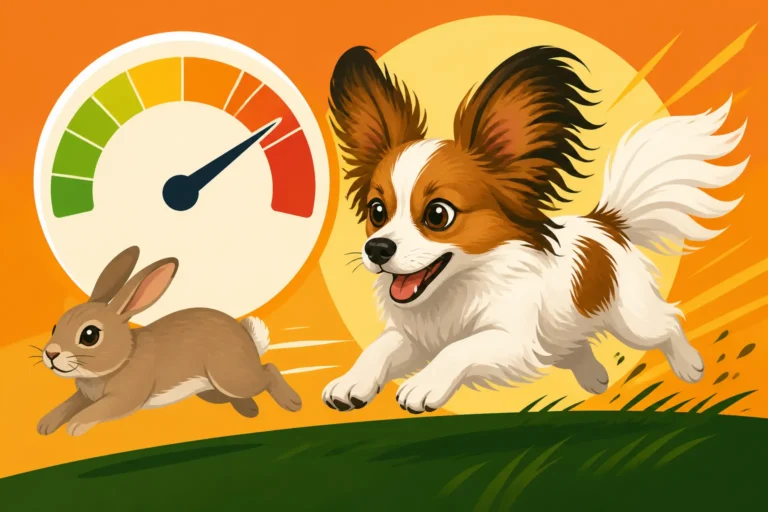
While their small stature makes them portable and perfect for apartment living, it also presents unique challenges for recall. A Papillon can disappear under a bush or behind a large rock much faster than a Golden Retriever. Their speed and agility, combined with their low profile, mean that a quick dash can put significant distance between you and them in seconds. And because A Papillon Has No Idea It Is Small, they often don't hesitate to venture into situations that could be dangerous for a dog of their size.
Furthermore, being so close to the ground, they have an intimate relationship with all the smells the world has to offer. A fascinating scent trail can be like a gripping novel, pulling them along with single-minded focus. This deep immersion in their sensory world makes it even harder to break their concentration once they're on a mission. This isn't just about fun; a lost Papillon is incredibly vulnerable, making a reliable recall a non-negotiable safety net.
Building a Rock-Solid Recall: The Foundation Steps
Building a reliable recall isn't about punishment or yelling; it's about making "come" the most positive, rewarding experience imaginable. It takes patience, consistency, and a deep understanding of what motivates your Papillon.
Making "Come" the Best Thing Ever
The single most important principle of recall training is to associate the "come" command with overwhelmingly positive experiences. Your Papillon should feel like they've won the lottery every time they respond. This means high-value rewards, not just a pat on the head or a boring piece of kibble. Think tiny pieces of cooked chicken, cheese, hot dogs, or their absolute favorite squeaky toy.
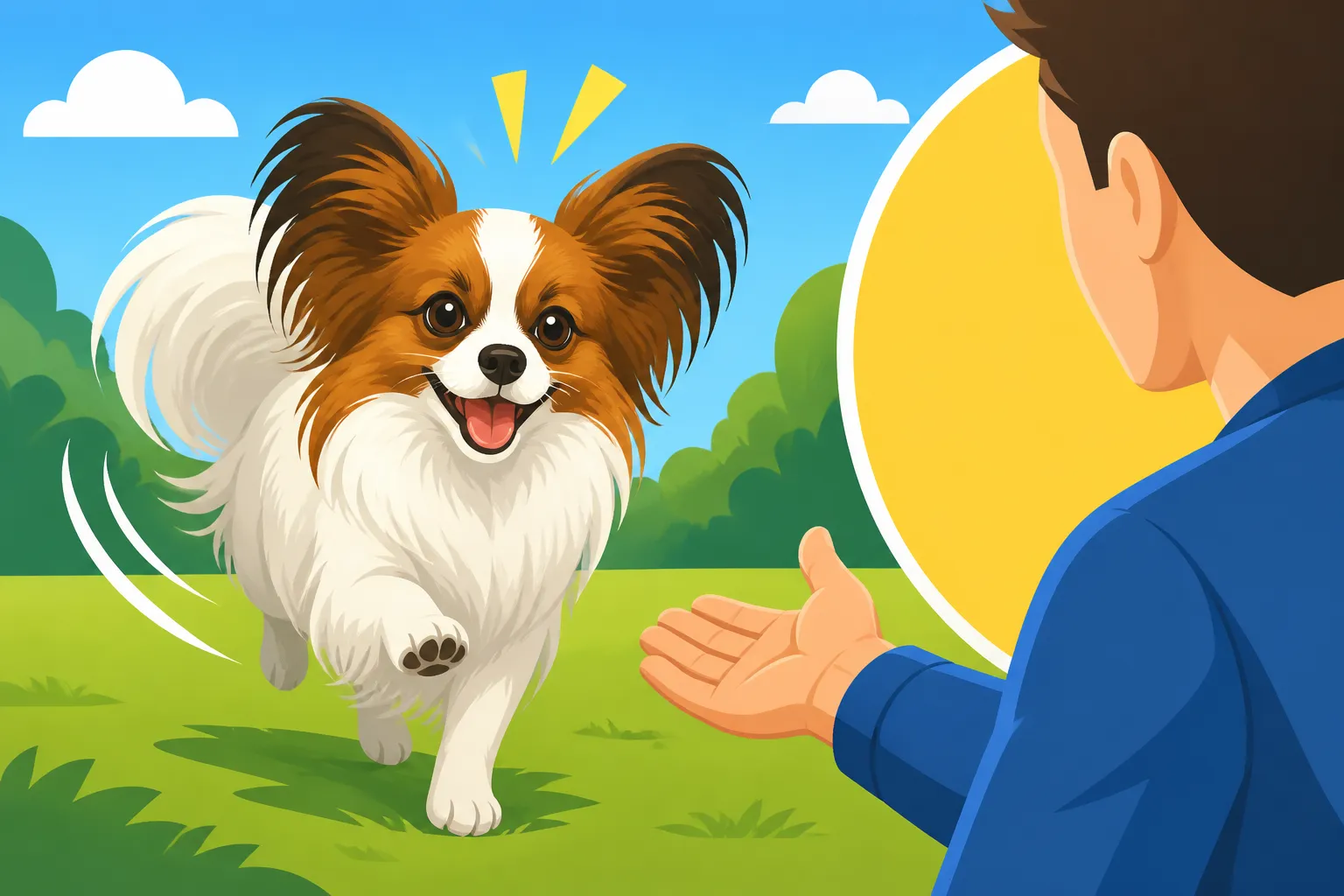
When you call them and they come, no matter how hesitantly or slowly, celebrate it like it's the greatest achievement in canine history. Shower them with praise, affection, and those amazing treats. Never use "come" to signal something unpleasant, like the end of playtime, a bath, or a trip to the vet. If they associate "come" with the fun stopping, they'll quickly learn to avoid it. Instead, call them, reward them, and then immediately release them to go back to playing. This builds a powerful positive association that makes them eager to return to you.
Starting Indoors, Without Distractions
You wouldn't ask a child to solve a complex math problem in a crowded, noisy playground, right? The same logic applies to your Papillon. Begin recall training in a quiet, confined space like your living room or a hallway. Start with no distractions. Get down on their level, call their name, and then excitedly say "Come!" or "Here!" as you back away a few steps. When they take even one step towards you, mark it with a cheerful "Yes!" or a clicker, and immediately offer that high-value reward.
Repeat this many, many times in short, fun sessions. Think 2-3 minutes, 5-10 times a day, rather than one long, boring session. Keep it upbeat and playful. As they get the hang of it, increase the distance slightly. You can also try calling them from another room. The goal is to build a strong, unquestioning response to the cue before you introduce any real-world challenges. This internal link on How Short a Papillon's Training Session Should Be might offer more insights into keeping training engaging for your Papillon.
The Power of Positive Reinforcement
Papillons are sensitive little souls. They thrive on praise and gentle guidance, not harsh corrections. Yelling, scolding, or punishing your Papillon for not coming will only teach them to fear you and the command. They'll learn that coming to you means something bad happens, making them even less likely to respond in the future. As discussed in Why Harsh Correction Fails on a Papillon, positive reinforcement is key to building trust and a strong bond.
Focus entirely on rewarding the desired behavior. If your Papillon doesn't come, don't chase them. Instead, try to re-engage them with a happy voice, a favorite toy, or by moving in the opposite direction (sometimes dogs will chase you if you run away playfully). Once they come, reward heavily. Consistency is paramount. Everyone in the household needs to be on the same page, using the same command and the same high-value rewards. This consistency prevents confusion and reinforces the positive association. For more ideas on what truly motivates them, check out Which Rewards a Papillon Works For.
Gradually Increasing Difficulty and Distractions
Once your Papillon is consistently coming to you indoors, it's time to slowly introduce more challenging scenarios. This is where many owners make the mistake of going too fast, too soon.
Moving to the Backyard (Safely!)
The backyard is often the first "real world" test, and it's a huge step up from the living room. Even a familiar yard has a multitude of new smells, sounds, and sights that weren't present indoors. Before letting your Papillon off-leash in the yard for recall practice, ensure your fence is secure. Papillons are surprisingly good at finding weak spots or squeezing through small gaps. It’s worth checking How High a Fence a Papillon Needs to ensure your yard is truly secure for an escape artist.
Start by practicing recall on a long line (we'll talk more about this soon) even in the fenced yard. This gives you a safety net if your Papillon gets distracted. Begin with short distances and simple calls, just like you did indoors. Reward, reward, reward. Gradually, as their reliability improves in this new environment, you can try short periods off the long line, but always be ready to reattach it if their focus wavers.
Introducing Mild Distractions
This is where the real fun (and challenge) begins. Once your Papillon is solid in the quiet backyard, introduce mild distractions. This could be a family member walking by, a distant car sound, or a few leaves blowing. Keep these initial distractions minimal. You can even create controlled distractions yourself:
- Have someone gently toss a ball a short distance while you call your Papillon.
- Practice near a window where they might see a bird, but not right when the bird is directly in view.
- Practice during a time when neighborhood activity is generally low.
The key is to set your Papillon up for success. If you call them when they are deeply engrossed in something, like a thrilling chase of a leaf, they are much more likely to fail. Start with a moment when their attention is only partially engaged, then build up from there. This slow progression is crucial for solidifying the behavior.
The Long Line: Your Best Friend
A long line (a lightweight leash typically 15-50 feet long) is an indispensable tool for recall training, especially for Papillons who love to explore but can be hard to catch. It gives your dog the illusion of freedom while giving you control and safety. You can find excellent quality long lines on platforms like Amazon, offering various lengths and materials to suit your Papillon's size and your training needs.
Here’s how to use it effectively:
- Attach the long line: Clip it to a well-fitting harness, not their collar, to prevent neck injury if they hit the end of the line.
- Let them wander: Allow your Papillon to explore while dragging the line. Keep a close eye on it to ensure it doesn't tangle.
- Call them back: When they are distracted but not completely fixated, call them with your happy, enthusiastic "Come!" command.
- Gentle guidance: If they don't respond, gently reel in the line while continuing to use your encouraging voice. Don't yank or drag them; just provide a steady, consistent pressure that guides them towards you.
- BIG reward: The moment they reach you, make it a party! Treats, praise, and a short burst of play.
- Release and repeat: Let them go back to exploring and repeat the process.
This tool allows you to practice recall in increasingly distracting environments without the risk of your Papillon truly bolting. It teaches them that even when they're far away, coming back to you is the best choice.
Troubleshooting Common Recall Problems
Even with the best intentions, recall training can hit snags. It's frustrating, but understanding common pitfalls can help you get back on track.
When Your Papillon Ignores You
There are several reasons your Papillon might seem to ignore your "come" command:
- Over-distraction: You might have introduced too many distractions too quickly. Go back a step in your training to an environment where they were successful.
- Poor motivation: Are your rewards truly high-value enough? If a piece of kibble is less interesting than a dirt clod, they'll choose the dirt. Up your treat game!
- Contaminated cue: Have you used "come" for negative things? If so, you might need to choose a new recall word (e.g., "here," "front," or even a whistle) and start fresh with positive associations only.
- Testing boundaries: Papillons are smart. They might be testing if they really have to come every time. This is where consistency is critical. Every call, every time, must be followed by a reward.
- Physical discomfort: Sometimes, a dog might be hesitant to move due to pain. If your Papillon suddenly becomes reluctant, especially if they show signs of lameness or stiffness, a vet check is always a good idea. Papillons are prone to Patellar Luxation Is the Papillon Problem You Will Actually Meet, so keeping an eye on their movement is important.
The "Catch Me If You Can" Game
Oh, the dreaded "catch me if you can" game! This happens when your Papillon learns that coming to you often leads to them being put back on the leash and taken home, or that you'll chase them playfully. For a smart dog like a Papillon, this becomes a fun game of evasion, and your call becomes part of the game. If your Papillon enjoys this, they might even learn to bolt through doors. You can read more about this behavior in Why a Papillon Bolts Through Doors.
To fix this:
- Never chase: If your Papillon runs away, resist the urge to chase. This just reinforces the game. Instead, turn and run the other way, or drop to the ground and act super excited. Often, their curiosity will win, and they'll come to investigate.
- Practice "come and go": Call your Papillon, reward them heavily, and then immediately tell them "Go play!" and release them. Do this many times before you actually put them back on the leash. This teaches them that "come" doesn't always mean the fun ends.
- Make leashing up positive: When it's time to go, don't just grab them. Call them, reward them, then clip the leash on while continuing to offer treats and praise. Make the leash a positive thing, not an indicator of the fun stopping.
Proofing the Recall in New Environments
Once your Papillon is doing great in your yard and with mild distractions, you can start practicing in new, increasingly stimulating environments. This is called "proofing" the behavior.
- Start quiet: Choose a new park or open space during off-peak hours when there are fewer people, dogs, or wildlife.
- Use the long line: Always, always start with the long line in new environments. This is a critical safety measure, especially for a small dog.
- Gradual exposure: Slowly expose them to more distractions. Maybe a person walking by, then a person with a quiet dog in the distance, then a slightly busier area.
- Vary locations: Practice in different parks, different fields, and even urban environments (always on a long line or leash in unsafe areas). The more places your Papillon successfully performs a recall, the more reliable it becomes.
Remember, every new environment is like starting over with a new level of difficulty. Be patient, be prepared with amazing treats, and always set your Papillon up for success. The goal is for your Papillon to come running back to you, no matter where you are or what exciting things are happening around them. This is the ultimate goal of Whether a Papillon Can Be Trusted Off Leash.
The Role of Consistency and Environment
A reliable recall isn't a "one and done" training exercise. It's an ongoing commitment and a way of life with your Papillon.
Every Interaction Counts
Every single time you call your Papillon, whether it's for dinner, to come inside, or just for a quick cuddle, it's an opportunity to reinforce their recall. Treat every "come" as a mini-training session. Use your happy voice, and always give a small reward, even if it's just a quick scratch behind the ears and a cheerful "good dog!" This ensures that the command remains fresh and positive in their mind.
Avoid nagging or repeating the command multiple times. Say "Come!" once, clearly and happily. If they don't respond, reset. Go closer, use a more enticing reward, or try to get their attention in another way, then give the command again. You want them to learn that "Come!" means immediate action, not "I'll think about it after I finish smelling this."
Managing Risk: When Not to Trust It
Even with the most dedicated training, there will be situations where your Papillon's recall isn't 100% trustworthy. It's crucial to understand these limitations and manage risk accordingly.
- High-traffic areas: Never rely on recall near busy roads, parking lots, or other dangerous zones. Leash up!
- Unfamiliar, high-distraction environments: A new dog park, a trail with lots of wildlife (Papillons can have a surprising amount of How Much Prey Drive a Papillon Has), or a very crowded event are not the places to test an unproven recall.
- When you're unsure: If you have any doubt that your Papillon will come, don't take the risk. It's better to keep them on a leash or long line than to have a terrifying moment or, worse, a tragedy.
It's also important to ensure your Papillon gets adequate exercise and mental stimulation. A bored Papillon is more likely to create their own fun, which often involves ignoring you and finding something exciting to do, potentially leading to destructive behaviors as discussed in What a Bored Papillon Destroys. A well-exercised and mentally engaged Papillon will be more attentive and less likely to bolt. You can explore how much exercise they need in How Much Exercise a Papillon Needs.
Tools and Aids for Recall Success
Beyond long lines and high-value treats, several other tools can aid in recall training:
| Tool/Aid | Description | How it Helps with Recall |
|---|---|---|
| Clicker | A small device that makes a distinct "click" sound. | Marks the exact moment your Papillon performs the desired behavior, making training precise and clear. |
| High-Value Treats | Small, soft, incredibly delicious treats (e.g., cooked chicken, cheese, hot dogs). | Powerful motivators that make "come" the most rewarding thing. |
| Long Line/Training Lead | A very long, lightweight leash (15-50 ft). | Provides safety and control while practicing recall in open, distracting environments. |
| Training Pouch | A small pouch that clips to your waist, holding treats and a clicker. | Keeps rewards readily accessible for immediate delivery, crucial for timely reinforcement. |
| E-collar (Careful Use) | Electronic training collar (static stimulation, vibration, or tone). | Only for advanced users with professional guidance. Can be used as a remote "tap" to gain attention in emergencies, never for punishment. |
| Remote Treat Dispenser | A device that dispenses treats from a distance via remote control. | Helps reward coming from further distances, making the return journey positive from afar. |
For those looking for structured guidance, online dog training programs can be incredibly beneficial. For instance, platforms like BAXTER & Bella offer comprehensive online courses and resources that can walk you through recall training step-by-step, often with live support and community forums. These programs can provide the structure and expert advice needed to tackle challenging behaviors like unreliable recall, especially for intelligent breeds like Papillons who thrive on clear communication and consistent training.
Remember, the journey to a reliable recall is an investment of time and effort, but the payoff — the freedom and safety you and your Papillon will gain — is absolutely priceless.
Disclaimer
This article is for general informational purposes only and does not constitute professional advice. Laws, prices and regulations vary by location and change over time. Consult a qualified professional for guidance on your specific situation.