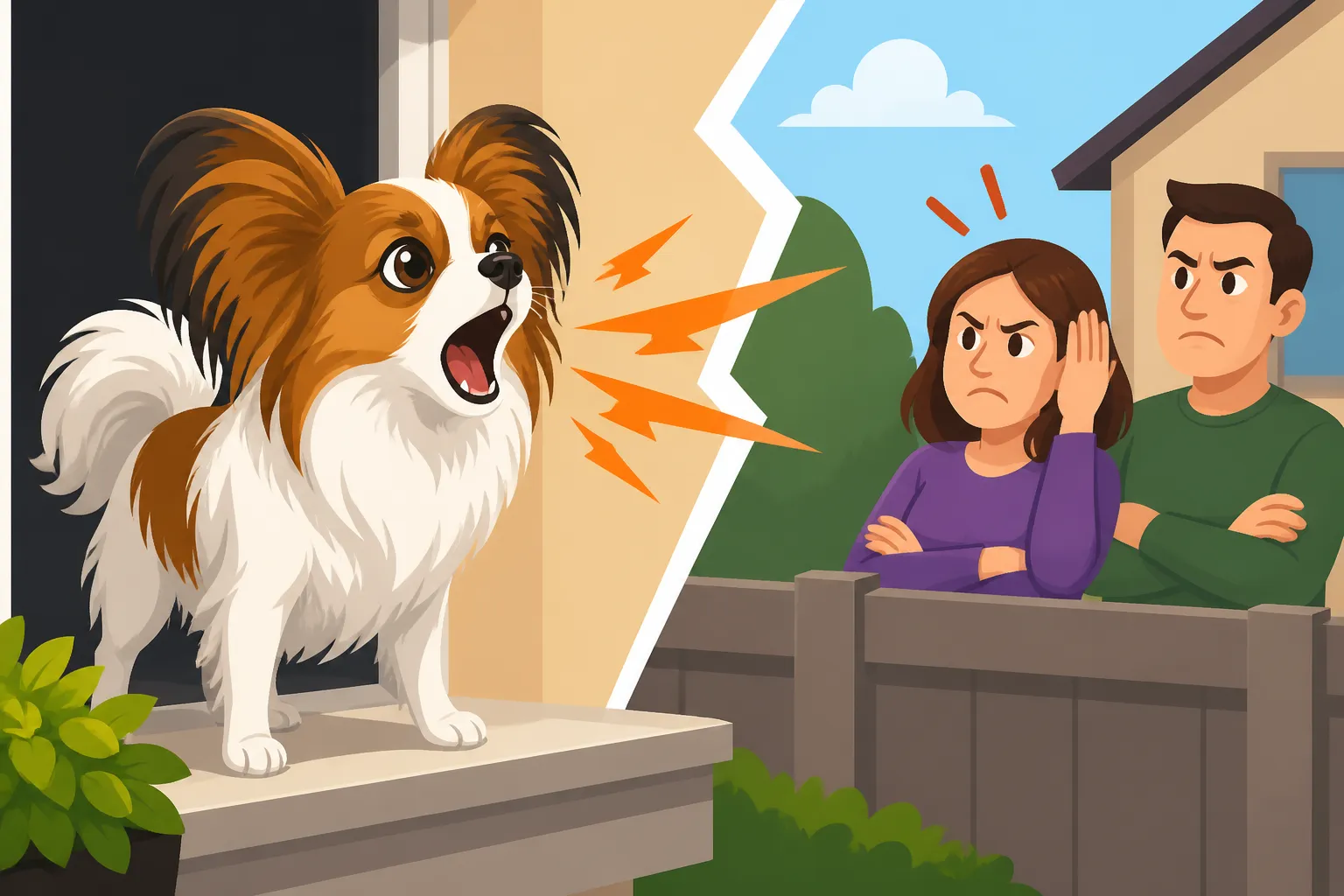
Why Neighbors Complain About a Papillon
It's incredibly frustrating when your tiny, beloved Papillon, who seems so quiet and sweet to you, starts to draw the ire of the neighbors with their barking. You know your little butterfly dog has a big personality, and sometimes that comes with a big voice, but constant complaints can really stress you out and make you feel like you're failing your furry friend and your community. This guide is here to help you understand why your Papillon might be barking so much, offer practical strategies to manage it, and help you maintain peace with those living around you.
Understanding the Papillon's Vocal Nature
Papillons are not typically known as incessant barkers in the same way some other toy breeds might be, but they certainly aren't silent. They possess a keen intelligence and an alert nature, which means they're often the first to notice anything out of the ordinary. This can manifest as barking, sometimes to the exasperation of their humans and the neighbors. It's not about being "bad" but about their innate traits.
The Watchdog Instinct in a Small Package
Despite their delicate appearance and small stature, Papillons often carry a strong watchdog instinct. They are highly observant and perceptive, quickly picking up on changes in their environment, whether it's a leaf blowing past the window differently, a squirrel in the yard, or a distant siren. For them, every new sound or sight is something worth noting, and their primary way of alerting their "pack" (you!) to these changes is by barking. They don't just see themselves as cute lapdogs; they're vigilant protectors of their territory, which includes your home and family. This intrinsic drive means you can't simply "turn off" their barking entirely, but you can certainly redirect and manage it.
Communicating Needs and Feelings
Barking is a dog's primary form of vocal communication, and for a Papillon, it's no different. They bark to express a wide range of emotions and needs. It could be excitement when you walk through the door, frustration when they can't reach a toy, or even anxiety when left alone. Sometimes, they might bark purely for attention, having learned that a few sharp barks quickly brings you running. This can be a tricky cycle to break, especially if you've unintentionally rewarded their vocalizations by giving them what they want. Think of it like a toddler's tantrum; sometimes, any attention is good attention. Learning to differentiate between these barks is the first step in addressing the root cause. A high-pitched, rapid bark might be excitement, while a lower, sustained bark could indicate a perceived threat or distress.
Common Triggers for Papillon Barking
To effectively address a Papillon's excessive barking, we first need to pinpoint what sets them off. It's rarely random; there's almost always a trigger, even if it seems invisible to us. Their world is much more acute, with senses finely tuned to pick up details we often miss entirely.
Environmental Stimuli and Alert Barking
This is perhaps the most common reason for neighbor complaints. Your Papillon is essentially on high alert, reacting to everything outside. That delivery truck rumbling down the street, the kid on a skateboard, another dog walking by, or even just the mail carrier approaching the door can all become major events worthy of a barking spree. Because Papillons are so quick-witted, they often become overly focused on these external goings-on. If your windows offer a prime viewing spot, your Papillon might spend a good portion of the day "on patrol," barking at anything that moves. Similarly, sounds that are barely audible to us can be crystal clear to them. A distant siren, a car alarm down the block, or even the faint sound of construction can all trigger their alert system. This is where you'll often hear complaints about your dog barking at "nothing," when in reality, they're reacting to something you simply can't perceive. Consider how much a Papillon barks when you're not home, as this is often when these complaints arise.
Boredom and Lack of Mental Stimulation
Don't let their small size fool you: Papillons are incredibly intelligent and active little dogs. They rank highly in canine intelligence and thrive on mental stimulation. A bored Papillon is a destructive Papillon, but also a vocal one. If they're not getting enough physical exercise or, more importantly, enough mental challenges, they will find ways to entertain themselves, and barking can become a default activity. This might manifest as "demand barking" for attention, or simply barking at shadows or dust bunnies out of sheer restlessness. They need to put their clever brains to work, whether that's through training sessions, puzzle toys, or interactive games. A lack of engagement can quickly lead to nuisance behaviors, and persistent barking is certainly at the top of that list. For a deeper dive into their mental needs, check out What Mental Work a Papillon Needs.
Separation Anxiety and Distress
This is a heartbreaking trigger for both you and your Papillon, and often a major source of neighborly complaints. Papillons are highly social dogs who bond deeply with their families. They can easily develop separation anxiety if not properly conditioned to be alone. If your Papillon starts barking almost immediately after you leave, and it's accompanied by other signs like destructive chewing, house-soiling, or pacing, it's likely anxiety. The barking isn't just noise; it's a cry for help. Imagine how a human child would react if suddenly left completely alone in a silent house. This isn't just a habit; it's a genuine emotional struggle. Addressing separation anxiety requires a careful, patient approach, often involving desensitization and counter-conditioning. Knowing the Signs a Papillon Has Separation Anxiety can help you determine if this is the core issue.
Seeking Attention and Reinforcement
Sometimes, your Papillon barks simply because it works. If your dog barks for a treat, and you give them one, you've just reinforced the barking. If they bark to be picked up, and you pick them up, they've learned that barking is an effective tool. Papillons are smart cookies, and they quickly learn what gets them what they want. This attention-seeking barking can be particularly irritating for neighbors if it's high-pitched and persistent. It's a tricky one to manage because even negative attention (like yelling at them to be quiet) can still be a form of attention that reinforces the behavior. Breaking this cycle requires consistency from every family member.
Health Issues or Discomfort
While less common for generalized barking complaints, it's always worth considering if a sudden increase in barking, or barking that seems out of character, could be linked to a health issue. Pain, discomfort, a change in vision or hearing, or even cognitive decline in older dogs can all lead to increased vocalization. If your Papillon is barking at seemingly nothing, seems disoriented, or shows other subtle signs of illness, a vet visit is always a good idea to rule out underlying medical causes. This is especially true as they get older; Night Confusion in an Old Papillon can sometimes manifest as barking.
Strategies for Managing and Reducing Excessive Barking
Once you've identified the primary triggers, you can start implementing strategies to help your Papillon quiet down. Remember, consistency is key, and it often takes time and patience to reshape ingrained behaviors.
Environmental Management and Blockading Triggers
The easiest way to reduce alert barking is to remove or minimize the triggers.
- Window Film or Blinds: If your Papillon barks at everything passing by the window, consider applying frosted window film to the lower panes or simply keeping blinds or curtains closed during peak "trigger times." This limits their ability to see outside, removing the visual stimulus.
- Sound Masking: For sound-sensitive barkers, a white noise machine, a fan, or soft music can help mask external noises. This creates a more serene environment and reduces their ability to pinpoint every distant sound.
- Create a Safe Haven: Provide a comfortable, quiet space away from windows and high-traffic areas where your Papillon can relax undisturbed. A crate covered with a blanket can often serve as a den, offering a sense of security.
- Outdoor Supervision: If your Papillon barks excessively in the yard, supervise them closely or bring them inside when you know triggers (like the mail carrier) are imminent. If you live in an apartment with shared walls, understanding How a Papillon Does Behind a Shared Wall can help you strategize soundproofing for your dog's area.
Enrichment and Exercise
A tired and mentally stimulated Papillon is a quieter Papillon.
- Daily Walks: Even small dogs need walks! Aim for at least one good walk a day, allowing them to sniff and explore. Sniffing is incredibly mentally stimulating for dogs. How Far a Papillon Should Walk Daily is a good read on this topic.
- Interactive Toys: Invest in puzzle toys that dispense treats slowly or require your dog to figure out how to get to the goodies. Toys like those found on Amazon that challenge their minds can keep them engaged and tire them out mentally.
- Training Sessions: Papillons love to learn! Short, frequent training sessions (5-10 minutes, several times a day) can burn a lot of mental energy. Work on basic obedience cues, or teach them fun tricks like "spin" or "bow." Their intelligence means they learn quickly; How Fast a Papillon Learns a New Cue is quite impressive.
- Dog Sports: If your Papillon loves activity, consider dog sports like agility or rally. These provide excellent physical and mental outlets. Starting a Papillon in Agility can offer a good starting point.
Training a "Quiet" Cue
This is a vital skill for any vocal dog. It teaches your Papillon to stop barking on command.
- Trigger the Bark: Have someone knock on the door, or ring the doorbell. Allow your Papillon to bark 2-3 times.
- Introduce the Cue: Hold a high-value treat near their nose. The scent will momentarily interrupt their barking. As they become quiet, immediately say "Quiet!" (or "Enough!") and give them the treat.
- Repeat and Fade: Practice this many times in different scenarios. Gradually increase the amount of time they need to be quiet before getting the treat. Eventually, you'll be able to say "Quiet!" and they'll stop barking without needing the treat right at their nose.
- Consistency: Everyone in the household must use the same cue and follow the same steps. If one person allows barking to go unmanaged, it undermines the training. For more specific guidance, read How to Teach a Papillon a Quiet Cue.
Addressing Attention-Seeking Barking
The golden rule here is to never reward attention-seeking barking.
- Ignore the Barking: When your Papillon barks for attention, turn your back, walk away, and completely ignore them. Do not make eye contact, talk to them, or touch them.
- Reward Silence: The moment they stop barking, even for a second, turn back, praise them calmly, and give them the attention or treat they wanted. This teaches them that quiet behavior gets rewards, while barking gets nothing.
- Proactive Attention: Instead of waiting for them to bark, proactively give them attention and engagement before they feel the need to bark for it. Play with them, cuddle them, or offer a training session.
Managing Separation Anxiety
This requires a delicate, gradual approach.
- Short Departures: Start with extremely short departures. Leave for a minute, then come back in before your Papillon has a chance to get anxious or bark. Gradually increase the duration.
- Pre-Departure Cues: Establish a routine for leaving that doesn't involve fuss. Give them a special long-lasting treat (like a Kong stuffed with peanut butter) as you walk out the door. This associates your departure with something positive.
- Desensitization: Practice leaving and returning without making a big deal out of it. Don't say long goodbyes or excited hellos. Keep your emotions neutral to avoid increasing their anxiety.
- Professional Help: If separation anxiety is severe, it's highly advisable to consult a certified professional dog trainer or veterinary behaviorist. Sometimes medication, in conjunction with behavior modification, is necessary. Online training resources, such as those offered by BAXTER & Bella, can provide structured programs and support for working through these challenges from home.
Maintaining Good Neighborly Relations and Seeking Professional Help
A good relationship with your neighbors is invaluable, especially when you have a vocal dog. Open communication and proactive steps can make a huge difference.
Open Communication with Neighbors
The worst thing you can do is pretend the problem doesn't exist.
- Listen to Feedback: When a neighbor complains, listen calmly and empathetically. Validate their feelings. "I completely understand how frustrating constant barking can be, and I'm so sorry my dog is causing a disturbance. I'm actively working on it."
- Share Your Efforts: Let them know what steps you're taking. "We've started working with a trainer on a 'quiet' command, and we're trying new ways to keep her stimulated." This shows you're being responsible and proactive.
- Ask for Specifics: Politely ask for details: "Could you tell me approximately when the barking usually happens? Knowing the times might help me pinpoint the triggers." This information is crucial for your training efforts.
- Offer Solutions: If feasible, you might offer a temporary solution, like keeping your dog inside during certain hours, or leaving a phone number so they can reach you directly if it becomes excessive.
Considering Anti-Bark Devices
There are various tools available, but it's important to use them wisely and ethically.
- Citronella Collars: These collars release a burst of citronella spray when your dog barks. They are generally considered humane, as the spray is startling but harmless. However, some dogs quickly habituate to them, or bark through them.
- Ultrasonic Devices: These emit a high-pitched sound, inaudible to most humans, when barking is detected. Dogs often find the sound unpleasant. Placement is key, and effectiveness varies.
- Electronic Collars: These deliver a static correction. They should only be used under the guidance of a professional trainer experienced in their application, as improper use can cause fear, anxiety, and aggression, making barking worse.
- Important Note: None of these devices are a magical cure. They are tools to interrupt barking, but they don't address the underlying reason why your dog is barking. They work best in conjunction with positive reinforcement training.
Here's a quick comparison of common barking management approaches:
| Method | Pros | Cons | Best For |
|---|---|---|---|
| Environmental Management | Non-aversive, can prevent triggers altogether | Requires constant vigilance, not always feasible | Alert barking (windows, sounds) |
| Enrichment & Exercise | Addresses root cause (boredom), improves dog's well-being | Requires time commitment, not a quick fix | Boredom, attention-seeking, mild anxiety |
| "Quiet" Cue Training | Teaches a specific command, builds communication | Requires consistency, can take time | Any barking type once triggered |
| Ignoring Barking | Non-aversive, teaches cause-and-effect | Requires strong will, barking may initially increase | Attention-seeking barking |
| Citronella Collar | Humane deterrent, good for intermittent barking | Can lose effectiveness, doesn't teach "quiet" | Situational barking (e.g., mail carrier) |
| Ultrasonic Device | Can be hands-off, covers a wider area | Effectiveness varies, can be startling | Outdoor barking, general nuisance barking |
When to Seek Professional Guidance
Sometimes, despite your best efforts, the barking persists, or you feel overwhelmed. This is not a sign of failure; it's a sign that you and your Papillon might benefit from expert advice.
- Certified Professional Dog Trainer (CPDT-KA): A good trainer can observe your Papillon's behavior, identify specific triggers, and develop a customized training plan. They can teach you effective techniques for teaching quiet cues and managing environmental factors. They're invaluable for teaching you What a Papillon Owner Wishes They Had Trained First.
- Veterinary Behaviorist (Dip ACVB): If the barking is severe, associated with aggression, or strongly linked to anxiety (especially separation anxiety), a board-certified veterinary behaviorist is the best choice. They can prescribe medication if necessary, alongside behavior modification, to help your Papillon cope. They have a deep understanding of the physiological and psychological aspects of canine behavior.
- Breed Clubs and Mentors: Sometimes, connecting with experienced Papillon owners through breed clubs or online forums can offer valuable insights and support. They often have specific tips for managing common breed traits.
Remember, a barking Papillon isn't trying to annoy you or your neighbors. They're communicating, and it's our job as their guardians to understand what they're saying and teach them more appropriate ways to express themselves. With patience, consistency, and the right approach, you can help your little butterfly dog live a quieter, happier life, and perhaps even win over those once-grumpy neighbors!
Disclaimer
This article is for general informational purposes only and does not constitute professional advice. Laws, prices and regulations vary by location and change over time. Consult a qualified professional for guidance on your specific situation.